
Firearms history is full of designs that seemed brilliant at first glance. Some promised lighter weight, new operating systems, unusual ammunition, or multi-role versatility. On paper, those ideas looked like shortcuts to better performance. On the firing line, many of them revealed a harder truth: innovation only matters when it holds up under recoil, fouling, heat, and repetition.
This list looks at eight guns that drew attention for doing something different, then ran into trouble where shooters notice flaws fastest. In each case, the problem was not a lack of imagination. It was the gap between concept and execution.
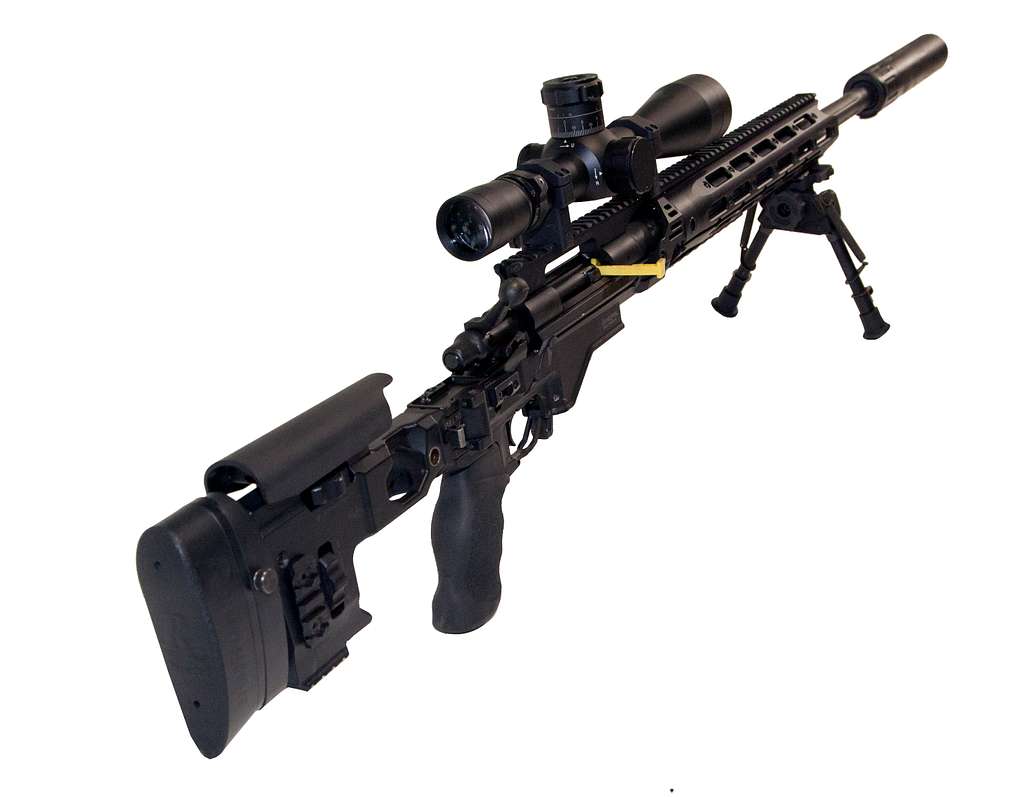
1. Remington 770
The Remington 770 was built to be an affordable bolt-action hunting rifle, but its budget-minded design showed up quickly once shooters started working the action. Reports repeatedly pointed to a rough, binding bolt stroke, a weak magazine setup, and inconsistent accuracy tied to the rifle’s flexible stock and basic bedding. A rifle meant for simple field use instead developed a reputation for feeling crude under even ordinary range use.
Some examples also drew criticism for chambers that were too tight for factory ammunition, a flaw that should never survive routine inspection. That issue, combined with a vague trigger and wandering groups, made confidence hard to build. For many shooters, the 770 became a case study in how low-cost construction can undercut the very reliability a hunting rifle depends on.
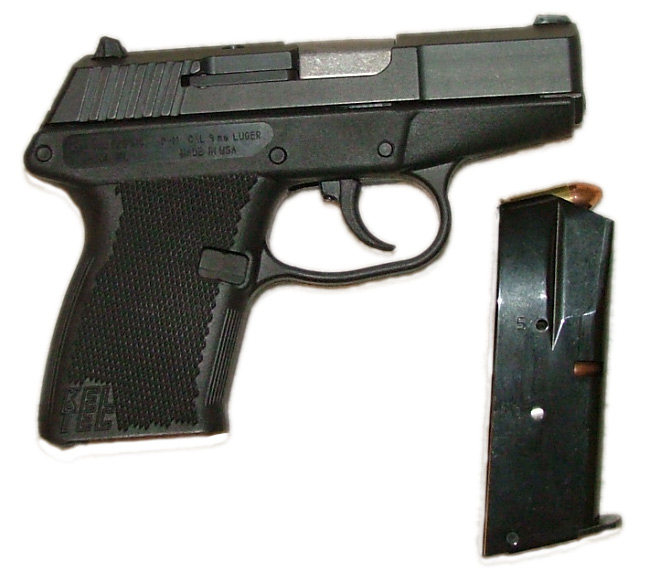
2. KelTec P11
The P11 attracted interest because it packed 9mm firepower into a small, easily concealed pistol. That kind of compactness had obvious appeal, especially at a time when slim carry guns were drawing strong attention. But the tradeoffs appeared almost immediately on the range.
The pistol’s long, heavy trigger made precise shooting difficult, and its small frame amplified recoil enough to reduce comfort and control. Instead of feeling quick and efficient, it often felt like a handgun that demanded extra effort for basic accuracy. Concealability remained its central strength, but range work exposed how much shootability had been surrendered to achieve it.
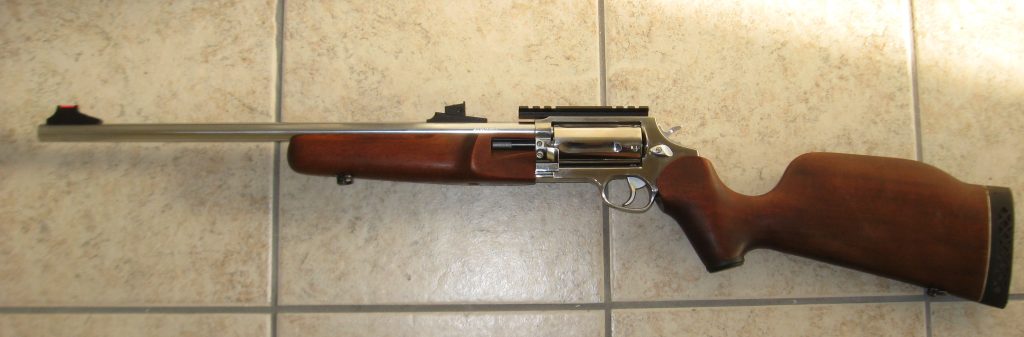
3. Rossi Circuit Judge
The Circuit Judge stood out because it blended rifle styling with a revolving action chambered for both .45 Colt and .410 shotshells. That sounded versatile, and versatility sells attention. The execution was another story.
Shooters found that the platform handled more like a novelty than a serious field arm. Accuracy with bullets was often described as only fair, while shotshell performance rarely justified the concept. More troubling was the cylinder-gap blast, a built-in issue on revolving long guns that can make hand placement a real concern. What looked like an all-in-one answer ended up showing the limits of combining two roles without doing either especially well.

4. Century Arms C39v2
The C39v2 was notable for being an American-made AK-pattern rifle with a milled receiver and upgraded touches, including a crisp trigger in some examples. It had the kind of spec sheet that suggested a modernized take on a proven formula. At the bench, however, consistency became the sticking point.
While some shooters reported acceptable groups, others described erratic accuracy, front-heavy handling, and premature wear in key bolt components on earlier production guns. That kind of mixed record is especially damaging in an AK-style rifle, where durability and predictability are part of the appeal. The C39v2 looked robust, but its range reputation never matched the promise of its construction.
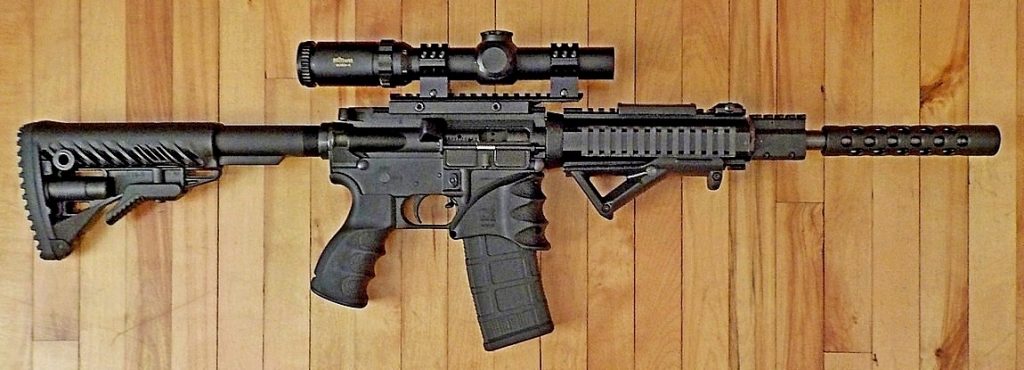
5. ATI Omni Hybrid AR
The ATI Omni Hybrid tried to push the AR platform toward lighter weight with polymer upper and lower components. That was the hook, and it was a strong one. AR owners have always been open to material changes when they offer practical gains.
What hurt the rifle was the sense that its lightness came with too much flex at stress points. Shooters criticized the platform for mushy trigger feel, inconsistent accuracy, and durability concerns around the receiver and buffer area. Separate testing of the Omni line also noted repeated stoppages and loosening near the barrel attachment area. The larger lesson was simple: reducing weight in an AR is useful, but not when rigidity and repeatability start to disappear.
6. MBA Gyrojet Pistol
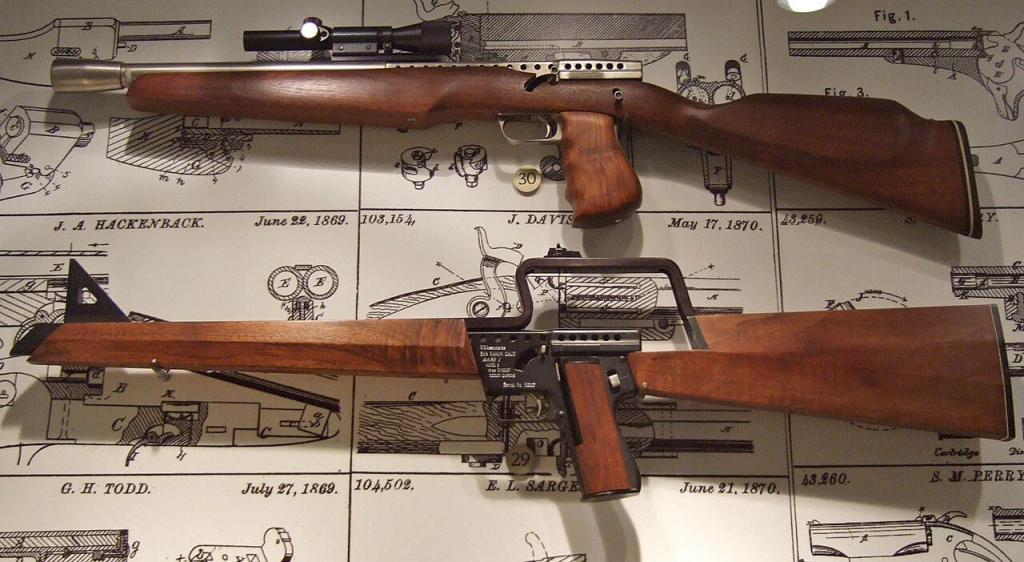
The Gyrojet remains one of the most unusual handgun ideas ever commercialized. Instead of firing a conventional bullet, it launched a small rocket projectile, a concept that gave it instant curiosity value and a futuristic image. The problem was that the system behaved in ways that worked against practical shooting.
According to the original Gyrojet design, the projectile accelerated slowly and did not reach peak velocity until about 20 yards from the muzzle. That meant weak close-range performance compared with ordinary handguns, and poor accuracy further undermined the design. Low recoil and a mild report could not save a platform that struggled at the most basic task of putting shots where they needed to go.
7. Dardick Series 1500
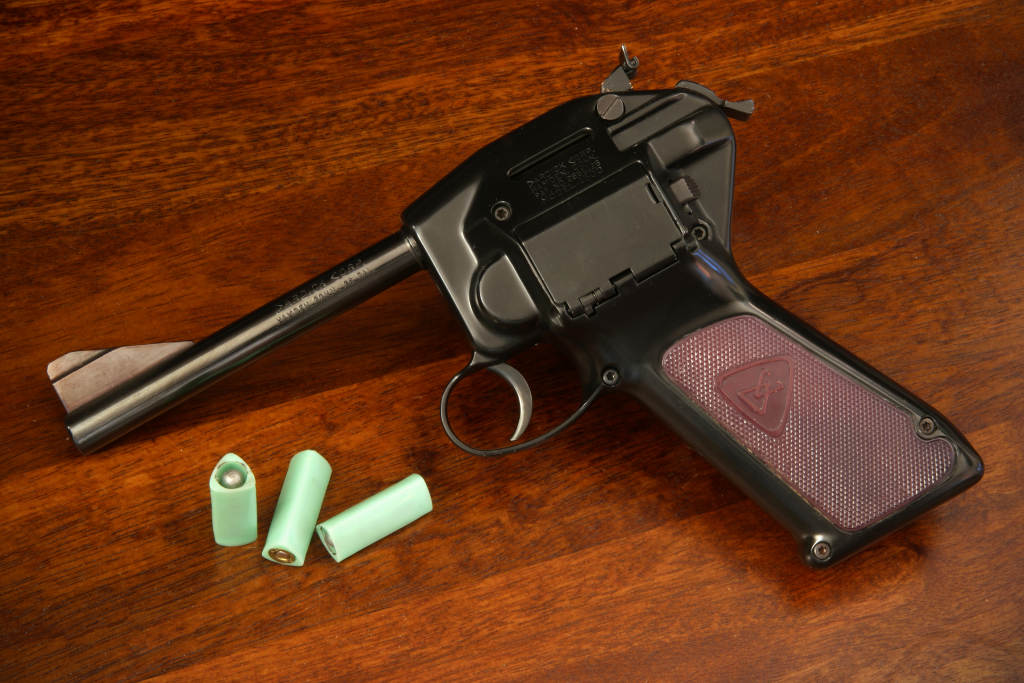
The Dardick Series 1500 looked like a radical break from both revolvers and autoloaders. It used triangular “Tround” ammunition, a magazine in the grip, and an open-sided revolving chamber system that tried to merge high capacity with revolver function. Few handguns have ever looked more original.
Few have also seemed more mechanically awkward in practice. The unusual ammunition limited appeal from the start, and the platform’s complexity worked against smooth, dependable operation. Contemporary descriptions and later retrospectives alike remembered it as a design that malfunctioned a great deal. The Dardick proved that originality alone does not create a useful handgun if the loading system, ammunition, and action all demand too much tolerance from the shooter.

8. Remington EtronX Model 700
The EtronX was one of the boldest production rifle ideas of its era. Built on the Model 700 action, it replaced a traditional firing pin strike with an electronic ignition system powered by a 9-volt battery. The purpose was to cut lock time to a minimum and bring precision-rifle thinking into a hunting platform.
It worked, but not well enough to justify the baggage. The rifle required specialized ammunition or primers, added an electronic system where hunters expected mechanical simplicity, and cost substantially more than standard rifles while offering no dramatic edge in real-world accuracy. As its electronic ignition system showed, the concept was advanced for its day, yet still too dependent on proprietary support and battery confidence. The EtronX did not fail because it lacked engineering ambition. It failed because the range did not reveal enough practical payoff.

The firearms on this list were not forgettable because they were ordinary. They were memorable because each one tried to solve a problem in a different way, then ran into the stubborn realities of recoil, reliability, ergonomics, or maintenance. That pattern appears again and again in gun design. A clever mechanism can attract attention, but the range has a way of reducing every sales pitch to the same hard test: whether the gun runs, shoots straight, and inspires trust.


