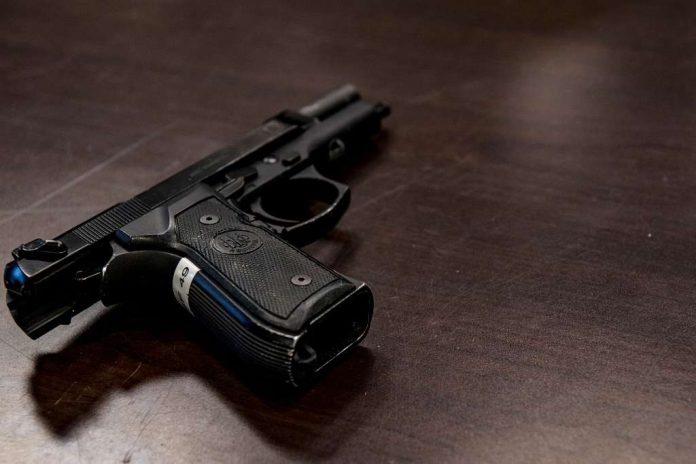
Army sidearms rarely get the same spotlight as rifles, but they reveal something just as important: how the service defines a last-resort weapon. Every major change in a handgun points to a bigger shift in doctrine, ammunition, manufacturing capacity, or the practical reality of putting a pistol into many different hands.
These five sidearms stood out not because of nostalgia alone, but because each solved a real Army problem at a specific moment. Some won their place through endurance, some through logistics, and some through pure staying power.
1. M1911 and M1911A1
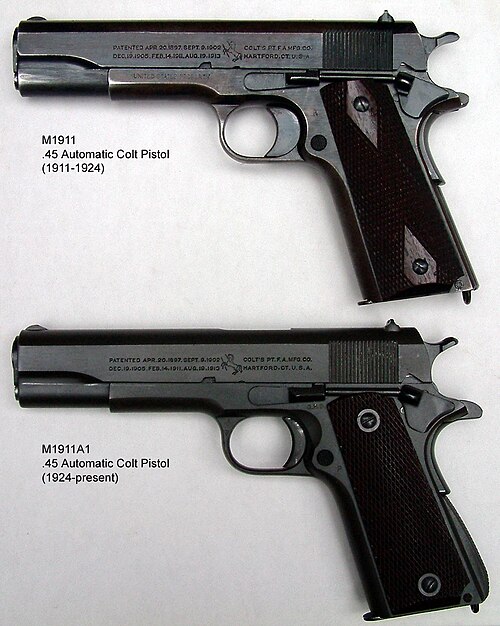
The M1911 became the benchmark because it answered a problem the Army could no longer ignore: the need for a harder-hitting sidearm after disappointment with smaller-caliber revolvers. John Browning’s design was built around the .45 ACP cartridge, but its reputation came from more than caliber. In the final Army trials, one Colt pistol completed a 6,000-round test with no reported malfunctions, a result that helped separate it from rival entries. The later M1911A1 did not rewrite the design. It refined it. A shorter trigger, arched mainspring housing, longer grip safety spur, and sight changes made the pistol easier to handle for a wider range of shooters.
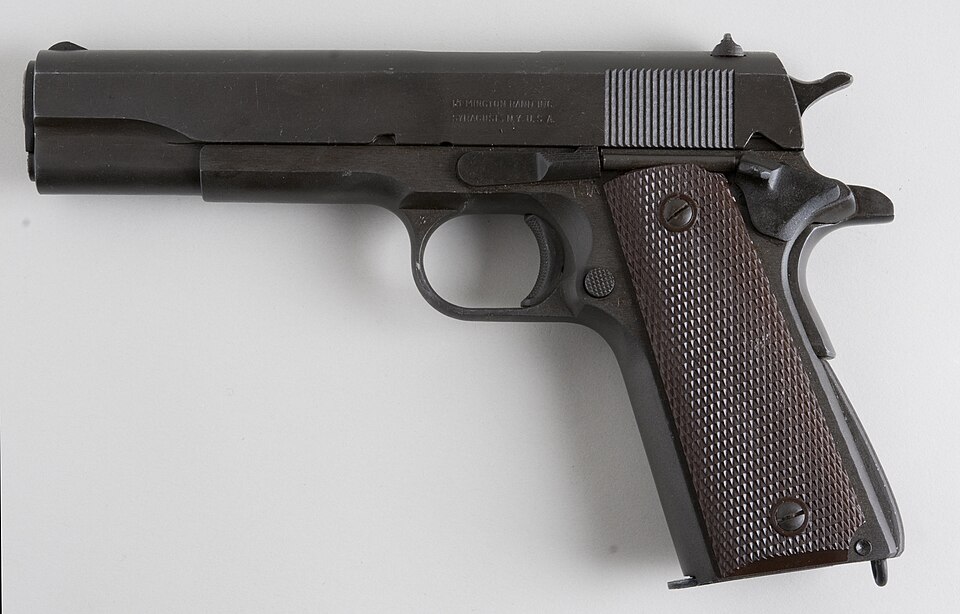
Those tweaks mattered because the Army was not just buying a machine; it was standardizing a sidearm for mass service. Its real legend is longevity. The platform served as the standard U.S. military sidearm from 1911 to 1985, and it remained in specialized use long after formal replacement. That is an unusually long service life for any mechanical system expected to survive war, depot rebuilds, new holsters, new ammunition lots, and decades of rough handling.
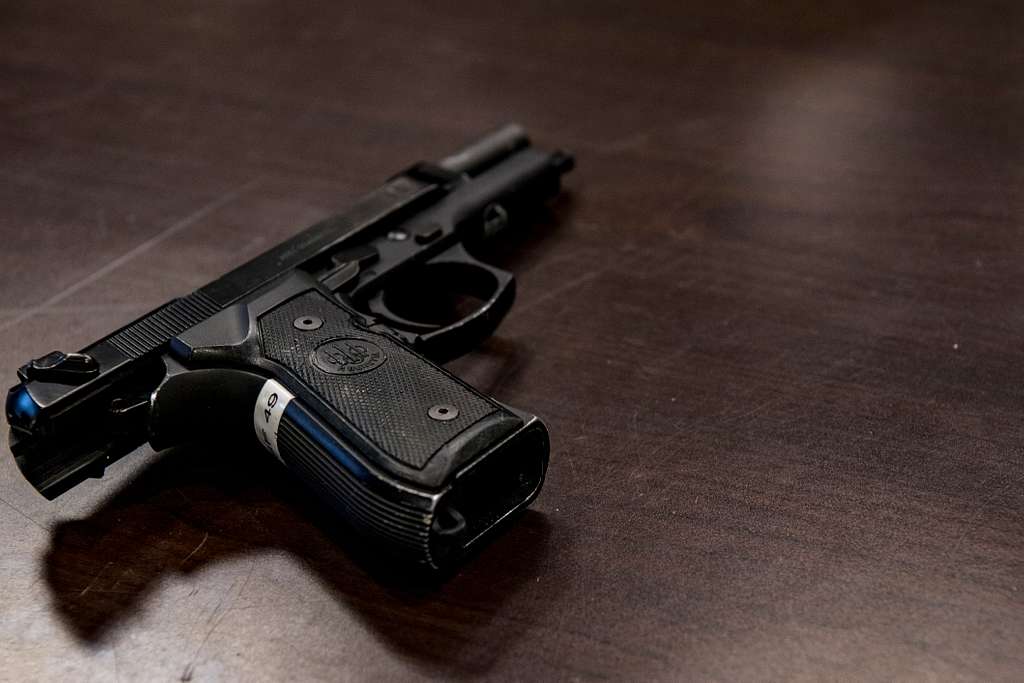
2. Beretta M9
The M9 became iconic for a different reason: standardization on a modern scale. By the late 1970s, the Defense Department wanted one pistol and one NATO-compatible cartridge across the services. The Beretta answer brought a 15-round magazine, ambidextrous safety/decocker, and double-action/single-action operation at a time when those features matched the military’s push for common training and logistics. Its road to adoption was messy, but its technical case was strong. In final XM9 testing, the Beretta 92F and SIG P226 both passed, with Beretta showing 1,750 MRBF in dry conditions and winning the total package competition.
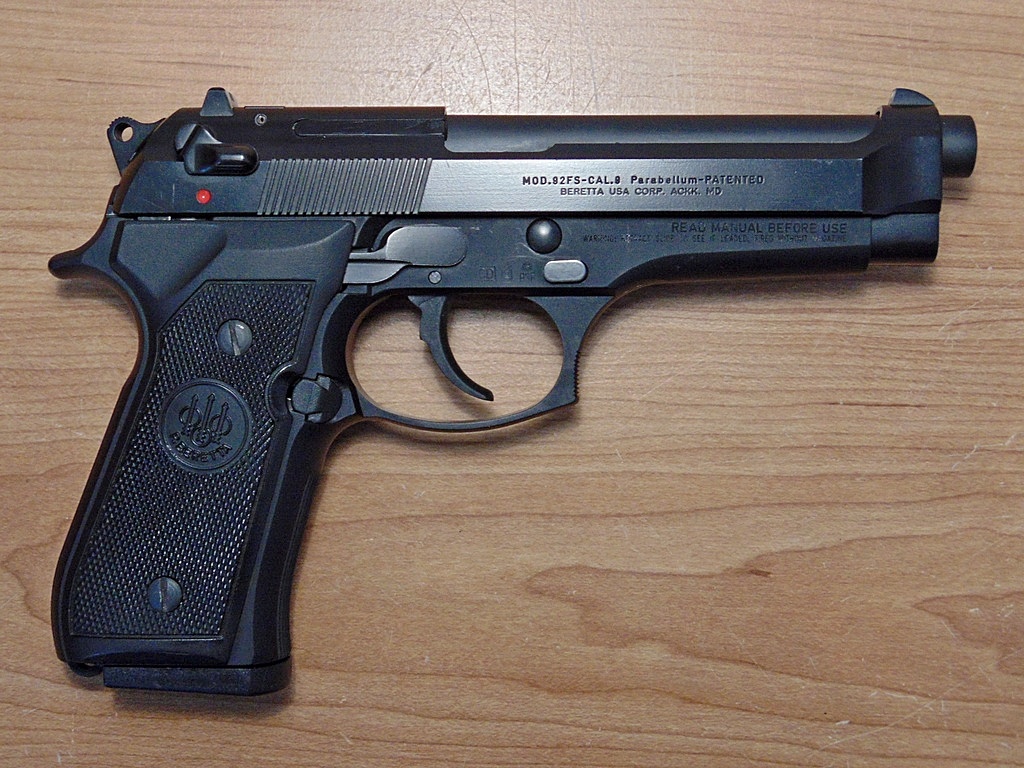
That matters because the M9 story is often reduced to arguments over caliber, when the actual Army decision was tied to reliability, supportability, and standardization. The pistol’s reputation later suffered from slide-failure headlines, worn fleet guns, and poor magazines in sandy theaters. Yet much of that damage came from defective ammunition, replacement-part timing, and maintenance discipline rather than a single fatal flaw in the design itself. As one small-arms investigator put it, “The biggest problem with any of the weapons we have in this country are logistics and maintenance.” The M9A1 later added a rail and improved magazines for desert use, showing that the Army’s sidearm problem had shifted from simple function to system-wide sustainment.
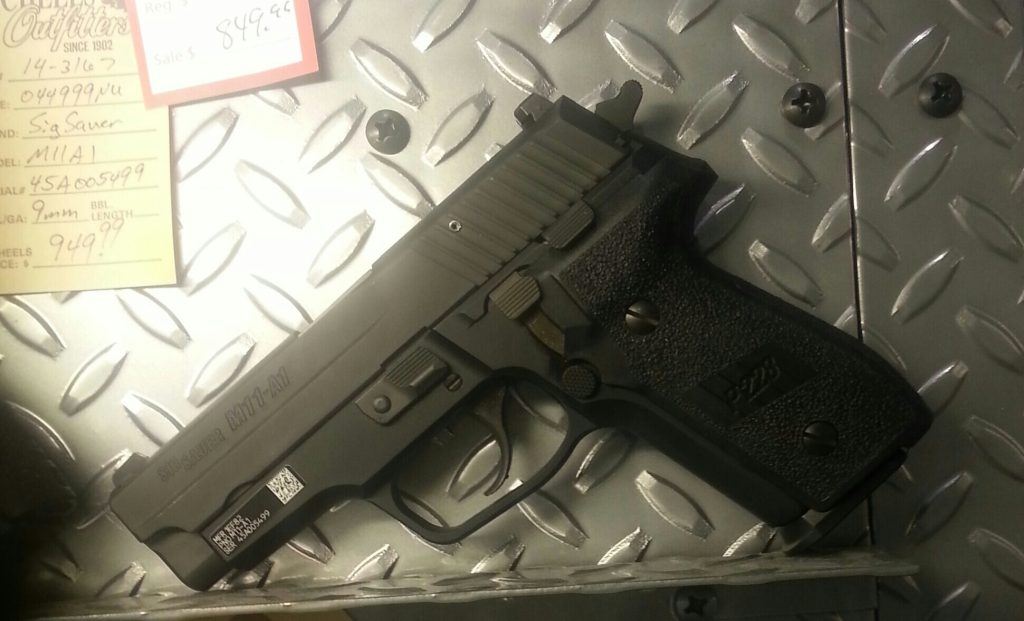
3. SIG Sauer M11
The M11 never served as the universal Army pistol, and that is exactly why it mattered. It showed that one standard sidearm could not cover every mission equally well. Investigators, protective details, aviators, and others needed a pistol with a smaller footprint but no loss of confidence.
That gave the compact SIG P228, adopted as the M11, a distinct place in Army handgun history. In official testing, examples reportedly reached 15,000 rounds with only one malfunction, the kind of dull reliability that procurement offices notice immediately. Unlike many compact pistols that feel like reduced versions of something else, the M11 earned respect as a complete service tool in its own right.
Its legacy is doctrinal as much as mechanical. The Army’s sidearm history is often told as a line of standard-issue replacements, but the M11 proved that specialization was part of modern handgun planning too.
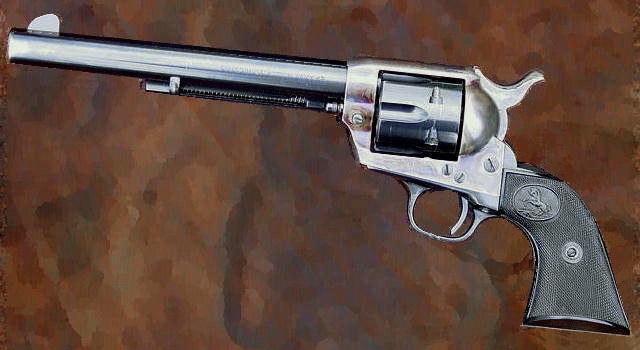
4. Colt Single Action Army
Long before detachable-box magazines defined military pistols, the Army needed a sidearm that could survive frontier service with minimal support. Adopted in 1873, the Colt Single Action Army met that need with a strong frame, simple manual of arms, and the .45 Colt cartridge.
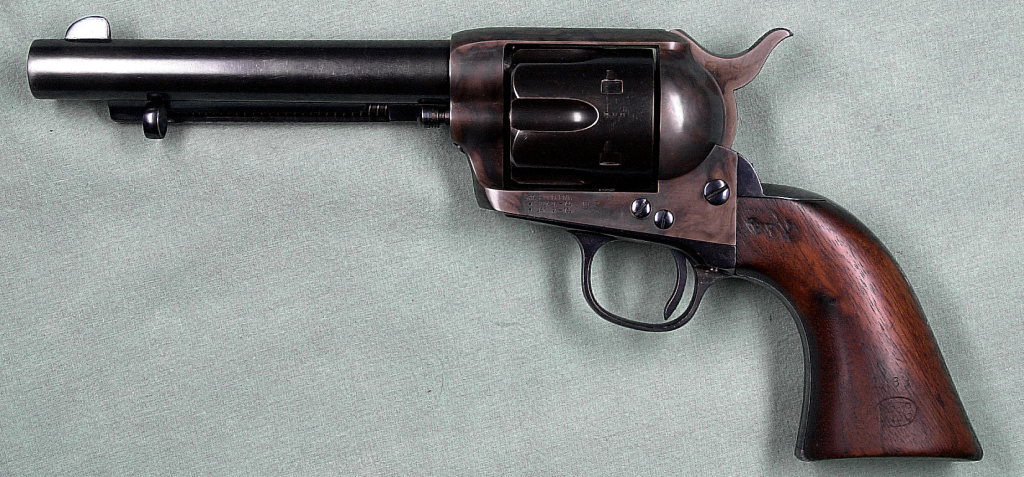
Its Army service life was relatively limited compared with later sidearms, but its cultural and mechanical afterlife was enormous. It became the enduring image of the frontier-era U.S. soldier, and it stayed relevant because it was hard to break, easy to understand, and effective within the expectations of its time. Even after newer revolvers and self-loaders arrived, older heavy-caliber handguns still influenced Army thinking about what a sidearm should do in close quarters.
5. Colt and Smith & Wesson M1917 Revolvers
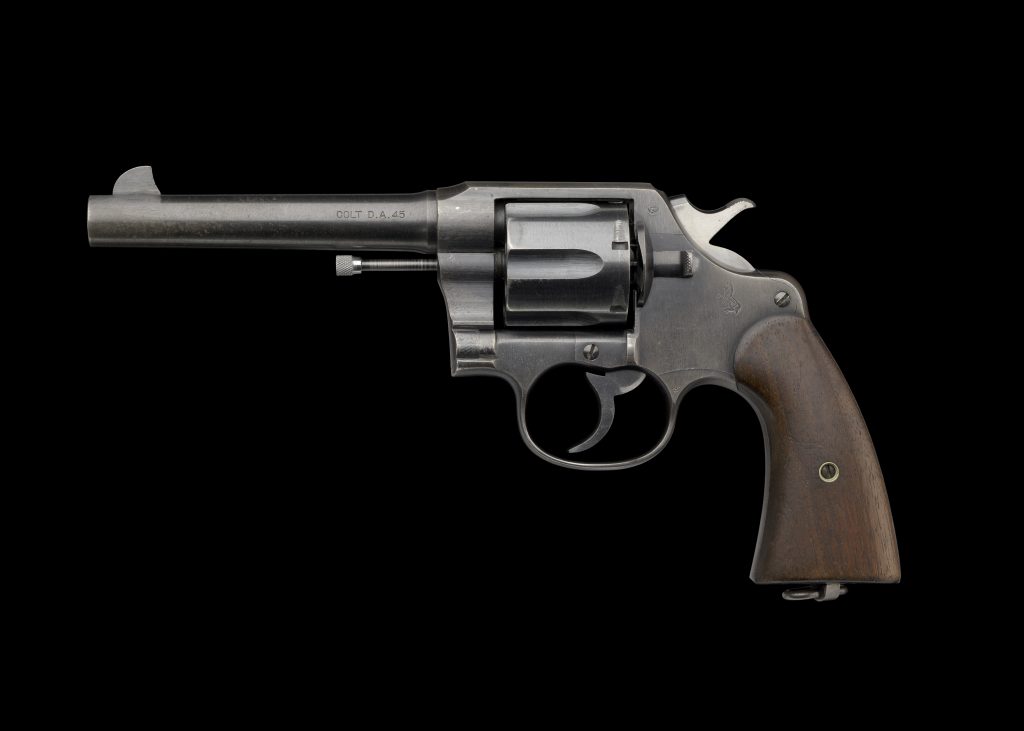
The M1917 revolvers are proof that a stopgap can become a legend when it solves the right bottleneck. When U.S. entry into World War I created more demand than M1911 production could meet, the Army turned to large-frame revolvers adapted to fire .45 ACP. The key engineering trick was the half-moon clip. That simple device let a rimless self-loading cartridge function in a revolver while also speeding extraction and reloads. It was an elegant fix to an industrial problem, not an attempt to chase novelty. Production numbers tell the story: more than 150,000 were made by Colt and more than 153,000 by Smith & Wesson.
The M1917 also captured a recurring pattern in Army weapons history. A good temporary solution often survives because it lowers training burden while buying time for industry to catch up. In that sense, the revolver was not just a substitute pistol. It was a lesson in wartime adaptability. These five handguns did not become legends for the same reason. One won through trial endurance, another through alliance-driven standardization, another through mission fit, another through rugged simplicity, and another through industrial improvisation. Together, they show that Army sidearms are really engineering snapshots. Each one reflects the point where battlefield needs, manufacturing realities, and shooter demands briefly lined up well enough to leave a mark that lasted far beyond official service.


