Handgun ammunition debates rarely stay settled for long. Bullet design, penetration standards, recoil control, and real-world performance all intersect in ways that keep experienced shooters, trainers, and ballistics specialists revisiting the same claims year after year. That persistence comes from a simple fact: handgun rounds are compromises. Modern testing has improved the discussion, but several familiar ideas still survive because they sound intuitive, even when the evidence is more complicated.
1. Bigger calibers always stop threats better
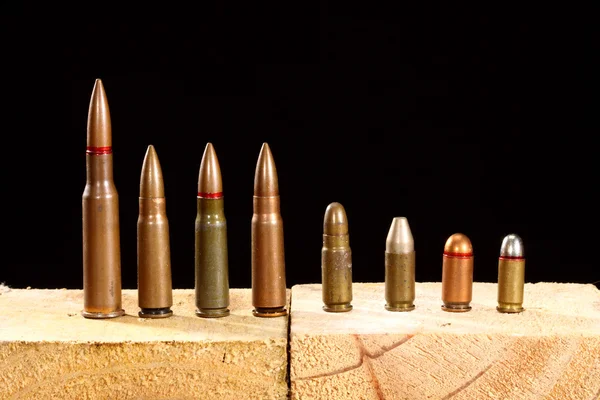
This is the oldest argument in the category, and it remains one of the least tidy. Larger bullets can offer advantages in diameter and mass, but that does not create a universal hierarchy where bigger automatically means more effective. Terminal performance depends on impact velocity, bullet construction, penetration depth, and whether the projectile reaches vital structures.
Ballistics writers and trainers repeatedly point to the same practical conclusion: bullet design often matters more than raw caliber differences among common service rounds. The gap between a poorly chosen .45 ACP load and a well-designed 9mm hollow point can be wider than the gap between good loads in both calibers. As one training source put it, “Handgun stopping power is simply a myth”, a conclusion tied to the larger idea that shot placement and adequate penetration are more predictive than caliber labels alone.

2. “Stopping power” is a scientific measurement
The phrase remains popular because it compresses a messy subject into two words. Experts still use it casually, but modern ballistic testing does not treat stopping power as a discrete, universally measurable value. The FBI protocol, for example, does not score lethality. It evaluates reliability through gelatin, clothing, wallboard, plywood, sheet metal, and auto glass, then measures penetration, expansion, and retained weight.
The purpose is consistency, not folklore. According to the FBI ammunition protocol, the resulting score is a measure of terminal reliability out of a given barrel length, not a direct lethality index. That distinction matters. A round can look impressive in advertising language and still fail to penetrate deeply enough, while a less dramatic load may perform more consistently under standardized conditions.
3. Hollow points always expand, so overpenetration is solved
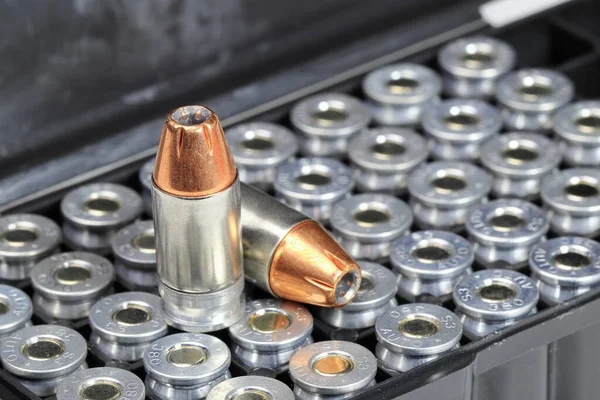
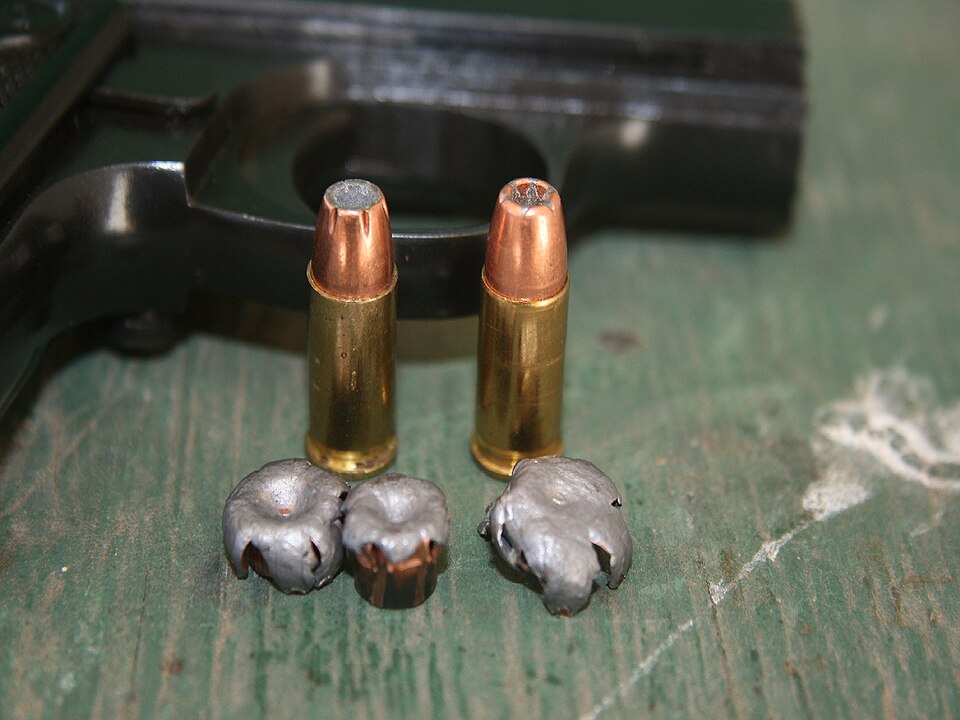
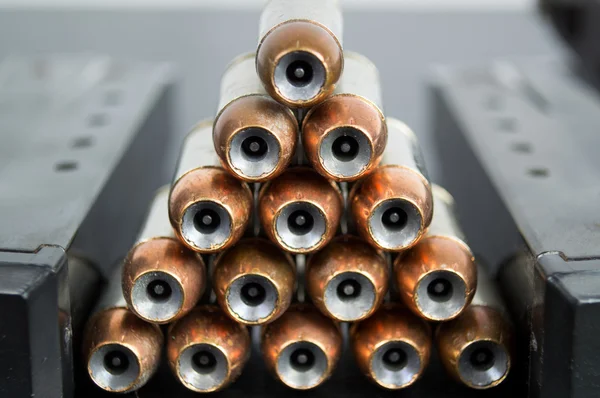
Hollow-point ammunition was developed to expand in soft tissue and create a wider wound channel while reducing the likelihood of exiting the target at full speed. That is the design intent, but experts do not treat expansion as guaranteed. Heavy clothing can clog a cavity. Intermediate barriers can deform the bullet before it reaches tissue.
Velocity changes from shorter barrels can alter how a given load opens up. The same sources that recommend hollow points also note that expansion failures remain possible, which is why modern duty designs are tested through layered fabrics and other obstacles. The often-cited standard remains 12 to 18 inches of penetration, with under-penetration carrying serious concern because a bullet that expands too early or too aggressively may not reach vital anatomy.
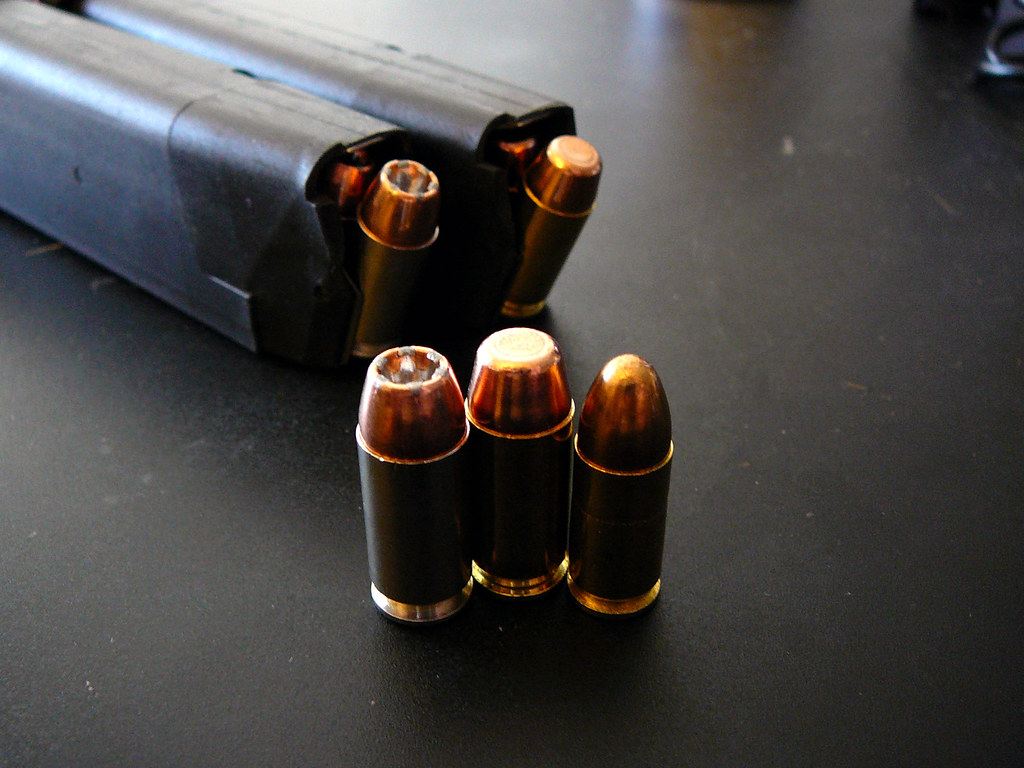
4. FMJ is just as good for defense if the caliber is large enough
This claim survives because full metal jacket rounds tend to feed reliably and penetrate deeply. Neither trait automatically makes them equivalent to a quality defensive load. FMJ bullets generally do not expand, which means they often produce narrower wound channels and carry a greater chance of exiting the target with hazardous residual energy.
Even some proponents of larger calibers acknowledge that a non-expanding bullet can surrender practical effectiveness to a smaller expanding design. The broad consensus in modern handgun ballistics is not that FMJ never works, but that it offers fewer mechanisms for controlled terminal performance than purpose-built expanding ammunition.
5. Penetration beyond 12 inches means a load is excessive
This is one of the more technical disputes because “too much” and “too little” depend on context. Ballistics experts generally agree that inadequate penetration is a major failure point. A bullet may need to pass through clothing, an arm, or oblique body angles before reaching vital organs. That is why the FBI testing standard rewards penetration in a narrower sweet spot and penalizes rounds that fall short.
The current benchmark, widely repeated in training and testing literature, is 12 to 18 inches in calibrated 10 percent gelatin. Some specialists emphasize the middle of that range, often around 14 to 16 inches, as an especially balanced result. The recurring argument is not whether overpenetration matters, but whether shallow loads are being overrated because they appear safer on paper.

6. More momentum means more stopping effect
Momentum is real physics, but experts continue to reject the shortcut that equates it directly with incapacitation. The idea persists because heavier, faster bullets feel more authoritative and often recoil more, which encourages the assumption that they must hit in a uniquely disruptive way. The more accepted explanation is less dramatic.
Handgun bullets wound by crushing tissue, and their effectiveness depends on where they strike and how the projectile behaves after impact. Permanent cavity, penetration, and expansion dominate the discussion. Momentum can influence recoil and barrier interaction, but it does not function as a simple knockdown number. This remains one of the clearest places where physics terms are often used accurately in isolation and inaccurately in conclusion.
7. Ballistic gelatin tells the whole story
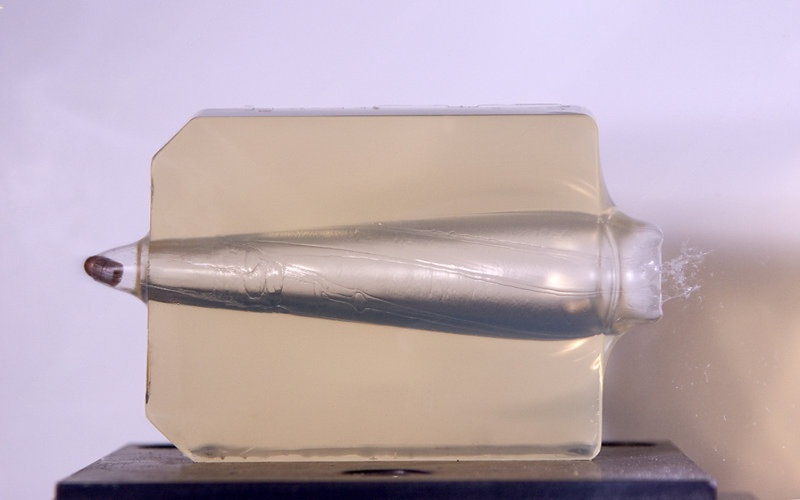
Gelatin remains central because it offers repeatable comparisons, and experts rely on it for that reason. It simulates muscle tissue reasonably well, allows bullet recovery, and makes expansion and penetration measurable across controlled test events. Still, gelatin is a model, not a human body. It does not think, move, react to pain, or reproduce every anatomical variable. Trauma specialists and forensic researchers have long argued that terminal performance is best understood through a wider evidence set that includes tissue simulants, field outcomes, autopsy findings, and medical reporting. Even in forensic identification, the trend has moved toward more objective and statistical methods, including numerical comparison work on cartridge cases by NIST researchers, rather than relying only on traditional expert interpretation.
That same push toward quantification shapes ammunition debates. Gelatin is indispensable, but it is still only one tool in a larger effort to understand what handgun bullets actually do. Most handgun ammo myths endure because each one contains a fragment of truth. Bigger bullets can help. Hollow points usually do expand. Momentum and caliber do matter in limited ways. The problem starts when any one variable is treated as the whole answer. Modern ballistics keeps returning to the same fundamentals: reliable function, sufficient penetration, sound bullet design, and accurate hits. Those are less catchy than the old slogans, but they remain far harder to argue away.


