

Reliability in a rifle is usually discussed as a matter of materials, maintenance, and ammunition quality. The deeper story sits inside the action itself. Long after individual models leave production, the mechanical ideas behind them continue to influence how modern rifles feed, lock, unlock, vent gas, and keep moving when conditions get difficult.
Some of these designs remain dominant. Others survive mainly as lessons that engineers still build around or deliberately avoid. Together, they explain why modern rifles can look very different on the outside while still borrowing heavily from a small group of enduring operating concepts.
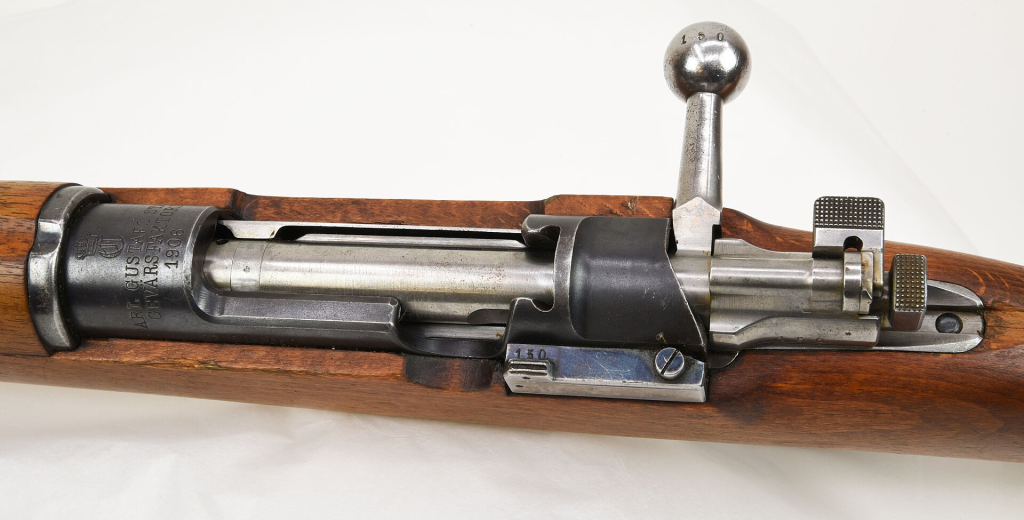
1. Controlled-round feed bolt actions
The classic controlled-round feed system remains one of the most discussed bolt-action layouts because it grips the cartridge early in the feeding cycle and keeps control of it as it moves from magazine to chamber. That approach is closely associated with Mauser-pattern rifles and later sporting actions influenced by them.
Its reputation comes from feed certainty and extraction authority rather than raw speed. The large claw extractor, fixed handling of the cartridge, and orderly path from magazine to chamber gave the design a long life in field rifles. Even in current debates over bolt actions, controlled feed still matters mainly because it represents a reliability philosophy: mechanical control over the cartridge from the beginning of the cycle.
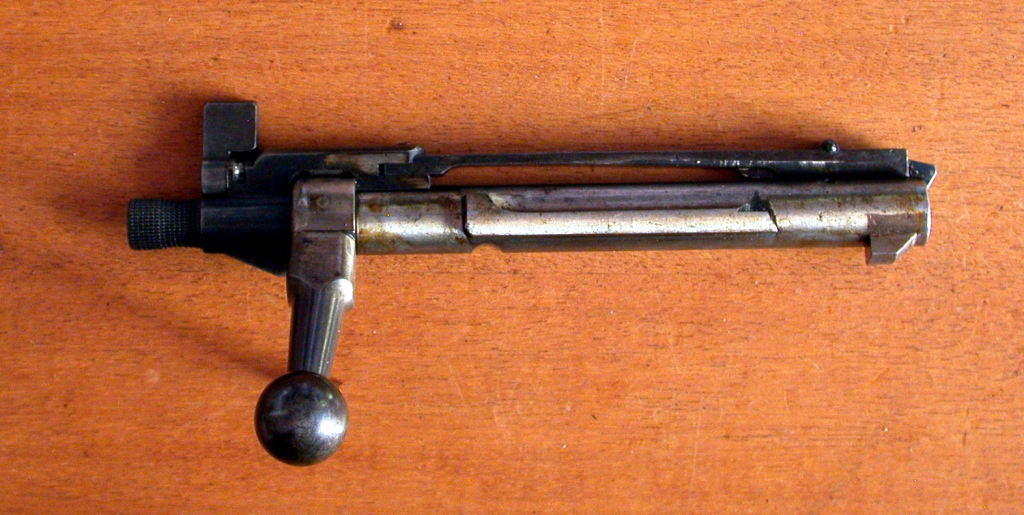
2. Push-feed bolt actions
Push-feed actions take a different route. The bolt pushes the cartridge forward and the extractor snaps over the rim later in the cycle, which simplifies machining and has proved highly effective in sporting and target rifles.
Modern discussion around push feed tends to focus less on theory and more on execution. Users repeatedly note that well-built examples run without incident, and practical reliability often depends as much on magazine geometry and feed rails as on the feed concept itself. That is why push-feed systems remain widespread: they show that dependable operation does not require one historic formula as long as the cartridge is presented cleanly and the bolt face, extractor, and magazine work together.
3. Long-stroke gas piston systems
Few operating systems have shaped the modern idea of a hard-running self-loader more than the long-stroke gas piston. In this layout, the piston travels under gas pressure through a stroke greater than its own diameter, and in many well-known rifles the piston assembly and carrier move as a unit. Examples include the M1 Garand and AKM.

The engineering appeal is straightforward: substantial operating energy, strong extraction, and a cycle that tolerates dirt and variation well. That does not make every long-stroke rifle identical, but it explains why the concept remains the benchmark for rugged autoloading behavior. Designers still return to it when reliability margins matter more than minimizing moving mass.

4. Short-stroke gas piston systems
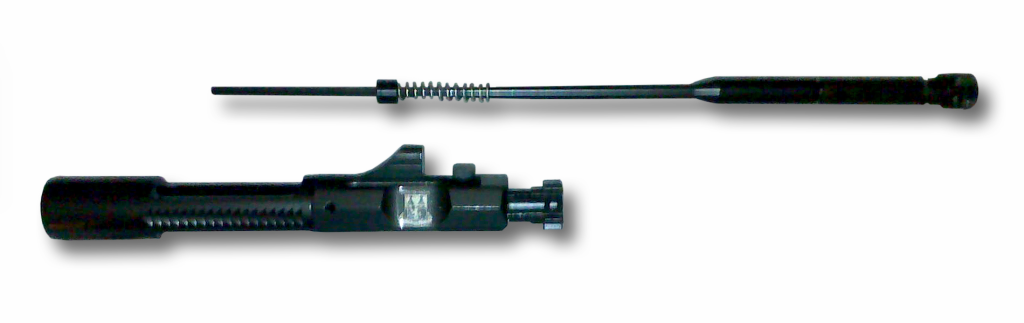
The short-stroke piston separates the gas impulse from the full rearward travel of the operating group. Gas pushes a piston only a short distance, then the piston transfers energy to the carrier or operating rod and stops while the rest of the action continues rearward.
This arrangement has become one of the most influential alternatives to direct gas systems because it keeps hot gas and fouling farther forward while avoiding some of the bulk of older piston layouts. In later M16-platform experiments and derivatives, the short-stroke gas system was found to be functionally practical and capable of reducing some fouling-related stoppages. That finding helped cement the short-stroke piston as a recurring answer whenever engineers wanted cleaner operation without abandoning the basic geometry of a familiar rifle platform.

5. Direct impingement
Direct impingement remains one of the most misunderstood and most durable rifle operating ideas. In the general sense, it routes gas from the barrel back to the working parts instead of using a separate external piston assembly. The payoff is a lighter and mechanically simpler layout with fewer moving parts out front.
Its staying power comes from those packaging advantages. Rifles using gas from the fired cartridge to cycle the bolt carrier can be lighter and keep reciprocating mass more closely in line with the bore. The tradeoff is familiar: more heat and fouling reach the action. Even so, direct impingement continues to shape rifle design because it proves that reliability is not only about cleanliness; it is also about balancing mass, timing, lubrication, and gas delivery.
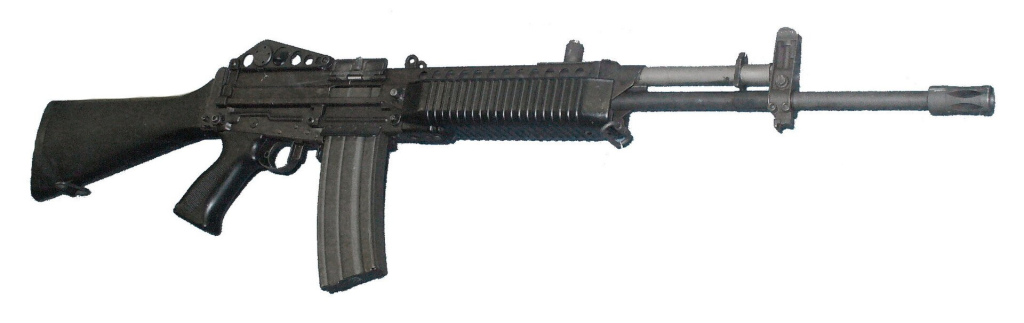
6. Stoner’s internal piston system
The AR-family mechanism is often grouped under direct impingement, but its internal operation is more specific than that label suggests. In Eugene Stoner’s system, gas enters the carrier and the bolt effectively acts as a piston within it. That creates an expanding-gas mechanism rather than a simple gas jet striking the carrier.
That distinction still matters. It helps explain why the AR architecture has remained adaptable across barrel lengths, calibers, and roles for decades. The system combines a straight-line layout, relatively low external mass, and a compact operating package. Its influence is less about terminology than about the fact that one internal gas concept became the backbone of one of the world’s most persistent rifle families.

7. Adjustable gas regulation
Adjustable gas systems are not a separate action type in the same sense as a bolt layout or piston stroke, but they have become a defining reliability feature across modern autoloaders. Earlier and later rifle development both showed why: ammunition pressure, fouling, suppressor use, and climate can all shift the amount of energy reaching the action.
Colt’s piston experiments described an adjustable regulator that let users tune the rifle for differing conditions, while broader gas-operated design history shows that many systems depend on port size, spring pressure, and venting strategy. The lesson has endured. Modern reliability is often achieved not by one perfect gas setting, but by giving the system a controlled way to stay inside a functional window.
8. Gas-trap operation
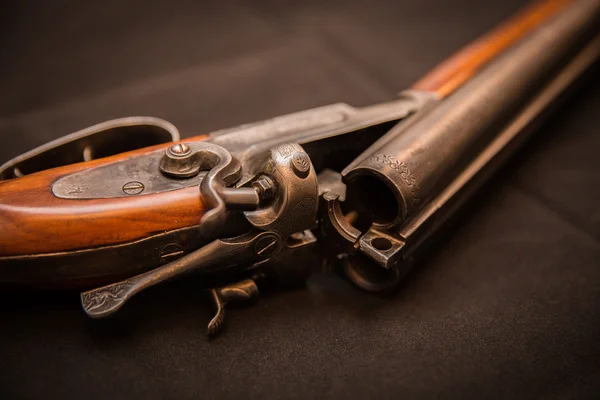
Gas-trap rifles are largely gone, but the concept still matters because it represents an early attempt to harvest muzzle gas without drilling the barrel. In these systems, gas was captured at the muzzle and then translated into the rearward motion needed to cycle the action.
The design faded because it added complexity, weight, and exposure to dirt, yet it contributed an important engineering lesson. According to the gas-trap system is no longer used in modern weapons, but its rise and decline helped establish a lasting rule in rifle design: an action may work in principle, yet still lose out if it complicates maintenance, balance, or packaging.
These eight designs continue to define what reliability means in rifles. Some do it by direct inheritance, as with controlled-feed bolts, long-stroke pistons, and the Stoner system. Others do it by leaving behind solutions and warnings that still influence current engineering choices.
That is why modern rifle reliability rarely comes from a single breakthrough. More often, it is the accumulated result of old action ideas refined until they fit contemporary materials, production methods, and expectations.


