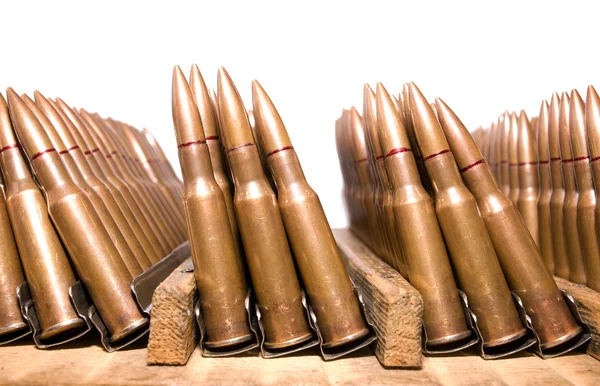
Deep penetration is one of the traits hunters value most when game gets large, angles get awkward, and bullets have to keep driving after impact. Cartridge choice is only part of that equation, but the case capacity, typical bullet weights, and velocity window of a round all influence how well tough bullets stay together and reach vital tissue.
Across North American big-game hunting, certain cartridges have earned lasting trust because they can launch heavier-for-caliber bullets at useful hunting speeds without becoming overly specialized. Some are old standards. Others are magnums that trade extra recoil for more reach and impact authority.
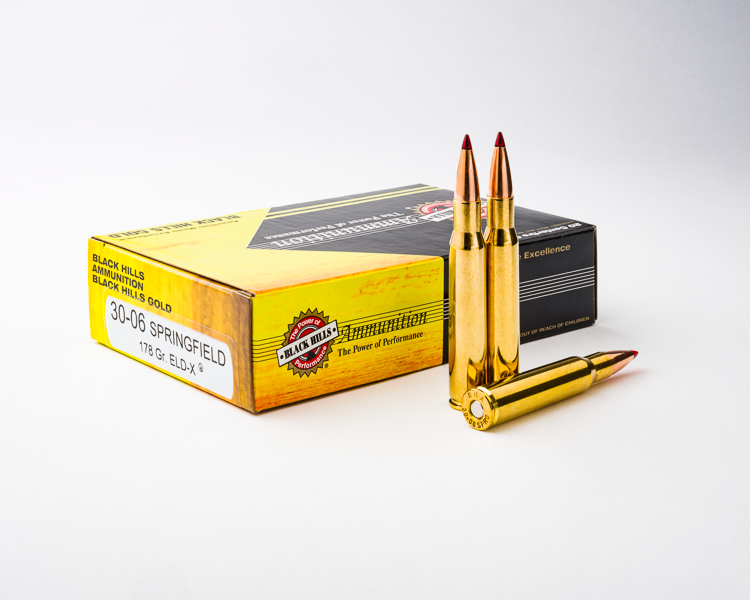
1. .30-06 Springfield
The .30-06 remains one of the clearest examples of a cartridge that balances power, bullet weight, and field practicality. Introduced in 1906, it has spent more than a century proving that moderate velocity paired with sturdy bullets is a reliable recipe for deep penetration.
Its strength is flexibility. Hunters can use 150-grain bullets for lighter game, but the cartridge’s real reputation on elk, moose, and other heavy animals rests on 180-grain and 200-grain bullets. Those loads offer useful sectional density without the extreme recoil of a magnum, which helps many shooters place shots better under pressure. The .30-06 also performs well from a standard hunting rifle with a 22- or 24-inch barrel, making it easier to carry than some longer magnum setups.
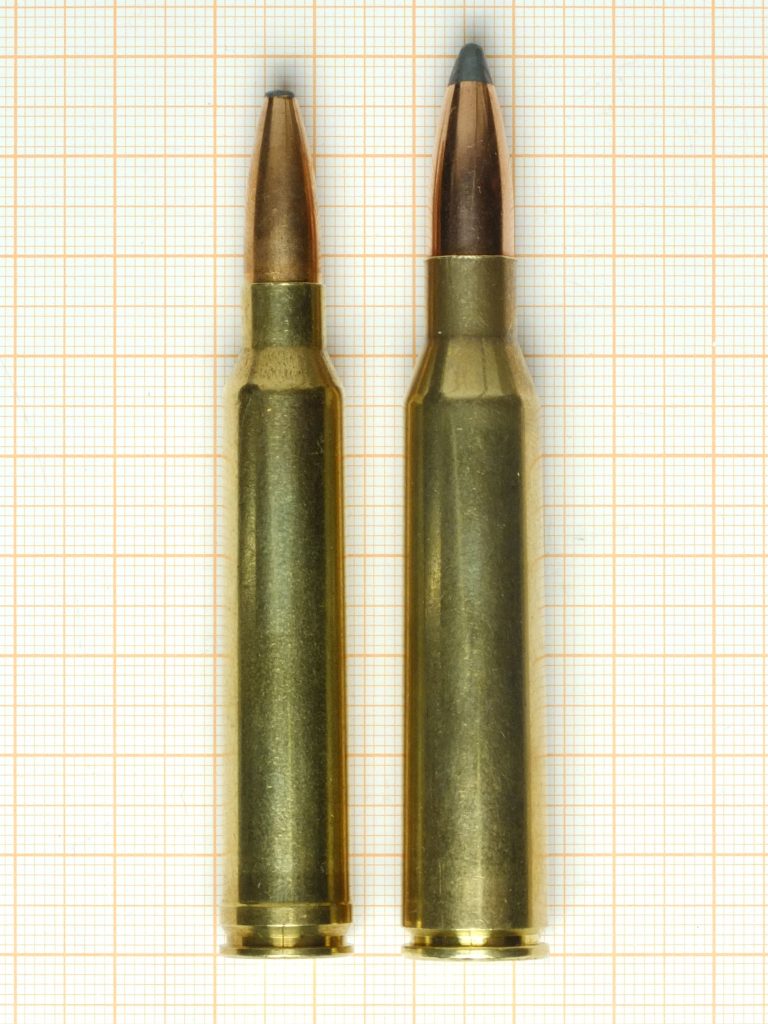
2. .300 Winchester Magnum
The .300 Winchester Magnum has been a big-game benchmark since 1963. Hunters trust it because it drives 180- to 200-grain bullets faster than the .30-06 while preserving the frontal area and bullet mass that make .30-caliber cartridges so broadly useful.
That added speed matters when bullets must punch through shoulder structure or hold together at longer ranges. The cartridge is widely respected for accuracy, and it has enough capacity to make heavy, bonded, monolithic, and high-BC bullets perform well on elk, moose, and similarly sized game. The tradeoff is recoil. In the field, however, the .300 Win. Mag. has long held its place as the cartridge hunters reach for when they want more penetration margin without moving up to larger bores.
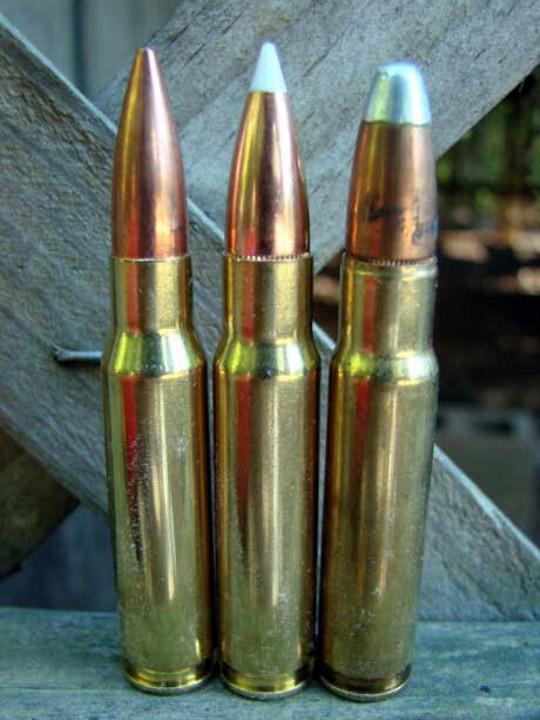
3. .338 Winchester Magnum
If the conversation centers on deep penetration, the .338 Winchester Magnum belongs near the top. Its appeal is straightforward: larger diameter bullets, heavier common hunting weights, and enough velocity to keep those bullets effective past ordinary woods ranges.
With 200- to 250-grain bullets, the .338 Win. Mag. offers the kind of sectional density and momentum hunters look for on elk, moose, and big bears. Multiple references describe it as an all-around heavy hitter for large game, especially with 225-grain bullets that still shoot relatively flat. It recoils harder than the .30-caliber standards, but its reputation comes from what happens after impact. On quartering shots and heavy-bodied animals, it has built decades of trust.
4. 7mm Remington Magnum
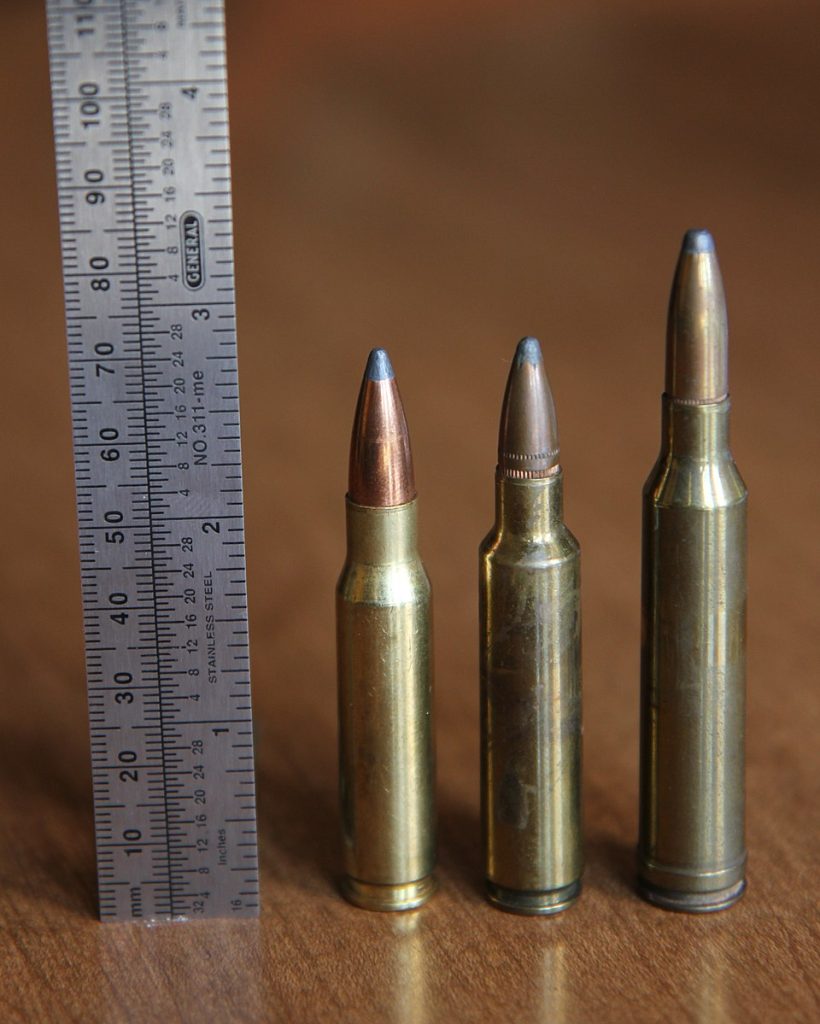
The 7mm Remington Magnum is often discussed for open-country hunting, but its deeper value is how efficiently it carries long, heavy-for-caliber bullets. That matters because 160- to 175-grain 7mm bullets offer strong sectional density, a key part of straight-line penetration.
When loaded with controlled-expansion bullets, the 7mm Rem. Mag. combines reach with enough bullet length and weight to handle elk-sized game convincingly. It does not hit with the frontal diameter of a .30 or .338, yet its aerodynamic bullets retain velocity well and continue to drive when impact speeds fall. That blend of reach and penetration is why it remains one of the most trusted magnums in the hunting world.
5. .308 Winchester
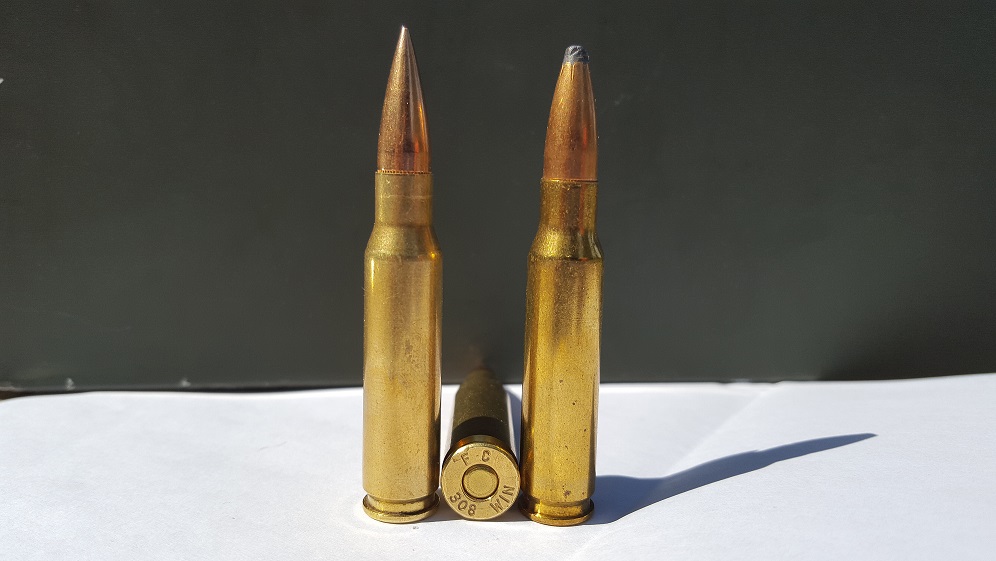
The .308 Winchester has a more modest velocity envelope than the .30-06, but it keeps the same bullet diameter and works exceptionally well with solid 165- and 180-grain hunting bullets. It is one of the clearest reminders that deep penetration does not always require magnum speed.
Hunters have used the .308 successfully on moose and other large game for decades, especially when shots are kept sensible and bullet construction is prioritized. Its lower recoil helps many shooters avoid flinching, and that practical advantage often matters more than raw paper energy. In a compact short-action rifle, the .308 remains a dependable cartridge for hunters who value control and straight-through performance over extra velocity.
6. .270 Winchester
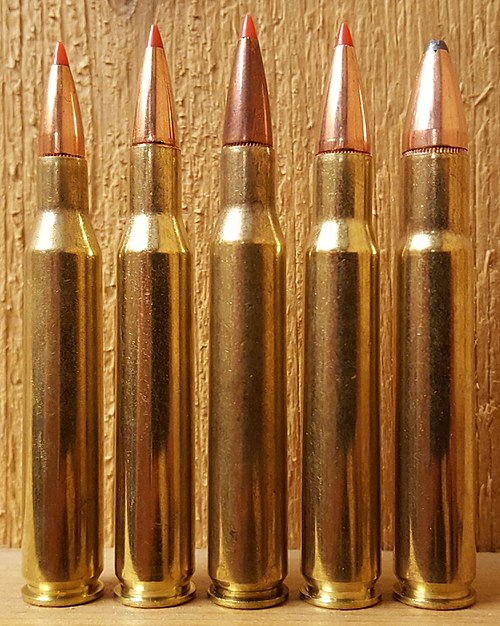
The .270 Winchester is often pigeonholed as a deer cartridge, but that sells it short. With good bullets in the 130- to 150-grain class, it has repeatedly shown the ability to penetrate large game cleanly, particularly on broadside and lightly quartering shots.
Its reputation rests on speed and bullet shape rather than sheer bullet weight. Premium bonded and monolithic projectiles have extended the cartridge’s usefulness on heavier animals by helping the bullet stay intact after impact. It does not carry the same penetration reserve as a .30-06 with a 180-grain bullet or a .338 with a 225, but hunters continue to trust it because it shoots flat, recoils moderately, and has an unusually long record of clean kills when paired with disciplined shot selection.
7. .35 Whelen
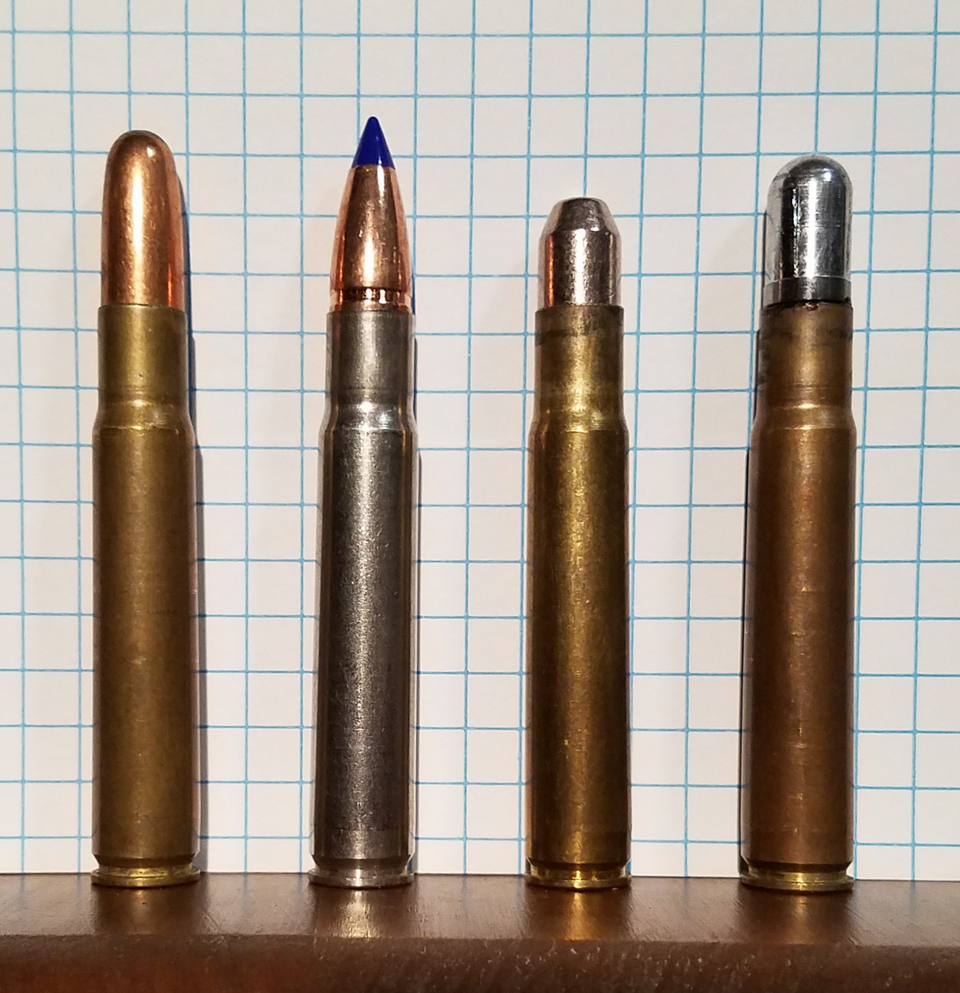
The .35 Whelen earns trust from hunters who want larger frontal area without stepping into full magnum recoil. Based on a necked-up .30-06 case, it throws substantially heavier bullets at practical hunting speeds, which is exactly the combination many hunters associate with dependable penetration in timber and at ordinary field distances.
Its strength is not extreme range. It is the way a .358-caliber bullet carries mass into the animal and keeps going. On big-bodied game in closer country, the .35 Whelen has long appealed to hunters who want authority without unnecessary complexity. It is not as universally common as the .30-06 or .300 Win. Mag., but among experienced big-game hunters, its reputation is unusually strong.
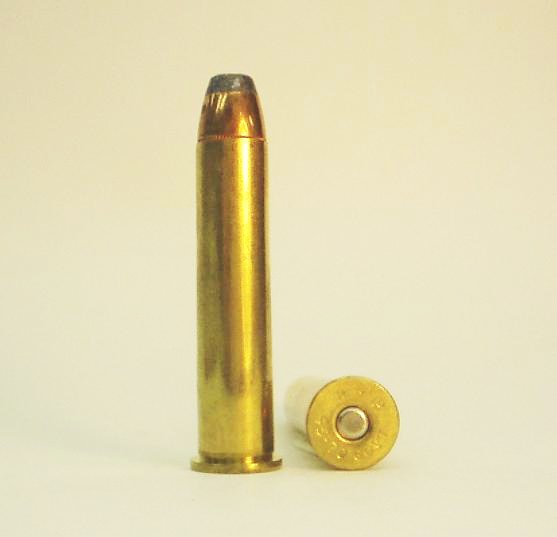
8. .45-70 Government
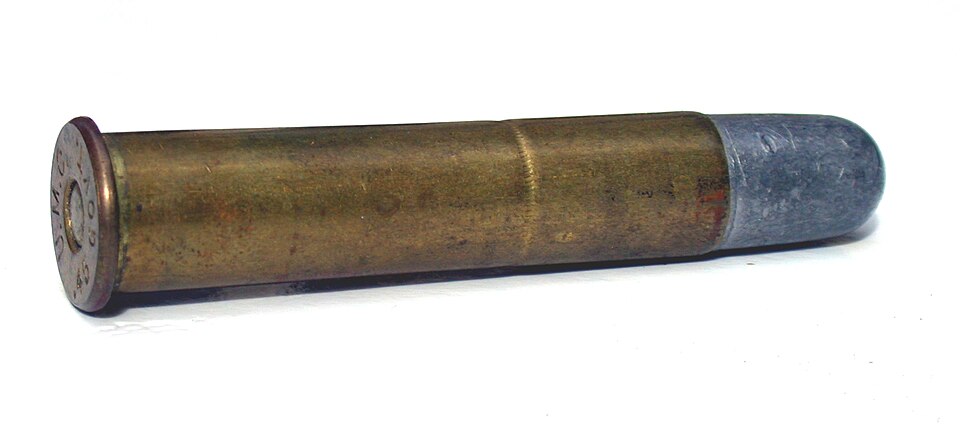
The .45-70 Government represents a very different path to deep penetration. It does not rely on high velocity. It relies on wide, heavy bullets and substantial momentum at short to moderate distances. In modern hunting loads, the .45-70 is a legitimate heavy-game cartridge for thick cover, where shots are often fast and inside 150 yards. It has been repeatedly cited as a powerful option for close-range elk hunting, particularly in lever guns that handle quickly in brush. Its trajectory limits it compared with flatter cartridges, but inside its comfort zone, few rounds have a stronger reputation for driving large bullets deeply through heavy animals.
These cartridges differ in speed, recoil, and ideal hunting distance, but they share one trait: each has earned confidence through repeated use on large game. Some deliver penetration through velocity, some through bullet weight, and some through bore diameter. The common thread is simple. Hunters who prioritize deep penetration usually pair these cartridges with stout, controlled-expansion bullets and use them within the distances where they perform best. That formula has kept these eight cartridges relevant for generations.


