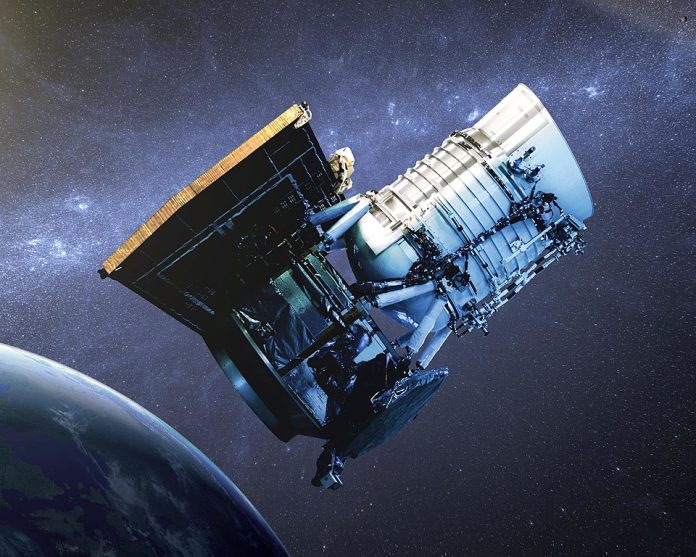

Interstellar objects do not linger. They arrive from deep space on one-way paths, brighten briefly as they cross the Sun’s domain, and then fade back into the dark before astronomy has much time to react.
That urgency has turned every detection into a test of modern observing systems. With only three confirmed interstellar objects identified so far, astronomers have built a tracking playbook that combines automated sky surveys, orbit analysis, rapid follow-up, and observations from telescopes spread across Earth and the Solar System.
1. Wide-field survey telescopes find the first hint of motion
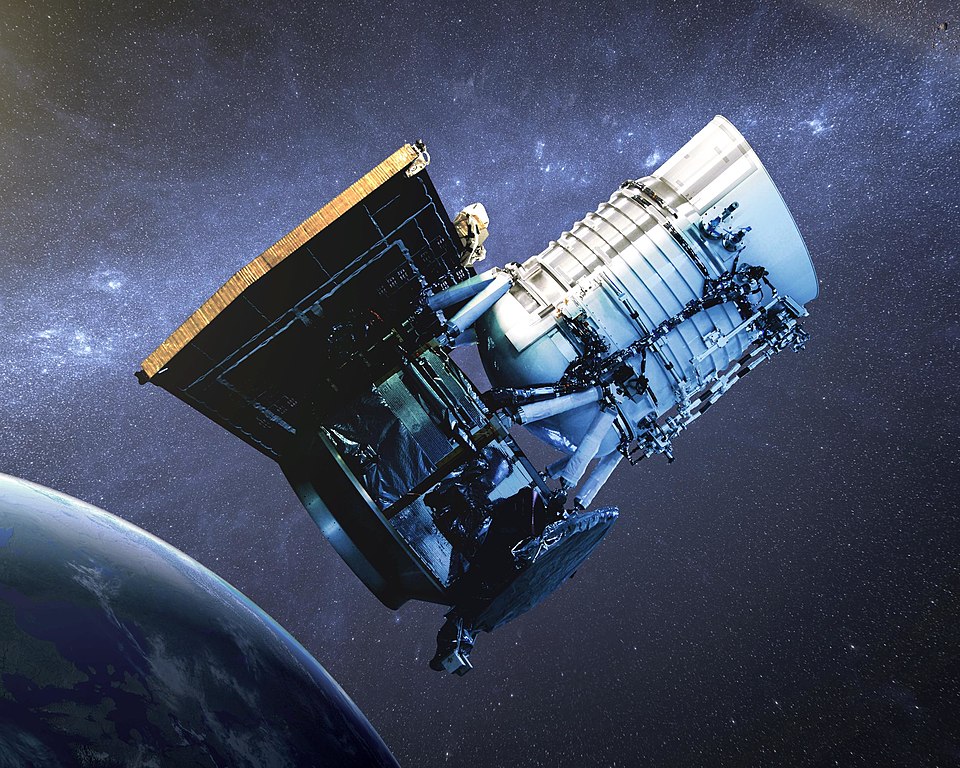
Most interstellar visitors are discovered by survey systems that repeatedly scan huge portions of the sky and compare new images with older ones. That is how 3I/ATLAS was first reported on July 1, 2025, after the ATLAS survey telescope in Chile spotted it and sent the observation to the Minor Planet Center.
ATLAS was designed to catch moving objects quickly rather than stare deeply at one patch of sky. Its telescopes revisit the sky at short intervals, allowing software to identify faint points that shift against the fixed star background. That same method that helps planetary defense efforts also makes the system useful for rare visitors from beyond the Sun’s gravitational family.
2. Archived images extend the object’s history backward
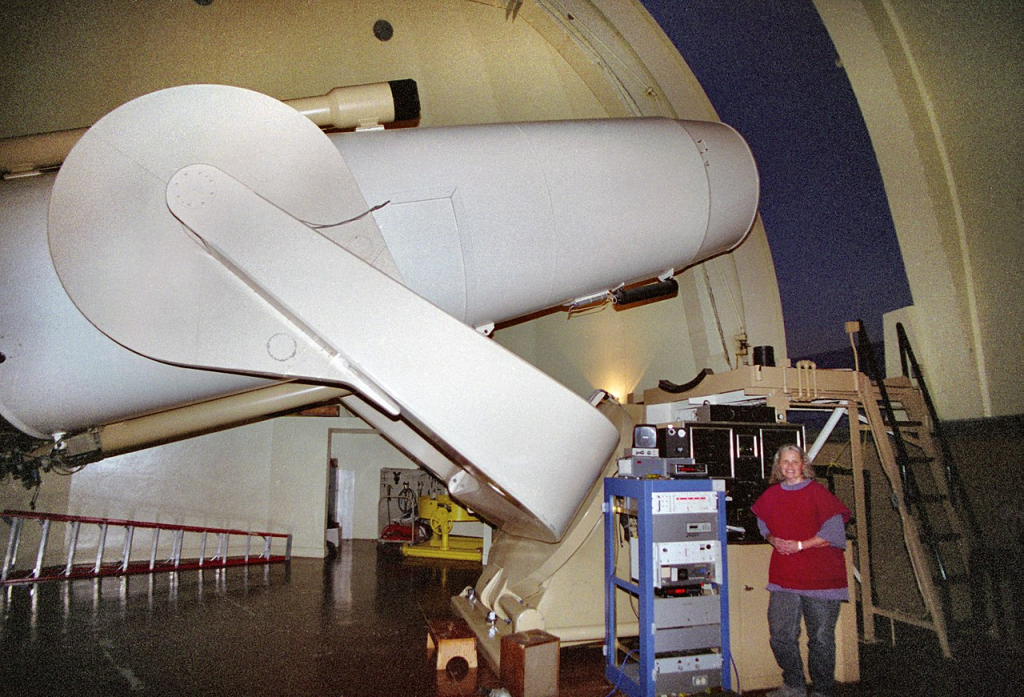
A discovery image is only the beginning. Once a candidate appears, astronomers search older data for unnoticed earlier sightings, a process known as pre-discovery recovery.
For 3I/ATLAS, archived observations from multiple ATLAS telescopes and the Zwicky Transient Facility pushed the object’s recorded history back to June 14, 2025. Those earlier positions sharpened the trajectory quickly. Instead of waiting days for fresh observations alone, astronomers effectively lengthened the observational arc overnight, which is one of the fastest ways to improve confidence in where an object came from and where it is going.

3. The orbit reveals whether the object belongs to the Solar System
The defining clue is the path itself. Interstellar objects are identified because they follow a hyperbolic orbit, meaning they are not traveling on a closed loop around the Sun.
NASA describes 3I/ATLAS as interstellar because of the hyperbolic shape of its orbital path. When astronomers trace that orbit backward, it does not settle into the usual architecture of asteroids, comets, and planets bound to the Sun. This kind of calculation transformed ‘Oumuamua from an odd moving point into the first confirmed interstellar visitor in 2017, and it did the same for 2I/Borisov and 3I/ATLAS.
4. Fast global follow-up turns a dot into a physical object
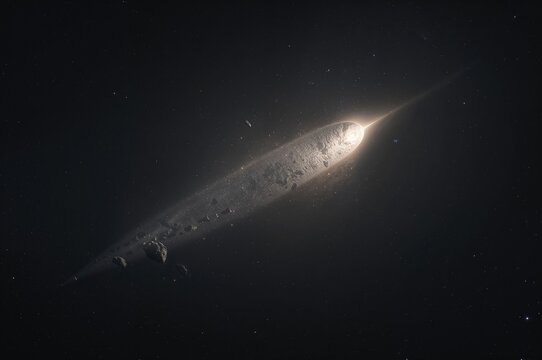
Once the orbit looks unusual, telescopes around the world begin measuring brightness, color, and any signs of activity. This stage answers a different question: not just where the object is going, but what it is.
That was crucial for both ‘Oumuamua and 3I/ATLAS. ‘Oumuamua’s rapid follow-up showed an elongated body with dramatic brightness changes as it rotated. In the case of 3I/ATLAS, additional observations revealed a coma and tail-like features consistent with cometary activity. Tracking therefore becomes a blend of astrometry and physical characterization, with every hour of observing time helping define whether the object is rocky, dusty, icy, active, or inert.
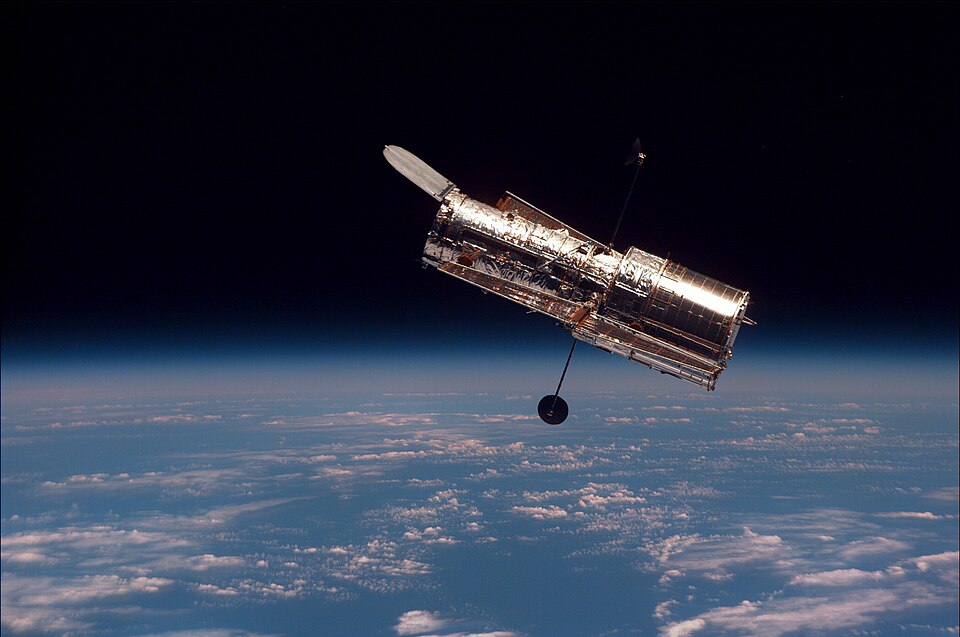
5. Space telescopes refine size, dust, and chemistry
Ground observatories often make the initial detection, but space telescopes add precision. Hubble helped estimate 3I/ATLAS’s nucleus size, with observations indicating an upper limit of 3.5 miles (5.6 kilometers), while Webb used near-infrared spectroscopy to examine the object beyond visible light.
Infrared and ultraviolet instruments are especially valuable because they can separate dust, gases, and thermal emission in ways visible-light tracking cannot. NASA’s SPHEREx observations later showed infrared signatures from dust, water, organic molecules, and carbon dioxide in the comet’s coma. In practical terms, tracking an interstellar object no longer means following a single point of light; it means building a layered physical profile from multiple wavelengths.
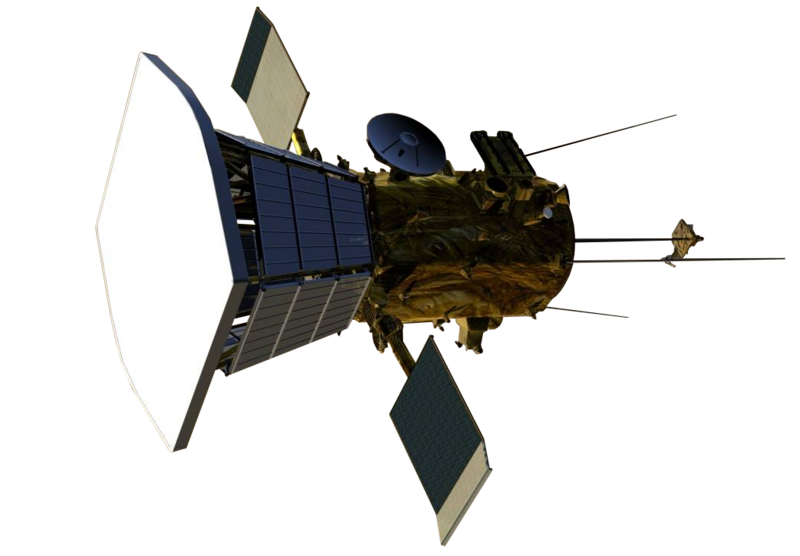
6. Spacecraft across the Solar System provide new viewing angles
One of the most striking changes in modern tracking is that astronomers are no longer limited to Earth. Missions at Mars, near the Sun, and en route to other destinations can all contribute observations from radically different positions.
During 3I/ATLAS’s passage, observations came from Hubble, Webb, SPHEREx, TESS, Parker Solar Probe, SOHO, Psyche, Lucy, Europa Clipper, the Mars Reconnaissance Orbiter, MAVEN, and even the Perseverance rover. Those off-Earth perspectives matter because geometry changes everything: a tail can become easier to detect, a coma can be studied against a different background, and orbital solutions improve when measurements come from separated vantage points. NASA noted that the comet would pass no closer to Earth than about 1.8 astronomical units, so distributed observing became essential rather than optional.
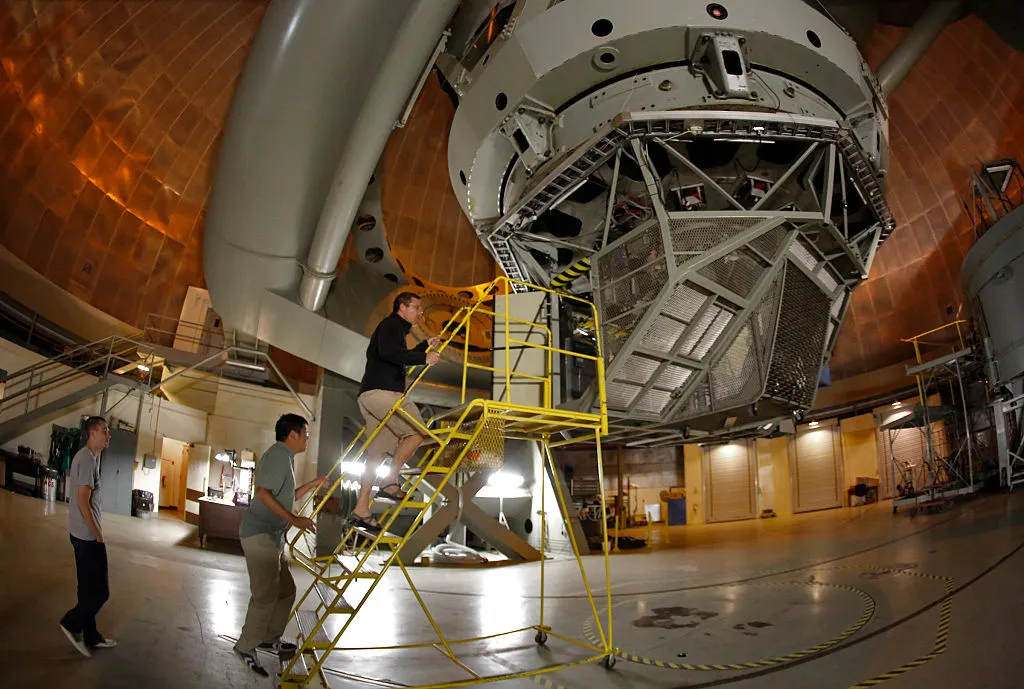
7. Tracking depends on timing around the Sun
Interstellar objects are easiest to study only during certain windows. As 3I/ATLAS approached perihelion, it became difficult to observe when it moved too close to the Sun in the sky.
NASA expected it to remain visible to ground-based telescopes through September 2025, then disappear into solar glare before reappearing in early December. That pattern forces astronomers to plan campaigns around geometry, not convenience. A visitor may be scientifically most interesting when activity increases near the Sun, yet hardest to observe at exactly that time.
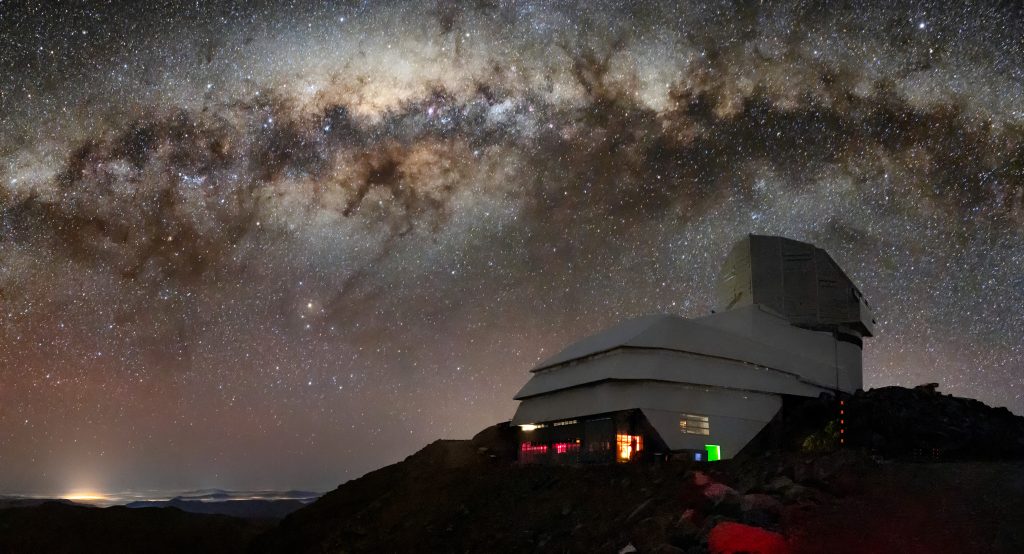
8. Future observatories will turn rare sightings into a real sample
Today’s methods work, but the sample remains tiny. Astronomers expect that to change as more sensitive surveys come online. The Vera C. Rubin Observatory is being built to scan the sky deeply and repeatedly, while NASA’s NEO Surveyor is intended to expand detection power from space. According to one estimate, these facilities could discover up to 70 interstellar interlopers per year, though the actual number depends on how reflective these objects are. Rubin scientists have also emphasized that repeated wide-field imaging could move the field from case studies to population science, where astronomers compare many visitors instead of treating each one as a singular event.

The tracking of interstellar objects has become a systems-level effort: survey telescopes detect motion, archival searches recover earlier positions, orbital analysis confirms an extrasolar path, and a fleet of observatories measures composition and activity before the opportunity vanishes. Each passing object is brief. The observing network is what makes the science last.


