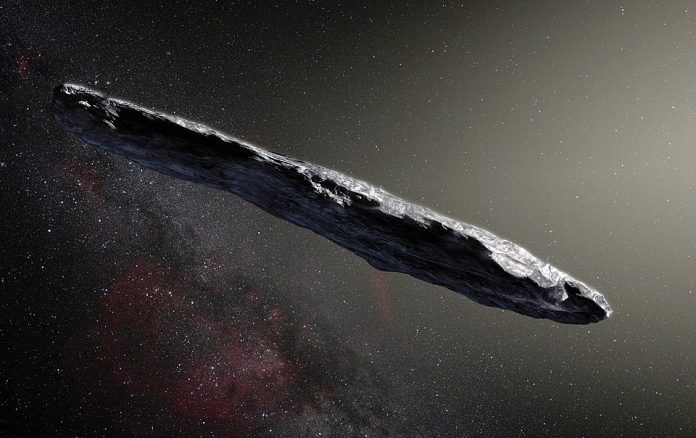
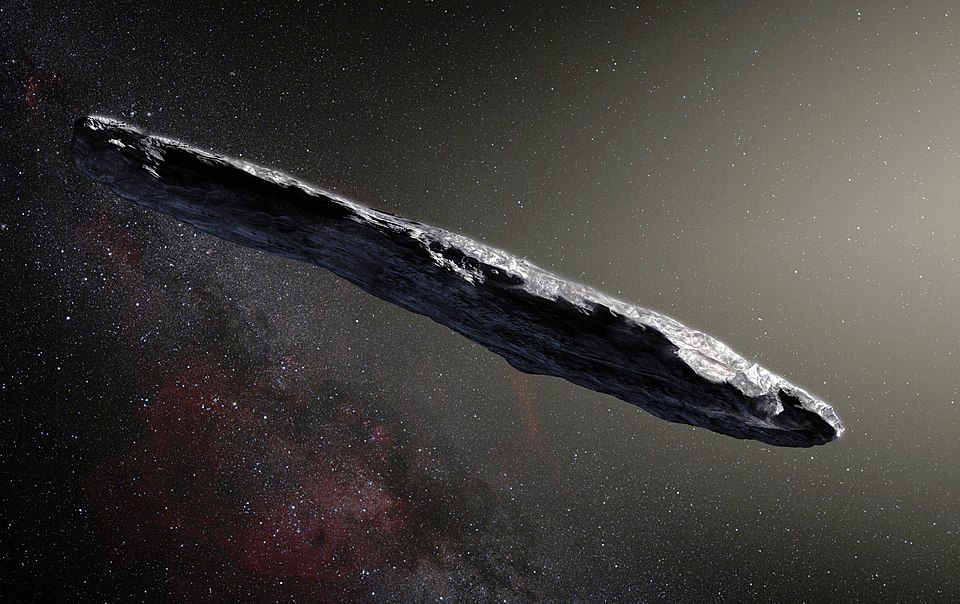
Interstellar objects cross the Solar System like brief messages from elsewhere in the galaxy. They do not settle into familiar solar orbits. They arrive fast, cut through the planetary region on open-ended paths, and leave astronomers with a narrow window to detect, classify, and study them before sunlight or distance swallows them again.
That challenge has sharpened into a new branch of sky surveillance. With only three confirmed interstellar visitors observed so far 1I/‘Oumuamua, 2I/Borisov, and 3I/ATLAS astronomers have built a playbook that blends all-sky scanning, orbit analysis, spectroscopy, and fast global follow-up.
1. They search the whole sky repeatedly instead of staring deeply at one place
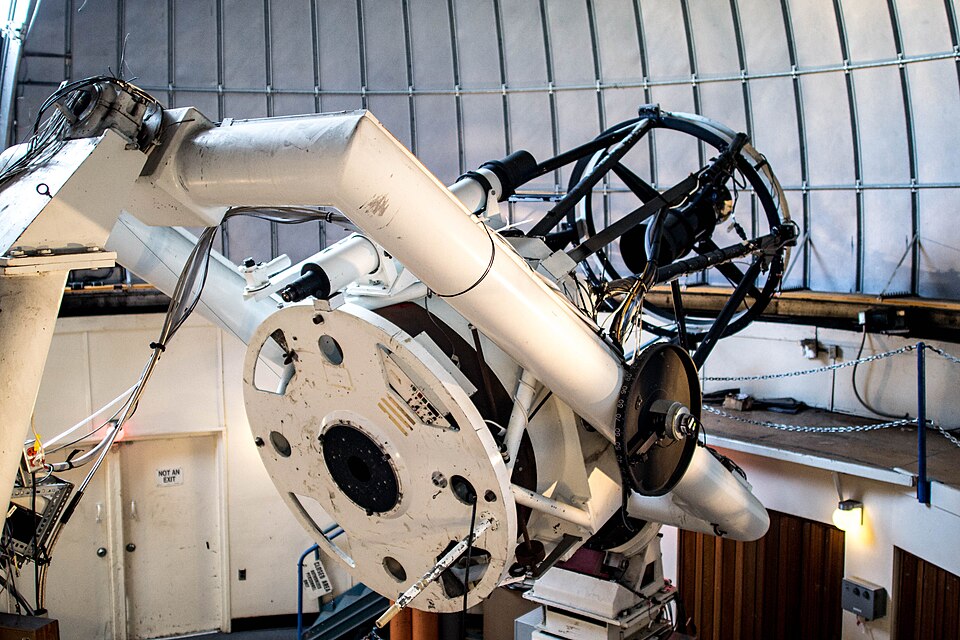
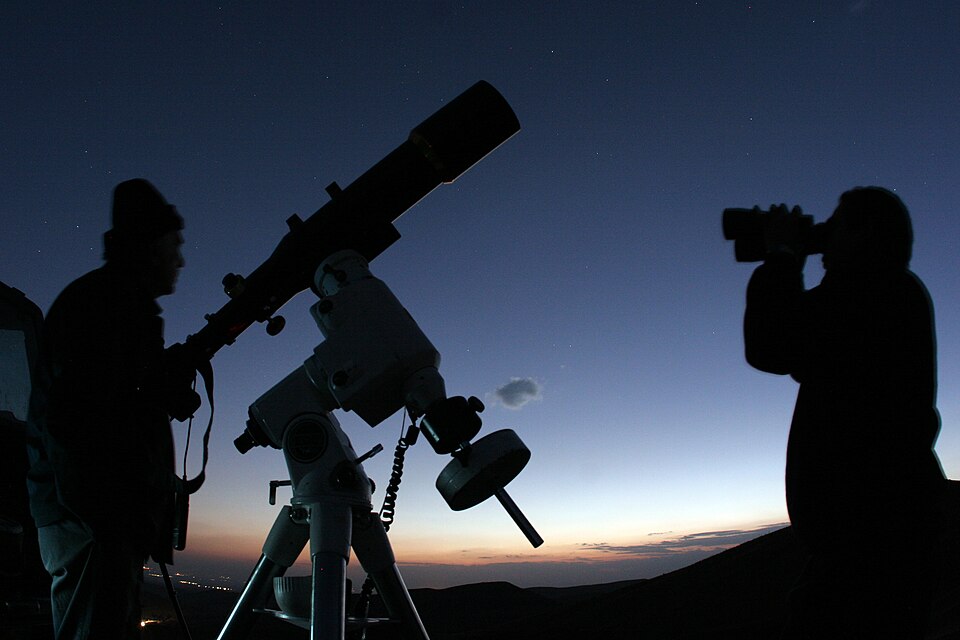
The first step is coverage. Interstellar visitors are usually faint and moving, so astronomers depend on survey systems that can sweep enormous areas of sky over and over in a single night. That is why facilities designed for moving targets matter more than instruments optimized only for deep, narrow views. ATLAS surveys one quarter of the observable sky four times per clear night, making it well suited to catch small points of light that shift against the background stars. Its network of 0.5-meter robotic telescopes in Hawaii, Chile, and South Africa gives researchers broad nightly reach, which is exactly what a transient interstellar object demands.
2. They look for trajectories the Solar System cannot naturally produce
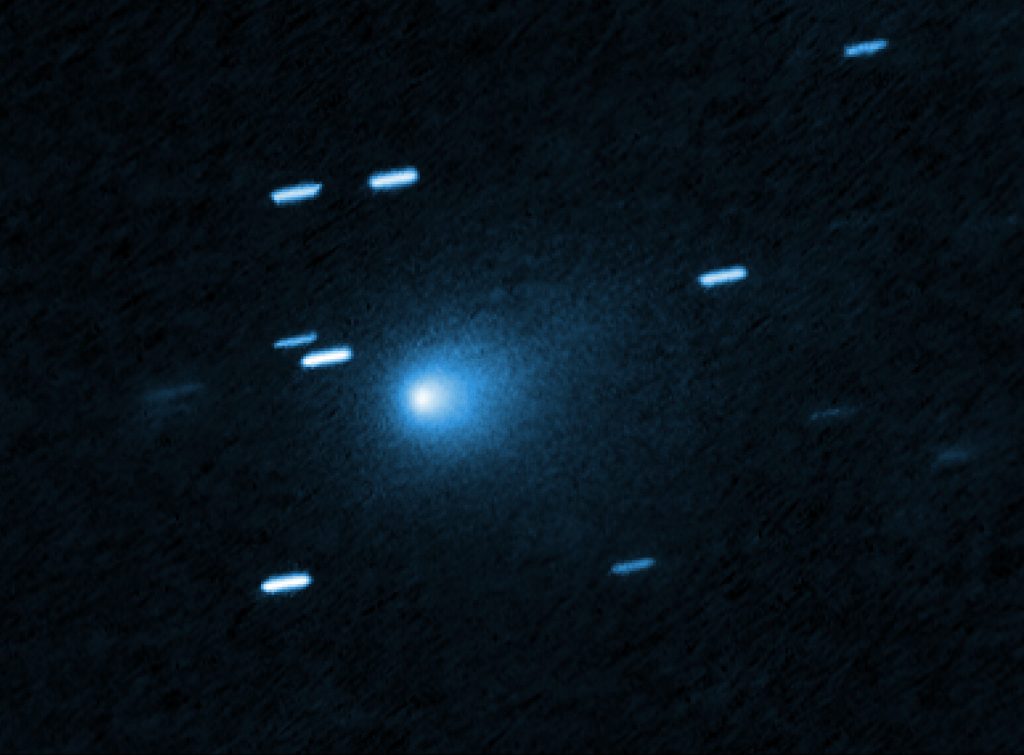
Discovery alone is not enough. The decisive clue is motion. When astronomers compute an orbit and find an object on a strongly hyperbolic path, they know the Sun is not keeping it bound. That is what separated the known interstellar visitors from ordinary comets and asteroids. In the case of 3I/ATLAS, early measurements showed it moving at about 245,000 kilometers per hour, on a path too straight and too fast to belong to the Sun’s native debris population.
3. They recover earlier images to extend the track backward in time
Once a candidate appears, observatories search archived images to find it before the formal discovery date. Those earlier detections, called precovery observations, stretch the object’s observed arc and improve the orbit quickly. That matters because every extra night of data reduces uncertainty. It helps astronomers tell whether the object is truly interstellar, where it will be visible next, and when it may disappear into the Sun’s glare. For a visitor that may remain observable for only months, those saved days are valuable.
4. They classify the object by watching for cometary activity
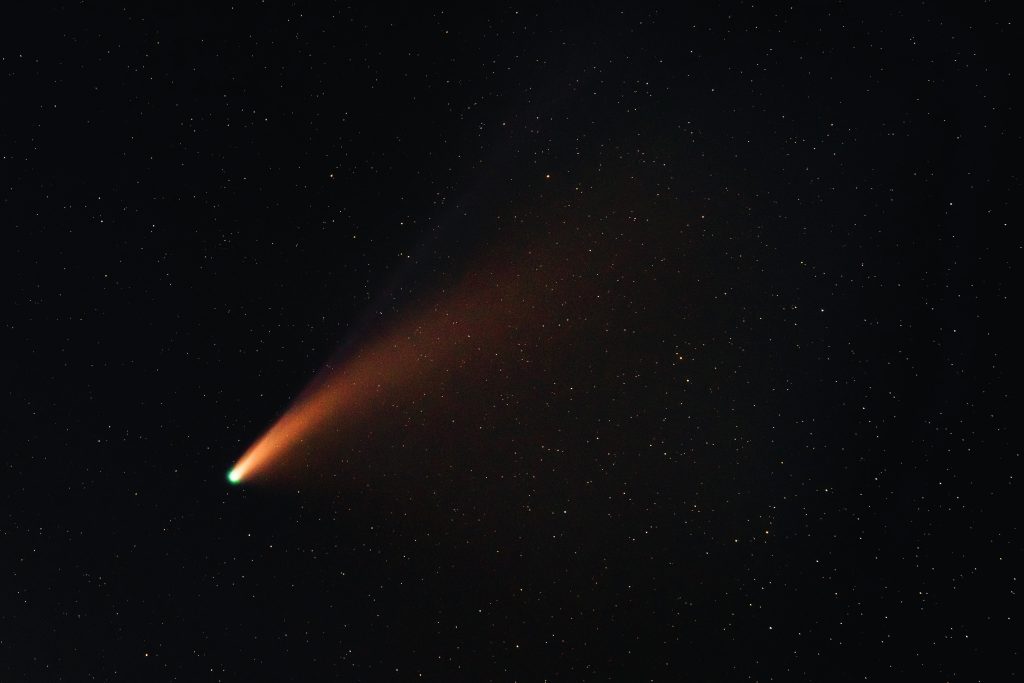
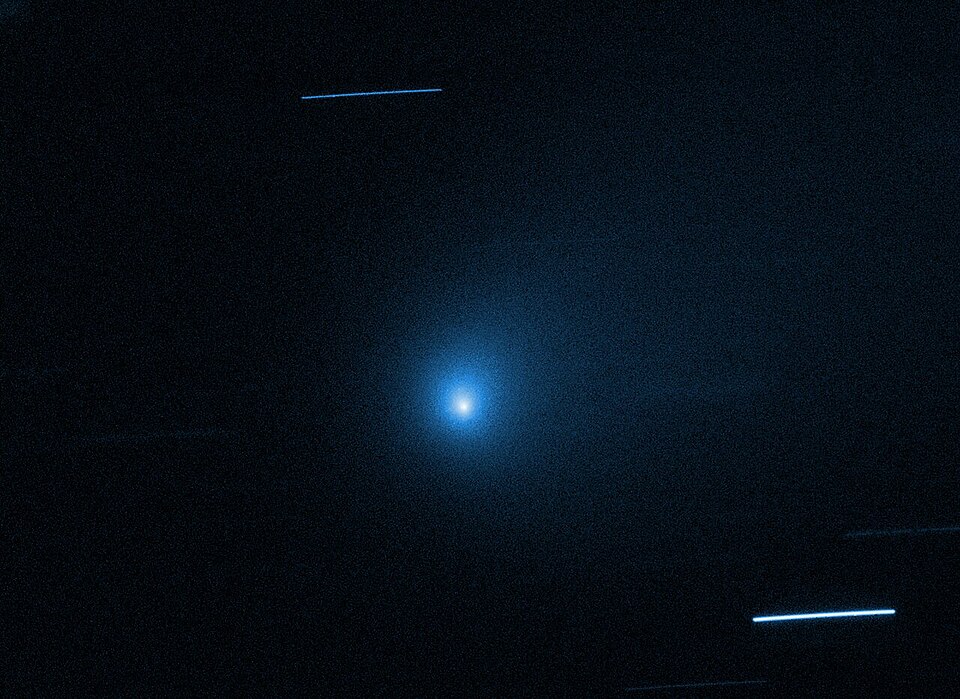
Some interstellar visitors look at first like bare asteroids. Then a coma or tail appears and changes the scientific story. Astronomers watch closely for diffuse gas and dust around the nucleus, because that reveals active sublimation rather than a simple rocky body. With 3I/ATLAS, follow-up observations pointed to a comet, not just a fast-moving minor body. Reports of a surrounding coma and tail shifted attention toward volatile chemistry, dust production, and comparisons with Solar System comets. That distinction matters because an active comet releases material that telescopes can analyze directly.
5. They use ultraviolet and spectral fingerprints to identify escaping gases
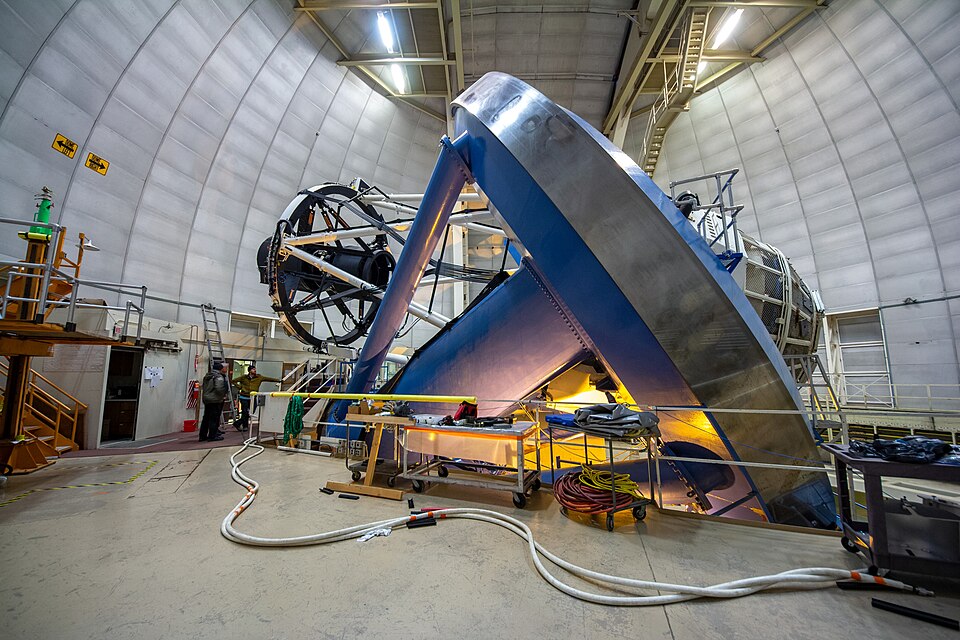
Light broken into wavelengths can reveal what an interstellar visitor is shedding into space. Spectroscopy and ultraviolet observations allow astronomers to detect molecules and fragments produced as sunlight heats the object. For 3I/ATLAS, astronomers detected water-related emissions when it was nearly three times Earth’s distance from the Sun. Observations indicated water loss of roughly 40 kilograms per second, unusually vigorous for that range. Instruments above Earth’s atmosphere are especially valuable here because ultraviolet wavelengths are difficult to measure from the ground.
6. They compare alien visitors with comets around other stars
Interstellar hunting does not begin only when an object enters the Solar System. Astronomers also study exocomets indirectly around distant stars, building a wider picture of how common icy debris is in planetary systems. At stars such as Beta Pictoris and RZ Piscium, exocomets have been inferred from spectral changes and deep dips in starlight. Those remote observations provide context: they show that cometary swarms are not unusual cosmic curiosities, but recurring byproducts of planet formation. When one of those bodies eventually wanders through the Solar System, astronomers already have a broader framework for interpreting it.
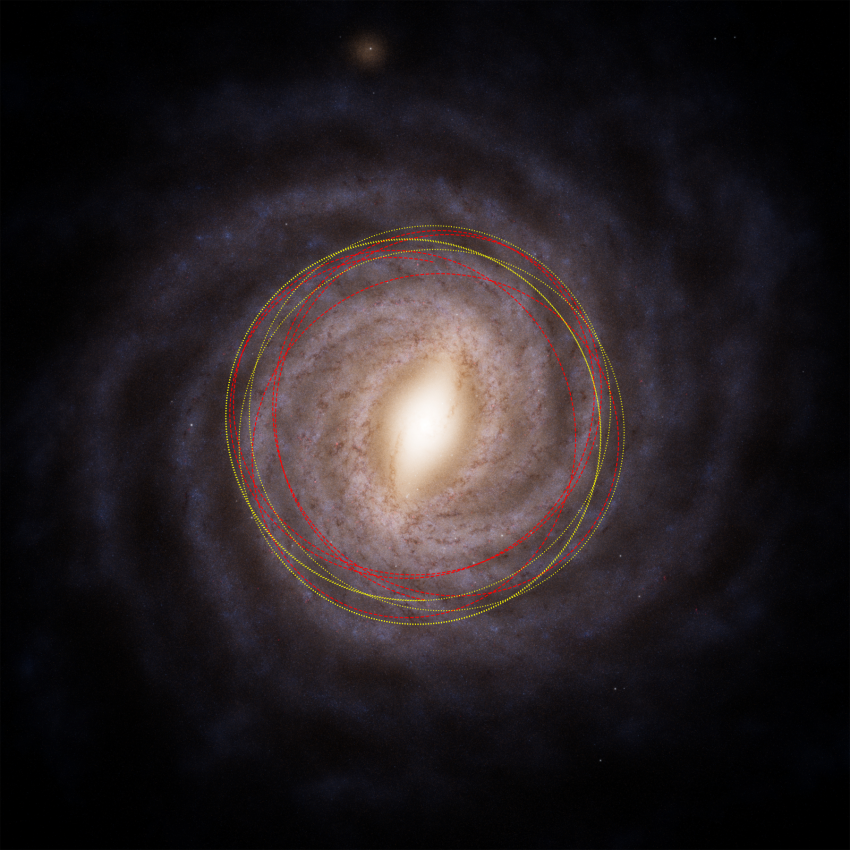
7. They run orbital simulations to trace possible galactic origins
After the immediate observations, researchers ask a larger question: what kind of stellar neighborhood launched this object? To approach that problem, they model thousands of possible past trajectories and account for uncertainties in the object’s speed, direction, and the Sun’s own motion through the galaxy. In one recent analysis, researchers generated 10,000 simulated trajectories for each known interstellar object and integrated them through the Milky Way’s gravitational potential for up to a billion years. Their results linked 3I/ATLAS to an older stellar population in the galaxy’s thick disk, while ‘Oumuamua and Borisov aligned more closely with younger thin-disk origins.
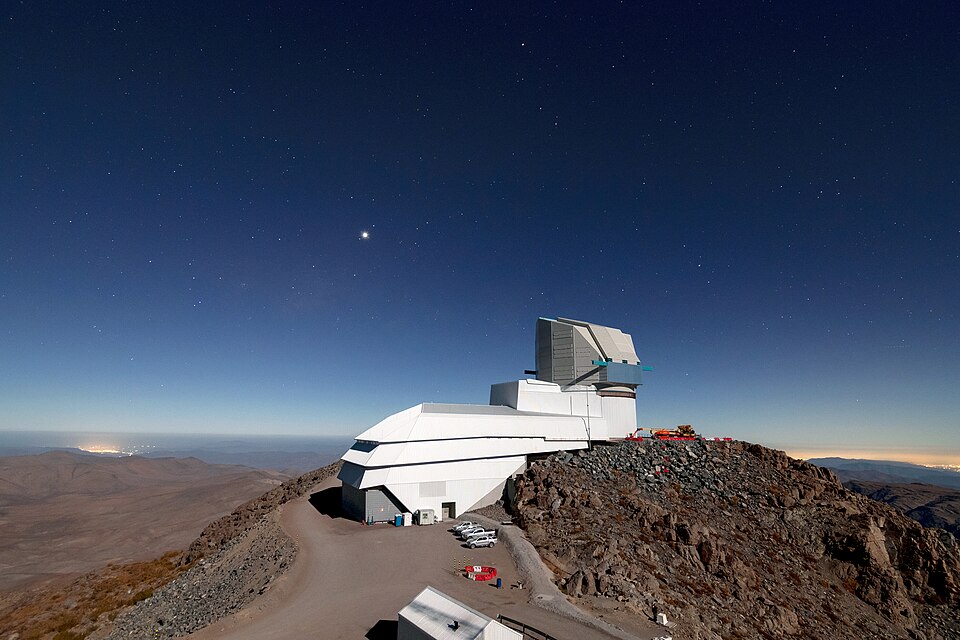
8. They prepare for a flood of discoveries from new observatories
The current sample is tiny because the search has only recently become fast and sensitive enough. That is changing. According to one projection, the Vera C. Rubin Observatory’s survey could find dozens of interstellar objects per year. More detections will shift the field from rare-case astronomy to population science. Instead of debating the oddities of one object at a time, astronomers will be able to compare sizes, chemistry, activity, and source regions across many visitors. That is how the hunt becomes a census.
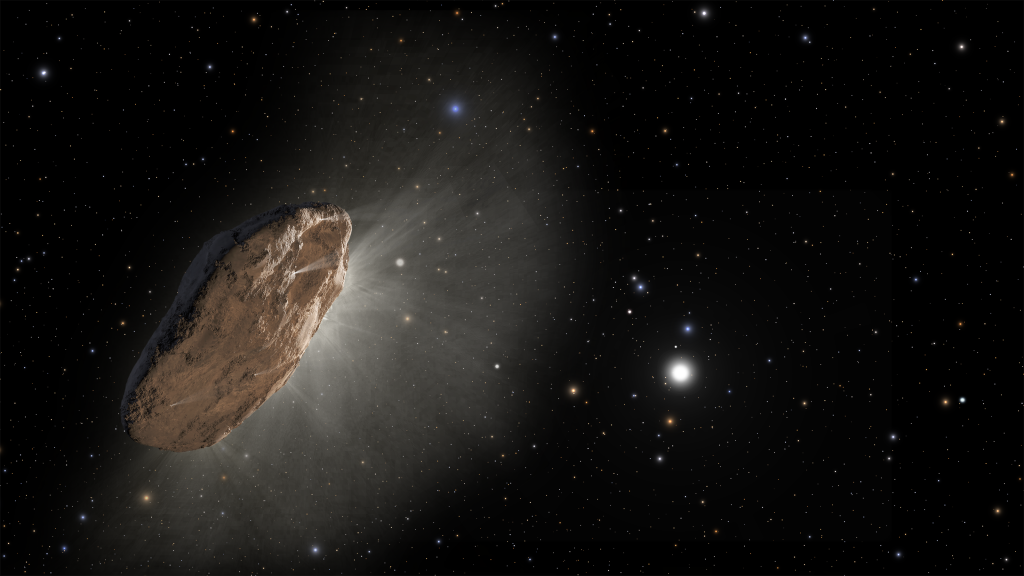
9. They design missions that could intercept the next suitable target
Finding an interstellar visitor is only the beginning. Because these objects move quickly and depart fast, mission planners have explored spacecraft concepts that could wait in a ready state or be parked in a strategic holding orbit until a suitable target appears.
The logic is practical: a direct mission to another star remains far beyond current timelines, but an interstellar object brings material from another planetary system into reachable space. A successful intercept would turn detection from remote astronomy into close inspection.
The hunt for interstellar visitors is therefore not a single technique but a chain of them. Wide-field surveys spot a moving speck. Orbit calculations reveal whether it belongs to the Sun. Follow-up telescopes test for gas, dust, and chemistry. Simulations place the object in galactic context. Each passing visitor is brief. The method built to catch it is becoming permanent.


