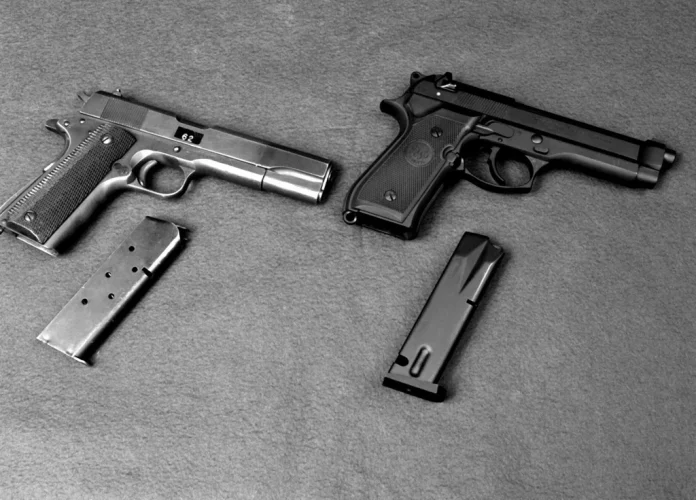
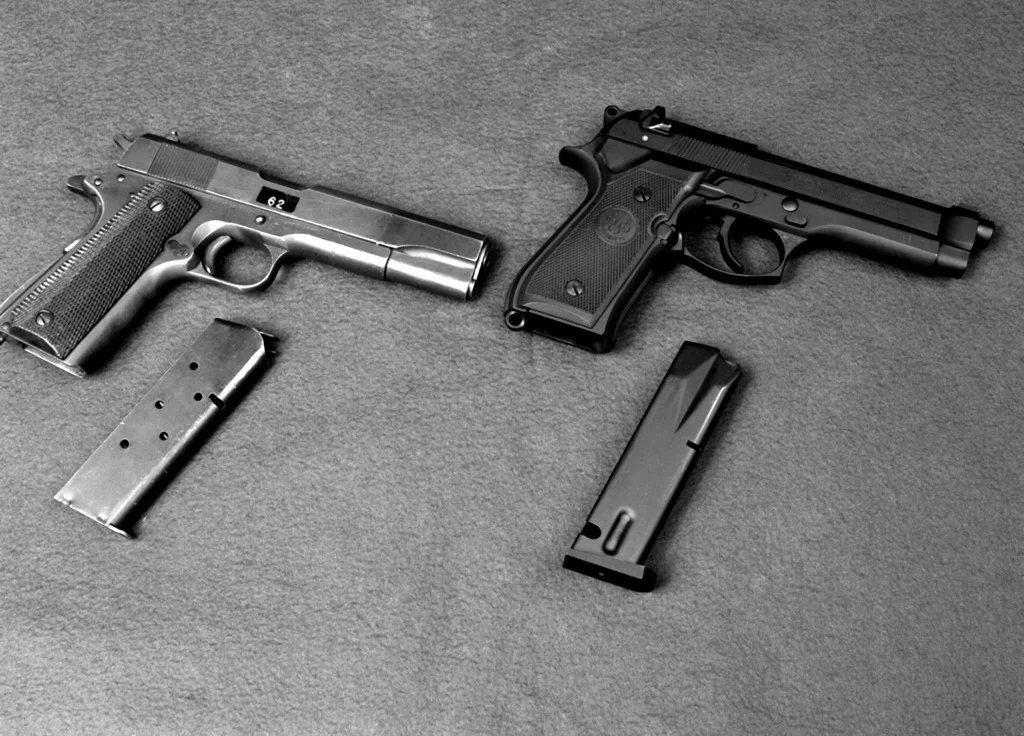
Military sidearms rarely get the spotlight that rifles, machine guns, and armored vehicles command. Yet the handgun has often been the weapon that reveals what an army values most: raw power, fast reloading, lighter carry weight, magazine capacity, or adaptability to new accessories and doctrine.
The modern service pistol did not appear all at once. It emerged through a long chain of engineering changes, with each generation solving a specific problem left behind by the last.
1. Colt Walker
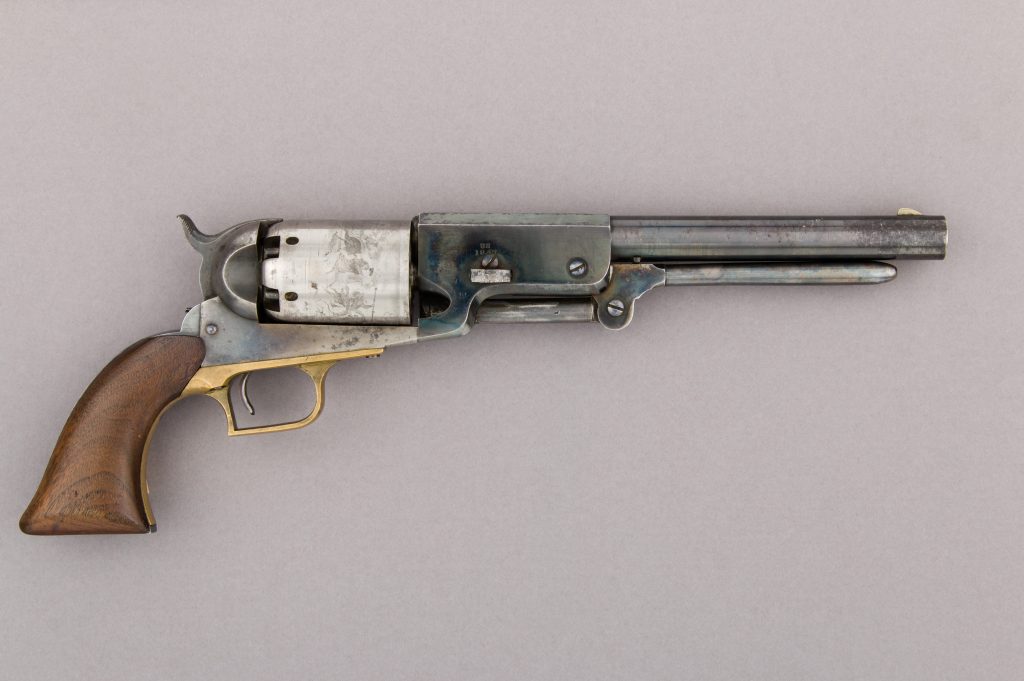
The Colt Walker belongs near the beginning of any serious sidearm lineage because it showed what a repeating handgun could do for mounted troops. Introduced in the late 1840s, it gave soldiers six shots before reloading at a time when single-shot pistols still shaped expectations.
Its size, recoil, and weight made it far from refined, but that was precisely the point of its influence. The Walker proved that a revolver could offer battlefield-relevant firepower rather than serving as a novelty or officer’s badge of rank. Later cavalry handguns became more practical, but the concept of the military pistol as a real emergency fighting tool gained momentum here.
2. Remington New Model Army
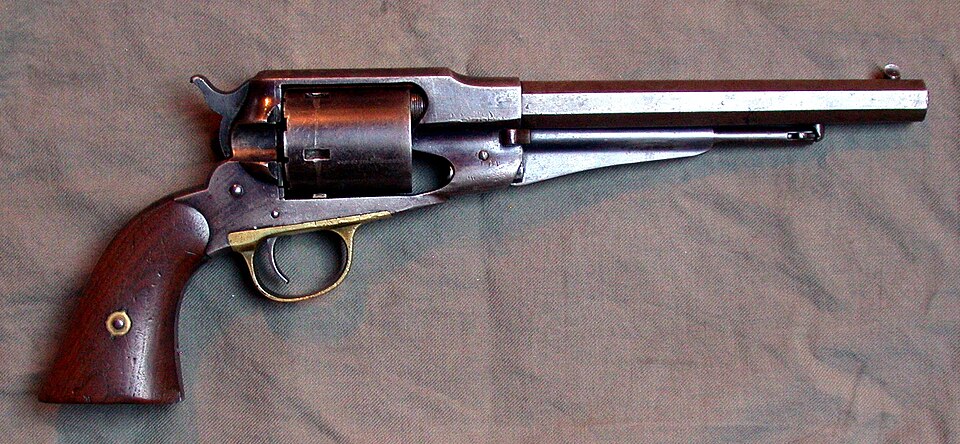
The Remington New Model Army helped establish durability as a defining trait of a service sidearm. Its solid-frame construction earned a reputation for strength in harsh field conditions, a contrast to more fragile open-frame designs of the period.
That mattered beyond its own era. Military pistols have always lived hard lives around dust, mud, holsters, saddlery, and rough handling, and the Remington showed that structural robustness was not a luxury. It was part of combat usefulness. Later pistol development repeatedly returned to that lesson.
3. Colt Single Action Army
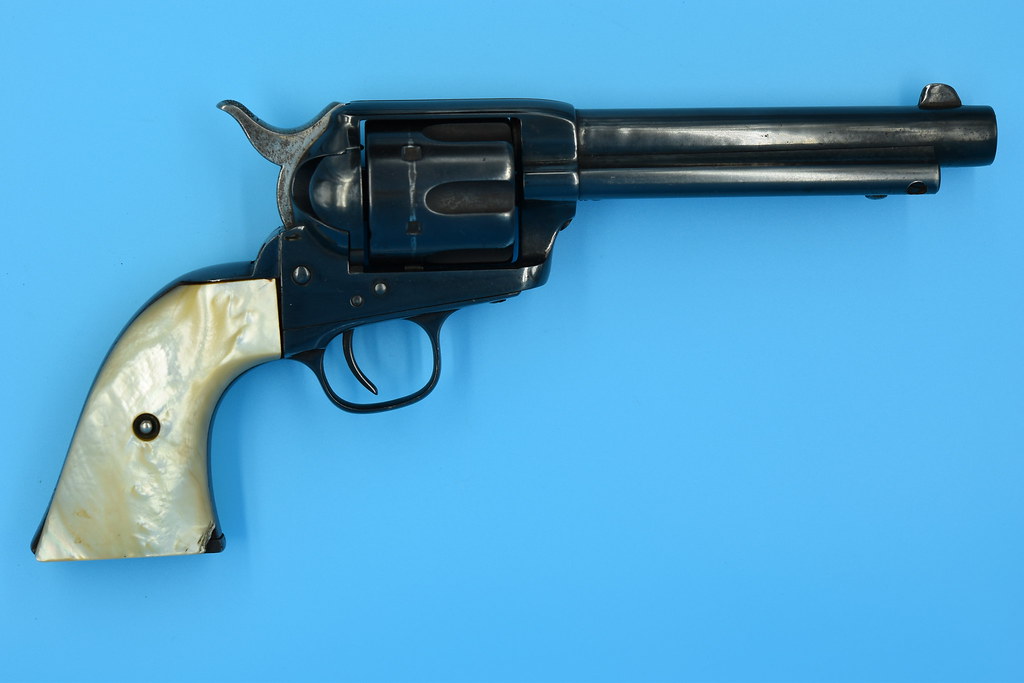
The 1873 Colt Single Action Army translated cartridge technology into a sidearm that soldiers could trust over years of frontier service. It paired a powerful .45-caliber center-fire cartridge with a solid frame and a mechanism known for rugged simplicity.
Its long-term influence came from standardization as much as legend. The Army wanted a stronger and more practical replacement for percussion revolvers, and this model helped lock in the cartridge revolver as the serious military sidearm of its day. Even after more advanced systems arrived, designers kept chasing the same balance of reliability, manageable maintenance, and authority at short range.
4. Colt M1892
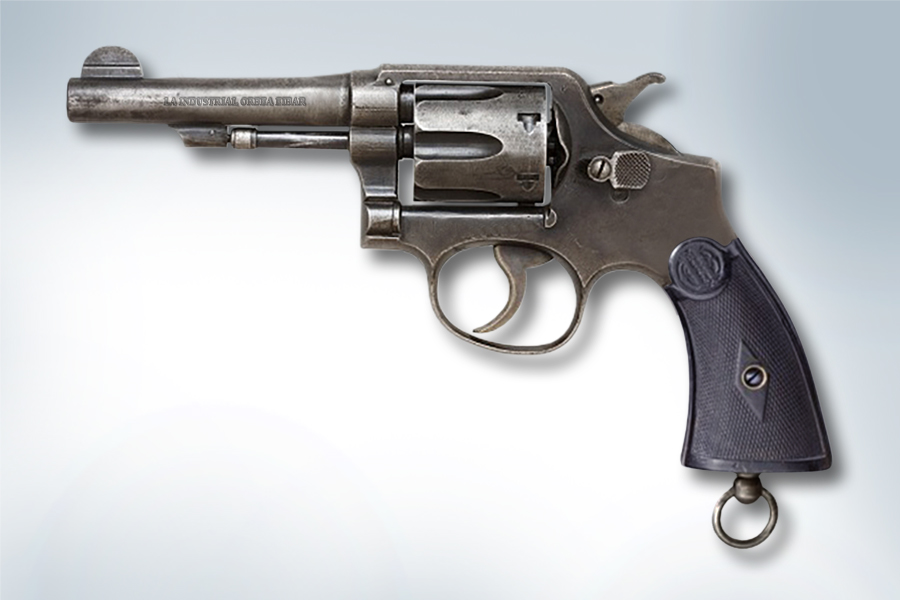
The Colt M1892 marked an important mechanical shift because it brought a swing-out cylinder and double action firing to U.S. military service. That combination made reloading faster and operation more immediate than older gate loaded revolvers.
Its shortcomings were just as influential as its innovations. Experience with the .38 Long Colt cartridge pushed the military to rethink what it wanted from a fighting handgun, especially at close range. In that sense, the M1892 shaped later pistols by demonstrating that modern handling features could not compensate for inadequate terminal performance.
5. Colt M1911
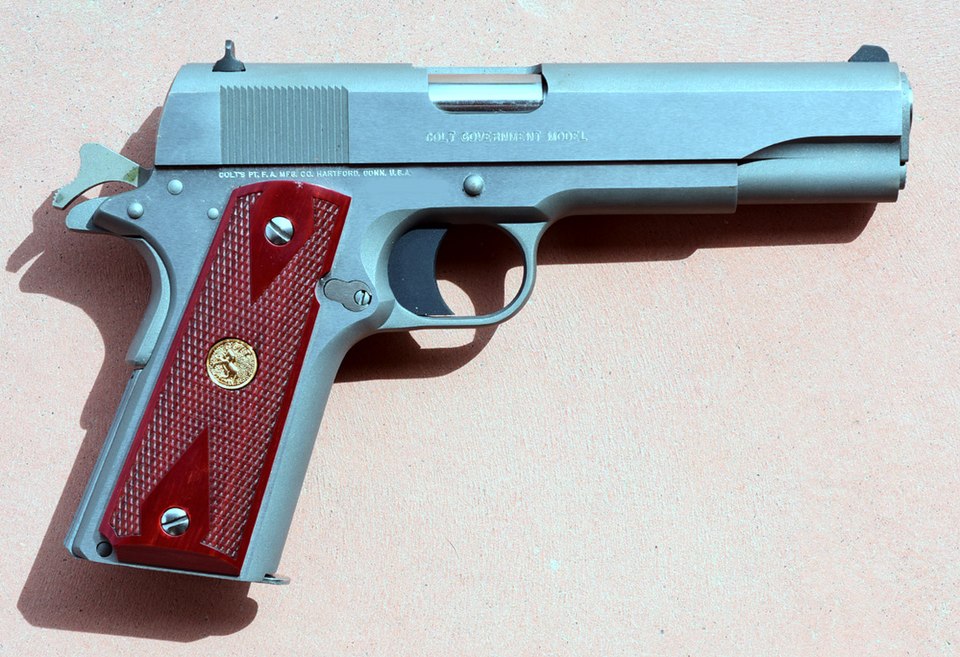
Few pistols cast a longer shadow than the M1911. Adopted after competitive trials, it became the benchmark for what a military self-loading pistol should be: reliable, durable, accurate, and chambered for a heavier round that reflected the Army’s conclusions from early 20th-century testing.
The platform’s influence stretches across ergonomics, manual safeties, recoil operation, and service expectations. It remained the standard U.S. sidearm from 1911 to 1986, and its descendants stayed in specialized use long afterward. Even today, service pistols are often judged against principles the 1911 helped cement: controllable trigger geometry, dependable feeding, and confidence under stress.
6. Browning Hi-Power
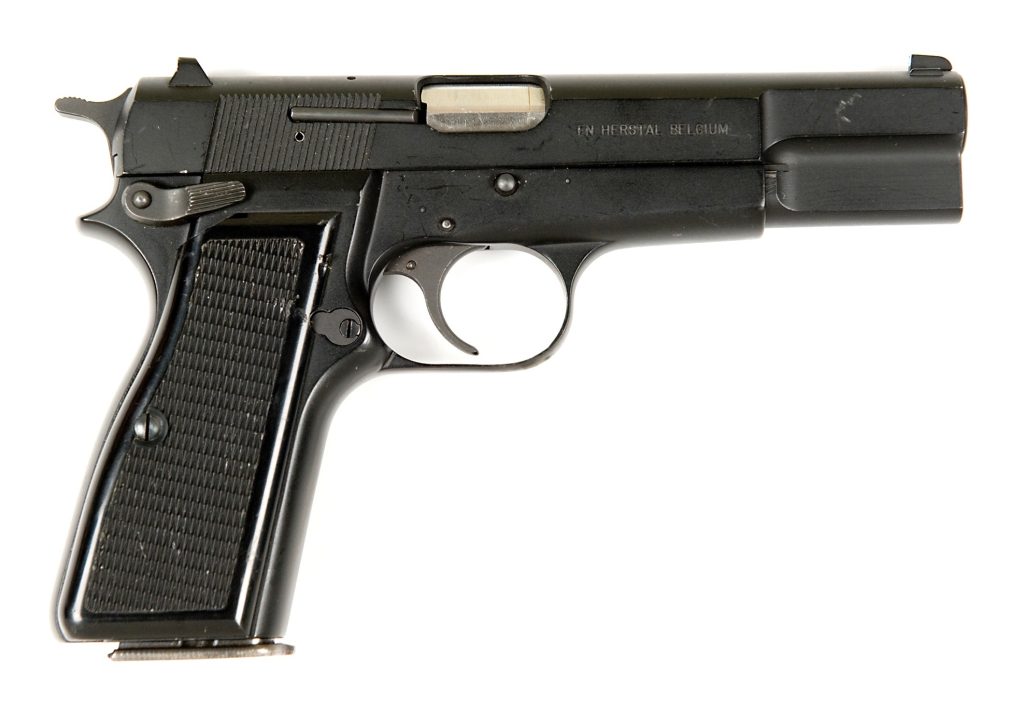
The Browning Hi-Power did not serve as America’s primary issue pistol, but its effect on modern sidearm design is difficult to overstate. Most importantly, it normalized the idea that a service pistol could carry a high Capacity double stack magazine without becoming impractical in the hand.
That design language spread globally. Later military handguns increasingly treated greater onboard ammunition as a baseline requirement rather than a special feature. The Hi-Power also helped demonstrate that ergonomics and capacity could advance together, a formula that shaped many late 20th century sidearms.
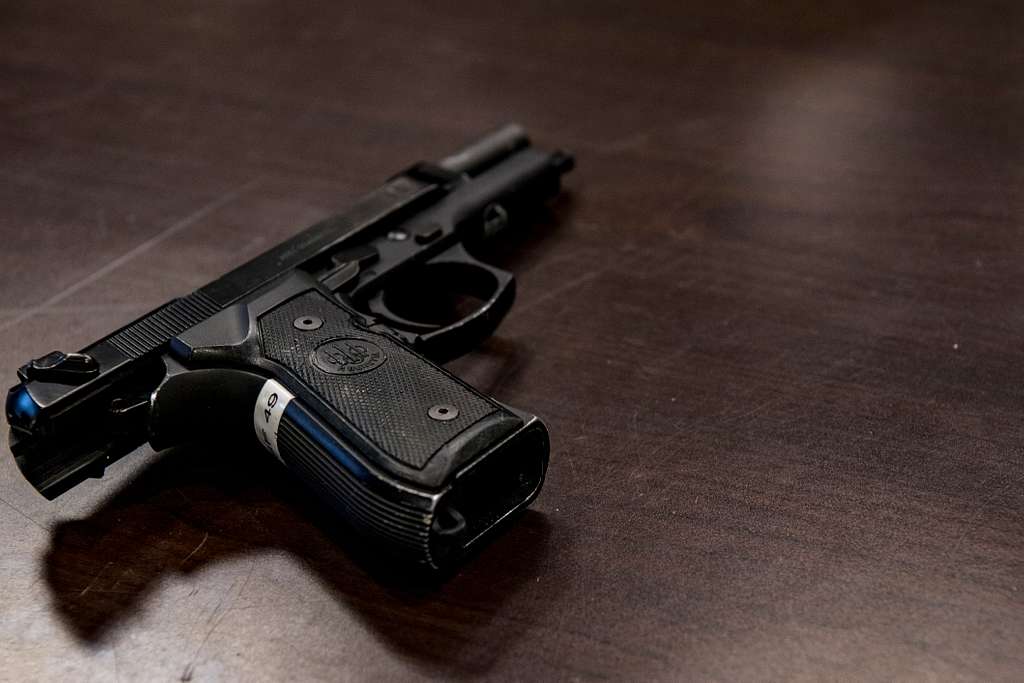
7. Beretta M9
When the United States adopted the Beretta M9, it signaled more than a simple model change. It represented a major doctrinal move toward 9mm cartridge that had become standard across NATO, along with a higher capacity magazine and double-action/single-action operation.
The pistol served for more than three decades and pushed military sidearms further into the modern era of standardized ammunition, larger magazines, and broader issue across services. Its long service life also showed how expectations had changed: accessory compatibility, environmental reliability, and easier training became increasingly important. The M9 was not the final answer, but it defined the baseline that its successor had to beat.
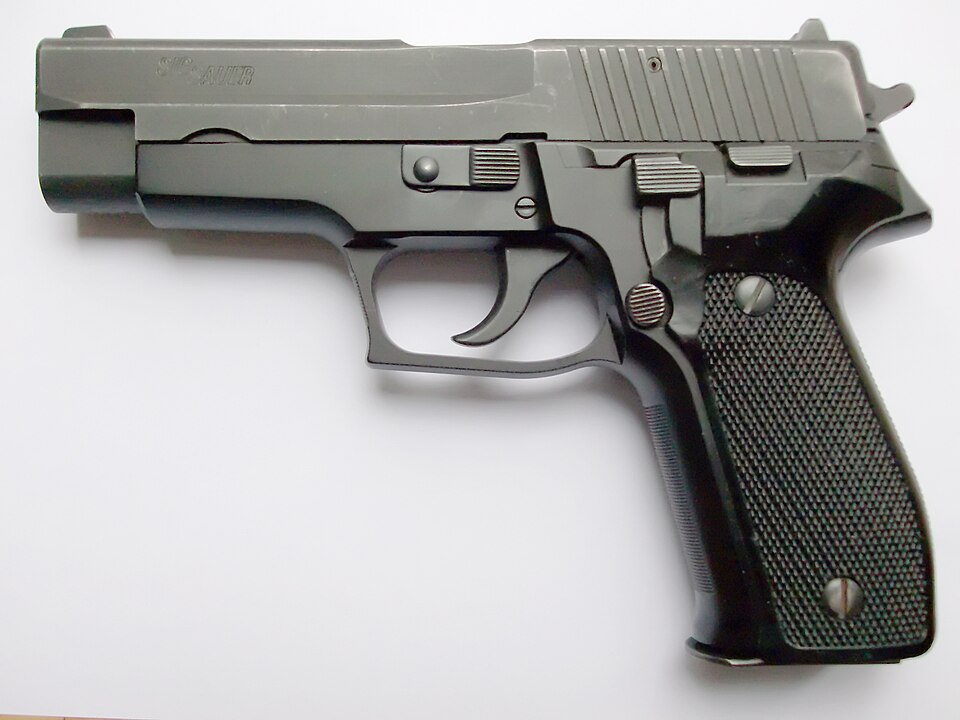
8. SIG Sauer P226
The SIG P226 became especially influential through elite use, most notably with units such as the U.S. Navy SEALs. Its reputation centered on reliability, accuracy, and a design suited to demanding operational conditions.
Service pistol history is not shaped only by standard issue contracts. Sometimes a pistol matters because specialized users validate a design under unusually hard conditions. The P226 helped reinforce the enduring value of robust construction, proven feeding reliability, and controllable 9mm performance in professional hands.
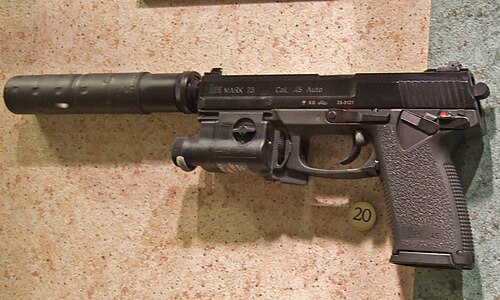
9. Heckler & Koch Mk 23
The Mk 23 showed how far a military pistol could be pushed when built around a highly specific mission set. Developed for U.S. Special Operations Command as an offensive handgun system, it prioritized durability, accuracy, and compatibility with suppressors and aiming modules.
It was large, specialized, and not a template for general issue. Even so, it shaped expectations for modular accessories and mission-specific pistol packages. Modern service handguns routinely accommodate lights, optics, threaded barrels, and other enhancements that became far easier to imagine after programs like this one pushed the envelope.
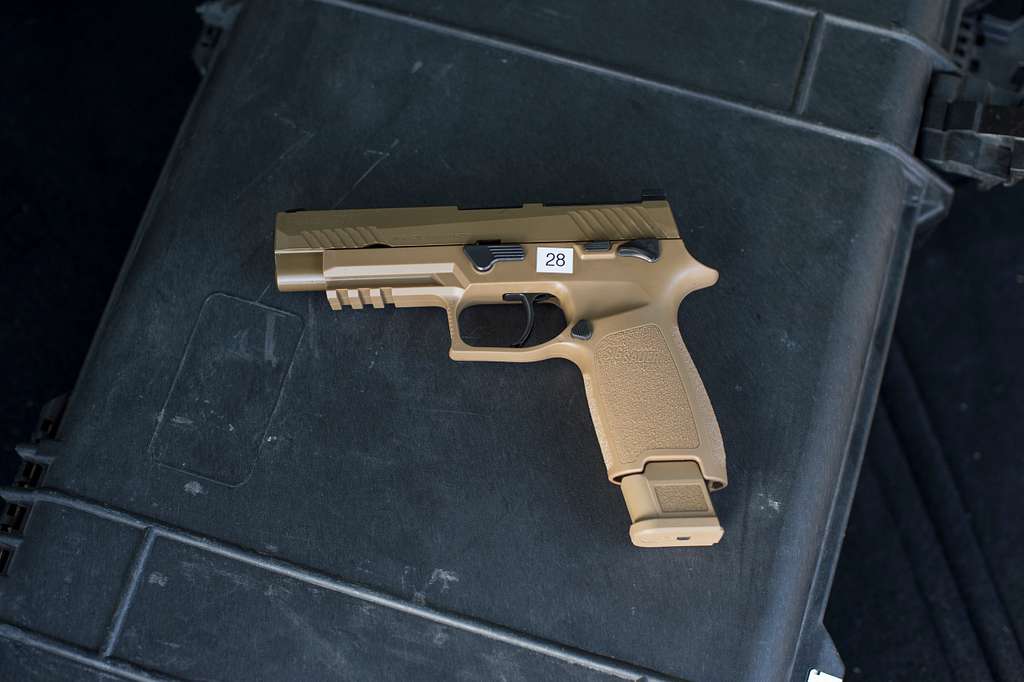
10. SIG Sauer M17/M18
The M17 and M18 represent the current state of U.S. military sidearm thinking. Derived from the P320, they replaced the M9 after the Modular Handgun System trials and brought a markedly different philosophy to service pistol design.
The core idea is flexibility. The pistols combine polymer construction, ambidextrous controls, optics-ready capability, accessory rails, and a serialized fire control unit that defines the weapon’s modular architecture. The full size M17 uses a 17 round standard magazine, while the carry size M18 adapts the same family for users who need a more compact form. This platform reflects a broader shift visible across military handguns worldwide: less emphasis on tradition, more emphasis on configurable fit, lower weight, and compatibility with modern enablers.
Across nearly two centuries, the service pistol evolved from a heavy revolver carried by mounted troops into a modular sidearm built around rails, optics cuts, and adaptable frames. Each of these handguns changed the pattern in some lasting way.
Together, they show that the modern military sidearm is not defined by one breakthrough alone. It is the product of repeated lessons in capacity, reliability, handling, durability, and modularity.


