In the 9mm world, “modern” gets attached to almost everything. The label means very little unless a pistol changed what later designs were expected to deliver more capacity, less weight, simpler controls, better durability, or a layout that others copied for decades. These ten pistols matter because each one pushed that standard line forward. Some introduced ideas too early for their own era. Others became the template that later duty guns, carry guns, and service pistols still follow.
1. Luger P08
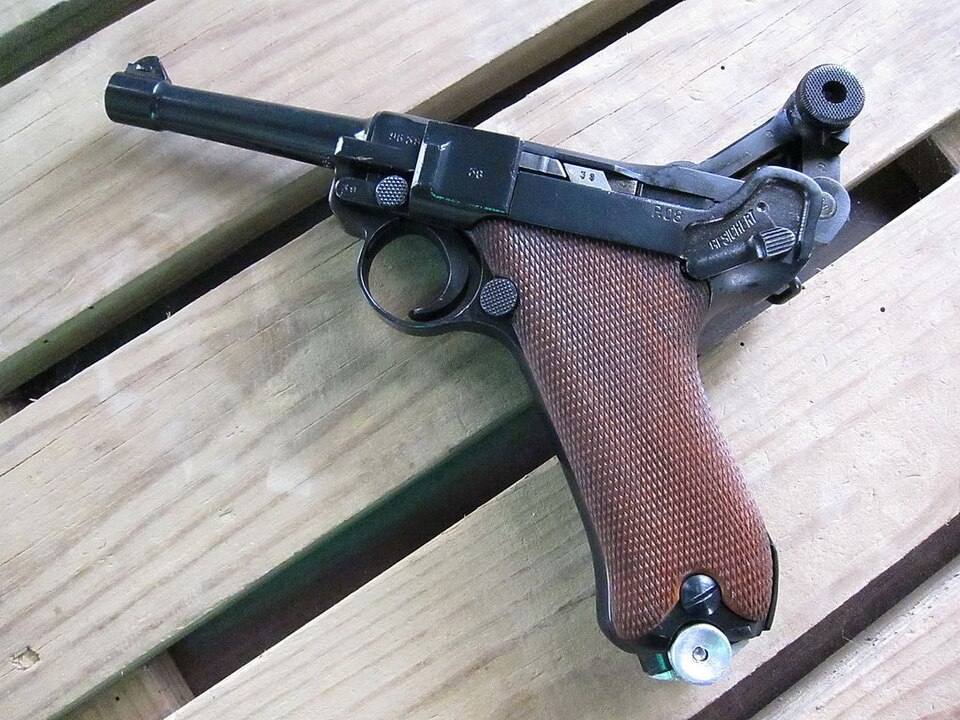
The Luger belongs on any serious map of 9mm development because it helped establish the cartridge itself. Its most enduring effect was tying the identity of the pistol to 9mm as a major service round, giving later handgun design a cartridge around which an entire class could evolve.
Its toggle-lock system was not the final answer for service pistols, but it showed how precise recoil-operated autoloaders could be built at a time when that concept still felt new. Modern locked-breech pistols do not copy the Luger mechanically, yet they still inherit its role in proving that a self-loading sidearm chambered in 9×19 could be practical, recognizable, and globally influential.
2. Browning Hi-Power
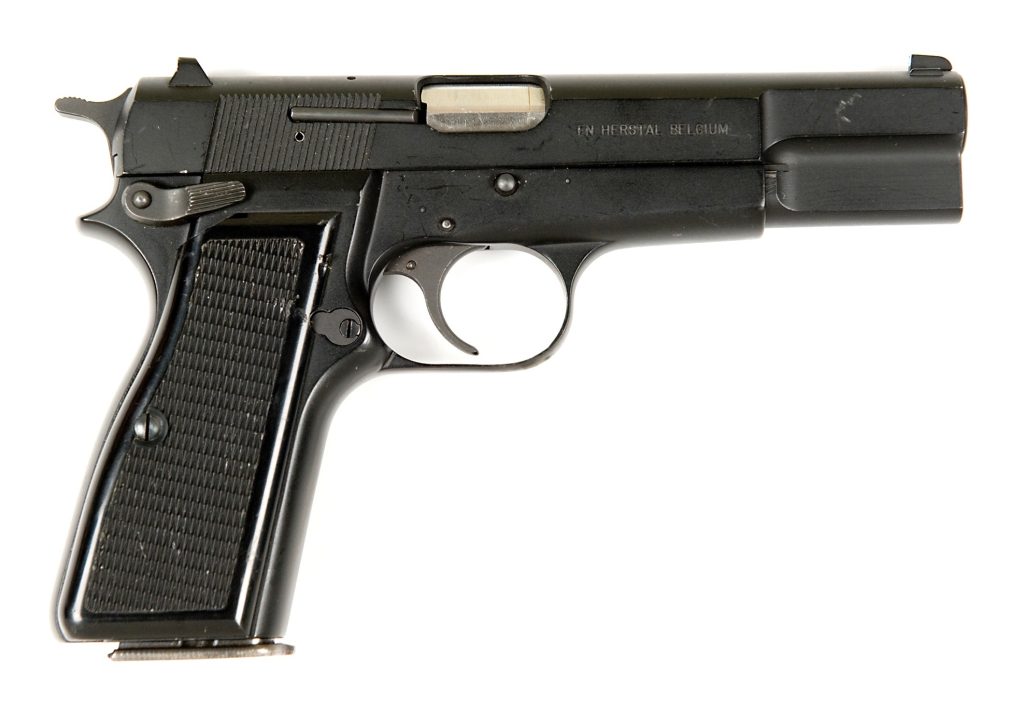
If one pistol made high-capacity 9mm service handguns feel inevitable, it was the Hi-Power. The design combined John Browning’s work with Dieudonné Saive’s magazine development, and the result was a pistol built around a 13-round magazine at a time when that was a major leap.
The influence runs deeper than capacity alone. Its linkless barrel system, grip shape, and overall balance became reference points for generations of later handguns. The Hi-Power was also used by the armed forces of over 50 countries, which helped normalize the idea that a serious fighting pistol could pair service-grade durability with greater onboard ammunition than earlier sidearms.
3. Beretta 92
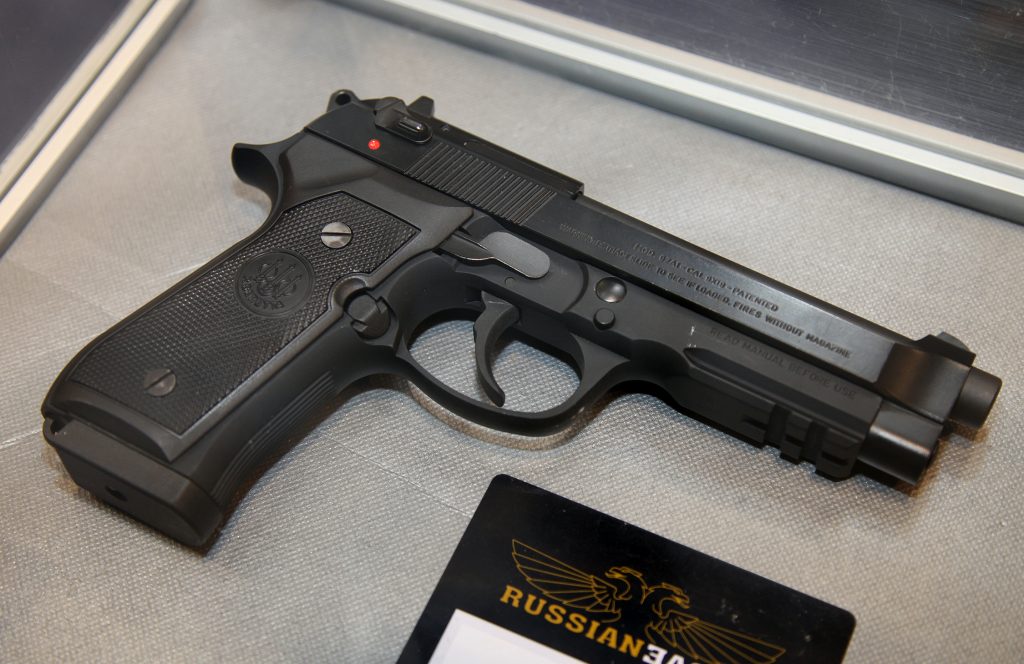
The Beretta 92 gave the big metal-frame service pistol one of its clearest final forms. Its open-slide layout, falling locking block, and double-action/single-action operating system made it mechanically distinctive, while its size and shootability helped define training standards for an entire generation.
Its military designation, the M9, mattered because institutional adoption can reshape expectations as much as engineering can. The platform was adopted by the United States military in 1985, and that decision turned the pistol into a benchmark for holsters, qualification courses, maintenance doctrine, and sidearm familiarity across a vast system. Even later M9 variants added rails, revised grips, and optics-ready features, showing how durable the base architecture proved to be.
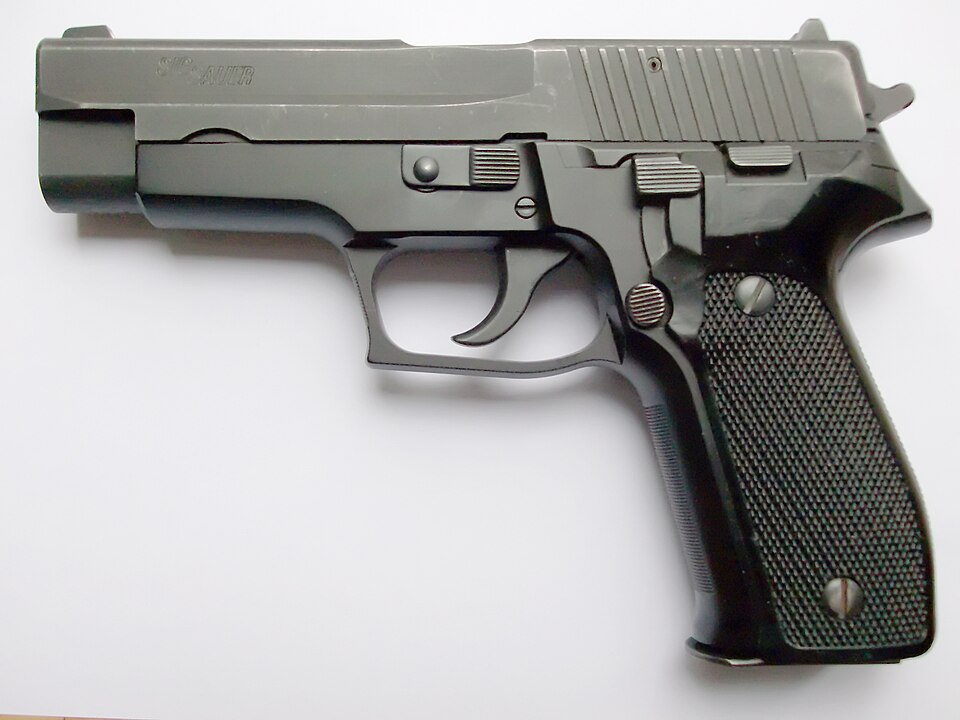
4. SIG Sauer P226
The P226 represents the duty pistol built for long service rather than short-term fashion. It emerged from the same U.S. service-pistol competition that elevated the Beretta, and even in losing that contract, it secured a reputation for endurance, accuracy, and institutional trust.
What kept it relevant was not trend-chasing but refinement. The platform carried the traditional DA/SA format into the accessory-rail era and remained a respected sidearm even as polymer striker pistols took over much of the market. That staying power made it a bridge between classic service-pistol doctrine and later modernization.
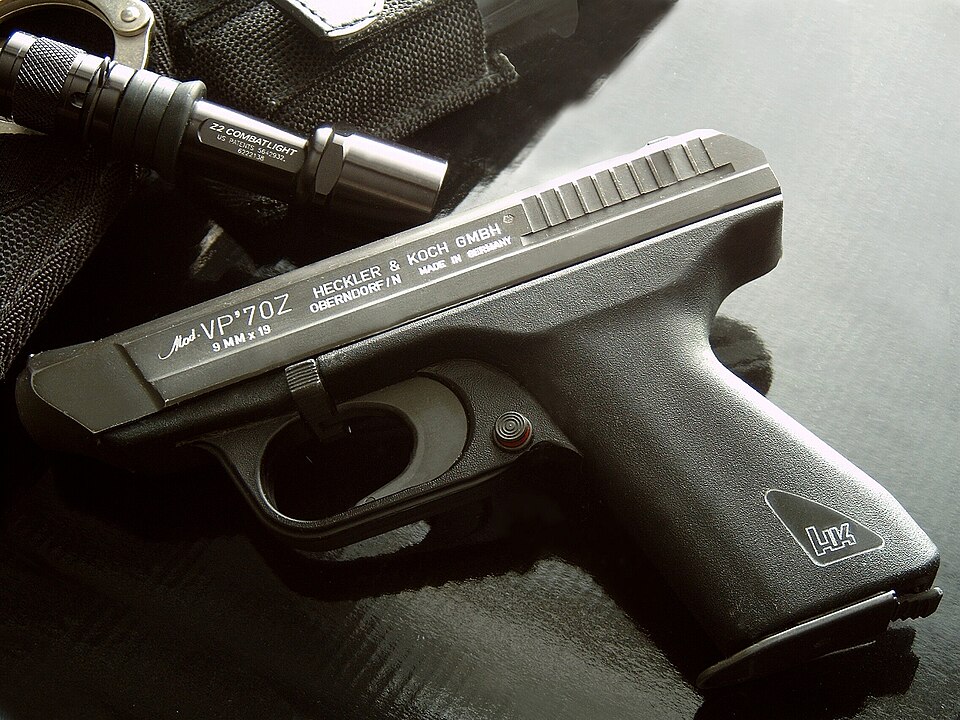
5. Heckler & Koch VP70
The VP70 looked strange because it arrived too early. It is widely recognized as the first production polymer handgun, and it also paired that frame with an 18-round magazine long before those features became ordinary.
Its trigger was famously heavy, and its reception was mixed, but its place in design history is secure. The VP70 showed that polymer construction and striker-fired operation were not late innovations attached only to Glock-era pistols. It opened the door, even if later handguns walked through it more gracefully.
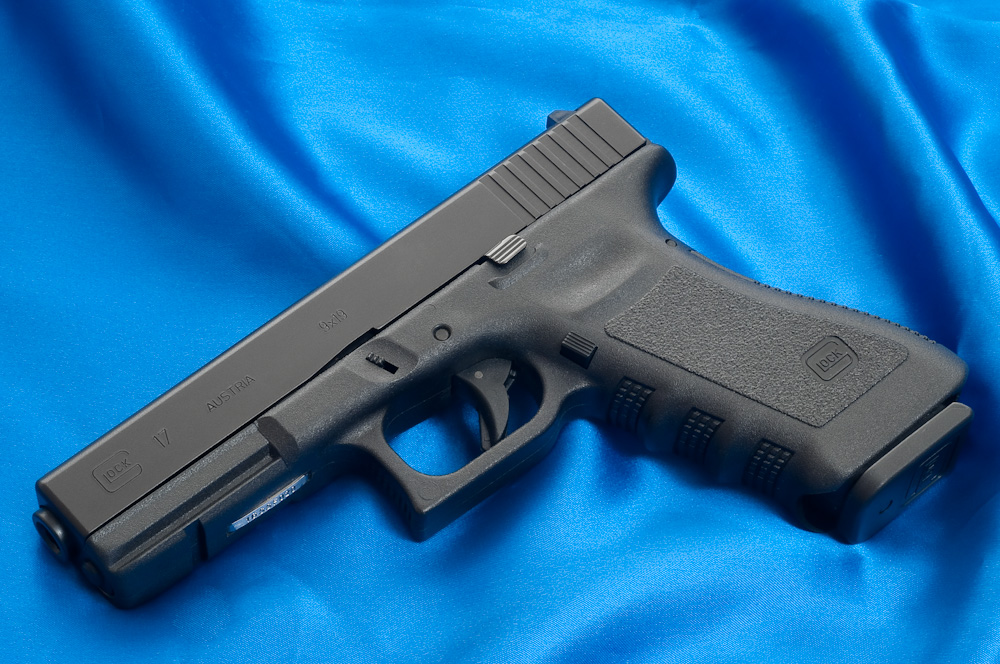
6. Glock 17
The Glock 17 was the shock to the system. Polymer frame, striker-fired action, high capacity, light weight, and a simple control layout came together in a package that many agencies first treated with suspicion and later accepted as standard.
That acceptance changed the whole market. By the early 1980s, the Austrian Army had adopted the Glock 17, and the pistol’s reputation for reliability and straightforward maintenance pushed rivals to rethink what a service handgun should be. What once looked unconventional became the baseline for modern duty pistols worldwide.
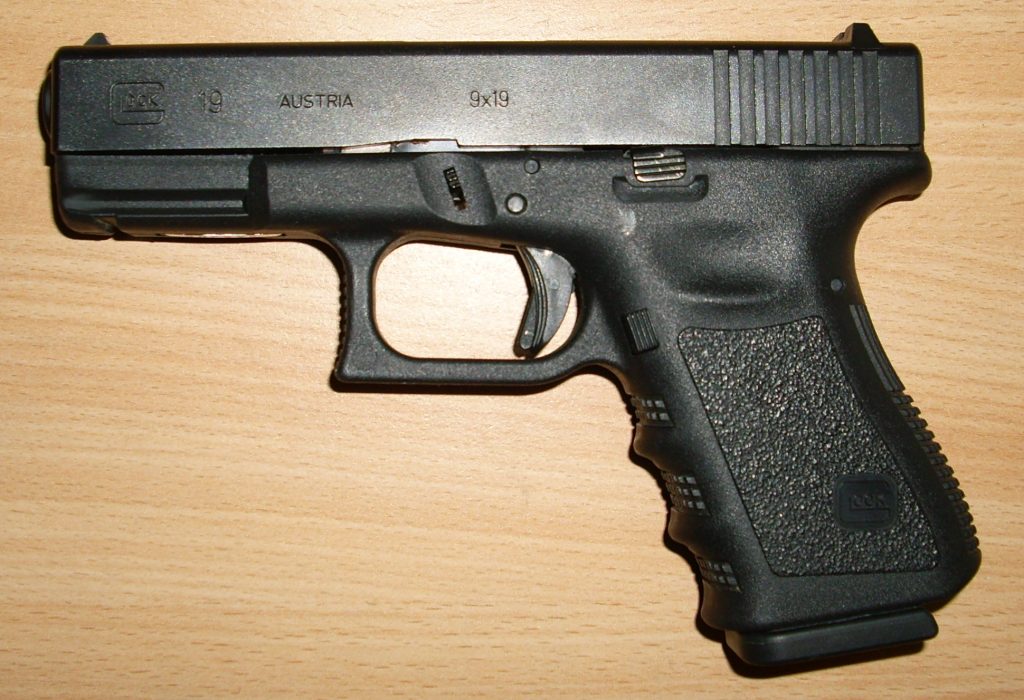
7. Glock 19
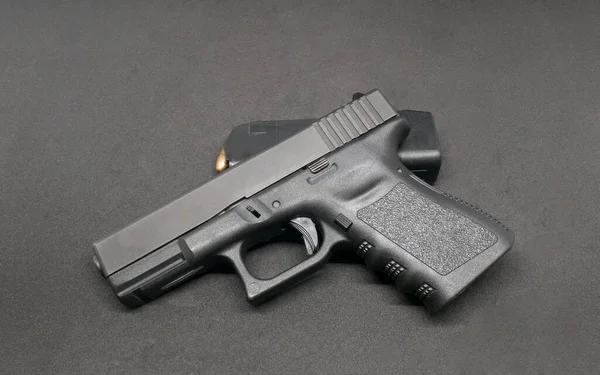
The Glock 19 refined the formula into the size class many shooters now treat as the center of the market. It was compact enough to carry, large enough to fight with, and simple enough to support with endless aftermarket parts, lights, magazines, optics cuts, and holster options.
Its real achievement was proportion. The pistol made the “one gun” concept believable for a huge share of users: serviceable as a duty handgun, practical for home use, and compact enough for daily carry. Many later 9mm pistols did not just compete with the Glock 19; they aimed directly at its dimensions and role.
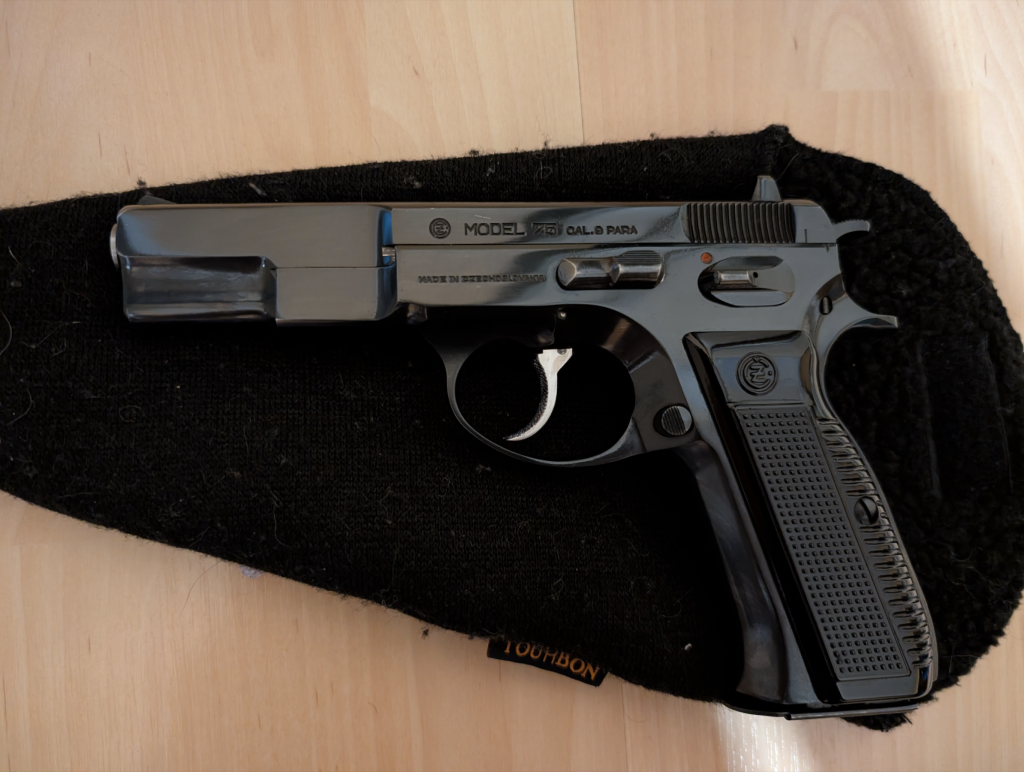
8. CZ 75
The CZ 75 proved that a steel-frame DA/SA pistol could feel unusually natural in the hand without giving up mechanical seriousness. Its inside-the-frame slide rails, strong accuracy reputation, and ergonomic grip profile helped create a design that shooters kept returning to even as newer materials entered the market.
Its influence is visible in the enormous family of copies, derivatives, and inspired designs that followed. That kind of cloning usually signals more than popularity. It signals that the original geometry, handling, and operating concept offered something the rest of the market wanted to reuse.
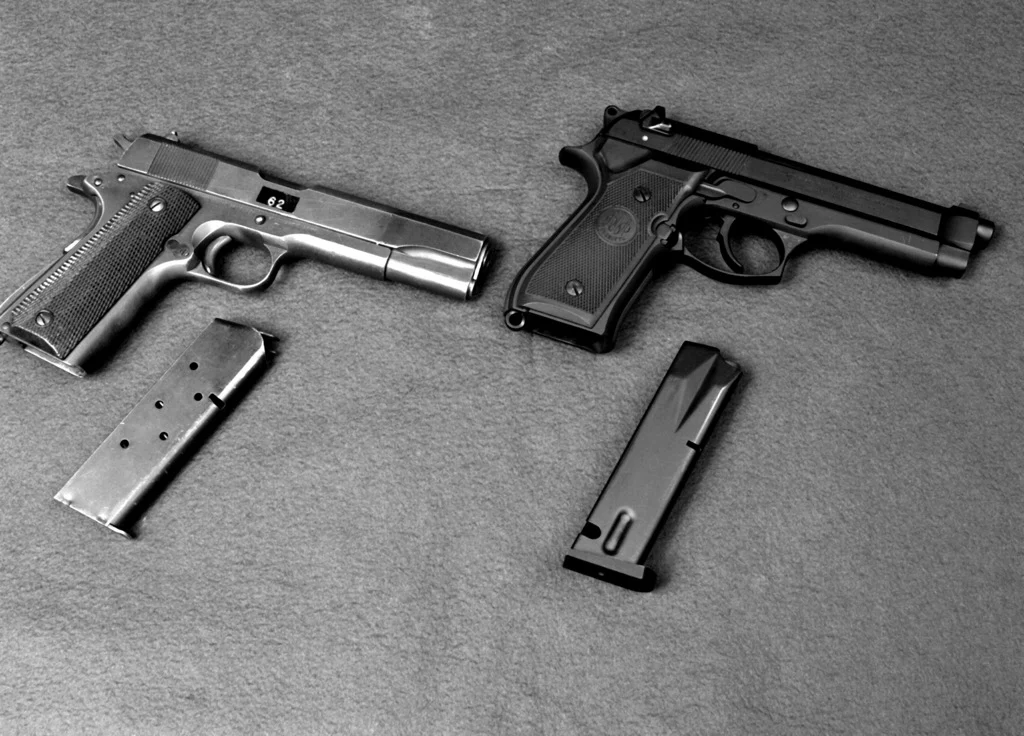
9. Colt 1911 in 9mm
A 9mm 1911 matters for a different reason than the others here. It did not invent the platform, but it proved that a century-old control layout could remain relevant when paired with a lower-recoiling cartridge and faster follow-up shooting characteristics.
The result kept the 1911’s straight-to-the-rear trigger and familiar ergonomics while adapting it to a cartridge that has become central to modern handgun use. That combination showed that “modern” is not always about fresh architecture. Sometimes it means an old design absorbing a new operating reality without losing its core strengths.
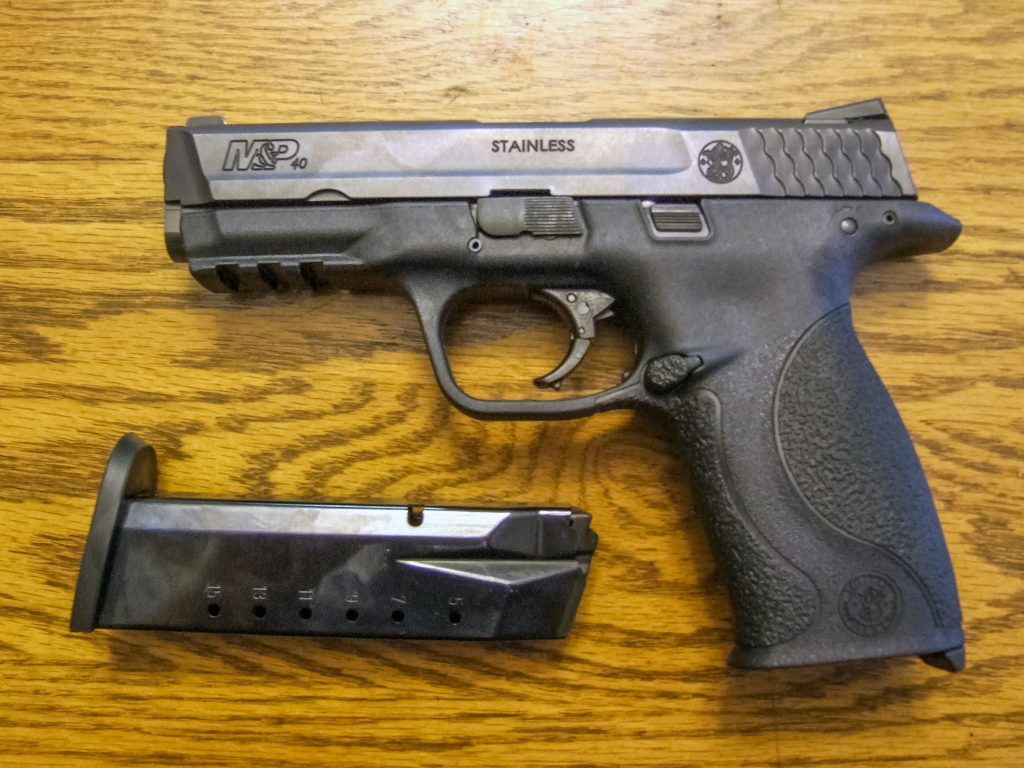
10. Smith & Wesson M&P Shield
The Shield helped make the slim 9mm carry pistol a mainstream expectation rather than a niche compromise. Small pistols existed before it, but many were harder to shoot well, carried awkward triggers, or felt like reduced-scale backups rather than serious primary handguns.
The Shield changed that perception by offering a thin, striker-fired format that still felt credible in training and regular use. Its success aligned with the larger rise of the polymer striker-fired 9mm, a class defined by light weight, consistent trigger pulls, and easy carry. As one account of that shift noted, shooters across brands increasingly converged on the same formula: polymer-framed, striker-fired 9mm pistols.
Taken together, these pistols show that modern handgun design was not created in one jump. It arrived in stages first through cartridge identity, then through magazine capacity, then through service durability, and finally through polymer frames, striker systems, and compact dimensions that no longer demanded major tradeoffs. That is why these ten still matter. Each one left behind more than a silhouette or a reputation; each one reset the baseline for what the next 9mm had to be.


