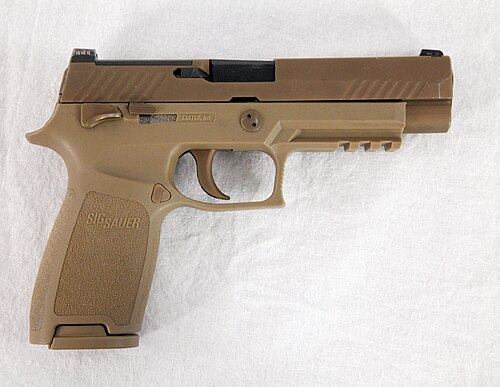
Army sidearms rarely carry the same public profile as service rifles, but they often reveal more about changing doctrine, industrial capacity, and battlefield priorities than larger weapons do. Across more than two centuries, the Army’s handguns shifted from frontier era revolvers to high-capacity semi automatics and, eventually, modular striker fired pistols.
This list focuses on five issued sidearms that best capture those turning points. Some earned their place through unusually long service, some through technical adaptation, and some because they solved a specific Army problem at exactly the right moment.
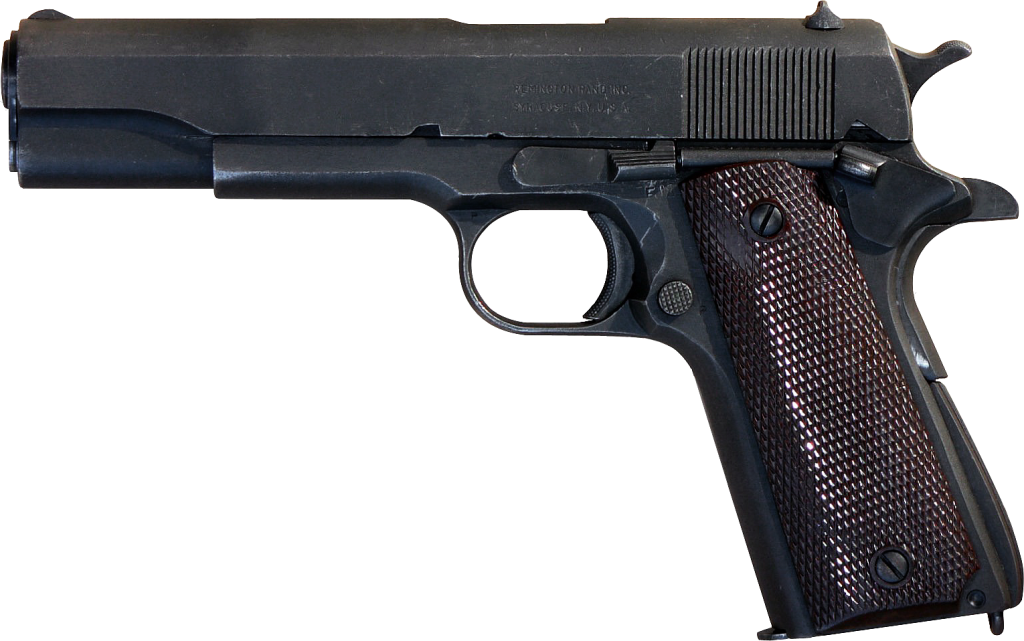
1. Colt M1911 and M1911A1
The M1911 remains the benchmark against which American military pistols are still measured. It emerged after the Army’s experience with .38-caliber revolvers in the Philippines pushed demand for a heavier, harder-hitting cartridge, leading to the .45 ACP and John Browning’s locked-breech design. Its reputation was built on endurance as much as power. During Army trials, the pistol completed a brutal 6,000-round testing standard that helped separate it from rival entries. Official adoption came in 1911, and the platform then served through World War I, World War II, Korea, and Vietnam.
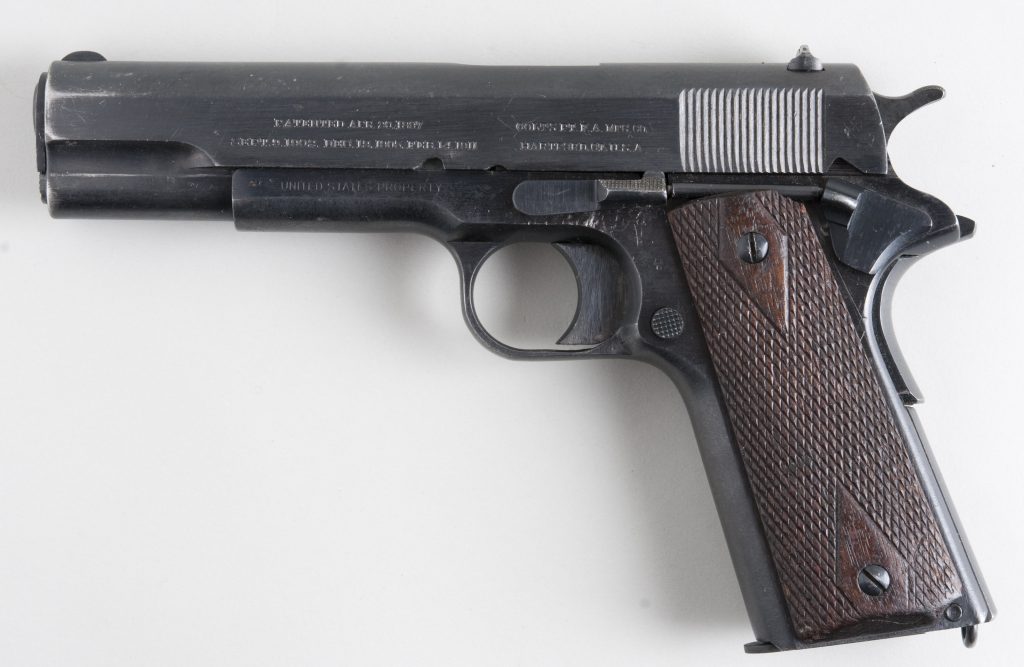
The later M1911A1 update refined the grip shape, trigger, and sights without altering the core formula that made the pistol famous. Its deeper importance lies in how long it remained relevant. The Army’s relationship with the design stretched roughly 75 years, and even after official replacement, specialized users continued to keep variants in service. Few military pistols have balanced stopping power, mechanical simplicity, and institutional trust as effectively.
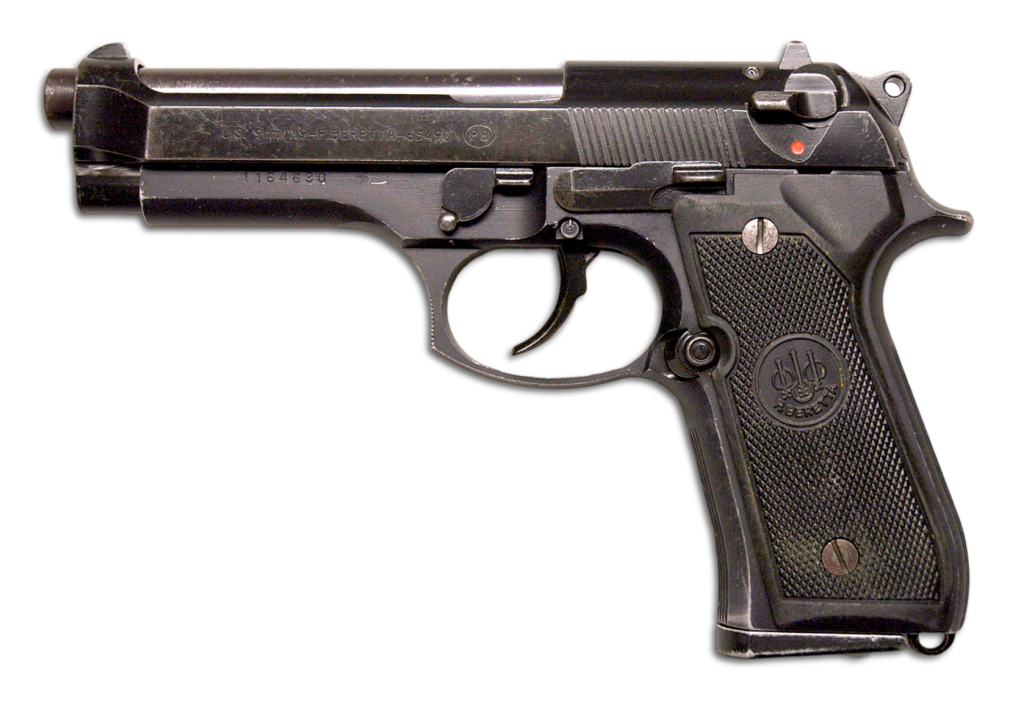
2. Beretta M9 and M9A1
Replacing the M1911 was never going to be simple, and the Beretta M9 arrived carrying both NATO standardization pressure and the burden of ending an American .45 era. Adopted in 1985, it brought a 9×19 mm chambering, a 15-round magazine, and a double-action/single-action system that reflected a different view of service pistol use. The XM9 competition was close. In final testing, Beretta and SIG Sauer both passed, with the Beretta selected after the total package came down to cost and support terms.
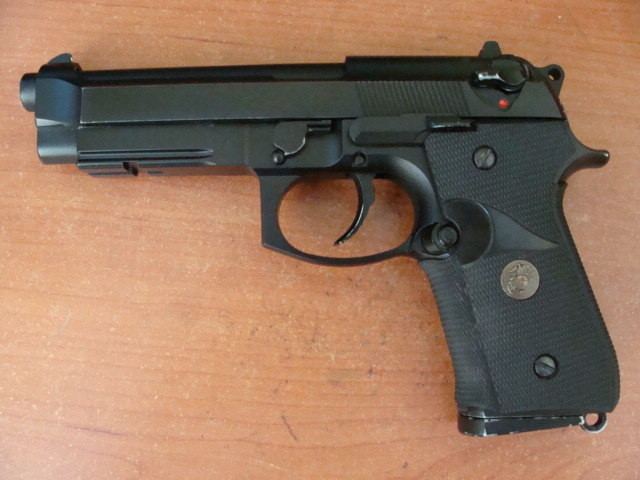
Trials data from that period gave the Beretta a documented 1,750 MRBF in dry conditions, while the design also proved easier for many shooters to handle accurately than older pistols. Its service life was more complicated than its adoption story. Early slide failure controversy damaged the pistol’s reputation, though later investigation tied the problem to overpressure ammunition rather than a basic design flaw. In later combat use, many complaints centered on maintenance, worn parts, and old magazines instead of the pistol’s core mechanism. The M9A1 addressed some practical shortcomings with a rail and improved magazines for dusty environments, helping the family remain in service for more than three decades.
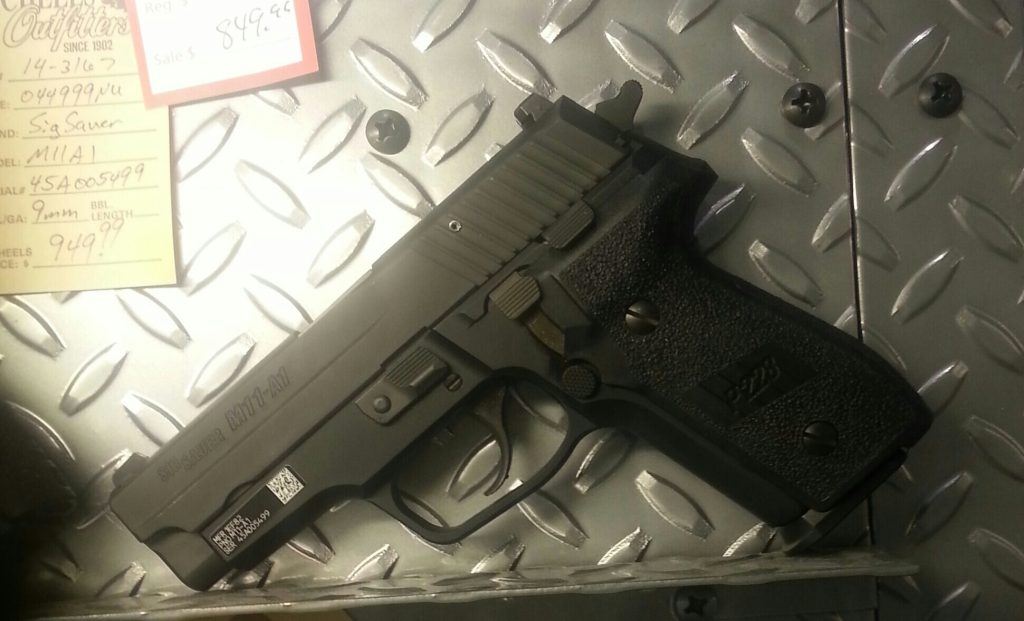
3. SIG Sauer M11
The M11 never served as the Army’s universal sidearm, which is exactly why it matters. Based on the compact P228, it filled a role the full-size M9 did not handle as well: a concealable, lighter pistol for investigators, protective details, and specialized users who needed something easier to carry without giving up service grade durability. Its testing record gave it unusual credibility for a compact handgun. Aberdeen evaluations cited in historical accounts recorded 15,000 rounds fired across three pistols with only a single malfunction.
That kind of result made the M11 less of a compromise gun and more of a purpose-built sidearm for a narrower mission set. For roughly a quarter century, it showed that Army handgun requirements were no longer one-size-fits-all. As a bridge between legacy metal-frame pistols and later modular handguns, the M11 proved that compactness could be an operational feature rather than a concession.
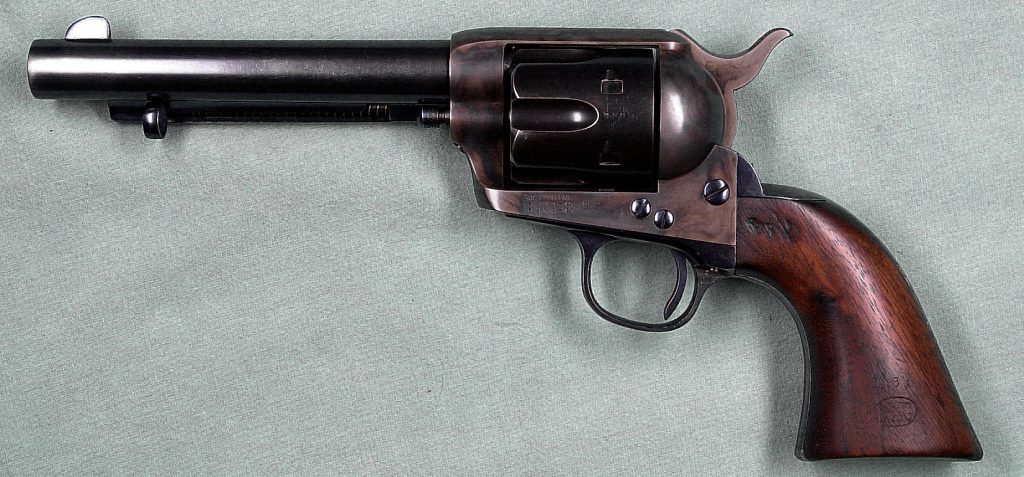
4. Colt Single Action
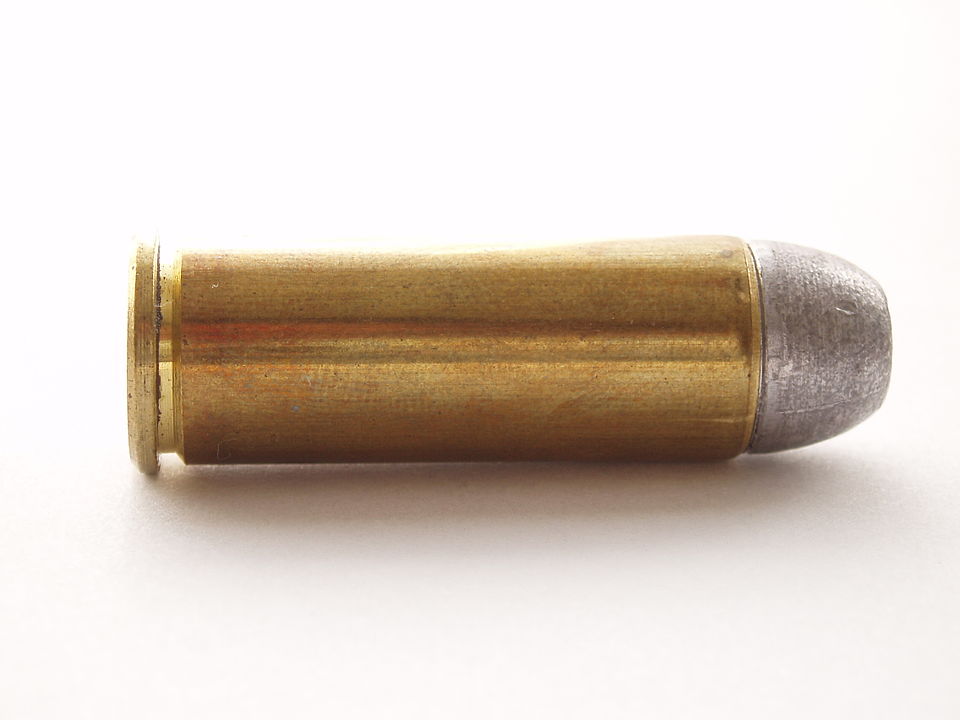
Army Before the age of self-loaders, the Colt Single Action Army defined what an Army sidearm looked like in the public imagination. Adopted in 1873 and chambered in .45 Colt, it gave the Army a rugged metallic-cartridge revolver at a time when handgun technology was finally becoming practical and repeatable in field use. Its appeal was not just mechanical reliability. The solid-frame design, balance, and cartridge power made it a durable tool for mounted troops and frontier service, and it remained standard until 1892.
The revolver’s cultural afterlife eventually became almost as large as its military one, but its Army importance came first: it represented the transition from percussion handguns to a more modern combat sidearm. It also lingered in trust long after replacement. Officers and prominent figures continued to carry it, and the Army’s later dissatisfaction with the .38 Long Colt helped reinforce how well the older .45 revolver had matched real-world needs.
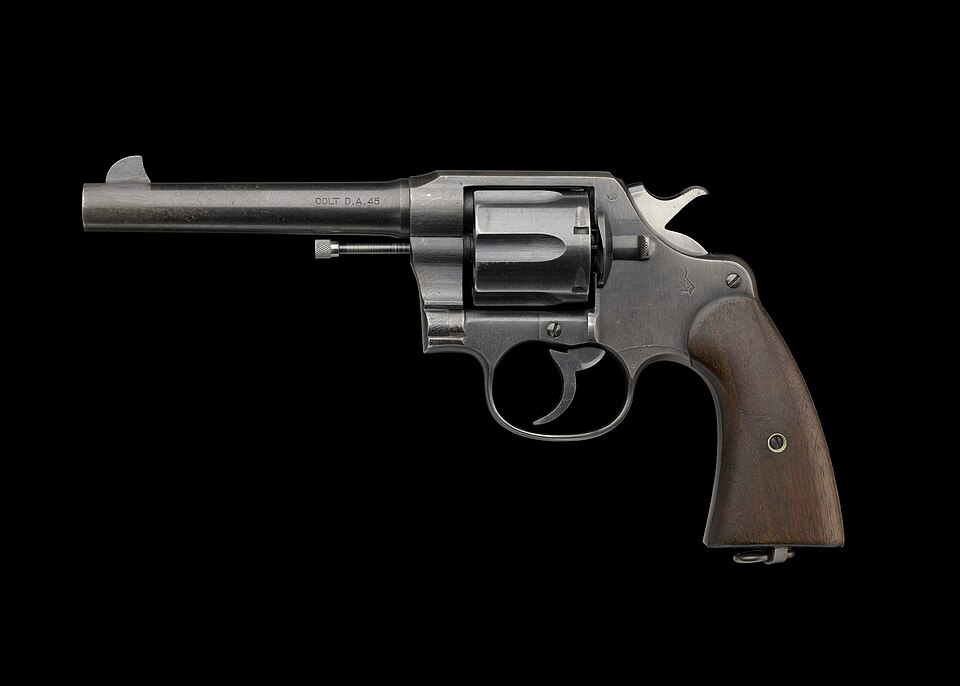
5. Colt and Smith & Wesson M1917
Revolvers Some of the most revealing military sidearms are the ones adopted out of necessity. When America entered World War I, M1911 production could not cover demand, so the Army turned to large-frame Colt and Smith & Wesson revolvers adapted to fire .45 ACP with half-moon clips. That workaround was more than an emergency measure. It allowed revolvers to use the same cartridge as the M1911, simplifying ammunition supply while preserving useful ballistic performance. Production was substantial, with more than 300,000 built between the two manufacturers during the wartime period.
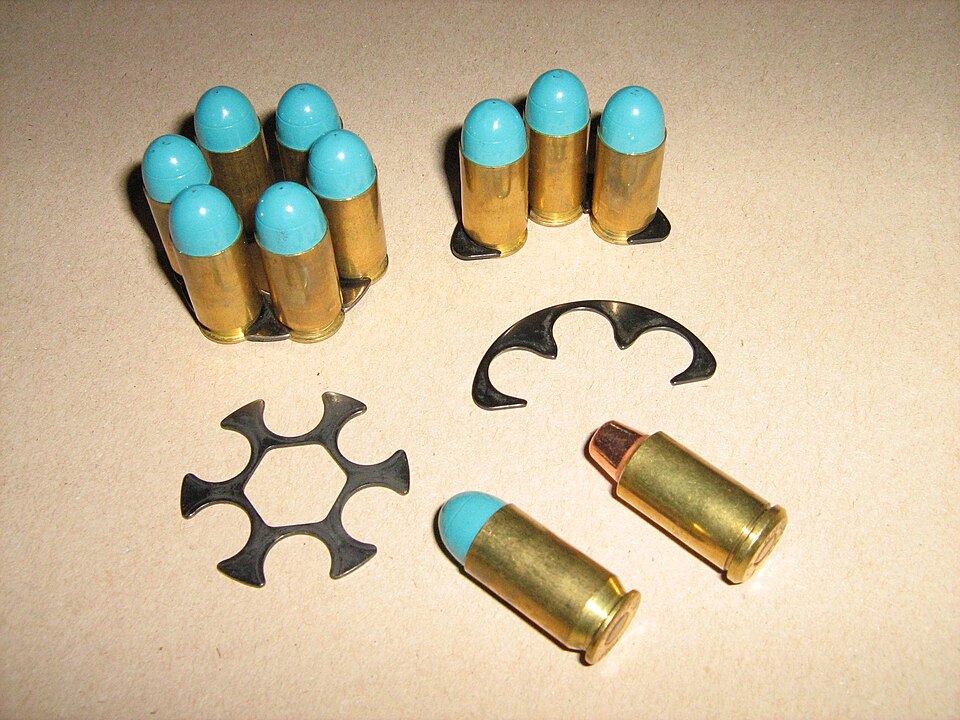
The M1917’s significance comes from flexibility. It was a stopgap that kept proving useful, serving beyond World War I and continuing in secondary roles during World War II. In Army history, that makes it more than a substitute pistol; it was an example of wartime adaptation done well. Together, these handguns trace a clear line through Army sidearm development: heavy cavalry revolvers, emergency wartime improvisation, the long dominance of the M1911, the high capacity M9 era, and the move toward more specialized sidearm roles.
Each one reflected the Army’s priorities at a particular moment. That evolution did not end with this group. The Army’s newer modular family began after the XM17 Modular Handgun System competition selected the SIG platform in 2017, closing the M9 chapter and opening a different one. What these five pistols left behind was the template: sidearms matter most when doctrine, logistics, and user confidence all meet in the same holster.


