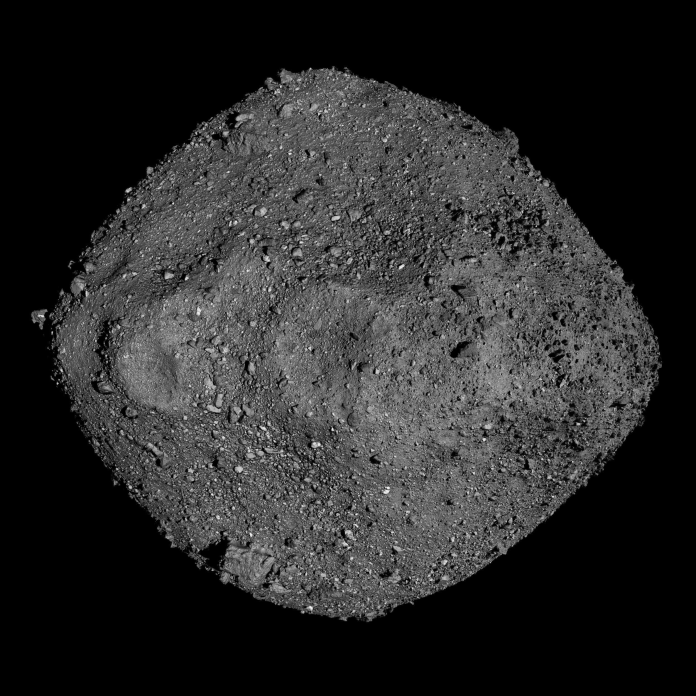
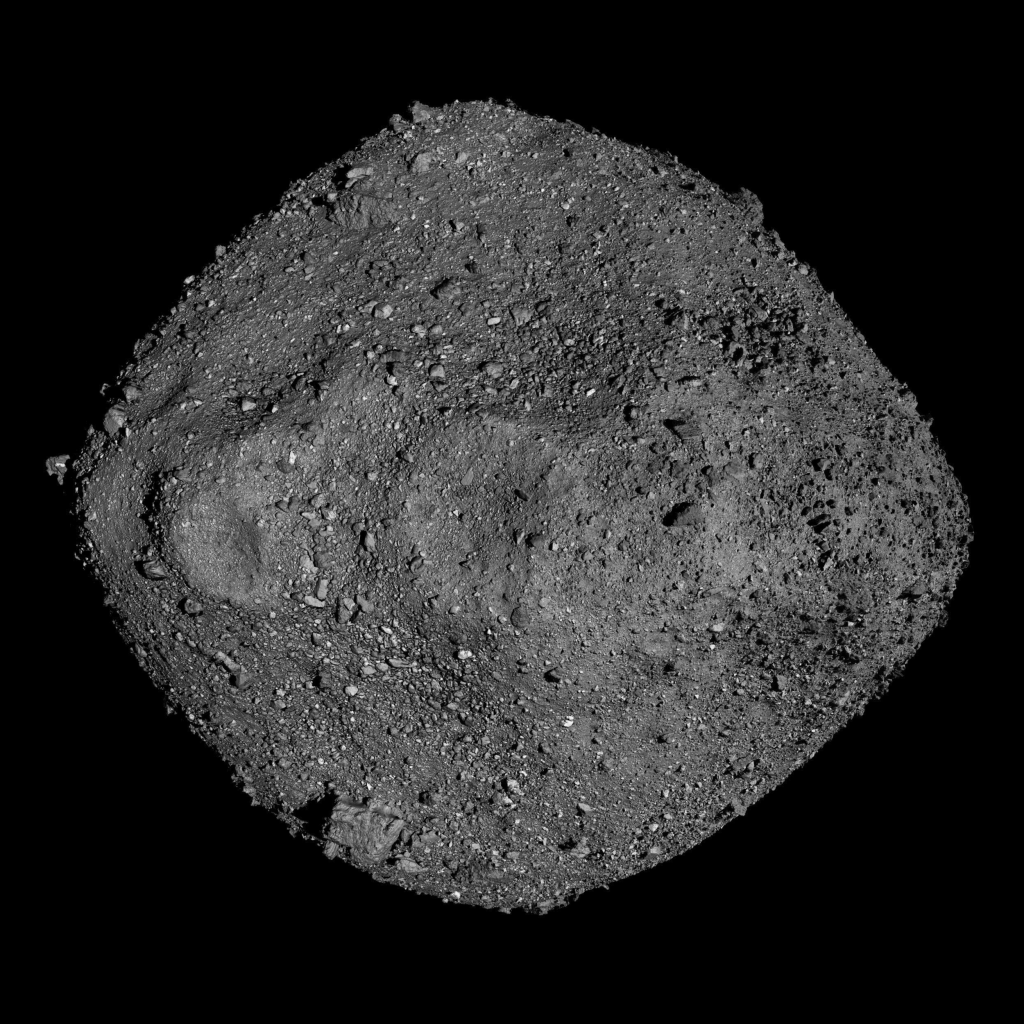
To become an engineering classroom, an asteroid does not have to be on a collision course. Bennu has been studied especially well, and its long-term follow-up has become a convenient example of how contemporary planetary-defense practice can be constructed: with deliberate orbit modelling, with clear risk tables, and with hard-earned ground truth provided by returned samples.
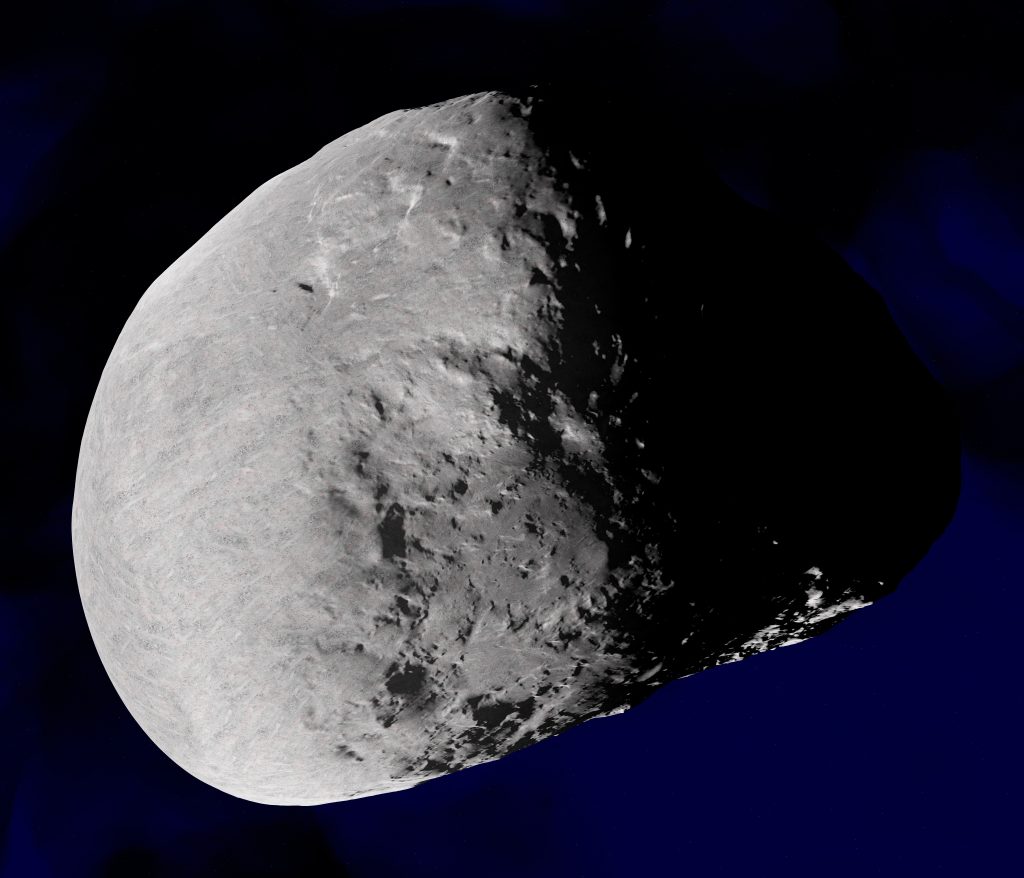
The interesting fact is not the number of days to go. It is the extent to which precision, chemistry and systems engineering are capable of being handled out of a world of darkness, rocks and boulders just a few hundred meters across.
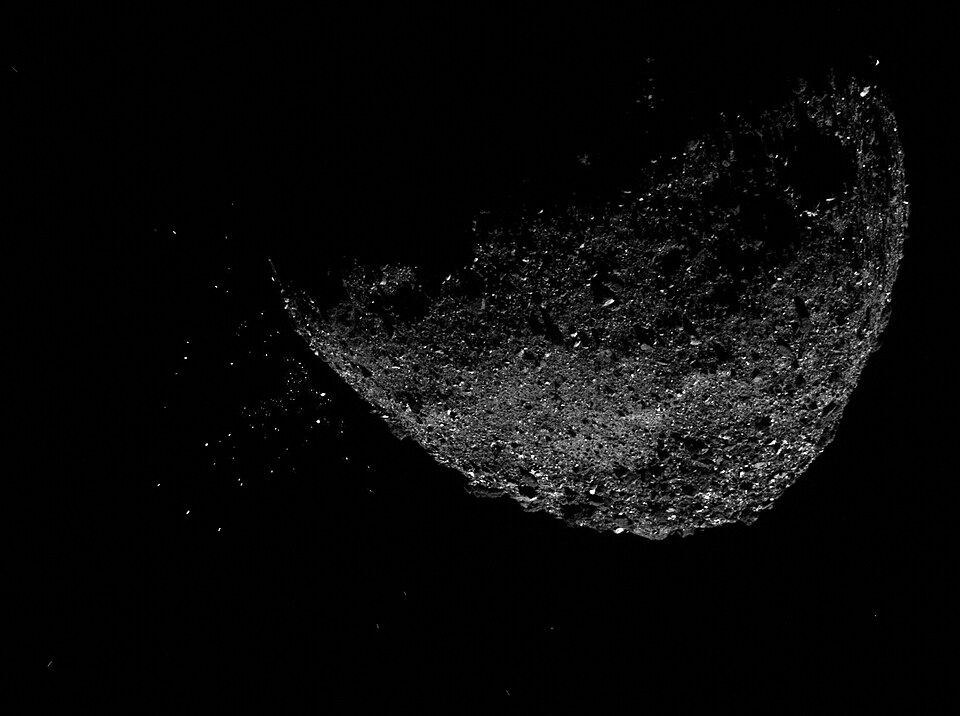
1. The date in which Bennu collided is a hypothetical date, not a date
An orbit solution is produced with uncertainties producing risk estimates of Bennu, which are then propagated forward to determine the existence of any uncertaintiest mathematical pathways that hit Earth. The Sentry impact monitoring system of NASA presents such results as opportunities of impact and probabilities, and the entries may vary as the new tracking data reduce the uncertainty. With such a framework a listed date serves as an indication of a small set of orbital solutions which generate an Earth intersection, and not as a forecast that an impact will take place.

2. Close passage may be significant due to gravitational keyholes
Before any spacecraft is capable of making contact at a much later date, a relatively nearby flyby can slightly refocus the collection of feasible orbits. A small area in space around earth could serve as a gate: an asteroid which travels through it may find itself pulled into an orbit passing through earth at a later time. This is what NASA has termed as a gravitational keyhole of Bennu, which comes as an idea that turns planetary defense into a geometry, navigation and uncertainty solution issue instead of pure propulsion. It also describes why the most opportune moment to mitigate risk can often be decades – even centuries – prior to any hypothetical impact opportunity.
3. OSIRIS-REx transformed a hazard case study into laboratory content
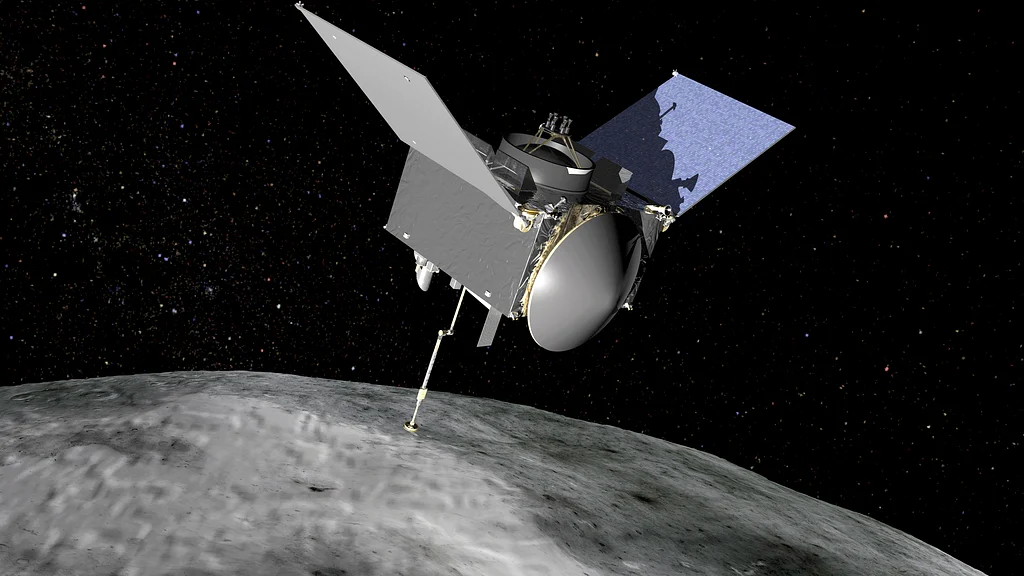
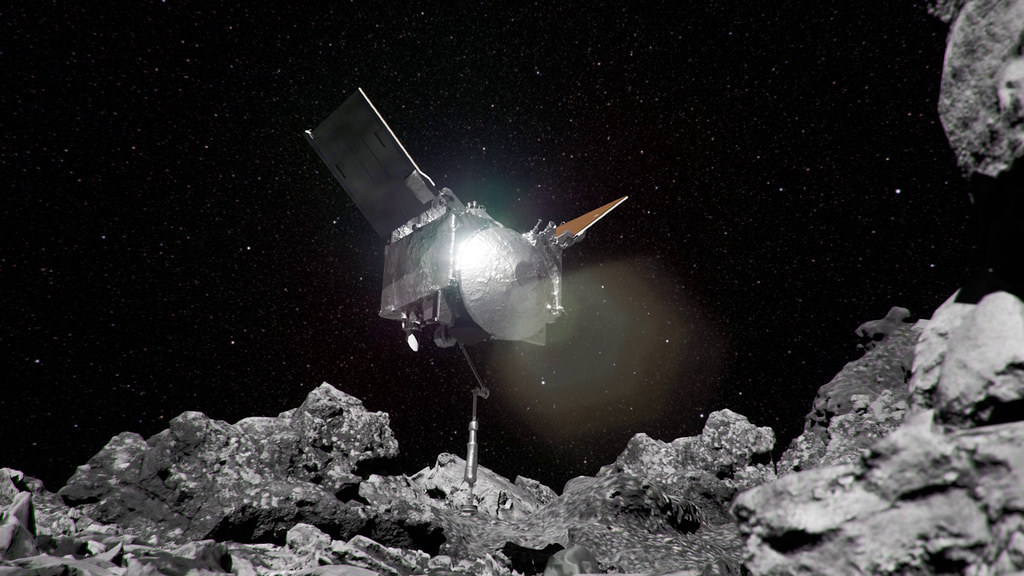
The OSIRIS-REx mission sent by NASA has done more than just take images of Bennu, it made it bring home some of the pieces as well. It was a spacecraft that was launched in 2016, gathered surface material in 2020, and dropped a capsule of samples on Earth in 2023. A current science report states that the sample investigations of Bennu have shown the presence of sugars necessary to support biology among other unexpected elements, making Bennu no longer an object to be followed but a material to be experimented on. This change is significant to engineering since the performance of any deflection measure is determined by properties that are inaccessible to telescopes: grain size, cohesion, porosity, and the manner of momentum transfer through a rubble-like body.
4.The sample indicates that Bennu is a sewn-up collection of the primeval solar system
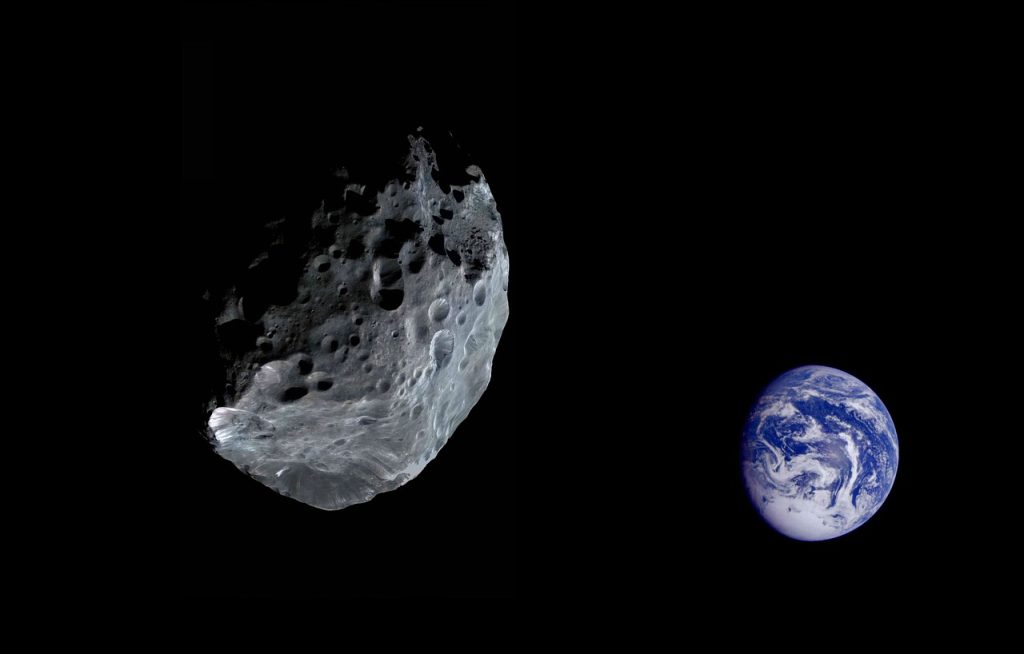
The material brought back shows that Bennu is not a single rock, but a composite record that is being put together over time. Its science summary provides it as a blend containing dust of the solar-system, organic substances pertaining to the interstellar conditions, and stardust grains that existed prior to the formation of the solar-system, modified by the reactions of water, and damaged by the forces of space weathering. The transport story was described in one sentence of one mission paper: We discovered grains of stardust whose compositions are older than the solar system, said Nguyen. To the engineering audience, such diversity is not merely poetic: it indicates that the mechanical behavior of Bennu can differ over relatively small scales, making any effort to model the mechanical behavior of the object difficult.
5. Water-modified minerals entail form that may act contrary to solid rock
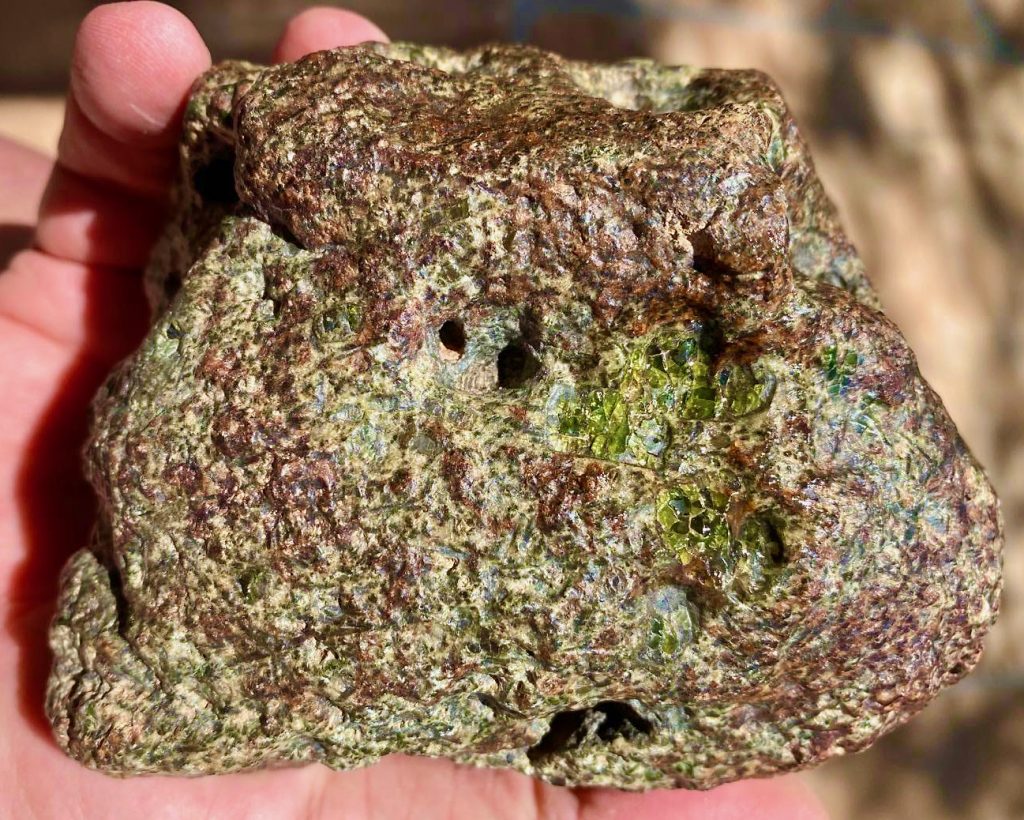
The returned sample was analyzed to show that there was extensive chemical transformation caused by water, which included minerals, which have water as their constituent structure. In the synopsis of the published work published by NASA, Zega described the degree of the change: We see today a sample 80 percent of which is minerals that contain water. Such a change has the potential to affect density, strength and fragmentation behavior-values that directly input to impact simulation and deflection planning. It also supports the larger scientific argument that at least a few of the asteroids bore water and other compounds that formed the environmental conditions of planets early in their history of the solar system.
6. The craters history of the earth tells us what remains and what does not
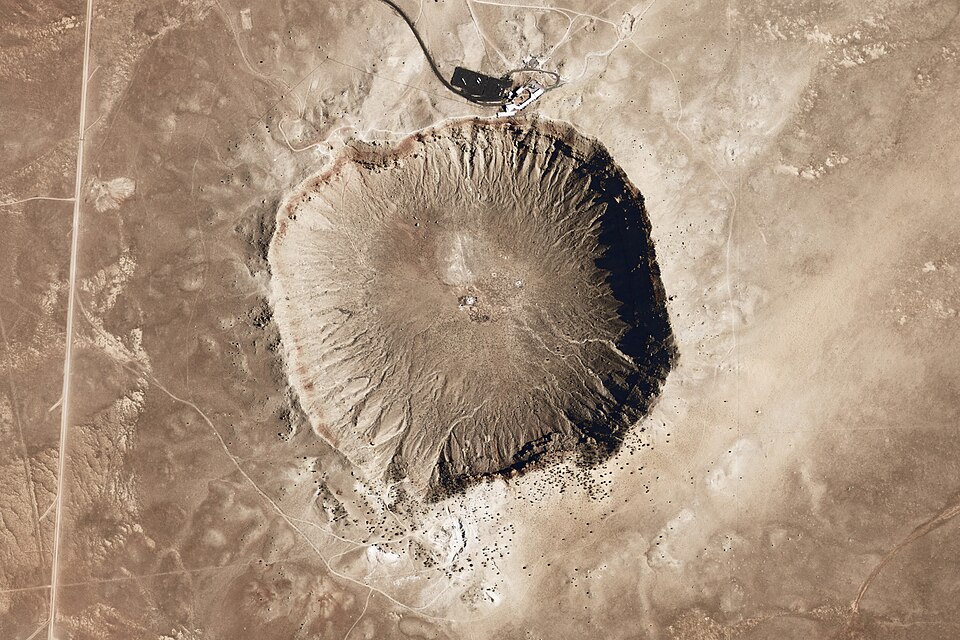
The earth maintains a registry of impressions that is both highly specific in the form of sharp-cut bowls and extensive, much-worn monuments. Meteor Crater in Arizona is one of the most obvious examples of a comparatively fresh and well-kept impact type, whereas Vredefort structure in South Africa is the largest impact crater which is definitely known on Earth, occupying a territory of more than 300 km. The 1908 Tunguska airburst shows that a lot of damage can be done without leaving a crater and Chicxulub, which lies beneath the Yucatan, has been identified with a global biological turning point, occurring 66 million years ago. Combined, these sites drive a realistic point: size, composition, entry angle, and object cohesion, or disruption, in the air are factors of impact outcome.
7. Planetary defense is today a verified subject, not an academic practice
Risk reduction is a one-sided phenomenon, but the other side is demonstration. In 2022 NASA confirmed that the DART mission altered the movement of an asteroid in space, which gave a real-world confirmation that a spacecraft can modify the movement of an asteroid when applied early enough. Such an accomplishment does not make everything certain, but it provides an engineering basis: navigation to a tiny body, targeting at high closing speed, and orbital change that is measurable facilities that can be optimized as missions such as OSIRIS-REx learn more about the behavior of asteroid materials.
There is a reason to be interested in Bennu long-range risk entries since the figures resemble a calendar. The engineering deeperness of these numbers is the infrastructure of those numbers, the ever-fresh orbit updates, the public hazard tables, the physical samples that make the unknowns testable. At the same time, Bennu is a less ominous object and a more reference-, it connects the old wounds of the Earth, modern surveillance equipment, and the practicalities of altering the orbit of a small world in space.


