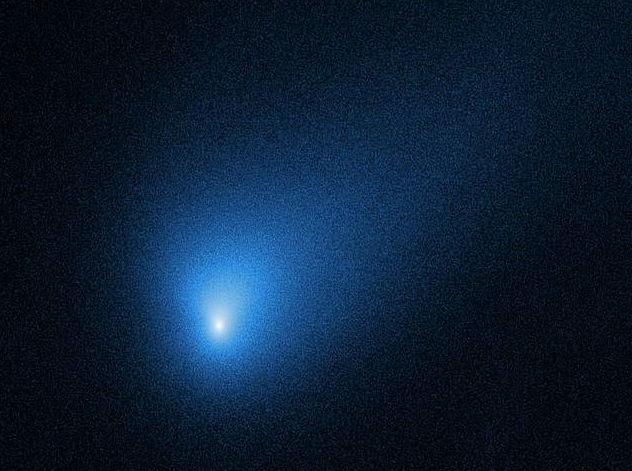
This is due to the fact that a comet coming outside the Solar System is so unusual that each of them alters the way astronomers approach planetary systems beyond the Solar System. 3I/ATLAS is no exception, being both extremely unbound and physically behaving in a way that other comet models have had to take into consideration.
The object was first spotted by the telescope constructed by the space agency to observe the planetary defense and soon became the object of international tracking. What ensued was not one observation, but a series of measurements, arcival discoveries, and characterizations by multi-observatories, that transformed a wandering light into a functioning scientific laboratory.

1. One of the third interstellar visitors whose orbit can not be confused
The third object known to enter the Solar System after interstellar space is 3I/ATLAS, which has been verified as passing through the Solar System. It is highly hyperbolic in its orbit, that is, it is traveling too quickly to be bound to the Sun by gravity, and will never go round in a closed orbit. One of the published orbital solutions provided as the eccentricity, e, with value = -6.139, well above the dividing line between the bound and unbound orbit, e>1. The same study report quotes an inbound speed of 57.7 kilometers per second relative to the Sun in the interstellar, which gives a definite dynamical observational signature that this object was formed in a different location and only crosses the Solar System.
2. ATLAS discovered it in the course of another job
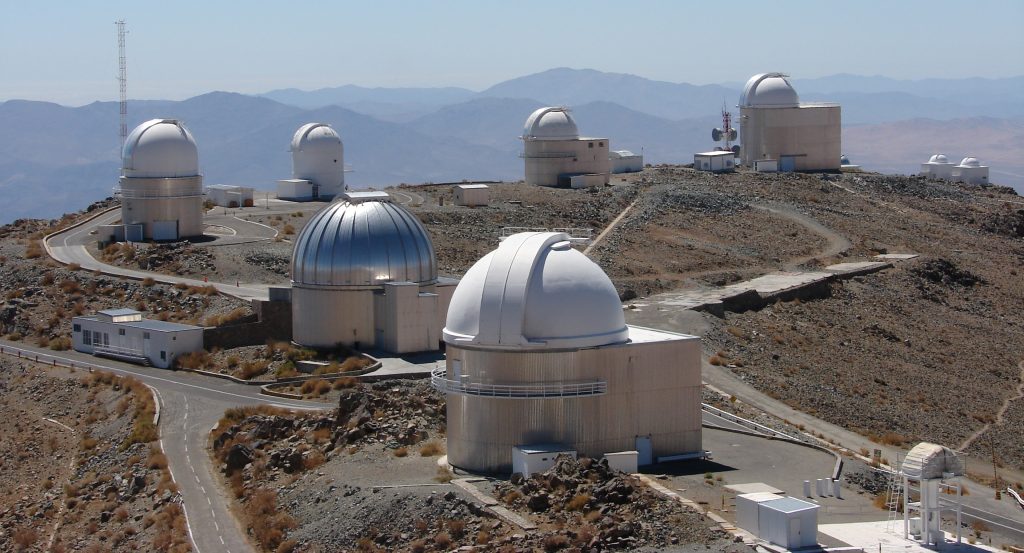
The NASA-funded Asteroid Terrestrial-impact Last Alert System (ATLAS) survey telescope located in Río Hurtado, Chile, a network of telescopes to scan broad expanses of sky, made the discovery. On July 1, 2025, the comet was announced, and the movement of the comet immediately caused the intensive pursuit. Even pre-discovery identifications in archives were able to stretch the observation arc and narrow the orbit: NASA reports that pre-discovery observations go back to June 14, which means that it is more certain about its birth and its further course. It led to a rapid shift between the discovery and coordinated characterization of facilities.
3. It came in the direction of Sagittarius, which is a thickly populated direction in the sky
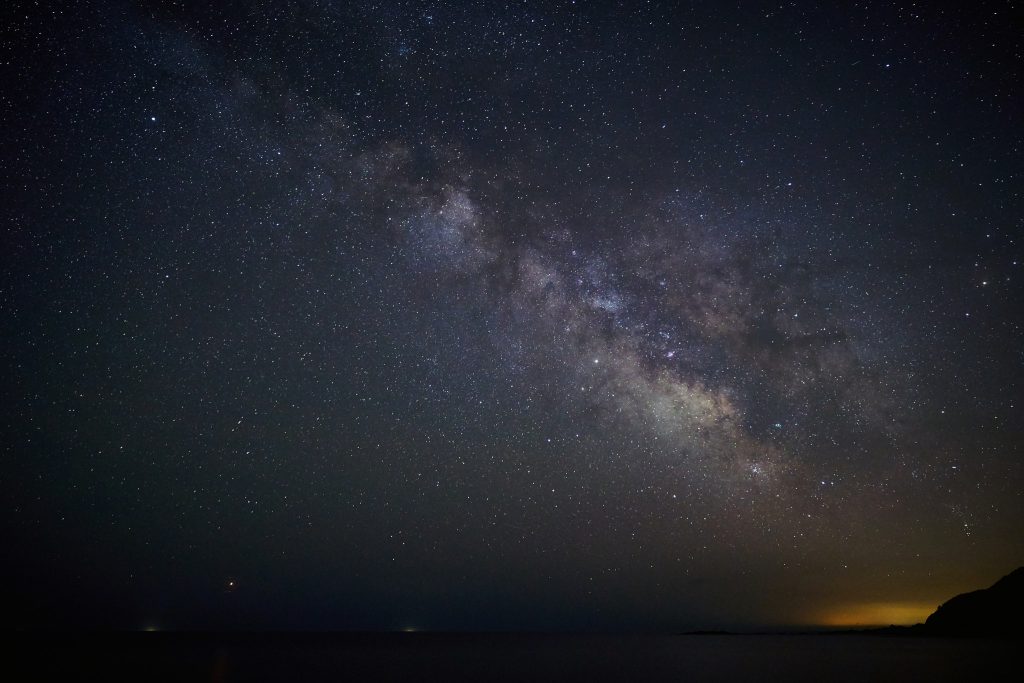
The comet came in the direction of the constellation Sagittarius and was facing heavy star formations close to the core aspects of the Milky Way. That the incoming direction is operationally as important as scientifically: dense backgrounds may confuse detecting and measuring, requiring very careful astrometry and repeated imaging. The timescales involved were placed in context by NASA Center of Near Earth Object Studies Director Paul Chodas: These objects drift across millions of years between stellar neighborhoods and so this object has been floating through space hundreds of millions, even billions of years. The geometry further assists in connecting the movement of the object with the larger models of galactic dynamics tracing the flow of objects moving in interstellar movements between stellar neighborhoods.
4. Estimates of size are between large and exceptional based on method
The comets in the interstellar are hard to estimate since their comae are able to conceal the core, and the activity can vary with the solar heating. The FAQ of NASA, which was founded on Hubble observations on Aug. 20, 2025, limited the diameter of the nucleus to 1,400 feet (440 meters) and 3.5 miles (5.6 kilometers) in diameter. The primary article contains independent commentary explaining visibly larger estimates and mass inferences, exemplifying how a change in assumptions about reflectivity and dust environment may cause a change in derived values. The practical implication on the part of the engineering reader is that size is not one figure at the start but is a changing parameter which narrows as instruments isolate nucleus light and coma and tail contributions.
5. Its speed profile shows a textbook gravity assist without becoming captured
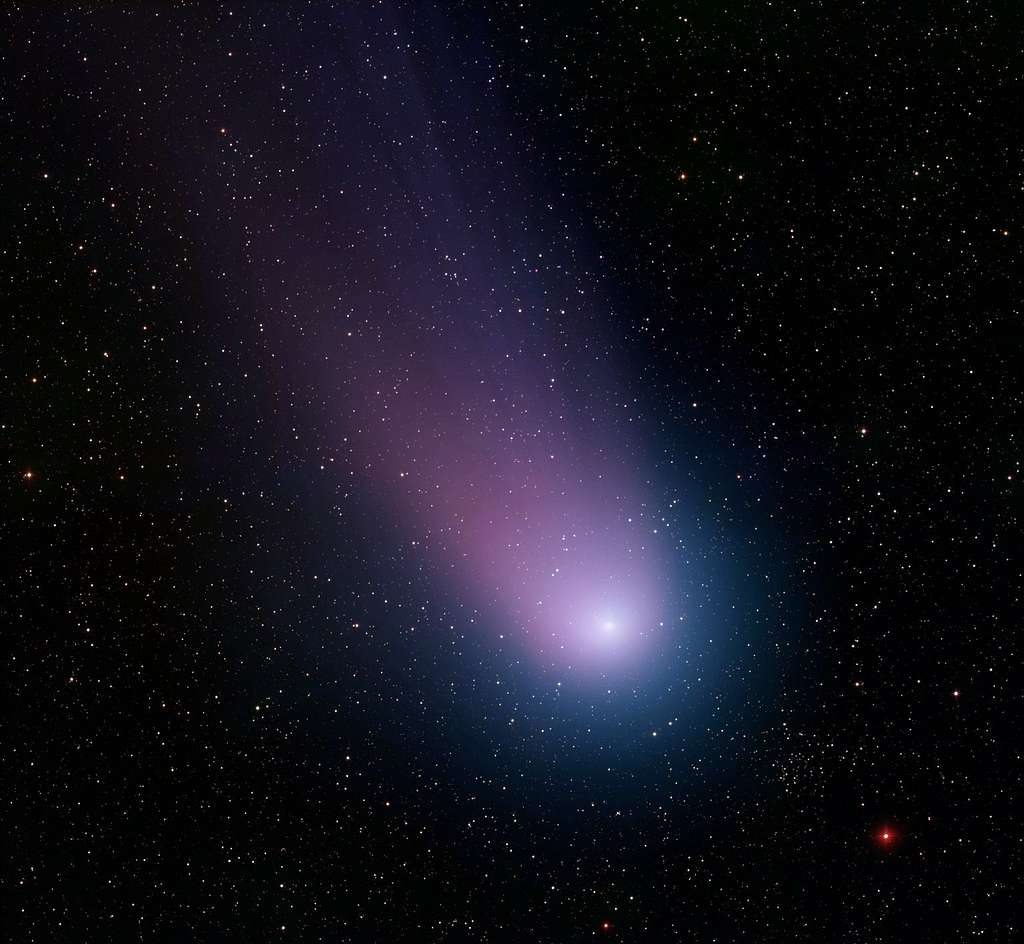
Another point of reference to the flythrough is the measured speeds. According to NASA, the comet had a speed of approximately 137,000 miles per hour (221,000 kilometers per hour) at the time of its discovery and increased to approximately 153,000 miles per hour (246,000 kilometers per hour) as the Sun drew the comet closer to it at perihelion. The speed reduces once more after the perihelion and the comet leaves at the same or near the same speed, which it introduced-a natural occurrence of a body on a hyperbolic orbit. This evolution of speed, combined with accurate astrometry, confirms the fact that the object is dynamically unbound despite the high acceleration with the solar gravity when passing by.
6. The close-approach geometry is the design of nature and safe on the Earth
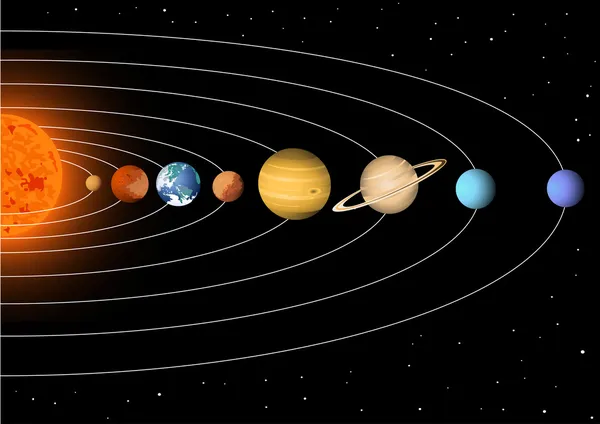
The orbit of the comet took it through the inner Solar System and did not create impact. According to NASA, the planetary-defense update, NASA will keep at least 1.6 astronomical units away (around 170 million miles or 270 million kilometers) from Earth, whereas NASA FAQ gives an almost similar value of 1.8 astronomical units (around 170 million miles or 270 million kilometers). It got as near to the Sun as it could on or about Oct. 30, 2025, at approximately 1.4 AU, just within the orbital radius of Mars. The two reasons why these distances are important are that they establish safety margins and also establish the observing limits that establish when telescopes can take data without much interference by solar glare.
7. The sunward facing tail illuminates dust grain physics
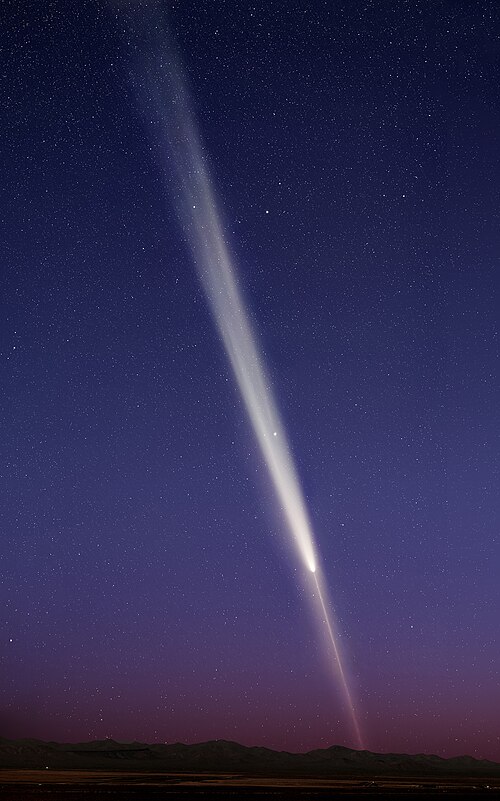
Among the most noticeable features given in the main article, one must note an anti-tail appearance: a dust feature direction toward, and not away, the Sun. A description is given in the article as to why astronomer Bryce Bolin explains that large grains of dust may not act in the same way as fine particles, which are controlled by radiation pressure. The inertia of grains and geometry of their release can form structures which are not consistent with the conventional blown out comet tail image of large grains. Engineering-wise, it is an experiment of a natural particulate-flow on an astronomic scale, with grain size distribution, speed of ejection and solar illumination geometry interacting to form what the observers perceive.

8. A rare January 2026 alignment enables precision photometry of “opposition surge”
A distinctive opportunity arrives when the viewing geometry becomes nearly Sun–Earth–comet aligned. Avi Loeb and Mauro Barbieri highlighted that on 22 January 2026, the comet’s phase angle is expected to reach 0.69 degrees, remaining below 2 degrees for about a week. That geometry enables measurement of the “opposition surge,” a nonlinear brightening at very small phase angles driven by shadow-hiding and coherent backscatter in dusty media. Their note includes a practical constraint from ephemerides: V-band magnitude of V ≈ 16.7 mag near the alignment, placing the campaign within reach of meter-class telescopes for high-precision photometry under well-controlled methods.
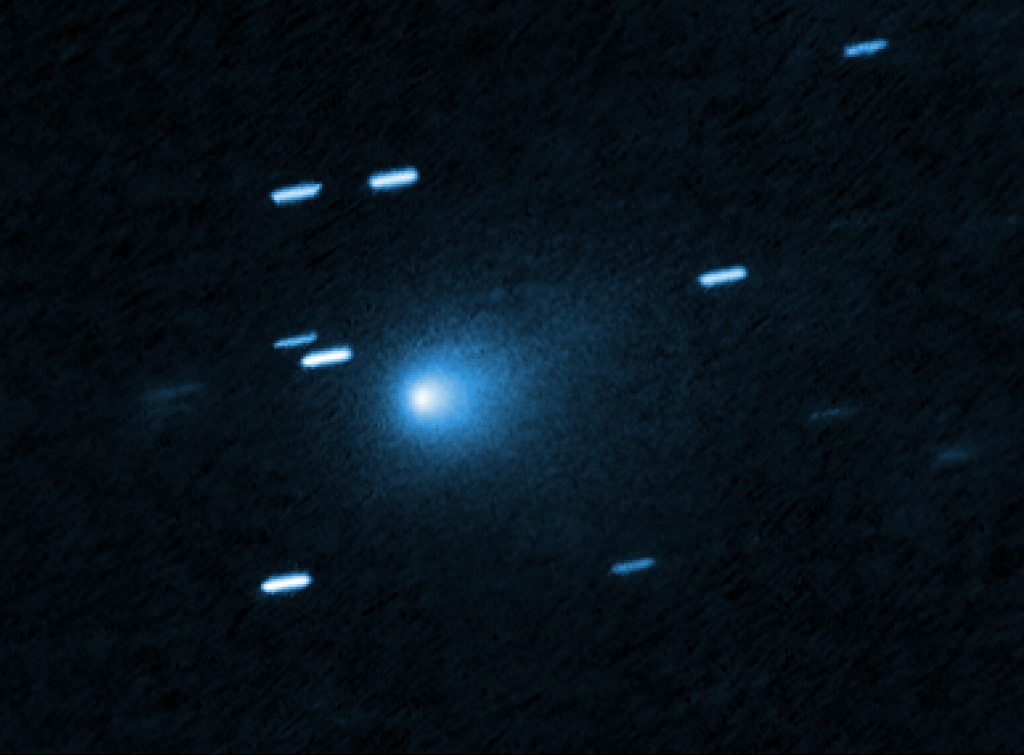
3I/ATLAS compresses multiple engineering problems into one passing object: detection in a crowded sky, rapid orbit refinement, uncertainty management in physical sizing, and microphysics inferred from light scattering. The comet’s departure will end the observing window, but the measurement techniques and coordination patterns built around it remain reusable. As the interstellar catalog grows, each confirmed visitor becomes less of a curiosity and more of a calibration point linking what can be measured from afar to the material history of other planetary systems.


