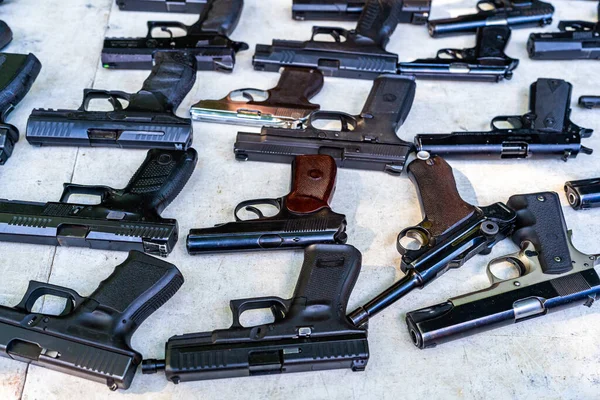
So what makes a service pistol legendary after uniforms, holsters and wars are all different? Throughout the two and a half centuries of the history of the U. S. Army, the handguns seldom led to the same results as the rifles and machine guns did. However, they keep coming back to the locus of procurement arguments due to a very basic reason; a side arm is the weapon that one carries when the main weapon has been lost, lost, or rendered useless, or even because of political considerations making it impractical.
The most influential issue handguns used in the Army appear to have a common characteristic; they became there to address a certain institutional problem, and not to become stylish. These five sidearms follow the traditional Army engineering tradeoffs of power versus controllability, simplicity versus capacity, long life hardware versus a supply chain capable of supporting it.
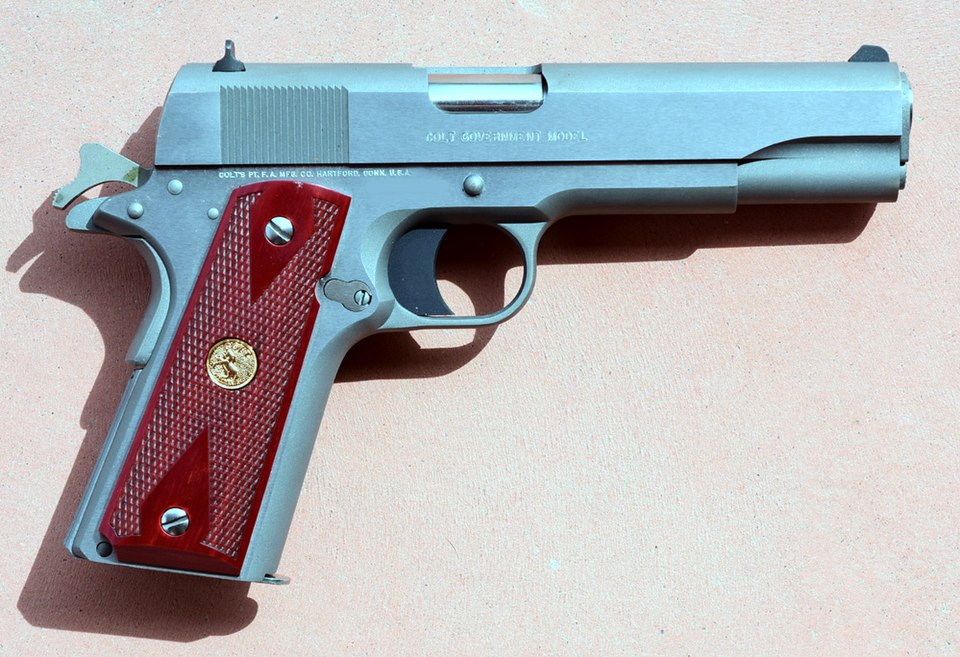
1. Colt M1911/M1911A1
The M1911 is at the legacy where the U.S. military no longer accepted handgun performance as being good enough and insisted on a service pistol. The program developed due to unsatisfaction with the previous .38-caliber revolvers, and the push to a heavier cartridge and a self-loading mechanism that would allow the Army to deliver it uniformly. This led to the creation of the.45 ACP pistol designed by John Moses Browning and became the first produced semi-automatic service pistol to be universally used by the U.S. military and remained in that capacity over the next 70 years.
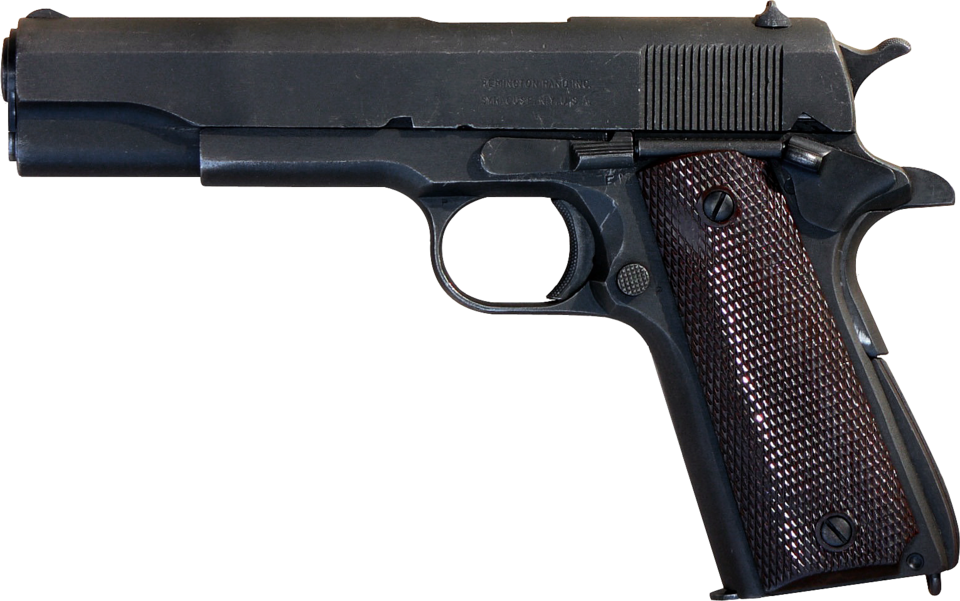
Durability and institutional momentum was what embedded the legend. Reference collections estimate military-only production of about three million pistols, and many more were produced to the civilian market, and that some of the special operations components continued using the platform up to 2023. The 1911A1 modifications of 1926, such as ergonomic modifications, better sights, and controls, indicate that the Army favors minimal change when a proven base design is involved. Above all the M1911 turned into a standard: subsequent pistols were compared with it even in the situation when the mission and environment of logistics were not the same.
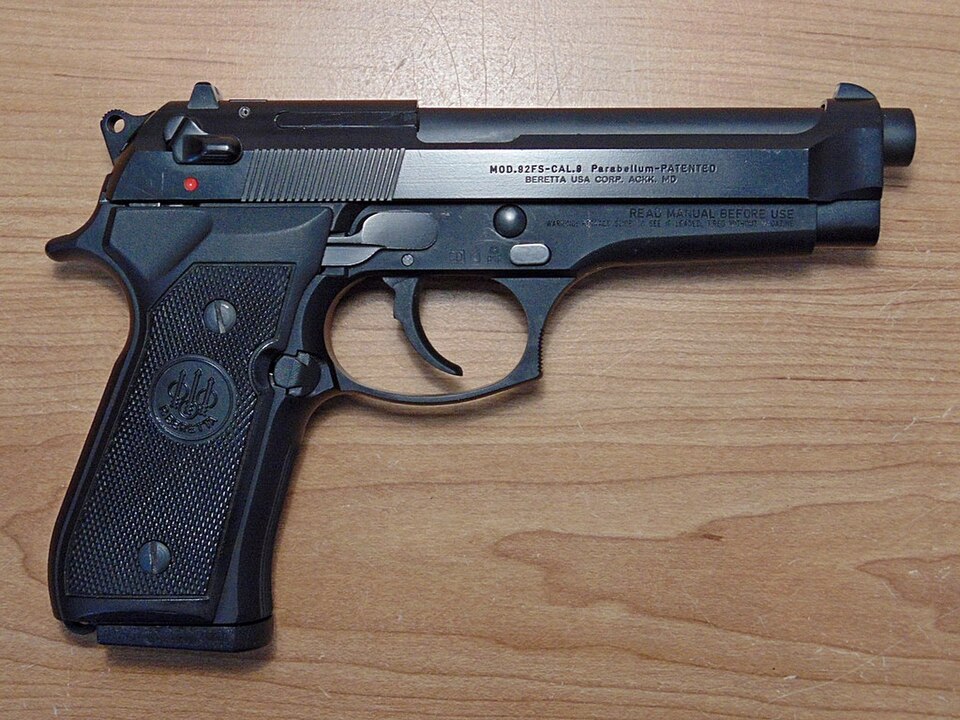
2. Beretta 92F/M9 (and M9A1)
The M9 age is commonly recalled as a standardization pressure against reality-tested sustainment. A long-form history of the push to a standardized handgun is another history where the U.S. military arsenal was examined by Congress, which found that it had over 25 different handgun models and over 100 different types of handgun ammunition, establishing the requirements to a single 9×19mm pistol that would meet the standards of NATO interoperability.
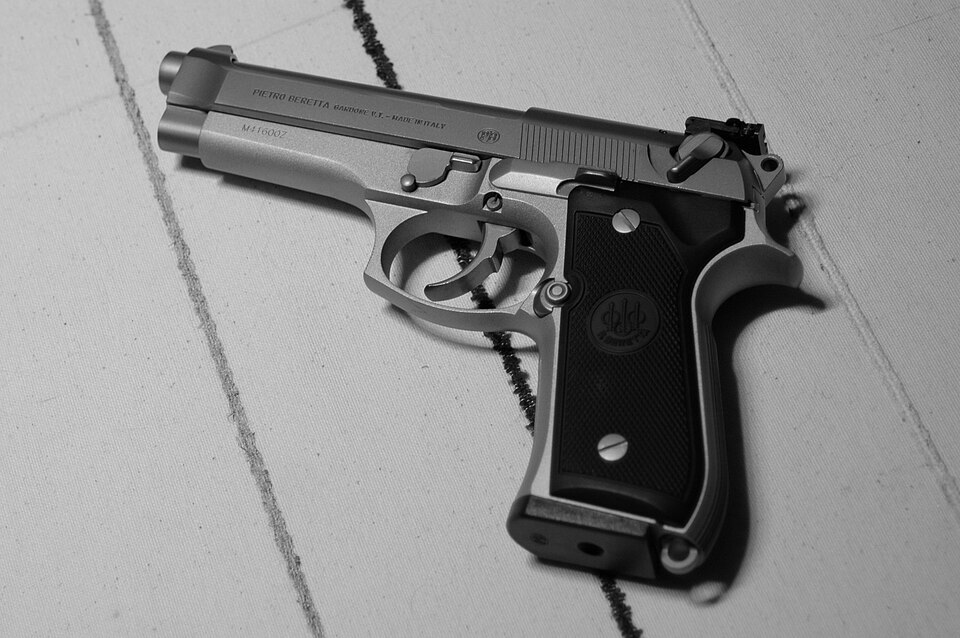
The reputation of the M9 oscillated wildly through the decades due to the fact that the gun at the mercy of ammunition lot batches, parts replacement intervals and training time. Early slide failures associated with overpressure ammunition are described by the same source and the change in safety that led to the development of the 92F becoming the 92FS-type slide-retention method used in later production. The addition of a rail and sand-resistant magazines to the M9A1 in Marine use; the lesson that the base design usually turns out to be less important than the training of the soldier to maintain his weapon, in terms of springs, locking blocks, and the frequency of inspections, is much larger; but it is a lesson some Army readers may need to learn.
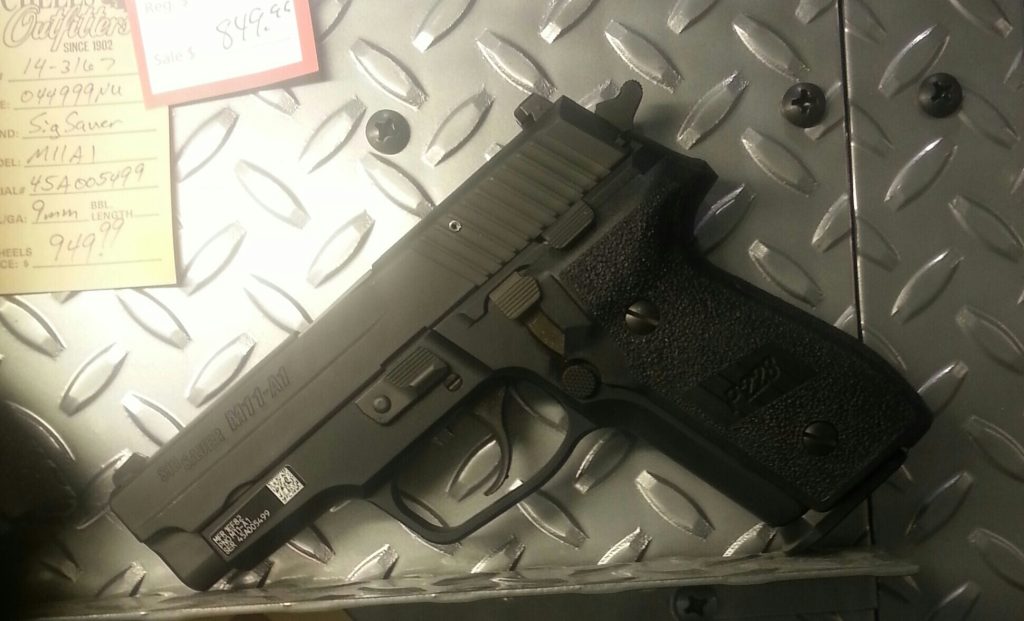
3. SIG Sauer M11 (P228)
The M11 is the confession of the Army that one size does not usually fit all. The Army continued to require a smaller, more easily concealable handgun to be used by investigators as well as some crews and in special purposes, even though the full-size M9 had already come into service. The Compact Pistol Program resulted in a compact 9mm that was able to carry and hold more than the duty-size 9mm it was based on.
During testing of the Army, 15,000 rounds of reliability test was claimed to produce only one fault, an extraordinary clean performance of a military acceptance test. Having a 13-round magazine and a decocker-oriented control scheme, the M11 still provided practical handling without the need to rewrite the entire doctrine. It also informed future acquisitions goals: an increase in ergonomics across a wider variety of hand sizes and functions, but remain within a 9mm logistical footprint.
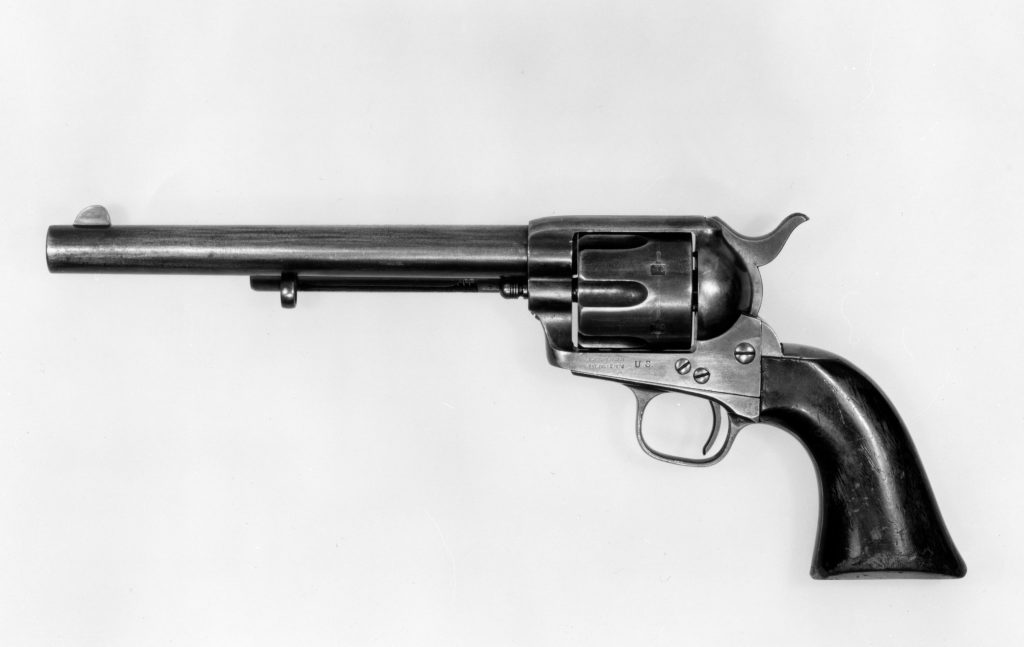
4. Colt Single Action Army (“Peacemaker”)
Prior to the definitions of service pistol, detachable magazines and qualification tables, the issue of handgun in the Army was mounted forces, severe conditions, and durability of black powder. The 1873 Colt Single Action Army provided that with a sturdy frame and a puncheon-like cartridge, and that was the standard Army sidearm until the 1890s, and an icon of culture ever since.
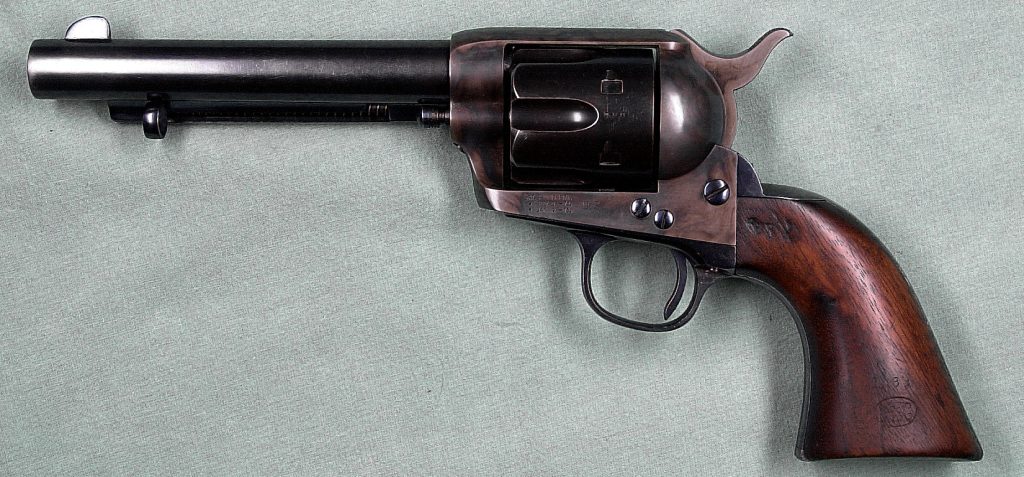
The platform records one technical deep-dive where the Army has issued 37,063 Single Action Armies between 1873 and 1891, and the quote on the test-board by Capt. John R. Edie: I have nothing whatsoever against providing a statement that the Colt revolver is superior in every respect and much more in keeping with the requirements of the Army than the Smith and Wesson. The reason why the Peacemaker remains significant to the history of engineering is that line: it was chosen on structural grounds, strength of the topstraps, selection of cartridge, and robustness in the field, at a moment when the Army was being informed of what it meant to be able to have a standard issue across the scattered frontiers.
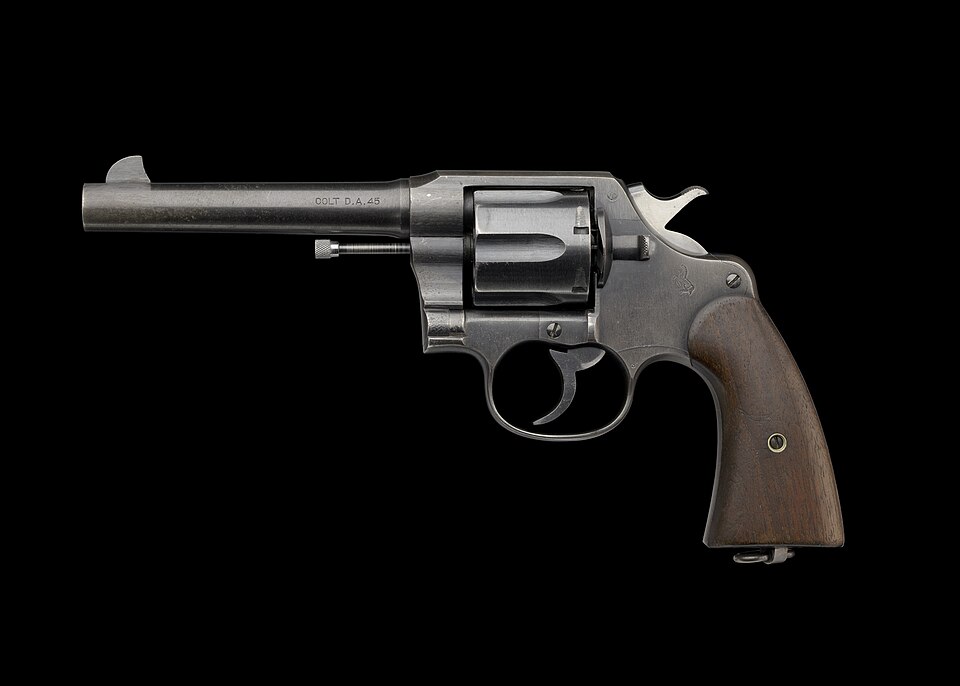
5. Colt and Smith and Wesson Revolvers 1917
The coolest instance of the repeated limitation, the production capacity, of the Army is the M1917 revolvers. When the demand of World War 1 surpassed M1911 production, the way out was not a new cartridge, a new pistol, but a simple compatibility hack, revolvers reconfigured to shoot half-moon-shaped .45 ACP clips. This maintained ammunition similarity and used current throughput in the manufacture of revolvers.
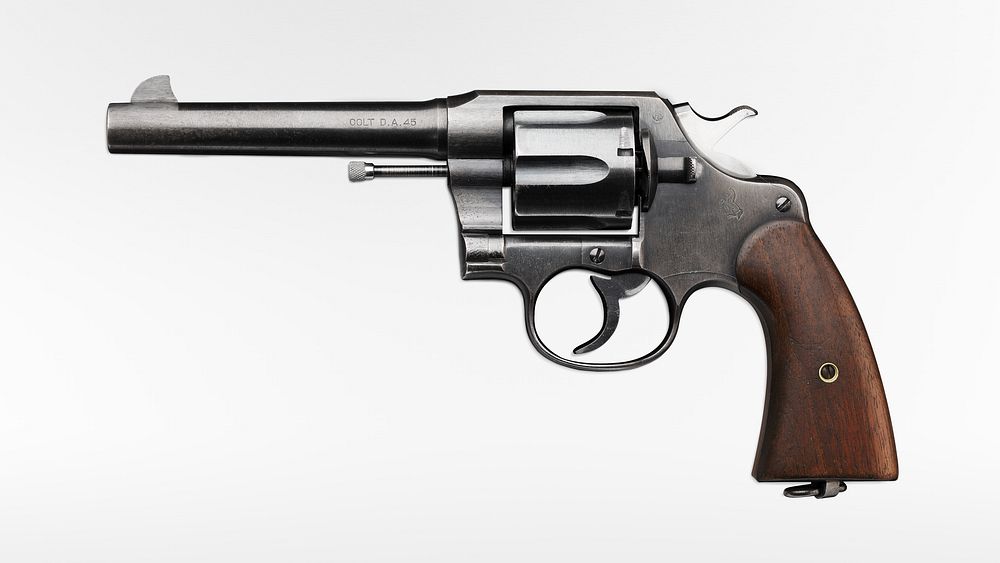
Statistics emphasize the extent to which the stopgap had escalated: Colt made more than 150 000 and Smith and Wesson made more than 153,000 between 1917 and 1919. The design option also left behind a permanent technical footnote: rimless pistol ammunition can be designed to fit in a revolver, so long as the loading design is made to provide extraction, a design that continues to be visible in small-scale uses today. To Army doctrine, the M1917 is not a romance, but a study in the realism of procurement; a satisfactory weapon, produced in quantity, and with no serious disturbance in the supply of ammunition.
Combined, these sidearms reveal a coherent throughline: the handguns that were considered the best in the Army were often the ones with the most recent features. They were those that fitted the limitations of the institution, logistics capability, training, maintenance, and the possibility of ramping up production at a moment when the Army had a lot more pistols than was originally budgeted to have.


