
Modern engineering is being asked to do two jobs at once: build systems that move faster than human reaction time, and build information systems that keep humans from being misled. The tension shows up in everything from how lethal force policies handle moving vehicles to how hypersonic claims are assessed in public.
Across border enforcement, online media, and missile defense, the common thread is technical complexity meeting brittle public confidence. The result is a growing premium on verification, constraints, and auditability.

1. Vehicle-Related Use-of-Force Policies as an Engineering Constraint
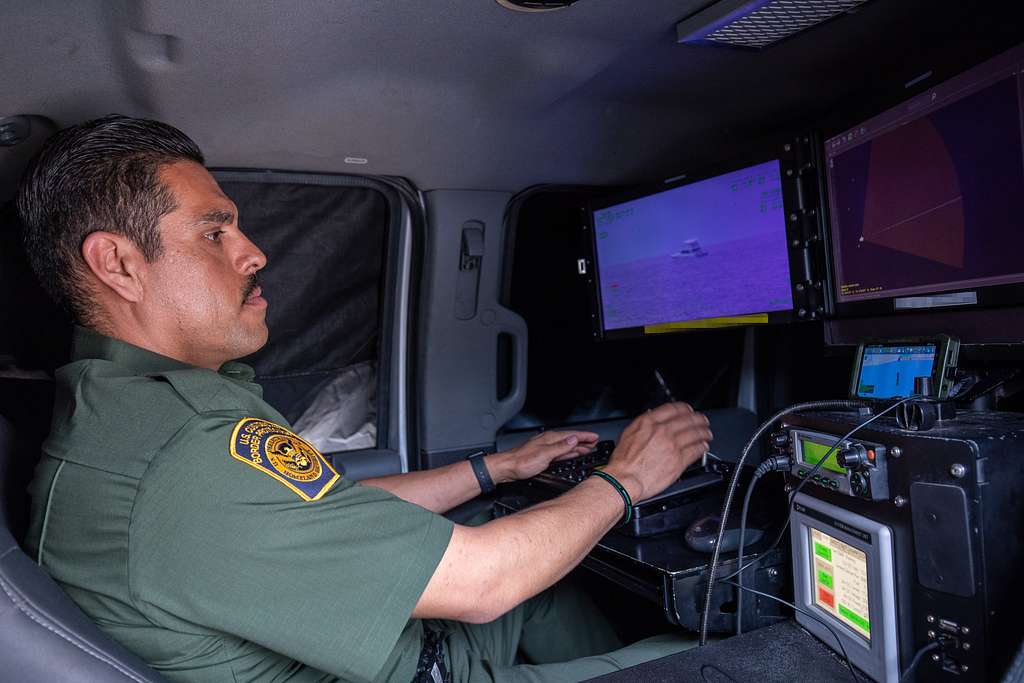
Guidance limiting gunfire at moving vehicles treats a car not only as a threat vector but also as a dynamic safety hazard for bystanders. Many policies restrict shooting at vehicles unless the driver poses an imminent threat beyond the car itself, reflecting the risk of missed rounds and the loss of control that can follow a driver being hit. Justice Department policy also emphasizes that deadly force is permitted only when no reasonable alternative exists, including stepping out of the vehicle’s path.

The Department of Homeland Security standard described for federal agents similarly hinges on an officer’s reasonable belief of an imminent threat of death or serious injury. In practice, these rules function like design requirements: they constrain allowable “solutions” during fast-moving encounters and put a premium on tactics and equipment that create time, distance, and clearer threat discrimination.

2. AI-Generated Media and the Collapse of “Seeing Is Believing”
Advances in generative AI have made altered photos and synthetic video easy to manufacture and hard to refute quickly, especially when older clips are repackaged to amplify emotion. Platform incentives that reward engagement can further encourage recycling and recombination, increasing ambiguity around what is authentic.

The engineering problem is not only detection accuracy but also operational scale: verification must work across countless uploads, compressed re-encodes, and partial clips. As uncertainty grows, the center of gravity shifts from “is this plausible” to “is this traceable,” turning provenance into a technical feature rather than a newsroom process.

3. Content Credentials and the Push for Tamper-Evident Provenance
The Coalition for Content Provenance and Authenticity describes a provenance architecture built around signed manifests and standardized “actions” that record whether an asset was created, opened, or edited. Its implementation guidance emphasizes cryptographic hard bindings and recommends SHA-256 for hashing in common cases, aiming to make tampering evident rather than merely suspected. It also addresses durability problems when platforms strip metadata, outlining “soft bindings” such as fingerprints or invisible watermarks that can help rediscover a manifest stored in a repository. The approach reframes verification as an engineering ecosystem: capture devices, editing tools, and distribution platforms each become actors that can either preserve or break the chain of custody.
4. Hypersonic Claims Versus the Reality of Interception Physics
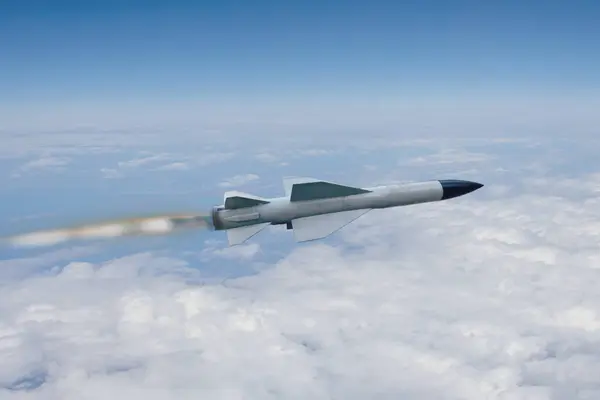
Hypersonic systems compress decision timelines, but interception is still governed by sensing, tracking, discrimination, and the mechanics of “hit-to-kill” engagements. Missile defense architecture typically relies on satellites and radars to detect and track threats, then interceptors to collide kinetically at extreme closing speeds often compared to a bullet hitting another bullet.

Intercept opportunities vary across boost, midcourse, and terminal flight phases, and existing defenses are not designed to guarantee coverage at every phase. As a result, public statements that a weapon is impossible to intercept collide with the practical limits of sensor coverage, countermeasures, and fire-control latency engineering realities that do not yield to rhetoric.
5. Intermediate-Range Ballistic Missiles and the Return of Range Bands
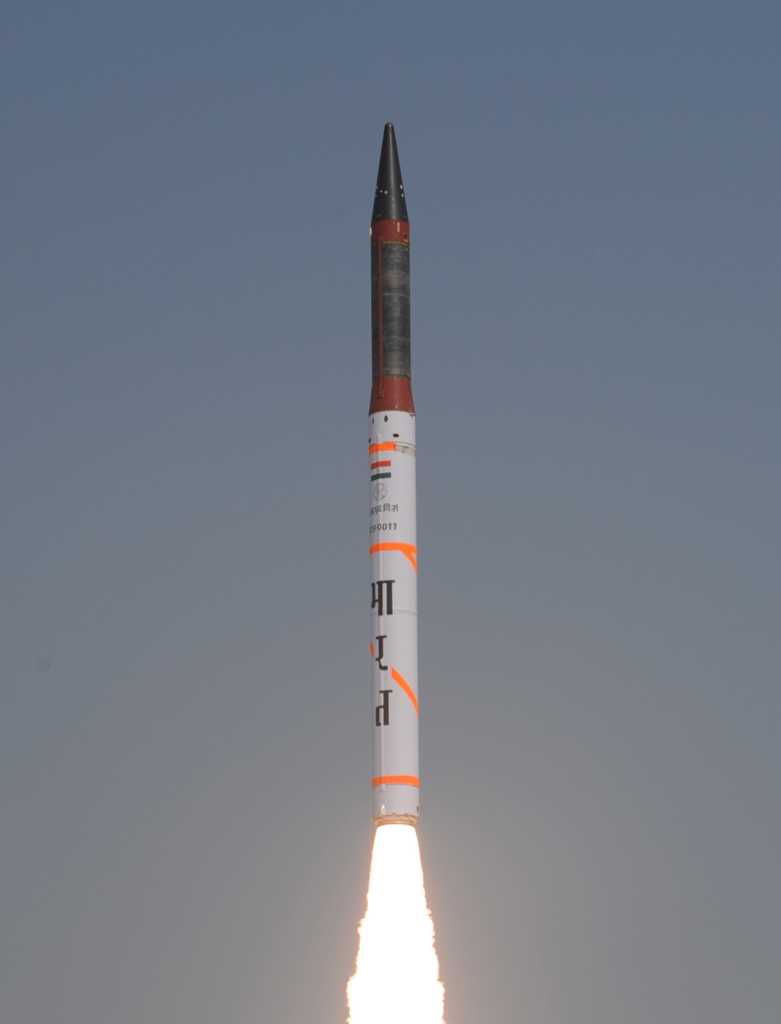
The reported emergence of Russia’s Oreshnik system has refocused attention on intermediate-range ballistic missile categories and the engineering trade-offs they imply: mobility, solid propellant readiness, multiple warhead packages, and terminal hypersonic speeds. A technical discussion published on the system describes it as a mobile, ground-based IRBM with multiple warheads and cites speeds up to Mach 10–11 in terminal flight, while noting uncertainty about payload type and configuration. The same discussion links the design lineage to Soviet/Russian practice of adapting ICBM stages into shorter-range systems, highlighting how industrial base and inherited tooling shape what gets fielded.
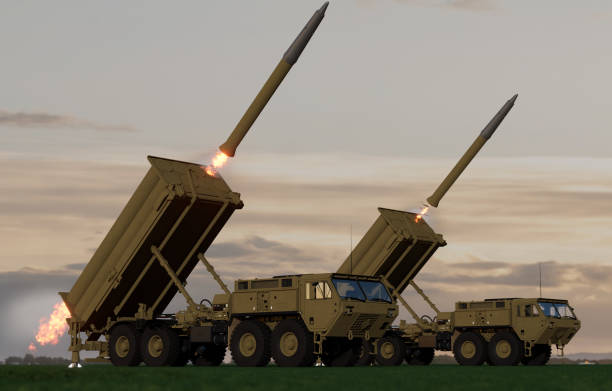
For defense engineers, the enduring point is structural: once these range bands are populated, they drive corresponding investments in sensors, command-and-control integration, and regional air-and-missile defense posture. Engineering cannot restore trust by assertion alone, whether the subject is an image, a policy decision, or a weapons claim. It can, however, make systems more auditable, more constrained by safety requirements, and more resistant to tampering. That shift from persuasion to verification has become a defining design pressure across both information networks and high-speed defense technology.


