A couple of years ago, putting her in a bikini sounded like an innocent summer headline. When repeated in 2026, the words may serve as an interface command, a command that pushes the assurance of platform safety, legality and the engineering decisions that are embedded within the contemporary AI product.
Recent attention of the Grok and the nonconsensual image manipulation of xAI has necessitated the wider examination of the governance of digital systems. Meanwhile, large national research facilities, and large-scale industrial projects, are being restructured in a manner that may alter the technical basis on which all the way down to forecasting to space operations are being made up.
To the engineering leader, product team, and policy operator, the tale is not one of this or that piece of equipment, but rather of points of repetitive pressure- where incentives, safeguards, and complex systems encounter the public.

1. The nudification at low-friction turns into the platform feature, rather than the niche
AI-driven nudifiers are not new, although they were often relegated to fringe services which charged a fee, prompted by a particular query, or manually. The shift being discussed by Grok is the distribution and convenience one: a popular social platform workflow allowing users to post a picture and order a sexualized edit in common words.
Such change in design is important as it brings the cost of abuse down to near zero, and it increases the rate of replication. A review by Reuters quoted 102 attempts within a 10 minute period of trying to use Grok in bikini-style edits, usually of young women. The interface being native to a feed and having the ability to repost output immediately makes even partial compliance easy to achieve.
The engineering lesson is not ideal. The threat model is less about lone bad actors when an image model is embedded in a social graph: instead, the threat model becomes one of swarming behavior, copycats, coordinated harassment, and the development of emergent patterns of misuse due to attention mechanisms.

2. Generative AI product design, as well as child safety, are no longer independent of each other
When the process of image generation and editing becomes accessible to the general audience, there are two different threats that safeguard must mitigate: synthetic abuse images portraying no recognizable child, and the so-called morphed content based on a harmless picture of a real child. Both are destructive, and both of them drain investigation resources that otherwise would be directed to finding actual victims.

According to the National Center for Missing & Exploited Children, GAI CSAM is CSAM, they assert that it is possible to use generative tools and generate deepfaked explicit images of a real child using a photograph of them and that the enactment and distribution of such images are harmful and illegal. In the year 2023, NCMEC was also reporting 4,700 reports, of which 1,946 addressed generative AI and possible CSAM or sexually exploitative material, as per NCMEC guidance on generative AI CSAM.
In the case of product teams, practical ramification is the inability to tack child safety on later. It must be built into training data controls, immediate treatment, filtering of the output, human review, overthrowing, as well as post-generation distribution controls, particularly in a system where products can be exchanged, searched, and multiplied within the same framework.
3. Pipelines are straining at the reporting end and the volume measures are deceptive
Operational throughput can make or break content safety programs: what is found, what is reported, what can be taken action on. The numbers are complex enough according to NCMEC CyberTipline. The 2024 CyberTipline reporting summary shows 20.5 million reports of suspected child sexual exploitation received, versus 36.2 million in 2023, and 29.2 million when adjusted because of so-called bundling.
Urgency is high even in the case of total reports decreasing, NCMEC reported that it received an average of 50 urgent reports per day with platforms, and its systems had shown another 1,400 as possibly time-sensitive and needing to be manually reviewed. That fact undermines the naive histories that less reporting means less harm; it may also reflect changing detection histories, less-good reporting or less-visible encryption.
4. The decisions made on the research infrastructure extend to the operational engineering
Platform issues are not the only ones that are concerned with safety and resilience. They are also reliant on the underlying research institutions which avail models, tools and common computing resources. National Center of atmospheric research (ncAR) is popular in atmospheric research and space-weather research, and they do support work relating the solar activity to the hazards to satellites, power grids, and communications systems.
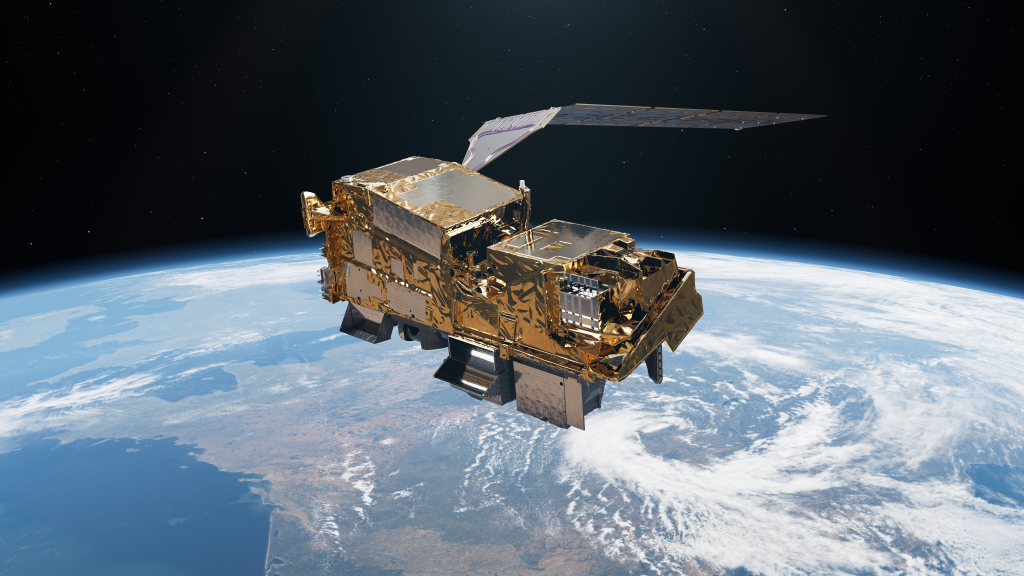
The work of NCAR has involved heliophysics missions, including the choice of CMEx by NASA to be studied further, and an NCAR-led cubesat project to be launched in 2029 as the proposal to restructure the center was covered. The center also collaborates on COSMIC-2, a U.S.-Taiwan mission with radio occultation to measure atmospheric data, and is connected with major models that are applied throughout the forecasting ecosystem.
Engineering Industries, where forecast accuracy is important (aviation, utilities, logistics, insurance, and emergency management), are operationally dependent on constant incremental advances on models and observation systems.

5. The same thing happens to moon rovers and chip fabs services, scale and dependency
Two key engineering sectors such as space mobility and semiconductors are examples of how U.S. technology stack is being reinvented using partnerships and focused capital.
NASA is seeking a service based mobility on the surface of the moon. According to the description of NASA Lunar Terrain Vehicle services, the agency chose Intuitive Machines, Lunar Outpost, and Venturi Astrolab to develop a Lunar Terrain Vehicle, and NASA intended to start using it in Artemis V and granted the rover as a service under a contractual framework with a maximum potential value of 4.6 billion. The technical focus, which is power management, autonomous driving, communications, navigation, and South Pole survivability, reflects automotive trends in autonomy, but more demanding and limited to safety cases.
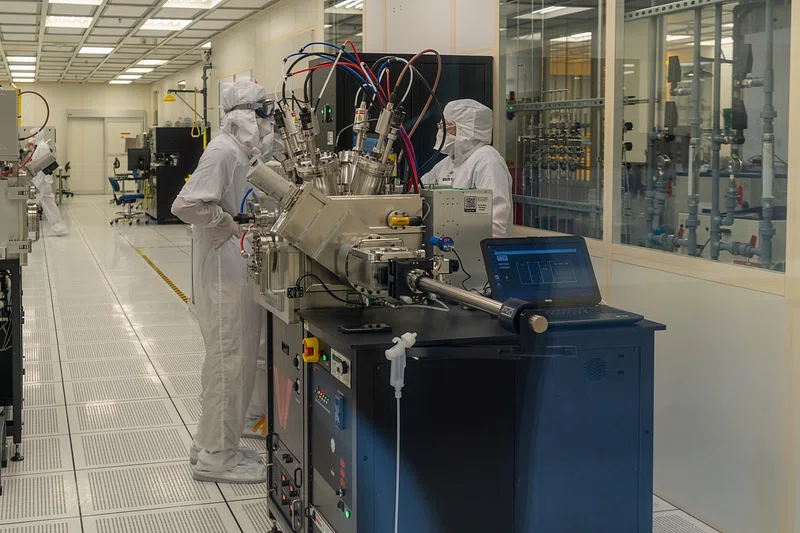
On the planet, the semiconductor buildout is at an industrial level. According to the summary of semiconductor supply chain investments provided by Semiconductor Industry Association, over 600 billion in announced private investments have been reported since 2020, more than 140 projects have been announced in over 28 states and more than 500,000 jobs are projected.
Collectively, these initiatives highlight a shared reality of engineering that modern capability is being provided more and more by large and interdependent service environments. When the platform is moderated, reporting infrastructure, shared research institutions, and manufacturing capacity are altered, downstream systems have a means of inheriting the outcomes.


