

As Carl Sagan once said, The universe is under no obligation to make sense to you. But every now and then, it gives someone a peek into its complicated machinery which defies explanation. Astronomers are tracking one such moment in the form of a huge rogue planet, unattached to any star, now making its way into our solar system. They are cosmic wanderers, born either in planetary systems or in isolation, that drift through dark interstellar space.
Detection is extremely rare, sometimes relying on short gravitational microlensing events or perturbations in the orbits of other bodies. The trajectory of the newly identified visitor would hint that gravitational capture might have played a role-a process that can sometimes eternally transform the architecture of the solar system. A discussion follows on some of the most powerful scientific angles of this encounter, ranging from orbital chaos to unparalleled observation opportunities.
1. The Mystery of the Origins of Rogue Planets
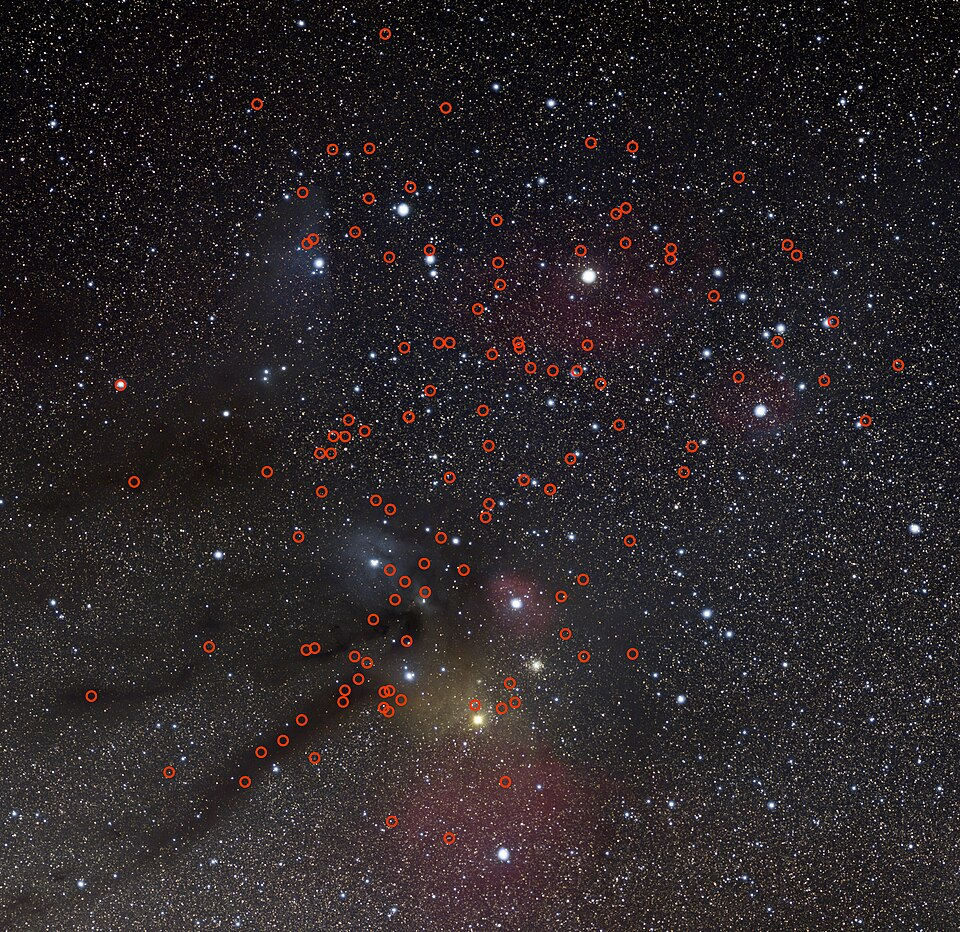
The definition of rogue planets-also referred to in some instances as free-floating planets-involves two different processes of formation: first, being thrown off by gravitational turmoil after their formation within a planetary system; and secondly, having been free since its birth by the action of the collapse of molecular clouds in a similar way that stars are born. Several surveys make estimates of hundreds of billions of rogue planets existing in the Milky Way. The orbits of such a planet through the galaxy would be determined by star, other planet, and galactic tidal field interactions, which would leave many of these worlds drifting for millennia.
2. Reveal the invisible
The principal means of detecting these so-called rogue planets is through gravitational microlensing, proposed by Einstein’s General Relativity. If a rogue passes in front of a background star, its gravity will bend and magnify the starlight which would cause a short-term brightening. Projects such as OGLE and MOA monitor millions of stars for these very rare events. Events less than two days have already disclosed Earth-mass and Jupiter-mass rogues, possibly hinting that such low-mass wanderers could be more common than the stars in our galaxy.
3. Permanent and Weak Capture Mechanics
A theory put forth by studies led by Edward Belbruno and James Green posits such objects, including rogue planets, might be caught permanently by the Sun in a gravitational dance with the Milky Way during such a process called weak capture, wherein the object spirals inward very slowly into a stable orbit, never to collide with the Sun. Such captures would take place at very specific gravitational gateways, which means, at Lagrange points lined up with the galactic center and anti-center, where the incoming body can be ensnared indefinitely.
4. Possible Orbital Chaos
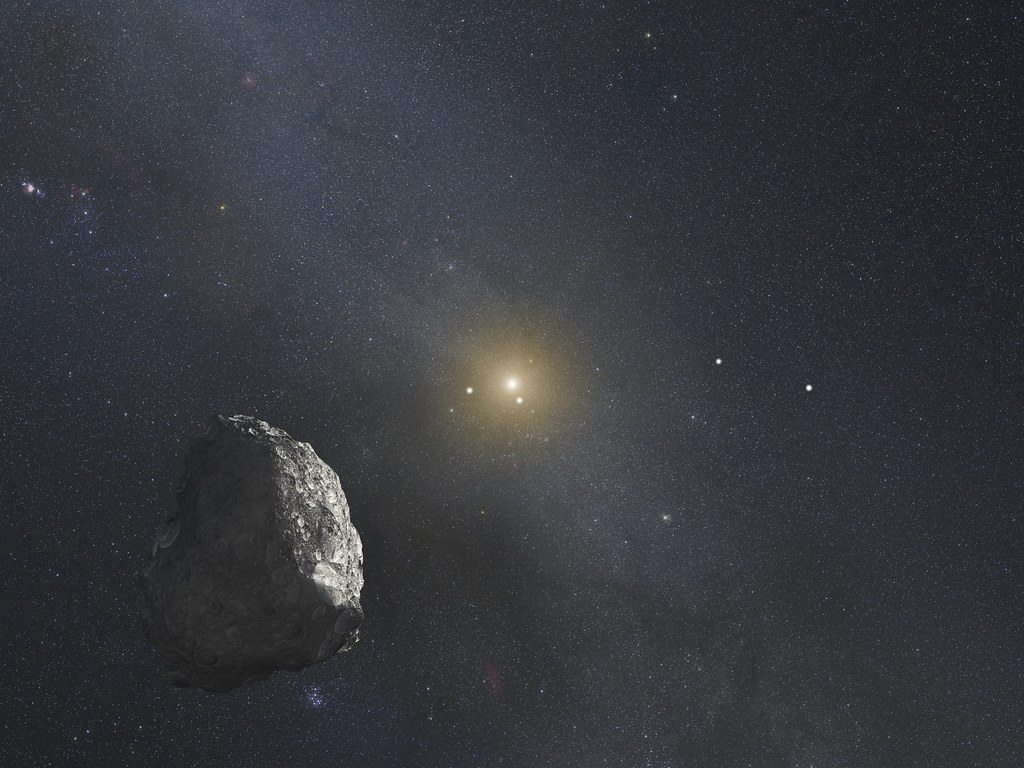
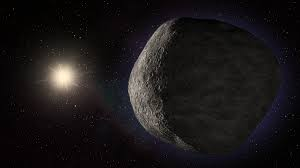
Its approach would perturb the orbits of asteroids, Kuiper Belt objects, and Oort Cloud bodies. Relatively small perturbations to orbital resonances may suffice to send comets into the inner solar system, which increases the possibility of close approaches or impacts with Earth. This is hinted at by historical evidence that may indicate such gravitational perturbations delivered water to Earth or caused mass extinctions-underlining how profound such an arrival could be.
5. Kuiper Belt Reshaping
The simulations indicate that a short-period resident rogue planet in the solar system can populate both the distant resonances and the detached trans-Neptunian objects during its formative years. Gravitational encounters can weakly push bodies into resonances with Neptune where processes such as the Kozai-Lidov effect lift their perihelia up to higher values or throw them onto detached orbits. This could, in turn, explain the profusion of high-perihelion objects seen today in the distant Kuiper Belt.
6. Trading Worlds with Alpha Centauri
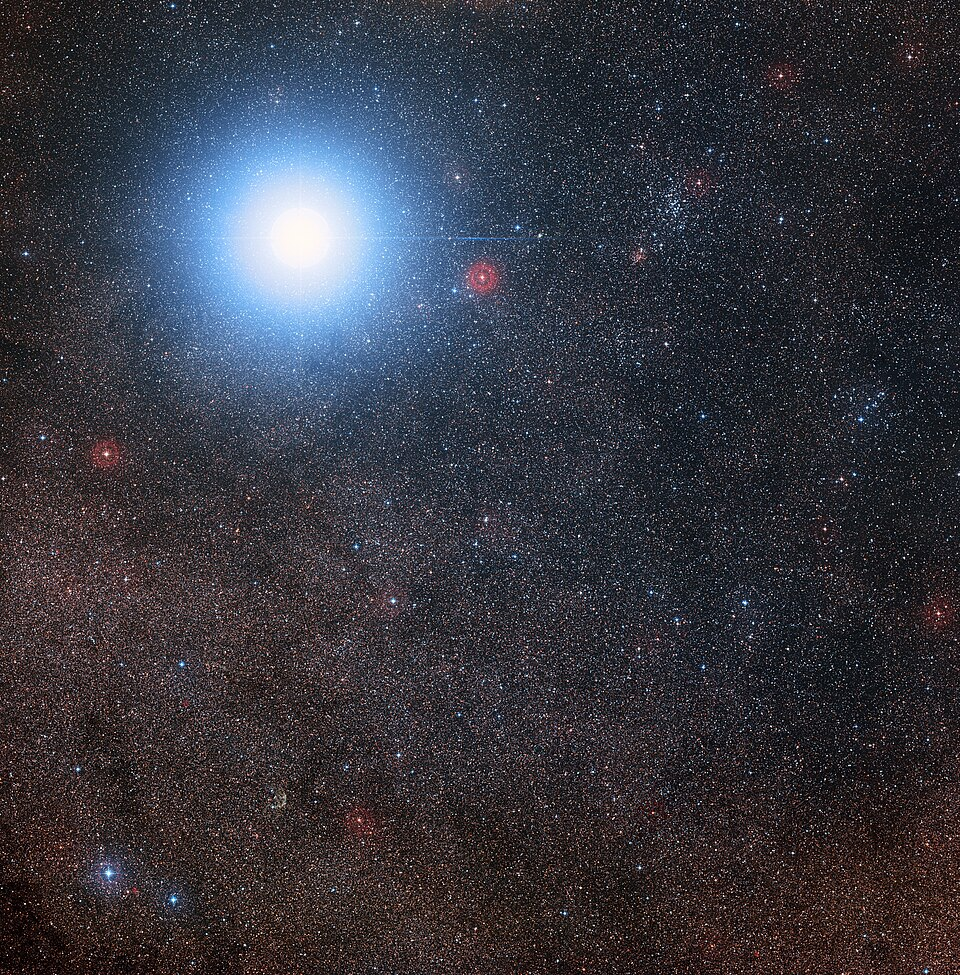
That is roughly at a distance of 3.81 light-years where the gravitational pull of the Sun combines with that of Alpha Centauri. It is at such distances that captured rogue planets may be exchanged between the two systems over billions of years, stamping long-lasting fingerprints in the outer parts of each system-a sort of dynamical interstellar marketplace for planetary bodies.
7. Atmospheric Forensics with JWST
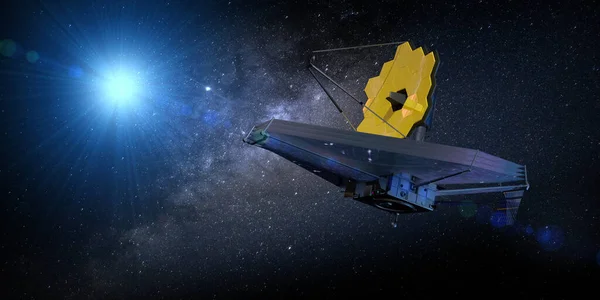
If it wanders close enough, instruments like the James Webb Space Telescope will have the capability to study its atmosphere by performing thermal emission spectroscopy. The presence of molecules such as methane, carbon monoxide, or water vapor could give some hints as to whether it formed somewhat like star formation or had been ejected from an older planetary system. Similar studies carried out on other such objects, such as SIMP 0136, have shown evidence for intricate atmospheric dynamics, a partly cloudy sky, and even chemical variations.
8. Hazards to the Cold Classical Belt
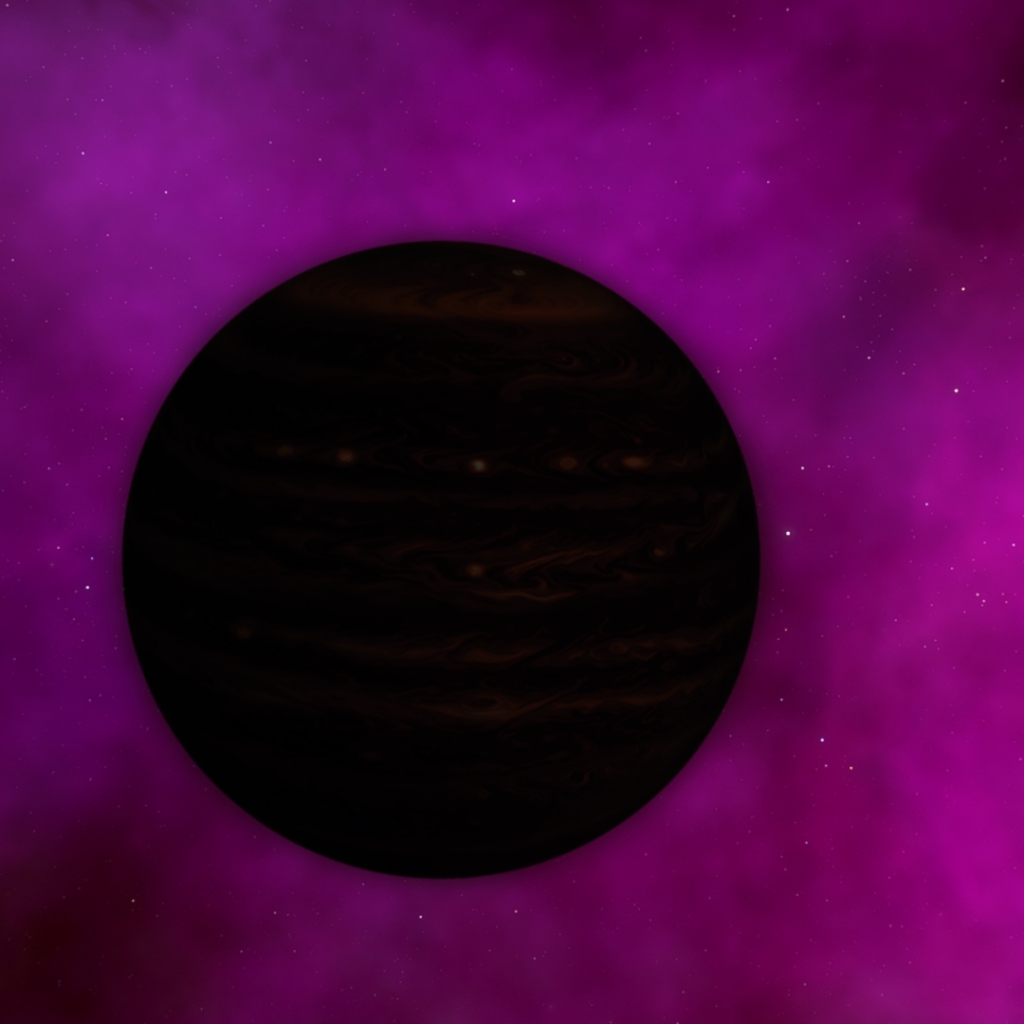
Concerns that a rogue planet might disrupt the cold classical Kuiper Belt-a region of low inclination, low eccentricity objects-are mitigated if the rogue’s orbit quickly extends to several hundred astronomical units. Simulations show that even in the case of repeated crossings, a large-a rogue generates negligible excitation and thus preserves the belt’s fragile dynamical state.
9. A Rare Scientific Opportunity
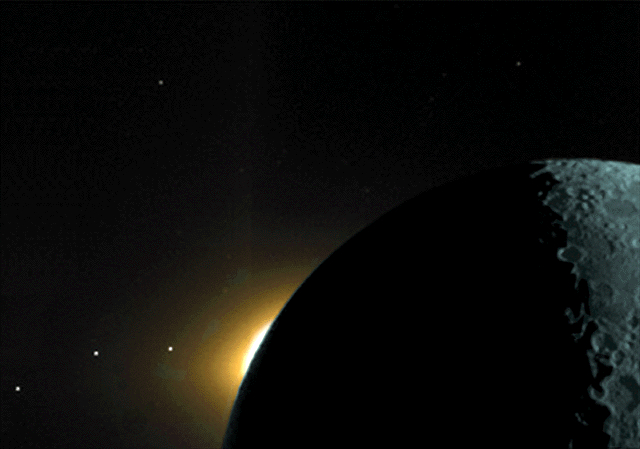
Beyond the hazards, the rogue’s arrival provides an unparalleled opportunity for investigation of a planetary body that has formed under totally different conditions from our own solar system. Its mass, velocity, and trajectory can improve models regarding planetary scattering, interstellar object capture, and solar system evolution. Be it a permanent resident or a transient, this interstellar visitor could change our insight into how planetary systems interact with the wider galaxy.
The passage of a rogue planet through the solar system is more than a curious celestial event; it is an experiment in gravitational dynamics on solar system scales. From reshaping distant belts to atmospheric analysis, this event connects planetary science, astrophysics, and observational astronomy. Whichever way it goes, the outcome will leave its enduring signature on the structure of our solar system and our understanding of the galaxy’s restless denizens.


