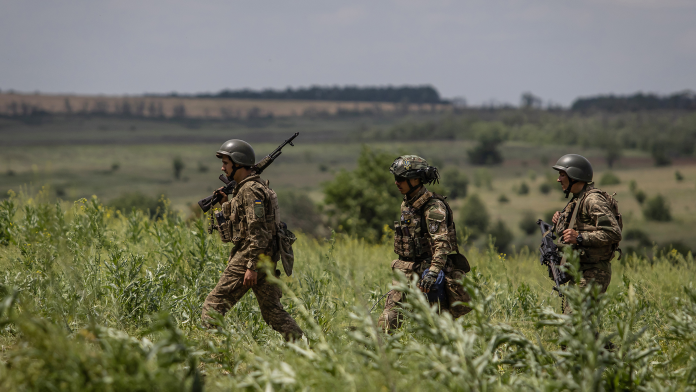
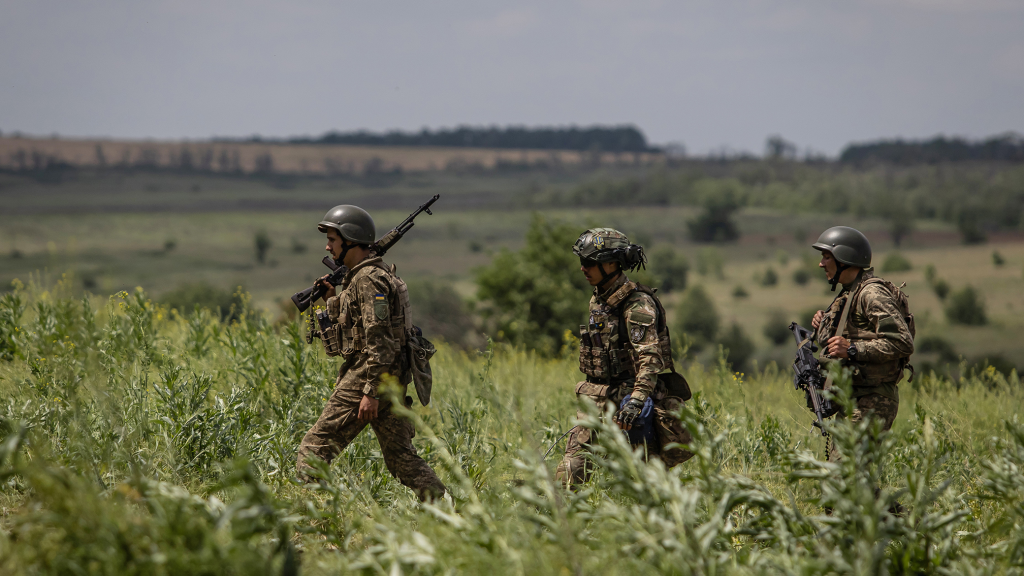
“Can a country, under constant attack, not only survive but reinvent its military? By late 2025, Ukraine’s war effort has moved beyond reactive defense into a deliberate transformation of its armed forces and industrial base. These things stand in jarring juxtaposition to the Russian reliance on refurbished Soviet armor and brute manpower. Ukraine is betting on precision, software-defined lethality, and sovereign production against the lack of mass.
This is not a single breakthrough, but interrelated changes: from indigenized long-range strike systems to the institutionalization of drone warfare, creation of a local defense-industrial ecosystem. Taken together, they suggest how Ukraine’s deterrence posture is shifting to make a fundamental difference in the calculus of the conflict. The following nine areas illustrate how Ukraine is building a force designed for technological decision rather than attritional endurance.
1. Indigenous Long-Range Strike Complex
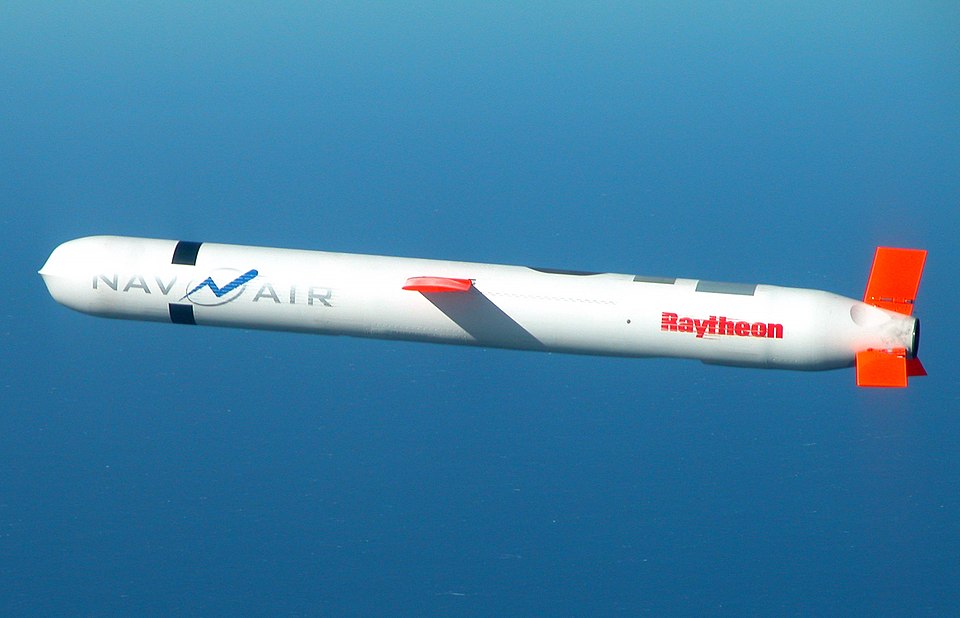
By 2025, Ukraine had broken free from Western range restrictions by operationalizing its own strike capabilities. The multi-layered complex includes ballistic missiles, cruise missiles, and hybrid missile-drones capable of deep strikes on Russian logistics and infrastructure without external approval. The latter represents a strategic shift from dependence upon the West for deterrence to one based on self-determination.
2. Sapsan Ballistic Missile Deployment
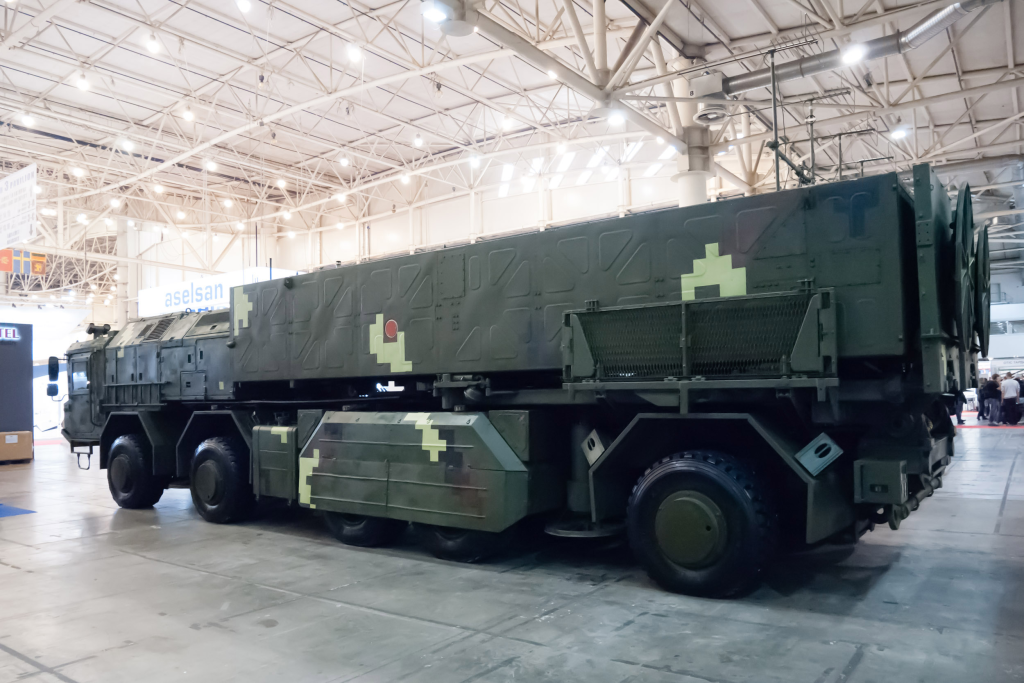
President Volodymyr Zelenskyy confirmed in December 2025 that the domestically developed Sapsan, with an approximate range of 500 km and a 480 kg warhead, is in combat use. Its Mach 5.2 terminal velocity challenges the Russian S-300 and S-400 defenses, pushing adversary air assets deeper into their territory. The rapid maturation from prototype to operational weapon reflects Ukraine’s accelerated R&D under wartime pressure.
3. Missile-Drone Innovations: Peklo and Palyanytsia
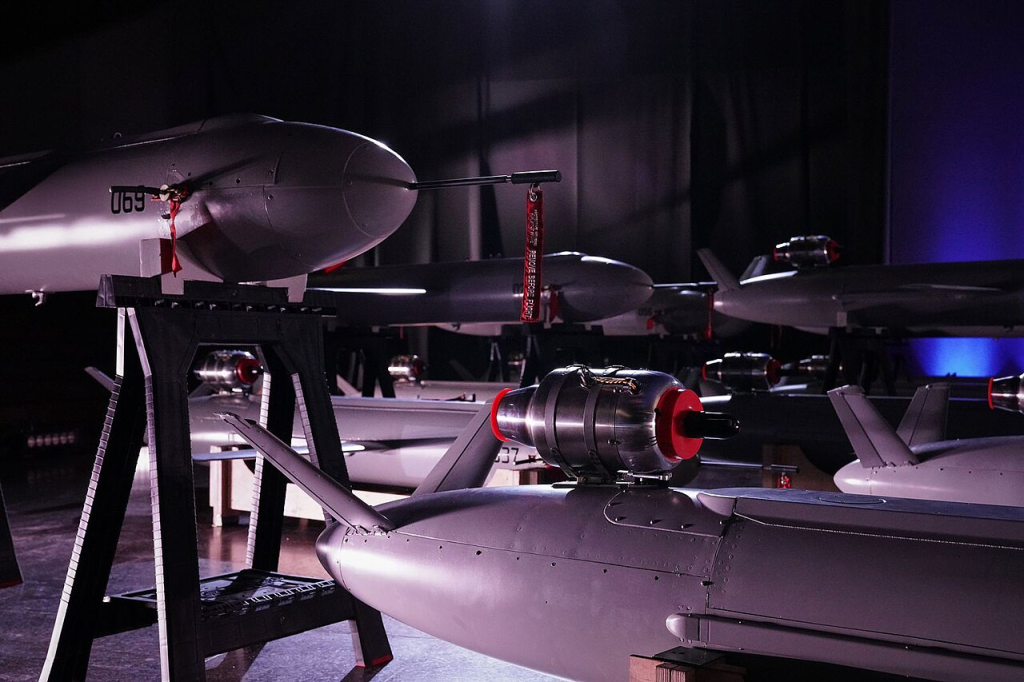
The Ukrainian “rocket-drone” Peklo and hybrid system Palyanytsia fall somewhere in between more expensive cruise missiles and slower, loitering munitions. Having well over 400 miles of reach with jet-powered speeds, these saturate air defenses at a fraction of the cost of traditional missiles. Their philosophy of mass production, simplicity, and scalability offers a model for affordable, long-range strike capability.
4. Defense Industrial Localization
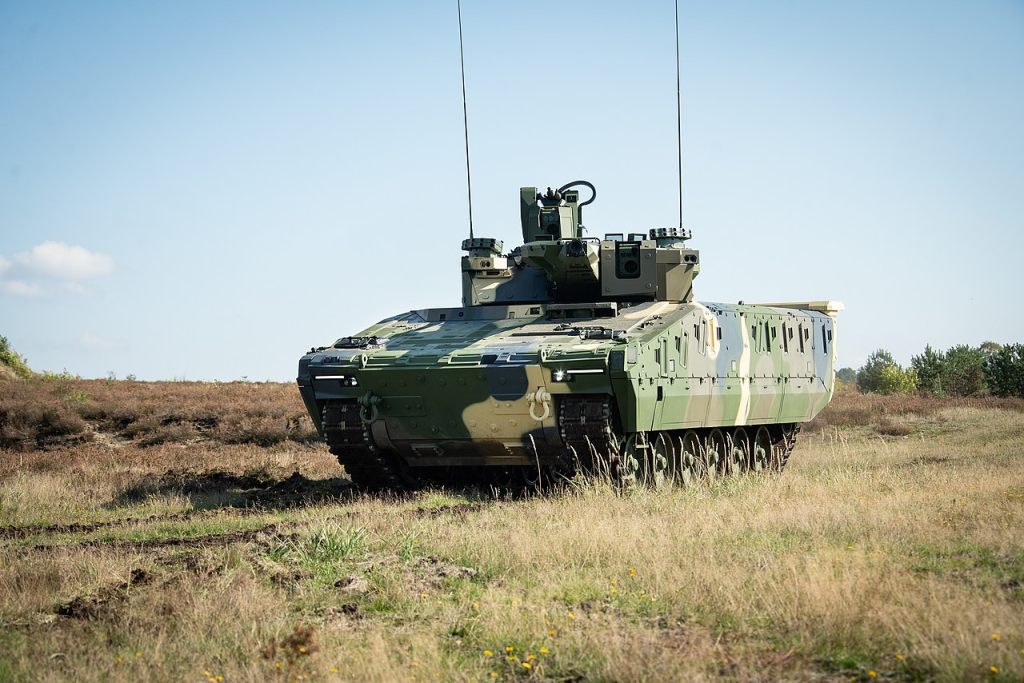
Aware of the limits of donor stockpiles, Ukraine has partnered with Western companies to develop domestic production capacity. Rheinmetall’s 155mm ammunition and Lynx IFV joint venture, Baykar’s drone factory near Kyiv, and the transition of BAE Systems from artillery maintenance to manufacturing-all point to a clear trend in this direction. Annual domestic production of systems like the 2S22 Bohdana howitzer has surpassed 200 units, outstripping pre-war procurement levels for many NATO states.
5. Unmanned Systems Forces as a Separate Branch
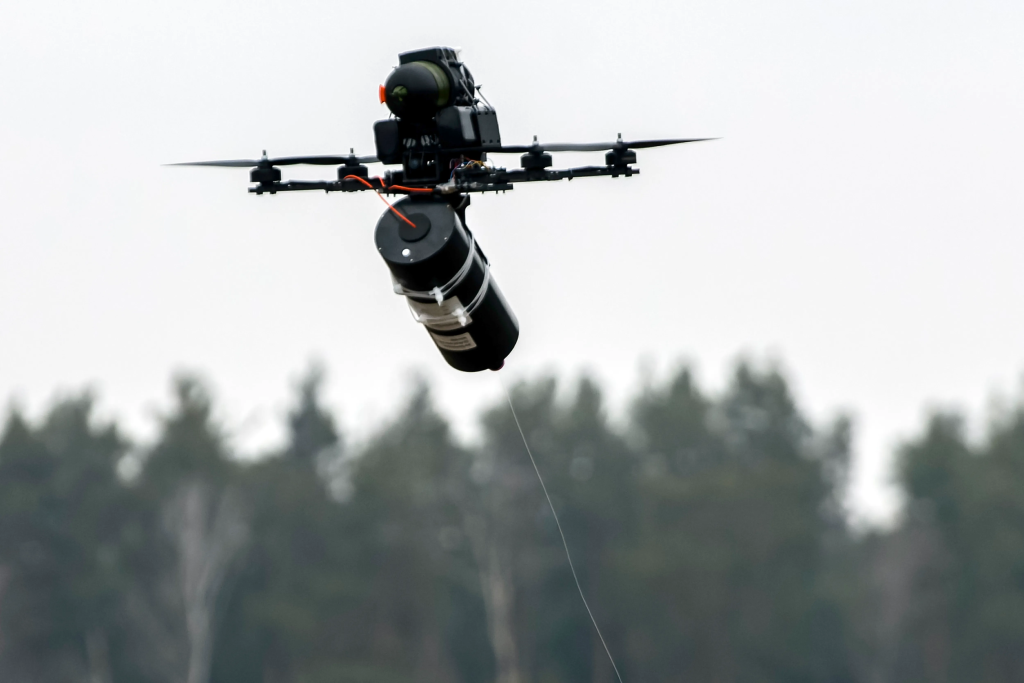
The USF, established in 2024, consolidates drone warfare doctrine, procurement, and training. The “Drone Line” project standardized the platforms and logistics to replace the chaotic mix of volunteer-supplied drones. USF controls under a single command strategic assets like missile-drones in combined arms campaigns, performing suppression and strikes in fully synchronized fashion.
6. Network-Centric Warfare with Delta
Ukraine’s Delta system has grown into an interoperable NATO battle command platform, placing space imaging, drone feeds, HUMINT, and sensor data in a common operating picture. AI-driven detection can cut the sensor-to-shooter cycles down to seconds as artillery preempts enemy fire. Experience from exercises such as NATO CWIX and REPMUS 2025 has generated export interest in this product, which is a reversal of the usual west-to-east flow of military technology.
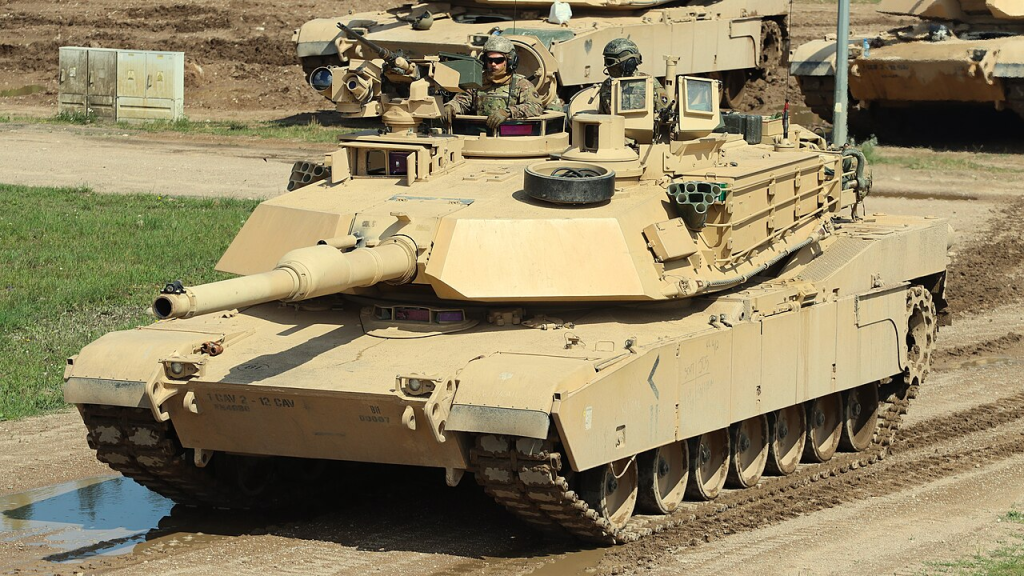
7. Managing the ‘Zoo’ of Diverse Platforms
The armored fleet of Ukraine includes Leopard 1/2, Challenger 2, M1 Abrams, PT-91, CV90, and many Soviet-era tanks. For the same purpose, this is pretty varied and complicates maintenance, supply chains, and training. That being said, mobile repair workshops and ‘universal mechanics’ reduce downtime, but a lack of standardization remains a drag on operational efficiency compared to the more uniform-if technologically regressed-Russia.
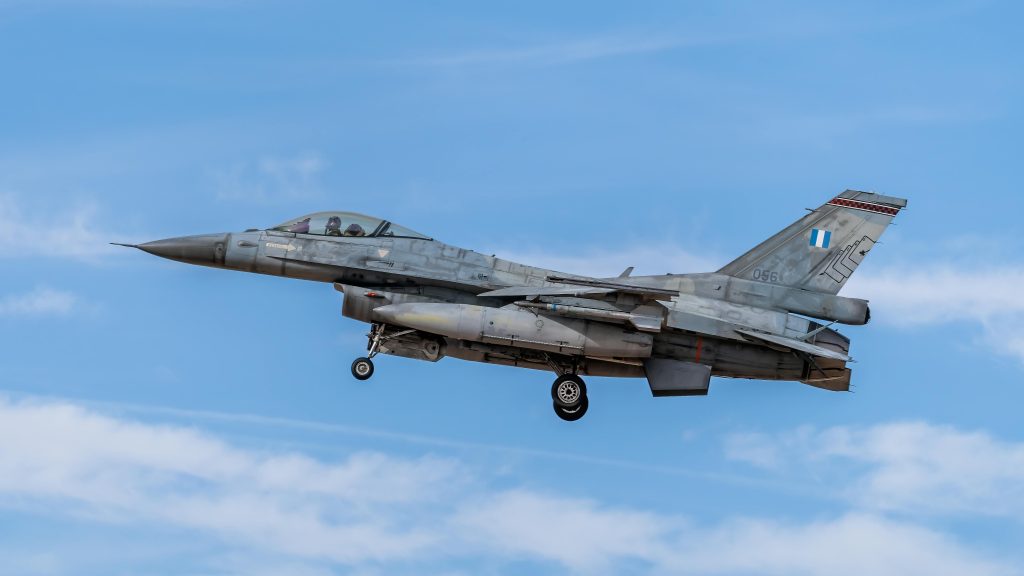
8. Air Power: Transition and Infrastructure Challenges
Adding F-16s and Mirage 2000-5Fs significantly enhances the capability but calls for both very well-maintained runways and specialized maintenance. The resultant pressures for airfield upgrading under missile threat are impairing options for dispersal. Specialized roles-Mirages for ground strike, F-16s for air defense-optimize performance but introduce logistical complications with two separate supply chains in addition to legacy MiG and Su aircraft.
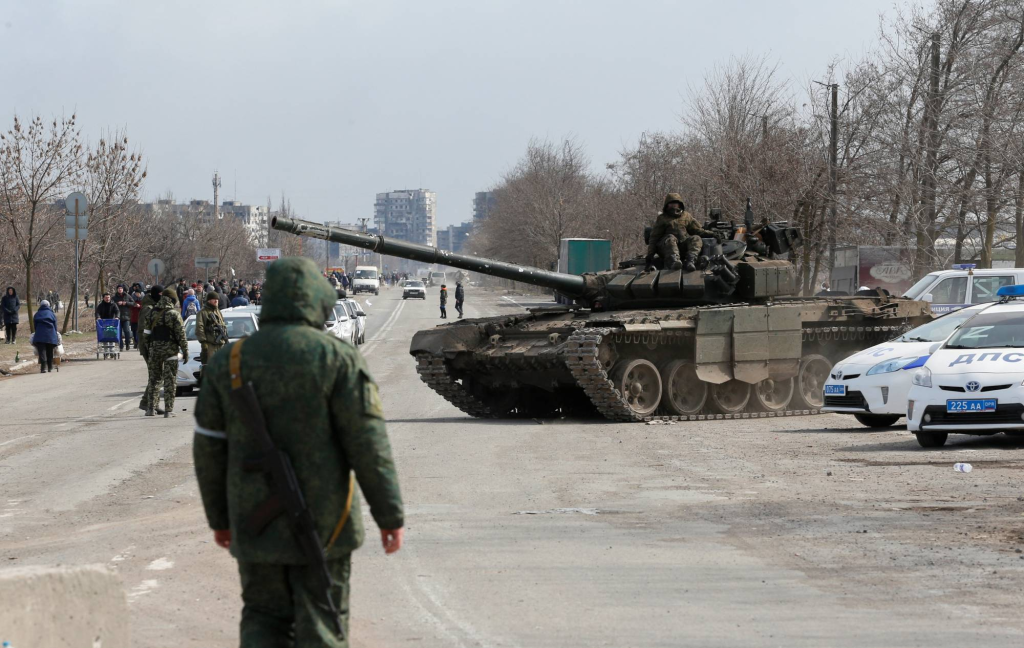
9. Human Capital Management through the booking system
The revised ‘booking’ system in Ukraine exempts critical defence industry workers from mobilization on grounds of recognition that a skilled welder or software engineer is more use in production than in the trenches. This preserves industrial production, but deepens labour shortages in other parts of the economy, whose pressures have to be weighed against military requirements. Ukraine’s trajectory in 2025 reflects a conscious decision for technological over numerical superiority-from indigenous missiles and institutionally embedded drone warfare to dispersed production.
These changes are intended to generate decision points on the battlefield rather than having to endure a war of attrition. The paradox is evident: diversity of systems creates logistical burdens, yet it feeds adaptability and innovation. It is, therefore, in this reclaiming of sovereignty over strike capabilities, and exporting battle-proven technologies such as Delta, that Ukraine is positioning itself not just to survive but also to redefine the balance in modern warfare between mass and precision.


