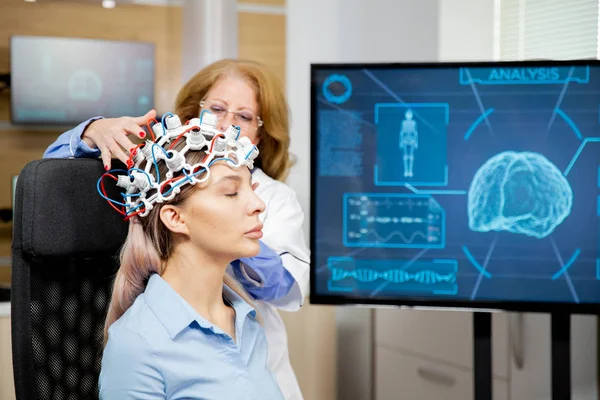
What’s more unpredictable than the plot twist in a mystery novel? The human brain. In 2025, neuroscience peeled back new layers of this intricate organ, revealing phenomena that challenge long-held assumptions and expand the bounds of human experience. From colors no one has ever seen before to proteins in newborns that could reshape Alzheimer’s research, this year’s findings are as astounding as they are profound.
By marrying sophisticated imaging, molecular biology, and innovative stimulation techniques, researchers delved into the brain’s structure, chemistry, and perception across laboratories and clinics. The results have implications for our understanding of consciousness, the diagnosis of disease, and even the redefinition of what it means to see or remember. Herein, ten of the most compelling breakthroughs from the past year, each offering a fresh lens on the mind’s complexity.
1. Mapping the Brain’s Five Life Eras
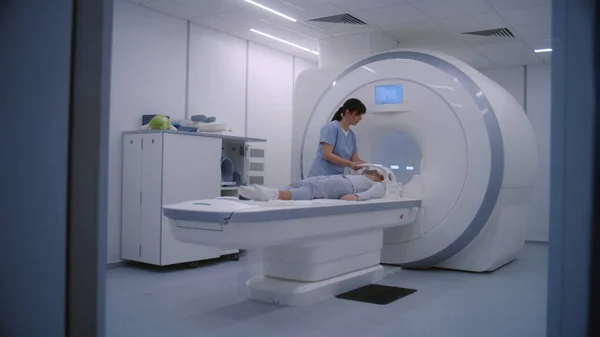
Large-scale MRI diffusion scans of 3,802 individuals from birth to age 90 demonstrated that the wiring of the connectome reorganizes at four key ages: nine, 32, 66, and 83. Consistent patterns of connectivity change across people span childhood, adolescence, adulthood, early ageing, and late ageing. As Dr Alexa Mousley of the University of Cambridge, who led this research, explained, neural efficiency only exhibits increased changes during adolescence, which lasts until the early thirties; architecture stabilizes after 32, along with a plateau in intelligence and personality, while during the later decades, there appears a gradual segregation of regions of the brain.
2. Infant Memories Exist but Are Locked Away
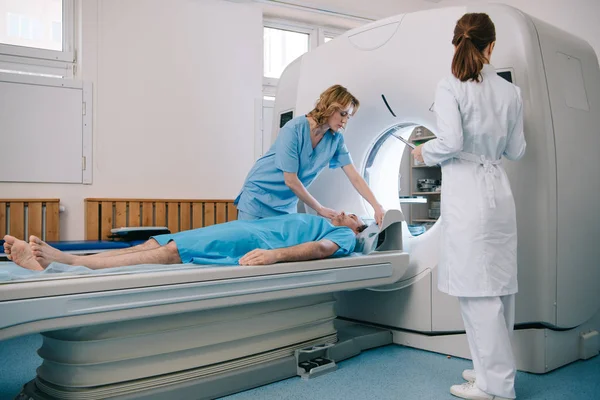
Contrary to the view that early-life events disappear as a result of a hippocampus that is not mature enough, Yale researchers used fMRI with awake infants to demonstrate that babies as young as one year can encode episodic memories. Activity in the posterior hippocampus during image viewing predicted later recognition. Coauthor Tristan Yates says these memories may persist into adulthood but remain inaccessible, reframing infantile amnesia as a retrieval problem, rather than a failure of encoding.

3. Tau Protein Levels in Newborns Challenge the Paradigms of Alzheimer’s
Now, an international team has found that pTau217 levels-more than fivefold higher in the blood of healthy newborns compared with healthy adults-decline within months, suggesting that tau-related changes in disease may be reversible. This work also revealed that total tau and neurofilament light chain are increased in infants, indicative of fundamentally different developmental processes from neurodegeneration and providing new therapeutic avenues related to tau phosphorylation reversal.
4. Proof of Adult Neurogenesis
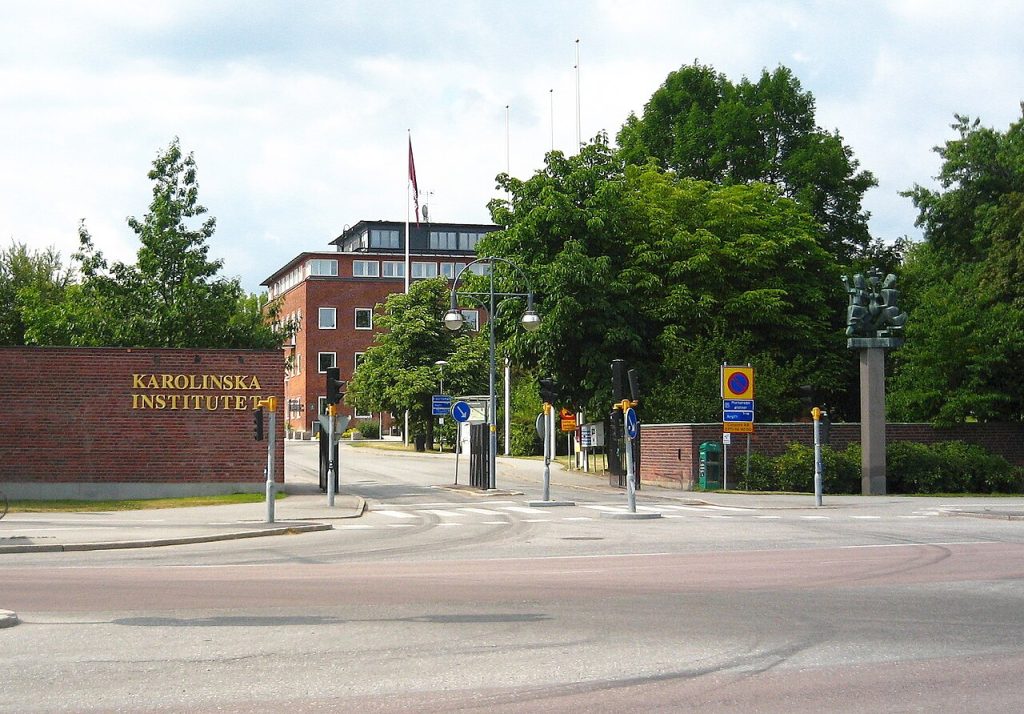
Using single-nucleus RNA sequencing and machine learning, scientists at the Karolinska Institutet have been able to highlight neural progenitor cells in adult hippocampi-even up to the age of 78. These progenitors were localized to the dentate gyrus, one of the primary sites for memory formation. “We have now been able to identify these cells of origin,” says Professor Jonas Frisén, an affirmation that new neurons are formed in adulthood, a finding which could inspire regenerative treatments for neurodegenerative and psychiatric disorders.
5. The Brain’s ‘Reality Signal’
UCL researchers show that the fusiform gyrus emits a signal whose strength determines whether experience is reported real or imagined. This ‘reality signal’ is interpreted by the anterior insula, which forms part of the prefrontal cortex. On those occasions when imagined patterns elicited vivid fusiform activity, participants incorrectly thought that they were viewing real ones. According to Dr. Nadine Dijkstra, dysfunction within this circuit may underpin hallucinations, offering targets for interventions in schizophrenia and disorders of perception.

6. First Disease-Modifying Therapy for Huntington’s
In the Phase I/II study, gene therapy AMT-130 reduced the progression of Huntington’s disease by up to 75% in high-dose recipients as determined by composite clinical scales. Given through an 8–10-hour surgery of the brain, AMT-130 employs an AAV5 vector that lowers both mutant and normal huntingtin protein. Prof. Sarah Tabrizi said the data indicate AMT-130 can “meaningfully slow disease progression,” a milestone for genetic intervention in neurodegeneration.

7. Ape Insights into Theory of Mind
In the Ape Initiative, experiments with bonobos yielded results showing they are aware whether a human partner has any information lacking and will proactively communicate to correct that information. According to cognitive scientist Christopher Krupenye, “the apes communicated proactively to make sure that their ignorant partner still made the correct choice.” This controlled evidence of theory of mind in bonobos suggests such social cognition existed in our last common ancestor, expanding understanding of nonhuman rationality.

8. Impossible Color to See: Olo
The ‘Oz’ system from UC Berkeley used lasers to only stimulate the M-cone photoreceptors, completely avoiding the natural spectral overlap and enabling, for the first time, a saturated bluish-green color, called olo. Participants confirmed olo was outside normal human gamut by desaturating it to a match any existing color. The technique also rendered images and video in olo, hinting at applications that range from advanced displays to vision research and demonstrating programmable control of individual photoreceptors.
9. Detection of the Biophoton Glow of the Brain
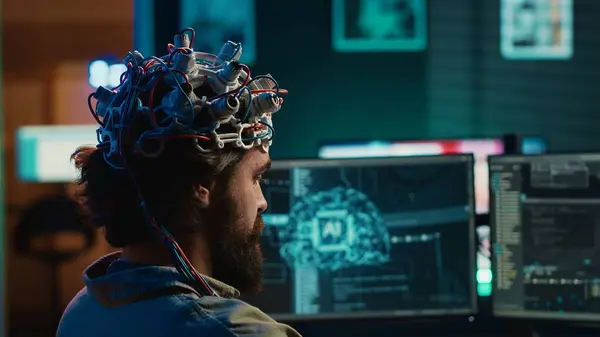
The first external measurements of ultraweak photon emissions from the human brain were obtained by researchers. The metabolic reaction by-products-light, or biophotons-changed with cognitive tasks but not as a simple function of concurrent EEG activity. As quoted by senior author Nirosha Murugan, photons may be internally absorbed or scattered; the findings raise more questions about the possible role of photons in neural communication and photoencephalography as a non-invasive method of monitoring the brain.

10. Impossible Color Vision Meets Neuroscience
Building upon the Oz platform, thousands of retinal cones were mapped and targeted by scientists to extend the colorspace of humans in controlled experiments. Color matching established olo beyond the natural gamut, with subjects rating its saturation at the maximum. The precision required-high-resolution retinal imaging, rapid eye-motion tracking, and low-latency stimulus delivery-starts a new experimental paradigm for studying human color perception at cellular resolution.
This year’s discoveries have made it explicitly clear how far neuroscience has come in decoding the architecture, chemistry, and perceptual limits of the brain. From unlocking early memories to colors beyond nature, each discovery not only deepens scientific understanding but hints at transformative applications in medicine, technology, and our grasp of consciousness itself. The mind remains a frontier, and 2025 has pressed it further into uncharted territory.


