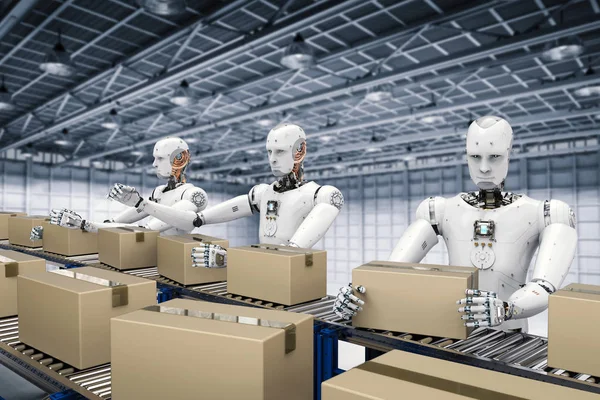
The future humanoid robot revolution is possibly already an imperative, but this will definitely not happen in the form of some sci-fi explosion but is already underway as something both technically complex and destined for a $5 trillion industry by the year 2050, while owning no more than one million units per year until after the year 2036. The next years will be defined by a set of research and reaching safety standards for humanoid robots for human environment interaction.
1. Reliability as the First Barrier
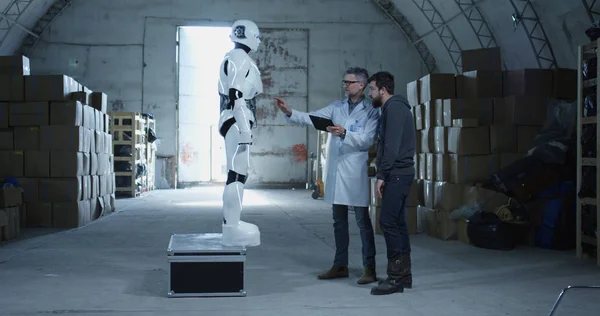
As stated by a Boston Dynamics researcher, Alberto Rodriguez, “reliability is the most important robotics mission” because of the current state of the art of robotics. All robotic applications, industrial and home, have to be carried out flawlessly for tens of thousands of hours. Helping to close the gap is the aim of the Atlas program, whose objective is to produce thousands of units within four years, besides the tens of thousands of units that have been promised for industrial use by Hyundai. Quite a distance is between lab and industrial applications, where everything is controlled.

2. The ‘Last-Mile’ Problem of Dexterous Hands
The difficulty in achieving a human hand with 24 degrees of freedom and touch capabilities is an extremely tough challenge. The setback in the Optimus project at Tesla, which aims at five-finger hands, is partly due to the complexity involved in achieving touch capabilities. The research performed at the CSAIL at MIT has proved that multi-finger hands are able to handle over 2,000 objects with the aid of reinforcement learning and “gravity curriculum” learning, although the pick and place task is very inefficient when it comes to irregular objects, like screwdrivers and scissors. A new approach is required in the area of soft and unactuated hands and touch technology.
3. Limitations in AI Research & The Need for World Models
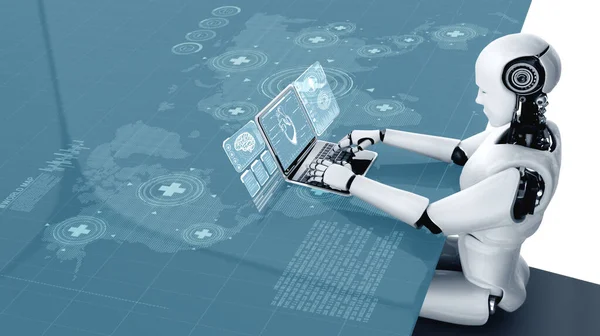
Current language models excel at symbolic cognition but fail at spatial intelligence. They do not understand physics, geometry, and environment engagement in the three-dimensional world. Organizations have already shifted their paradigms toward developing world models in which they deal with multimodal sensory input, spatial memory, and predictive control. WSG models integrating implicit fields and 3D environments, along with scene graphs, would provide a long-term coherence for robots to perform complex tasks without structure. Current work is underway at Boston Dynamics, building large models for behavior, teleoperated, and learning from synthetic experiences for a set of actions.
4. Data Acquisition – Teleoperation vs. Simulation
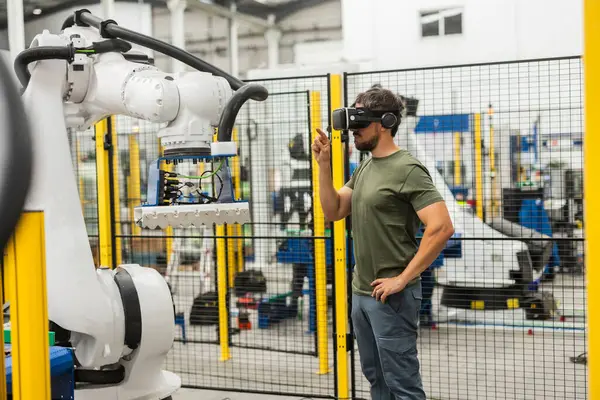
For training humanoids in dexterous tasks, a lot of data needs to be involved. Tele-operation, where the control of robots is done by human operators from a distance, gives high-quality interaction data, but it can be very expensive and also very slow. Simulations, such as Isaac Sim and MoJoCo, provide data instantly, but it also faces the problem of Sim2Real, which involves the discrepancy between friction, compliance, or deformation properties of simulated and actual objects. Recent work suggests that simulated environments can easily outdo tele-operation in force-major skills, such as a tight peg-in-hole task.
5. Safety within the Human-Robot Shared Environment
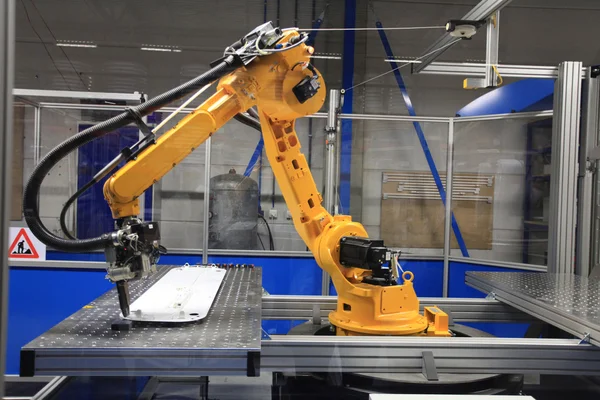
The issues of humanoid robots include issues of safety, which have not yet been considered in industrial robots. They work in dynamic environments, with their performance measured by social interactions and dynamic adaptation of tasks. Standards such as ISO10218 and ISO13482 are only partially supportive, and the loopholes lie in multi-model system safety, adaptation of systems, and validation of social interactions. The Saphira platform provides opportunities for assessment of possible colliding chances and understanding of intentions of humans in case of force-limited manipulator systems and possible chances of collision.
6. Dynamics of Manufacturing and Supply Chain
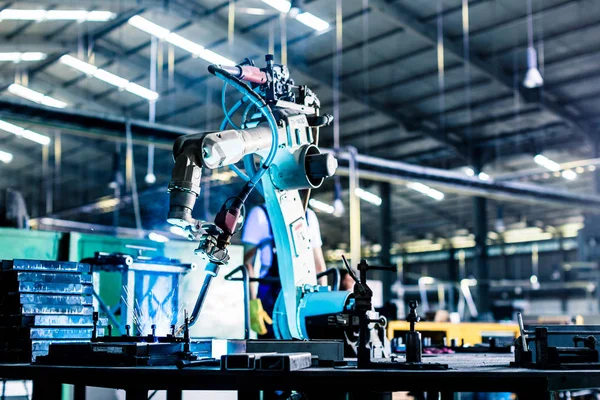
The difference is widening in the creation of embodied AI and robots from China and the global community. It is therefore safe to say that since China has mastered all the required components of the mentioned robots such as the motors, the harmonic drive, and the force torque sensors, they are designing low-priced humanoids like those offered by Unitree that only cost thousands of dollars. Unlike robots from the U.S., which are designing high-spec humanoids and AI with chips that support 150 TOPS processors.
7. Market Trajectory & Pricing Trends
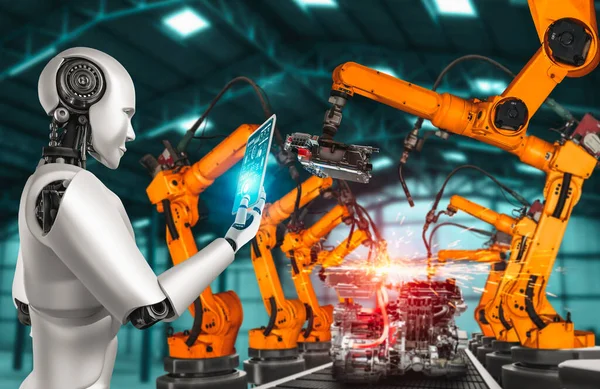
Humanoid prices of $200,000 in 2024, later dropping to $50,000 in 2050 and even $15,000 for the less affluent markets. U.S. market penetration could reach 10% in the mid-century period, with industrial and commercial use dominating with 90%. Biased robots for the early-consuming public, for instance, a robot for less than $1,500 for the child robot from Noetix, fill a specific niche in the research community, while subscription services like 1X Technologies’s Neo utilize tele-control with autonomy to negotiate the AI obstacle in the near future.
8. Engineering Innovation in Mobility and Power
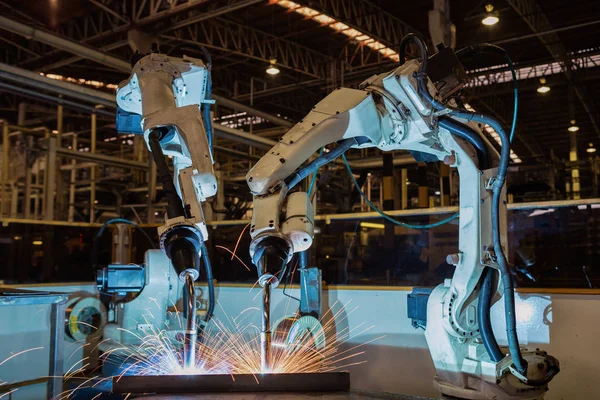
The Atlas series of robots from Boston Dynamics captures the philosophy of seamless integration of high-density hydraulics, servovalves developed and customized for the demands of these systems, and additive manufacturing methods aimed at decreasing the moment of inertia in the limbs, which plays a crucial role in effective biped locomotion.
The power density of the hydraulic power unit reaches nearly 1 kW/kg, having 3D manifolds that create minimum pressure loss. The future of the use of these humanoid robots would be shaped by the domains of mechanical engineering innovations, AI and intelligence in space, and the ability to adapt the laws to these innovations.


