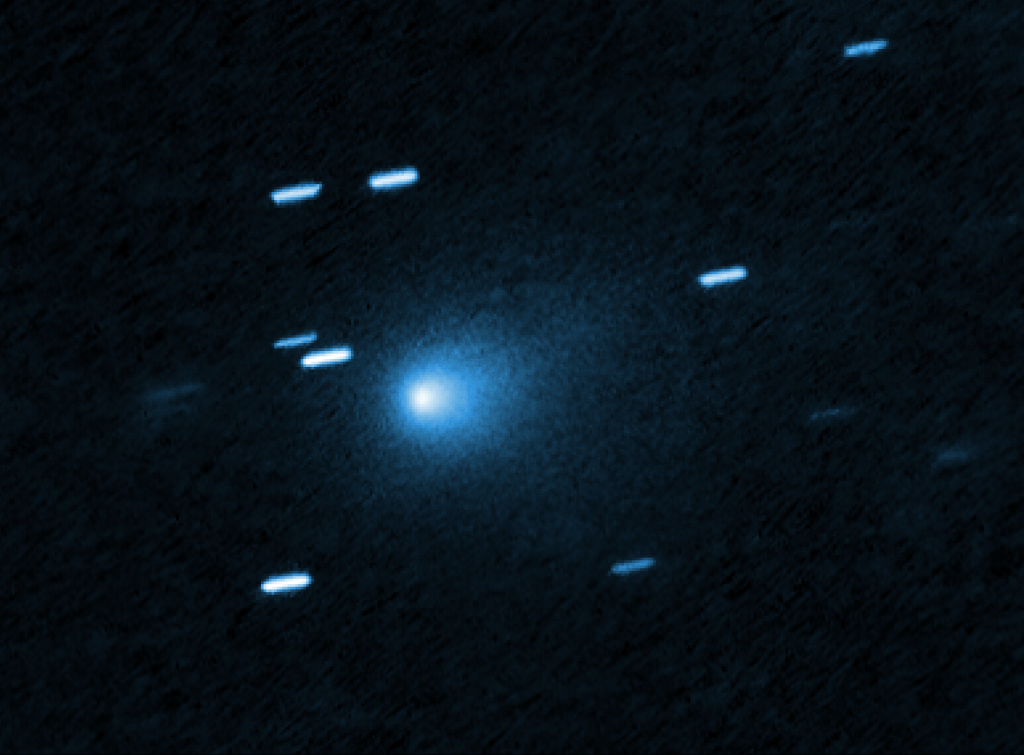
Its arrival was far from stealth. Comet 3I/Atlas is, as it was observed in July 2025, the third confirmed interstellar object ever discovered a faint bright spot noted by the Asteroid Terrestrial-impact Last Alert System (ATLAS) in Chile. Its hyperbolic orbital pattern, foreign composition, and unprecedented level of observation access place this object at the top of everyone’s list. NASA and international efforts will spend the next year pursuing its multi-faceted observation mission to document every possible aspect of this relic from beyond the reaches of the Sun.
1. The Interstellar Signature
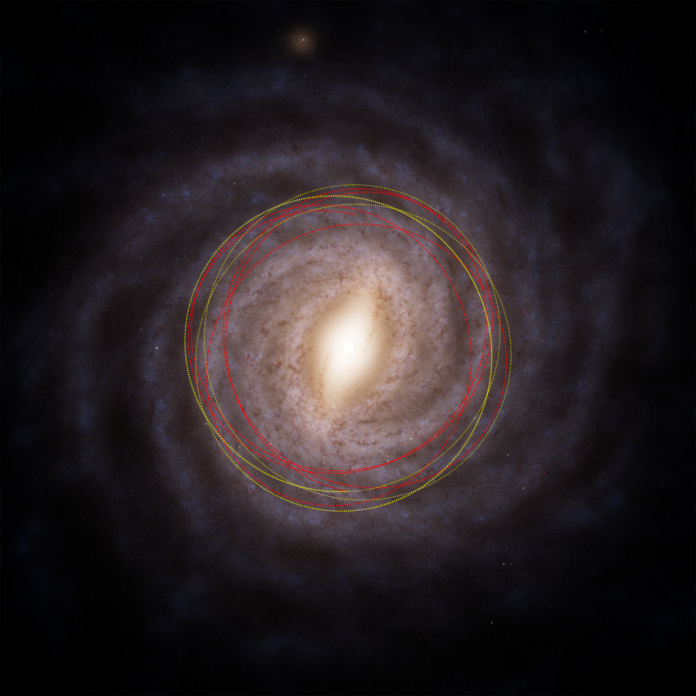
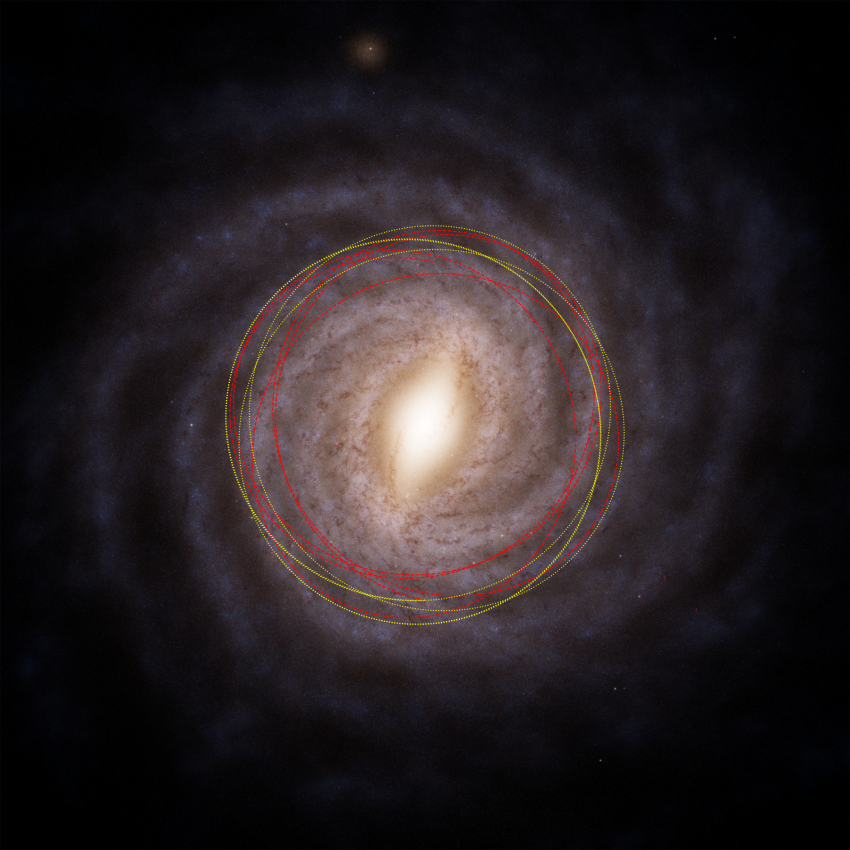
The origin of 3I Atlas is traceable by its orbit around the sun, which is a hint to where it came from. Based on hyperbolic calculations of its orbit, complemented by pre-discovery images taken at the Zwicky Transient Facility, there is confirmation that it is unbound to the sun’s gravitational pull. With a speed of about 130,000 miles per hour, it is much faster than both 1I/Oumuamua and 2I/Borisov; apparently, it was kicked out of its parent planet with large amounts of kinetic energy. Computer simulations of astronomers indicate that it probably originated from the older stars of the Milky Way’s thick disk, which dates back more than 7 billion years.
2. Composition and Spectroscopic Revelations
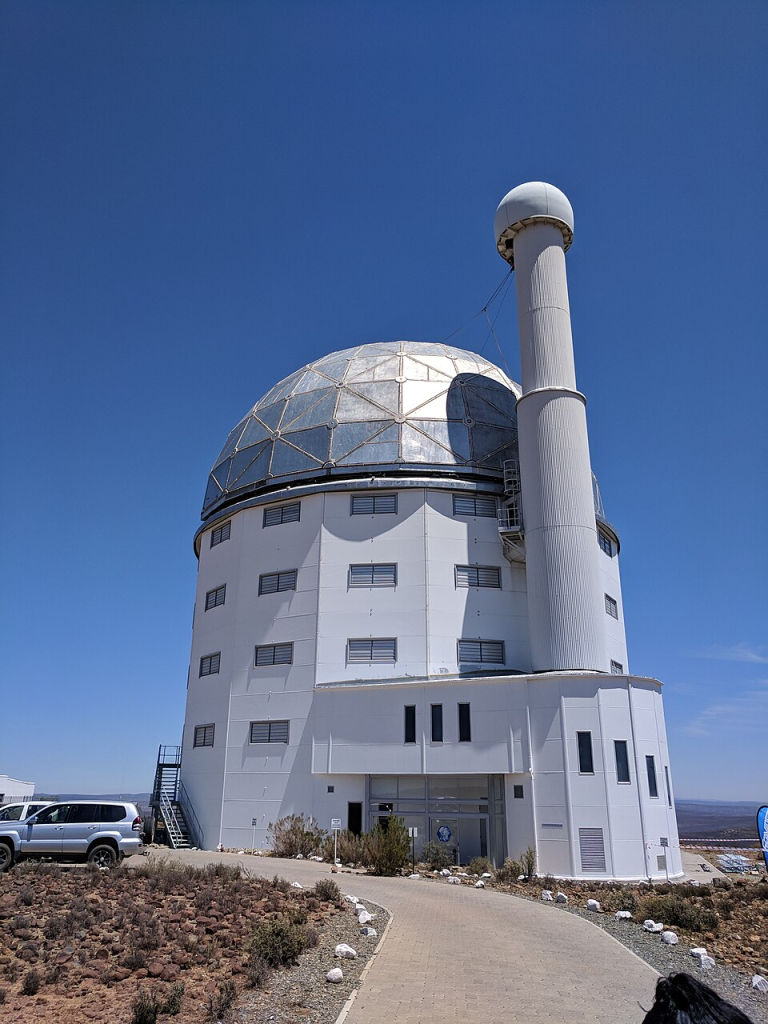
The initial spectra from the Southern African Large Telescope and Nordic Optical Telescope indicated a reddening towards the blue end (0.4-0.7 µm) with a spectral slope of 22.8%/µm, which suggests carbon-rich material. The CO₂/H₂O ratio estimated by JWST was abnormally high, ∼8:1, among the highest ratios ever recorded for any comets and indicative of formation either inside a CO₂ ice line or a radiolysis region. The Very Large Telescope detected the presence of nickel without associated iron, likely because of volatile nickel tetracarbonyl, a molecule that decomposes when exposed to ultraviolet radiation, releasing nickel and carbon monoxide molecules.
3. Activity and Physical Properties
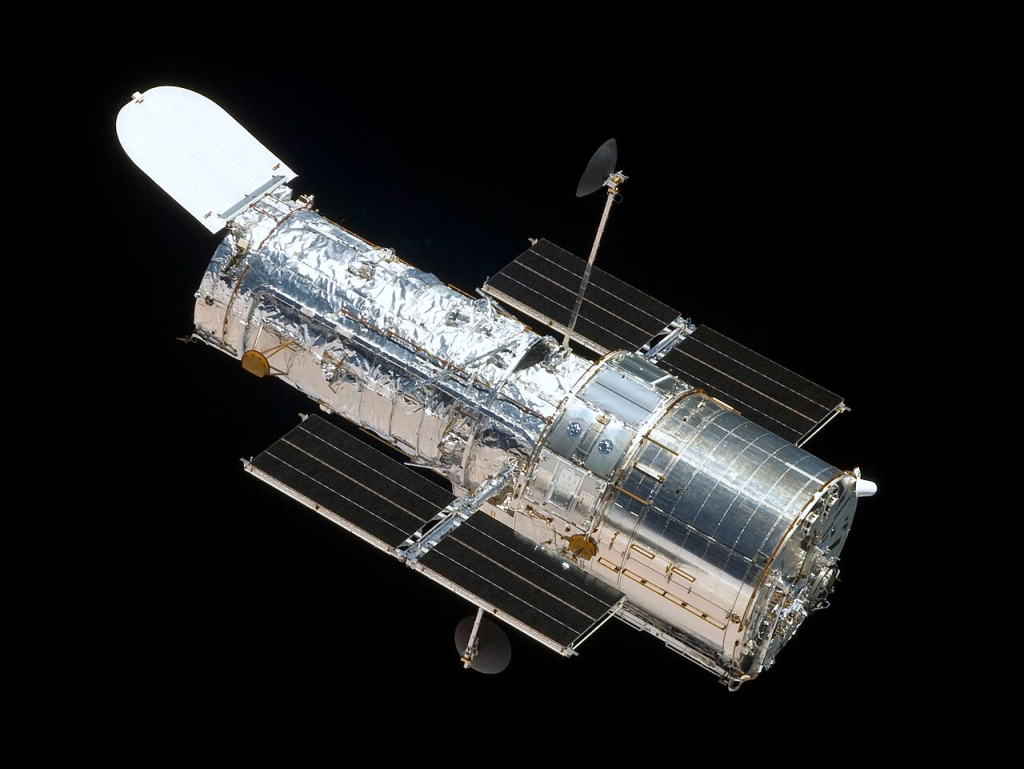
Spectro photographic observations provided a spin period of 16.16 ± 0.01 hours and dust mass-loss rates between 0.3-4.2 kg/s. Nevertheless, in view of its level of activity, 3I/Atlas does not sport an evident tail because its large dust particles are highly resistant to solar pressure force. The upper limit on its nucleus size was estimated at 3.5 miles (5.6 kilometres) by Hubble Space Telescope imaging; this would be directly observed by JWST in its coma during the latter stages of the campaign.
4. Global and Space-Based Observational Network
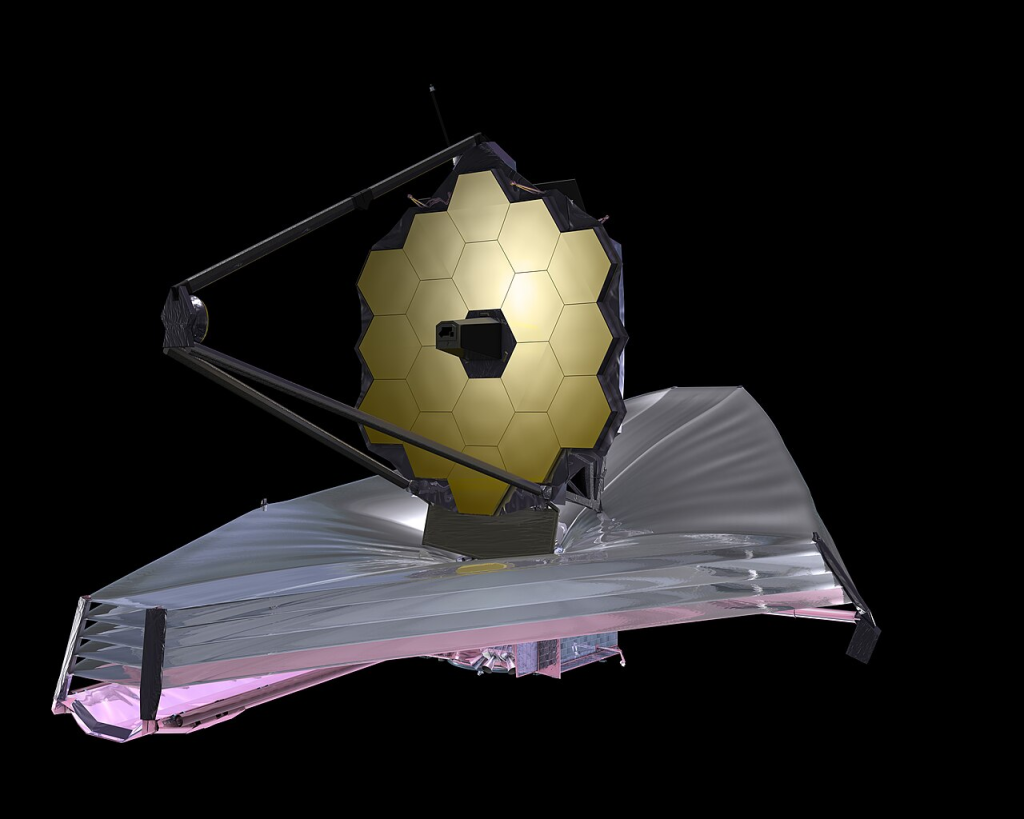
NASA has resources throughout the solar system. Some of the resource contributions include Hubble, JWST, SPHEREx, TESS, Swift, Psyche, Lucy, MAVEN, MRO, Perseverance, Parker Solar Probe, PUNCH, and SOHO. Some of the images were taken by Mars-orbiting spacecraft, which recorded some of the close images at a distance of 19 million miles. WISPR aboard the Parker Solar Probe recorded images daily at the point it was too close to the sun to be visible to Earth-based telescopes at the Perihelion
5. Engineering the ATLAS Survey
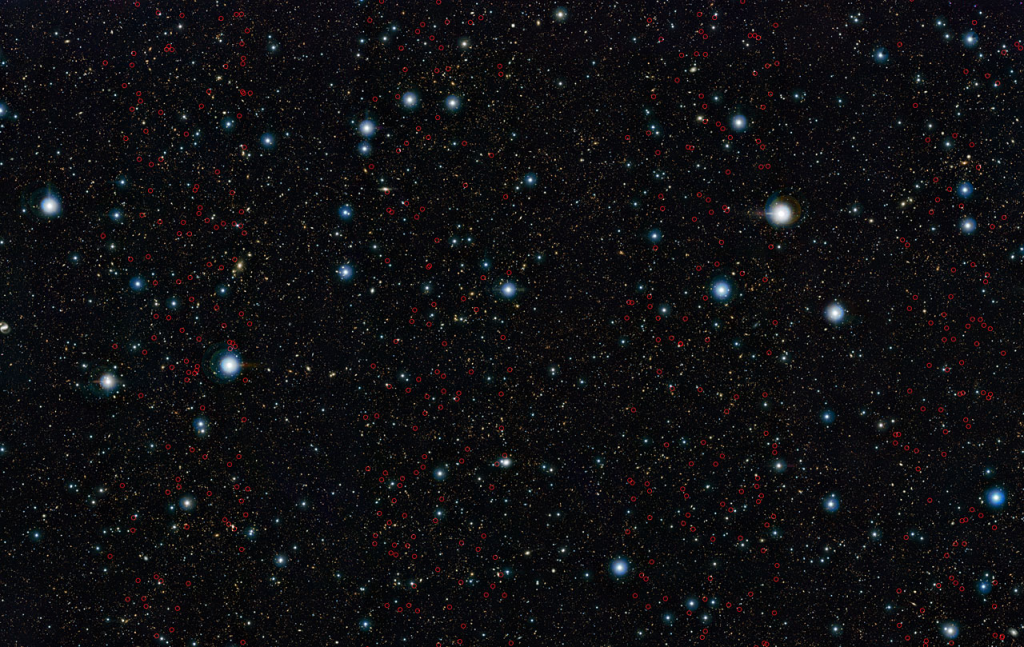
The ability of ATLAS to automatically search a wide field was essential, as it was designed for planetary defense purposes. Each night it scanned the entire sky, sensing the fast motion of 3I Atlas. Data processing in real time and the indication of anomalies from multiple telescopes located on different continents in the world characterize the design of the survey.
6. Hyperbolic Dynamics and Galactic History
Backward integration of its orbit within the Milky Way’s gravitational field reveals that 3I Atlas has had experience with different environments, ranging from interstellar clouds, star-forming regions, to regions rich in supernovae. Its encounters with these regions may have influenced its surface chemistry, leading to the production of the CO₂-rich “cooked shell” material it is releasing now, as it encounters the Sun. Its high vertical distance from the galactic plane confirms it as a thick-disk object.
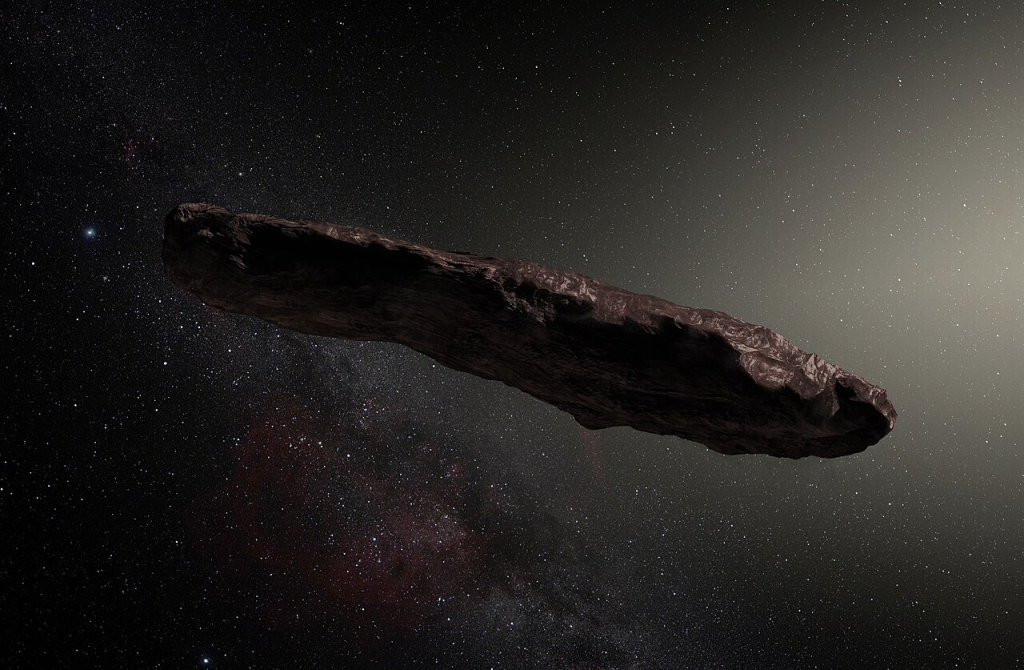
7. Comparative Context: ‘Oumuamua and
‘Oumuamua exhibited little to no outgassing, with Borisov having carbon monoxide gas, giving 3I/Borisov highly energetic behavior coupled with composition characteristics that are very atypical for such an object. Variations between the three known interstellar objects make sampling an important part of future missions such as the Vera C. Rubin Observatory.
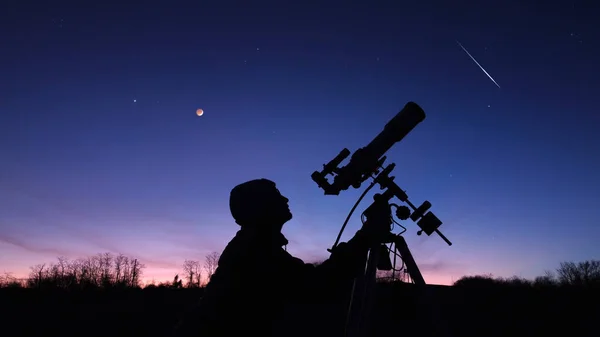
8. Public Engagement and Citizen Science
Citizen scientists have also contributed optical observations with the UNISTELLAR Network, which provides stacked images taken with small telescopes to record brightness variations. Citizen contributions significantly increase the dataset in terms of timing and also serve as a supplement when the large observatories have solar conjunction constraints that prevent them from observing.
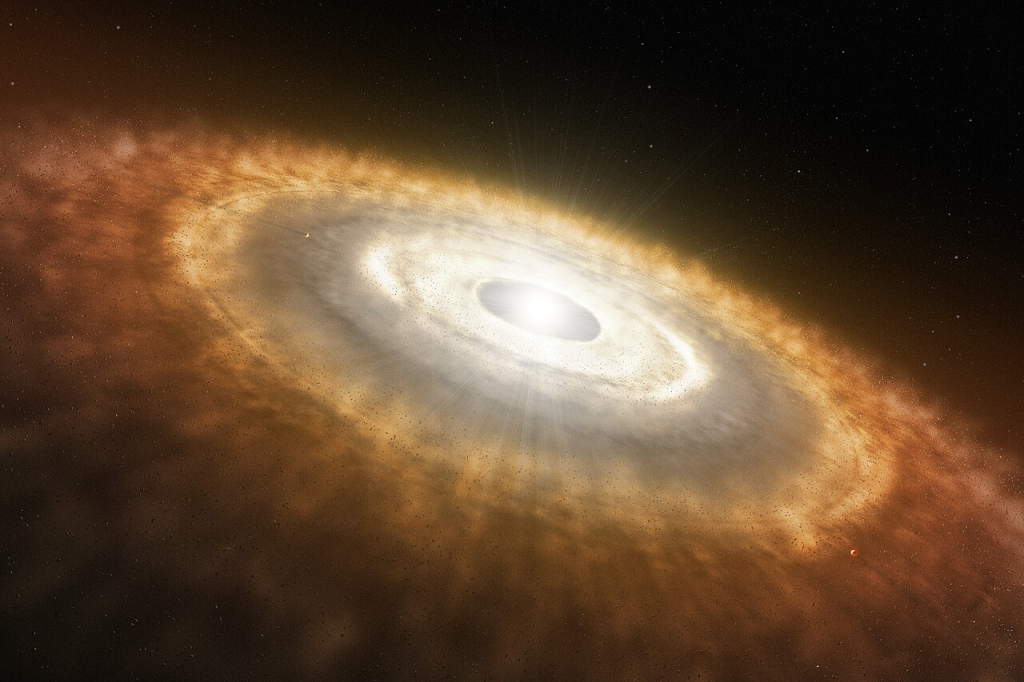
9. What to Expect to Find
Indeed, as 3I Atlas presses on in its outbound journey, it must be noted that astronomers remain alert to changes in composition following perihelion that could differentiate between composition in surface-altered and primordial bodies. Future spectroscopic observations by the JWST will focus on methanol, formaldehyde, methane, ethane, HCN, and ammonia. Such results will serve to determine the chemistry of protoplanetary disks in systems elsewhere in the galaxy.
The 2025 campaign is an unprecedented undertaking in engineering, astrophysics, and planetary science, to be accomplished by the time that 3I Atlas departs our system to head off into interstellar space; such results will set the standard to which all individual comet analysis and analysis of this class of ancient messengers that roam between the stars will aspire to attain.


