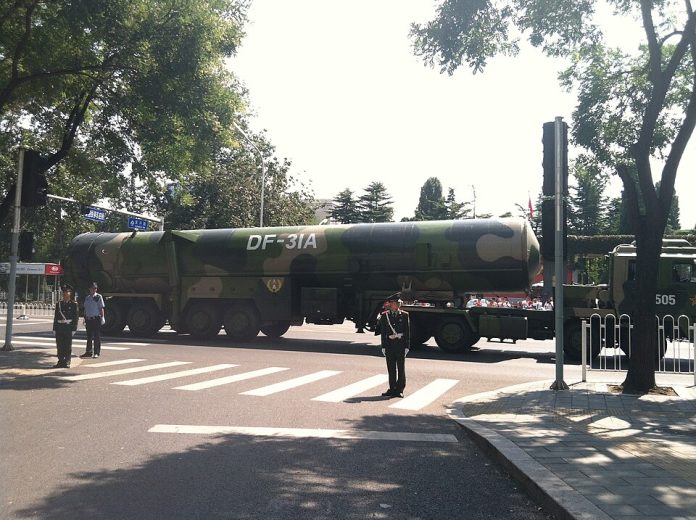
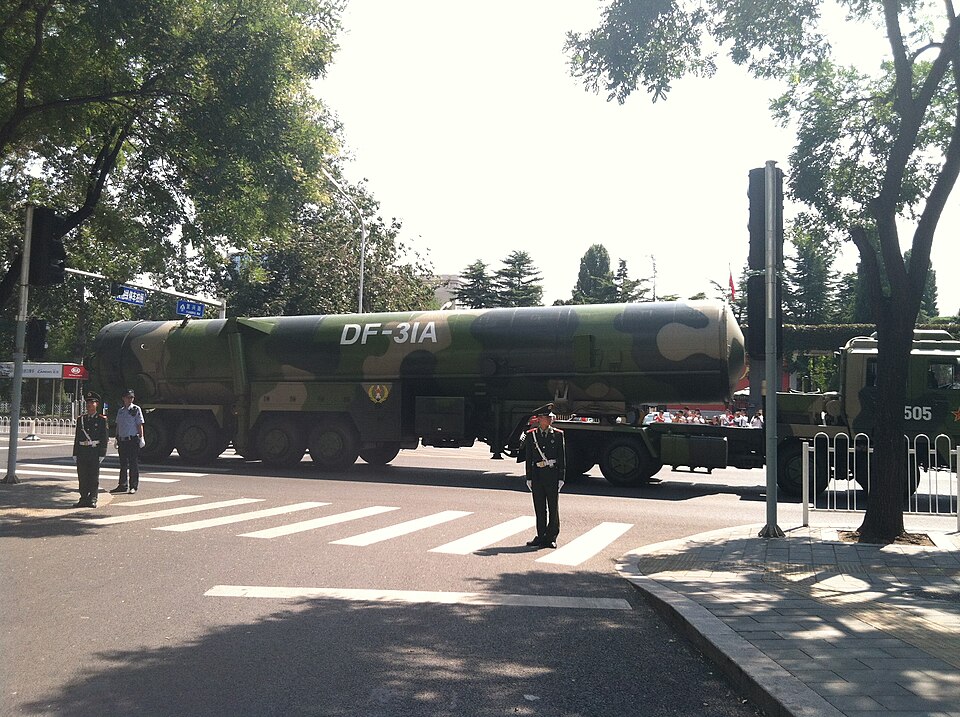
In late 2025, a forecast report by the Pentagon showed that China is likely to have placed over 100 nuclear-capable, solid fuel DF-31 intercontinental ballistic missiles in their nuclear silo sites along their border with Mongolia. This marks one of the biggest hurdles China has ever faced within its nuclear modernization campaign, especially at a time when theyare not participating in any nuclear arms talks, amid fears of a nuclear arms race among China, Russia, and the USA.
The Nuclear buildup in the PRC does not occur in a vacuum. It is part and parcel of an overall modernization scheme, which includes the latest missile technologies, multiplied silos, even the introduction of the Nuclear triad. The significance does not lie merely in the hardware; on the basis of an evolving theory, posture, and production facility in China, its deterrence strategy shifts in the long term. The following are nine examples, representing the acuity in this particular piece, authored in fragments, pointing toward the magnitude, inventory, and strategic meaning in the deployment of the DF31 for China.
1. The DF-31 Family: Solid-Fuel Precision and Range Extension Range
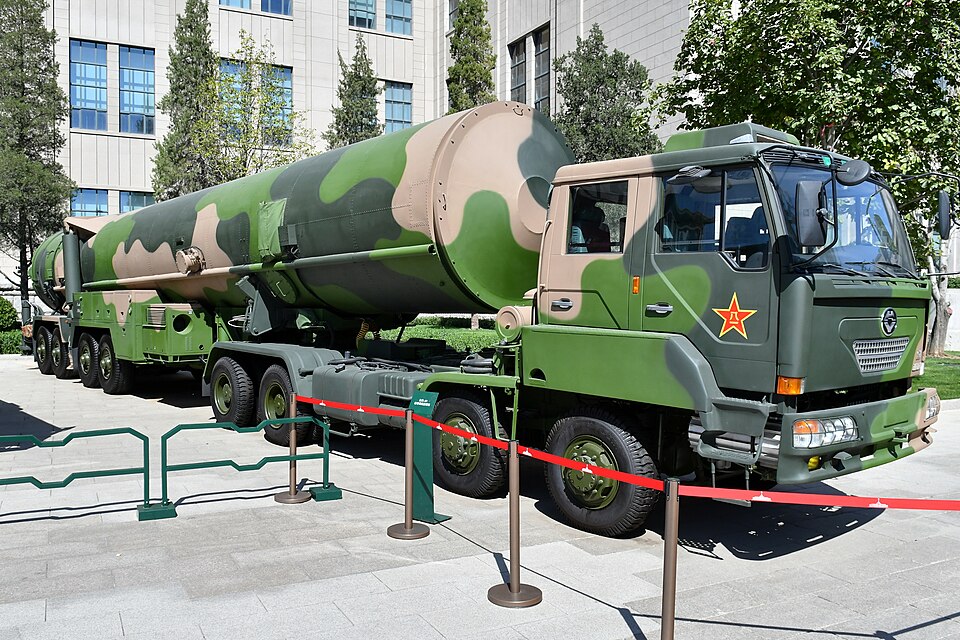
DF-31 series or CSS-10 is a three-stage solid fuel intercontinental ballistic missile that has an estimated striking range of 7,000 to 11,700 kilometers. Initially tested in 2006, it has evolved to DF-31A and DF-31AG versions that show better guidance and ground mobility. The use of solid fuel in this context has various advantages in terms of its application in missiles because “missiles using solid fuel can be stored for extended periods without degradation and are therefore immediately available for launch.” Additionally, according to the Missile Defense Project at CSIS.org, DF-31 has “a single warhead of 200-300 kilotons” and is “capable and strong enough to put strategic points on all continents at risk.”

2. Over 100 Missiles Placed into New Silo Fields
A Pentagon-draft assessment also believes that the DF-31 ICBMs that Beijing has most likely deployed in excess of 100 have been put inside three fields of silos near the boundary with Mongolia. That is in line with past satellite image analysis that has found major silo projects in the Yumen and Hami regions. Each of these projects is expected to be intended for the stationary storage of dozens of missiles. And with the current projects of some 250 in the country under way, it represents the largest silo expansion since the Cold War era. It is not yet confirmed if the silos will be fully equipped or if they will be intended to merely decoy the enemy.
3. Strategic Change towards Launch-on-Warning Posture
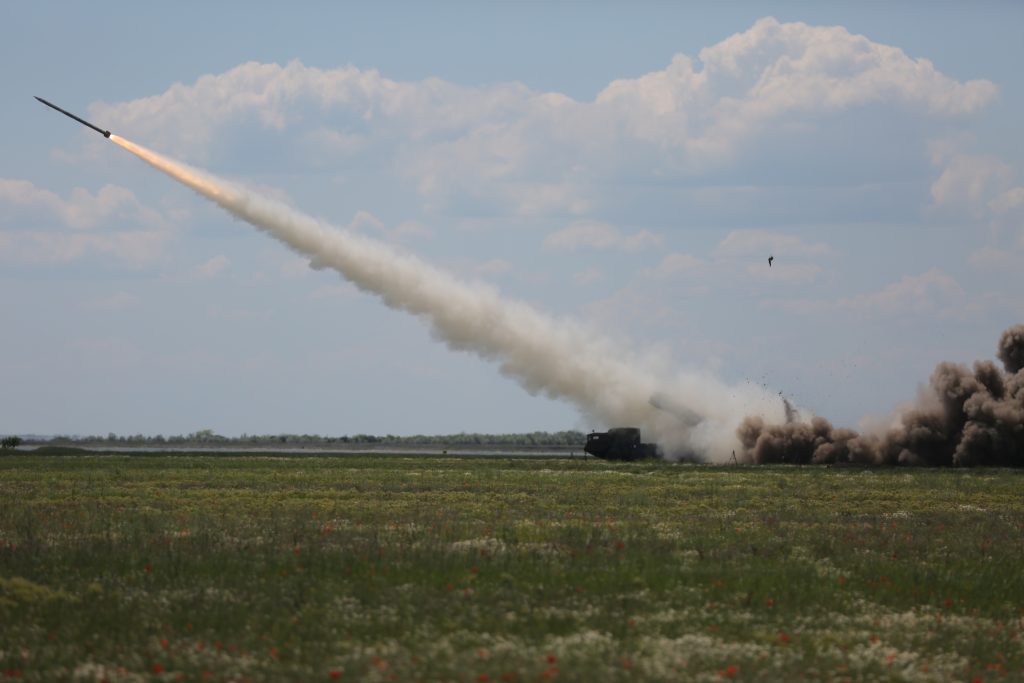
Indeed, according to a number of reports that have been coming from the Pentagon, China intends to change its posture from a limited retaliatory one, as was actually observed, to a launch on warning posture in this decade. As if that was not enough, this would be a policy that involves reacting to an arriving strike by launching missiles in order to survive. This formulation along with solid-fueled preparedness would therefore significantly shorten time in any crisis.
4. Integration into a Diversified Nuclear Triad
The Victory Day Parade held in China in September 2025 was the first public demonstration of the nation’s nuclear triad, encompassing land-based ICBMs, SLBMs, and ALBMs. The DF-31BJ silo-based ICBM was showcased at the parade along with the H-6N bomber carrying the JingLei-1 ALBM. These efforts at diversification are reflective of the strategic approach of the US and Russia and are testimony to China’s plans to focus on multi-modal delivery systems with the capability of striking the continental United States.

5. Warhead Stockpile Growth Trajectory
A Bulletin of the Atomic Scientists estimate suggests China has about 600 weapons in its stockpile, 276 of which are intercontinental. Projections by the Pentagon indicate that China could have more than 1,000 nuclear weapons by 2030, making China the country with the highest growth rate in its nuclear supply. Also, fissile material production in fast-breeder reactors in Xiapu helps in an increase in weapons after 2030. This contradicts past perceptions of China maintaining a “minimum deterrence” policy.

6. Solid-Fuel Advantages in Survivability and Readiness
A solid propellant consists of a mixture of fuel and an oxidizer that is incorporated in a stable manner, and this allows the missile to be “fuelled from the point of manufacture.” According to Joseph Dempsey of the IISS, this technology enables the launch of the missile in minutes, thus making it less susceptible to pre-emptive strikes. Unlike liquid propellants, it is difficult to detect the supporting transportation aircraft in solid propellants, as solid propellant missiles are less detectable and targetable because they “do not have the infrastructure of liquid propellants.” Specifically, this technology is advantageous to the DF-31 missile in China because of territory that is “very, very remote.”
7. Geopolitical Messaging and Taiwan Contingency
The Chinese ICBM-range nuclear force Nuclear modernization appears purposeful publicly highlighting these ICBM-range nuclear forces. The Chinese believe that a nuclear-first strike would be more credible if a nuclear attack would guarantee the survival of the state amid a conventionally bad situation. The attendance of the leaders of both Russia and North Korea at the nuclear parade signifies that a strategic partnership is emerging between the US major adversaries, in which nuclear deterrence is one of the fundamental elements.

8. Deadlock in Arms Control and the Danger of an Arms Race
“There is no appetite for arms control talks” in China, despite overtures from the United States, according to a Pentagon document. The expiration of New START with no new framework to replace it heightens fears about the potential for an unbridled three-way arms competition. Experts like Daryl Kimball believe that increased weaponry and decreased dialogue will only reduce regional and national security for all involved. “An imbalance and a gap” in advanced weaponry “could lead to match advances on bothsides of both the United States and Russia,” according to Mr. Kimball.

9. China’s Balancing of Mobile Launchers and Fixed ICBM Sites
China’s ICBM arsenal has made the transition from exclusively mobile platforms to a combination of both mobile vehicles and fixed silos. Presumably, about 80 percent of China’s ~110 ICBMs were mobile before the rise of the silo sites; this helps strike a balance in the country’s arsenal between the mobility provided for cover and the invulnerable infrastructure of the fixed silos. Again, this makes it more difficult for the adversary in planning targeting attacks since China will thus maintain a pool of retaliatory power no matter the attack plan.
The loading of over 100 DF-31 ICBMs in the new silo sites represents more of a transition in China’s nuclear policy and capabilities in terms of diversity in attack capabilities. Given the robust technology of the DF-31 in terms of China’s assured destruction capabilities in the event of a war attack, the increase in the arsenal of warheads in China through the over 100 ICBMs loaded in the new silo sites aims to ensure China is one of the super-nuclear states, ranking equal with the U.S. and Russia. However, this represents a danger in the potential amplification of multi-polar nuclear rivalries.


