
When energy policy meets national security, expect turbulence. This is how the situation in the American capital hung in the balance during the current week as the administration of President Donald Trump unexpectedly put off federal leases for the development of five massive wind farm projects off the East Coast of the United States.
These projects mean billions of dollars of investment, thousands of jobs, and almost six gigawatts of new power. However, the administration’s move, which comes just two weeks after a federal court invalidated a previous wind moratorium, now signals a growing challenge between clean energy support, states, and the federal government on the intentions for offshore wind energy. The ten most important considerations of this developing saga include the following:

1. The Scope of Suspension
The Interior Department’s move puts the brakes on five megaprojects: Vineyard Wind 1 off the coast of Massachusetts, Empire Wind 1 and Sunrise Wind off the coast of New York, Revolution Wind off the coast of Rhode Island and Connecticut, and the 2.6-GW Coastal Virginia Offshore Wind (CVOW). These five projects cumulatively involve an investment of $28 billion and were all approved by the Department of Defense after their reviews. The projects include those in different phases: operational and partially operational in the case of Vineyard Wind, and 60% completion in the case of the CVOW project, meant to supply electricity to 660,000 homes.

2. National Security Concerns Cited
The Pentagon had found conclusively that there were risks of radar interference associated with the movement of the turbine blades and the tower reflections, according to Interior Secretary Doug Burgum. They associated the risks with the population centers on the East Coast and the large airports. This particular effect of radar interference has long been known, but the mitigation of its effects has been proved by U.S. Department of Energy studies, and this particular aspect has been dealt with by most projects in the world.

3. Legal and Regulatory Context
This comes after a ruling by the federal court on Dec. 10 that struck down Trump’s previous executive order suspending wind projects as arbitrary and capricious. All affected projects had previously been cleared for national security review as part of their lease agreements. Critics of this move include Sens. Sheldon Whitehouse and Martin Heinrich.
4. Economic Fallout
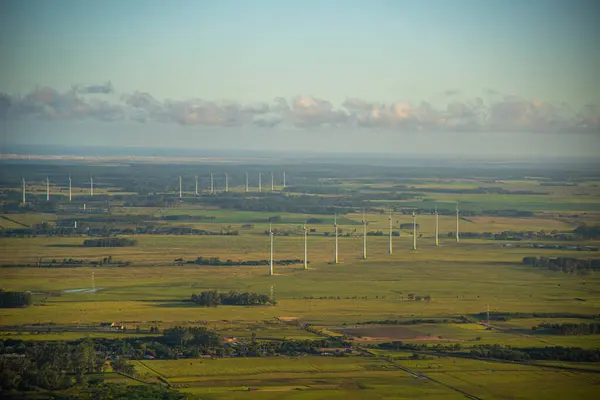
Developers and the state express warnings of the severe economic implications. Dominion Energy warns that the halt of the CVOW would “undermine the reliability of the Virginia grid, drive up the cost of electricity, and put thousands of new Virginia jobs at risk because of the region’s growing data center market.” Ørsted shares dropped by more than 11% as a result of the announcement. “This is a layoff notice for the trades workforce,” stated union officials a few days before Christmas.
5. State-Level Pushback
Governors in Massachusetts, Rhode Island, Connecticut, New York, and New Jersey have spoken out against it, and Governor of Massachusetts Maura Healey said that this pause is dangerous and vowed to protect ratepayers and workers. Some states are even looking into legal actions because Connecticut Attorney General William Tong said that the order is lawless and erratic and that each day of delay only makes costs higher and locks us into a reliance on fossil fuels.
6. Industry Response
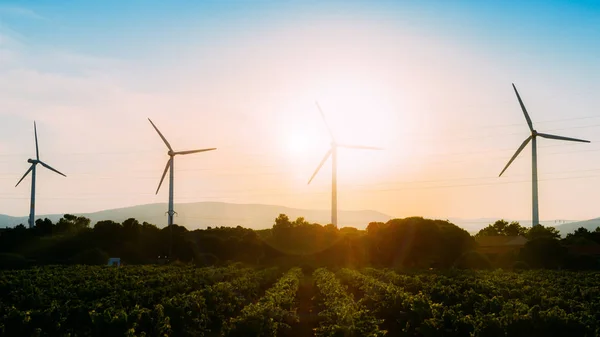
Trade organizations like the National Ocean Industries Association and the Oceantic Network noted that all the leases were already approved by the Pentagon beforehand. According to Liz Burdock of the Oceantic Network, this is another veiled attempt at obfuscating opposition to offshore wind energy and forecasted that it would lead to the death of new employment and higher electric bills. Erik Milito of the NOIA called on the administration to reverse this pause and not let clean and offshore investments suffer.

7. Comparison to Sweden’s Radar Concerns
The U.S. pause follows a recent move by Sweden, which rejected proposals for 13 offshore wind farms because they would cut the time it takes for the country’s missile defense system from two minutes to just 60 seconds. Swedish defense minister Pål Jonson said that “radar shadows could mask incoming missiles.” It is, however, true that radar shadows exist, and usually, this can be solved via turbine location modifications.

8. Mitigation Technologies and Limits
Research efforts, like Sandia National Laboratories’ Wind Turbine Radar Interference Mitigation project, have explored ways based on radar-absorbent paints, backup radar systems, and short-term turbine shutdowns. None of these methods is foolproof, since paints are expensive, backup radar systems are also costly, and turbine shutdowns result in lower power generation. Over-the-horizon radar systems remain very susceptible, and, at times, interference can only be eliminated by preventing the construction of wind turbines in some areas.
9. Political Aspects
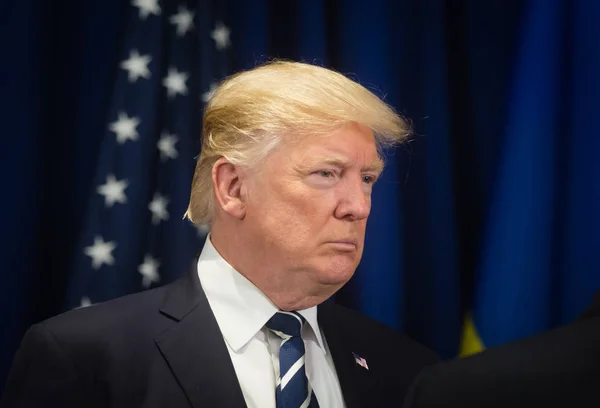
Ugly, costly, and inefficient, Trump has denounced offshore wind, campaigning to shut down this energy source and instead favor oil and gas. His administration has launched several blockages, some reversed by lawsuits, and this hinders investment. The blockade has two faces, with detractors calling it politically motivated and wind opponents as relief as protection against foreign control of infrastructure near vital assets.
10. Strategic Energy Implications
Aside from economic benefits, another area where CVOW is connected involves supplying electricity for military bases and shipbuilding facilities as well as data centers used in artificial intelligence development. Dominion Energy’s Jeremy Slayton said that “Virginia needs every electron” as power demand doubles. Moreover, halting CVOW may jeopardize energy diversity along with national security as it postpones development efforts focused on enabling war-fighting and high-tech industries. At the nexus of energy policy, defense policy, and economic policy, the Trump Administration wind suspension is an issue that affects both the energy industry and defense analysts.
While radar interference is clearly an important technical issue, the sudden suspension of highly qualified projects has serious implications for the quality of governance and politics around infrastructure policy. For experts in the energy industry and defense analysts, this development will impact the future of wind infrastructure off the coast of America as well as the role of national security from the perspective of climate change.


