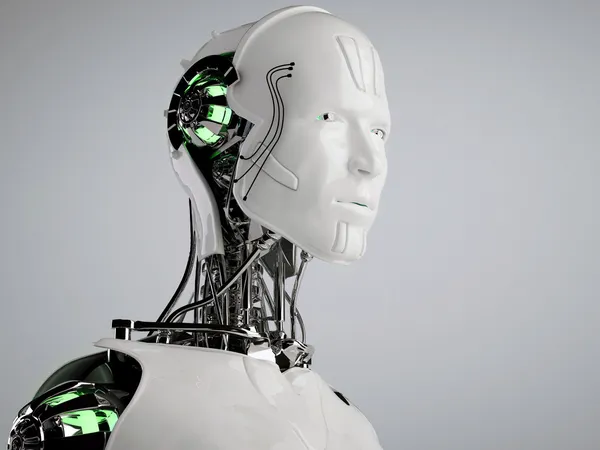
“Could a $5 trillion market be made on robots that walk, talk, and work like humans? That question transitioned in 2025 from speculative debate into tangible reality. Humanoid robots bounded out of research labs and into viral videos, investor decks, and factory floors that are marking a turning point for embodied AI.
The most-hyped moments of the year were more than feats of engineering; they were cultural events. Tesla’s popcorn-popping Optimus, and XPeng’s on-stage “skin reveal,” these machines did more than show off technological muscle; they captured the public imagination and investor attention all at once.
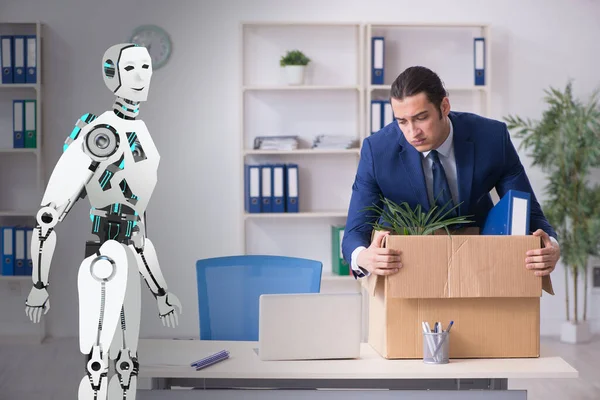
Each debut also brought into relief a strategic push toward mass production, cost reduction, and real-world deployment. Here are five standout humanoid breakthroughs from 2025, and why they matter for robotics’ future and the industries they’re poised to transform.
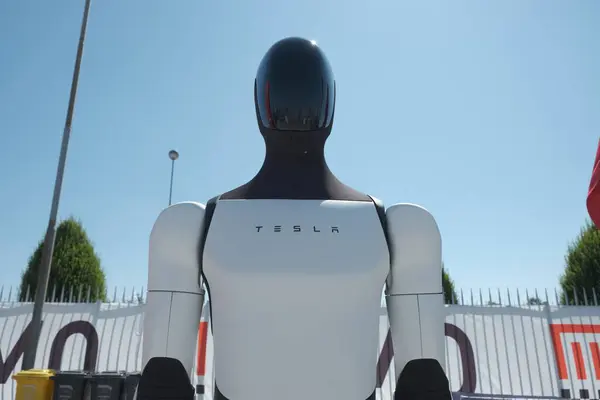
1. Tesla’s Optimus Gen 3 Targets Scale and Affordability
Tesla’s Optimus Gen 3 dominated social media attention serving popcorn at a Tesla diner, but the real story is in its ambitions for production. 5-8″ tall and designed for general-purpose tasks, Optimus is being constructed on Tesla’s vertically integrated supply chain, using in-house actuators, electronics, and AI systems adapted from its Full Self-Driving platform. Elon Musk confirmed a pilot production line in Fremont, California at the 2025 shareholder meeting. The CEO says it will scale up to Gigafactory Texas. The company is targeting a cost of goods sold of $20,000 per unit “at scale,” a number significantly lower than others.
It plans annual upgrade cycles with Gen 4 arriving in 2027 and Gen 5 following one year later, in 2028. Initial deployments will be inside Tesla factories, where the robots will handle repetitive and unsafe tasks. Musk projected that the pilot line would eventually produce upwards of one million units annually-a hint that ambitions may extend beyond Earth. For investors, Tesla’s scale and cost-down strategy positions it as the frontrunner in the humanoid race.
2. Neo Gamma from 1X Brings Adaptive AI Home
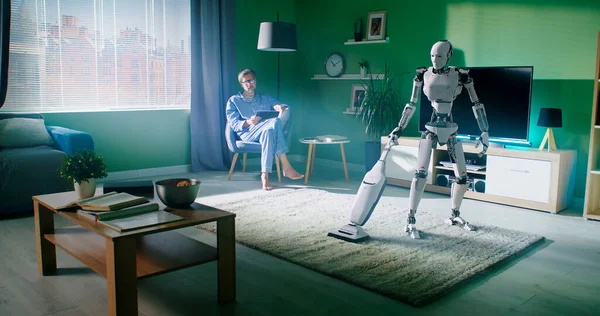
Norway’s 1X Technologies introduced Neo Gamma last October-a 5’6″ home assistant robot powered by its proprietary Redwood AI. This vision-language model combines locomotion and manipulation to allow articulated whole-body control for tasks such as doing the laundry, cleaning, and arranging things. The soft 3D lattice polymer body of Neo is machine-washable for home safety, while its $20,000 purchase price-or $499 monthly subscription-is fairly more reasonable to make humanoid ownership more accessible. Redwood AI runs on an onboard GPU, reducing reliance on cloud connectivity and improving privacy.
For tasks it doesn’t know, owners can book remote training sessions with human experts, enabling Neo to learn continuously. Development “alongside humans, not in isolation,” highlighted CEO Bernt Børnich-a design philosophy focused on real-world adaptability. Deliveries start in Q2 2026; with neo now open for pre-orders, Neo could be a turning point toward affordable, tailored domestic robotics.
3. IRON by XPeng Represents Extreme Anthropomorphism
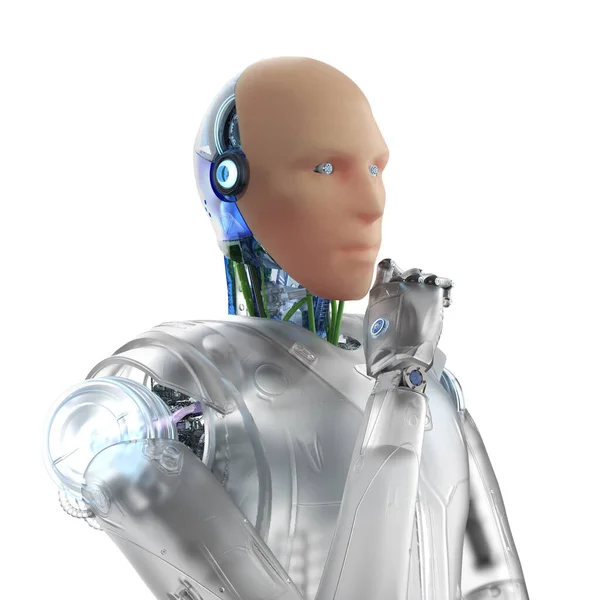
At XPENG AI Day in Guangzhou, Next-Gen IRON humanoid wowed audiences with movements so lifelike that many thought there was a human inside. It was only until XPeng’s CEO cut open IRON’s synthetic skin on stage, revealing the bionic spine, actuators, and wiring still moving. IRON boasts 82 joints, including 22 degrees of freedom in each hand, and its skin is made to flex much like human flesh. Powered by three AI chips that execute more than 2,000 trillion operations per second, it has the ability to walk, balance, and gesture with uncanny realism.
This design goal aims at making it friendly enough for robots to work among people in places of retail to museums. It is scheduled for mass production in late 2026, with its initial roles being used in customer-facing positions. IRON provides a touchstone in the conversation about how society will accept humanoid robots by just blending advanced engineering with cultural resonance.
4. Figure AI Figure 03: The focus is shifted to the home
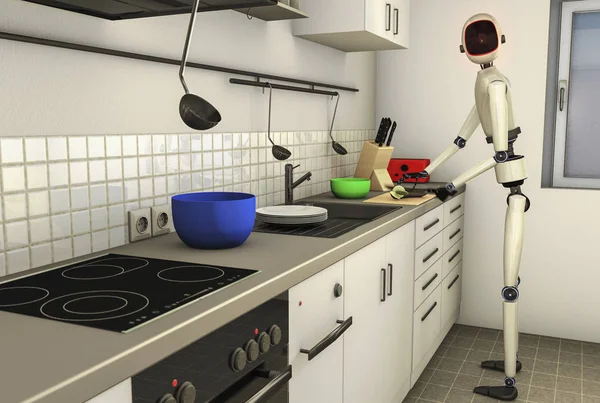
Figure AI’s Figure 03 pivoted from industrial pilots to home applications in 2025, debuting with viral videos of it folding laundry, loading dishwashers, and tidying rooms. With an upgraded Helix brain, this device can now learn by zero-shot learning from videos of human tasks, thereby being able to do new chores without manual programming. The hardware upgrades include higher frame-rate cameras, palm-mounted lenses for hidden angles, and the internally developed tactile sensors that detect as little as 3 grams of force.
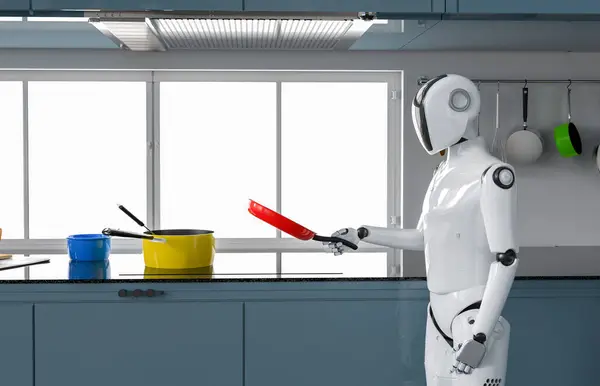
A soft, fabric exterior on the robot, with changeable clothes, makes it much more home-friendly, while there is wireless charging through its feet to eliminate manual plug-ins. Figure’s BotQ facility is gearing up to produce 12,000 units annually, targeting 100,000 over four years. Priced above $80,000 initially, Figure 03 is rolling out in commercial and residential pilots, gathering data to refine performance and reduce costs before broader consumer release.
5. UBTECH’s Walker S2 Masters 24/7 Industrial Operations
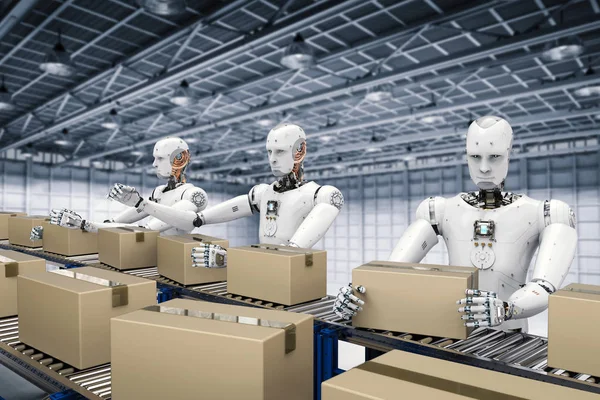
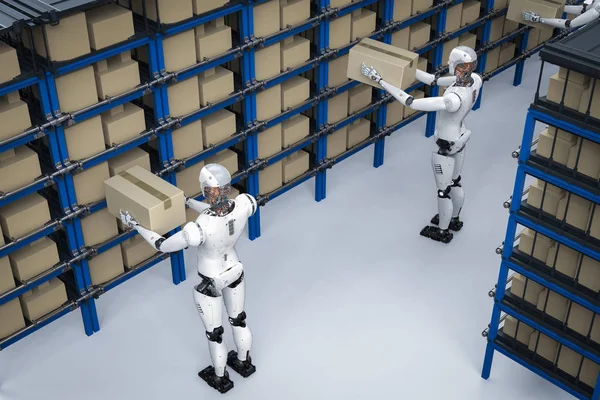
Shenzhen-based UBTECH made headlines with footage of rows of Walker S2 humanoids ready for shipment, evoking scenes from science fiction. Unlike home-focused models, Walker S2 is built for factories and warehouses, where it is able to autonomously swap its own battery in less than three minutes and resume work without human intervention. It is capable of walking at 4.5 mph, and the S2 is already finding its way into major manufacturers such as BYD, Geely, and Foxconn to perform tasks related to inventory, assembly, and logistics.
Orders have topped $110 million, reflecting strong demand for automation that can run continuously without stopping in high-pressure environments. By solving the downtime problem of battery replacement autonomously, UBTECH has positioned Walker S2 as a productivity multiplier in industrial settings. That capability, backed by China’s strong robotics supply chain, underlines the country’s growing influence in embodied AI. In 2025, humanoid robotics moved from speculative prototypes to real products and clear deployment strategies.
Tesla, 1X, XPeng, Figure AI, and UBTECH each showed not only technical milestones but also business models aimed at scaling the production and reduction of costs. For technology investors and industry-watchers, these developments mean humanoids no longer represent some kind of farther-away vision; instead, they are deeply embedded both in the industrial and domestic landscapes. The next few years will tell which of these pioneers can turn those viral moments into lasting market leadership.


