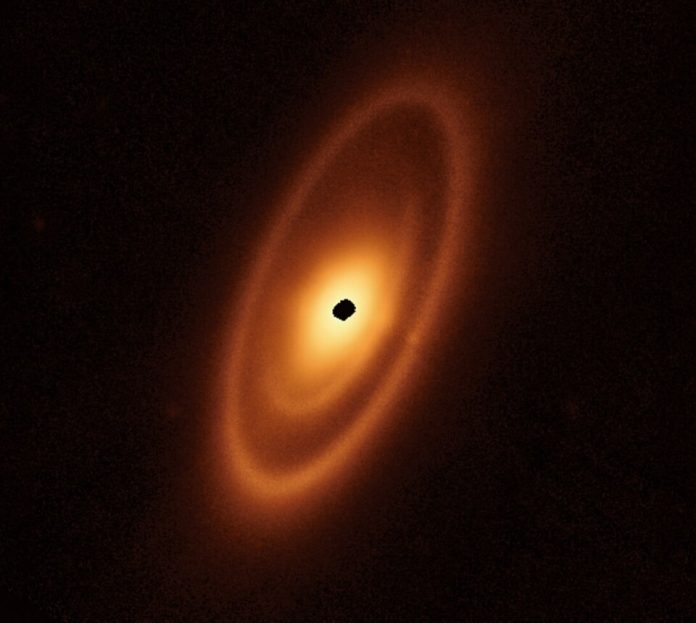
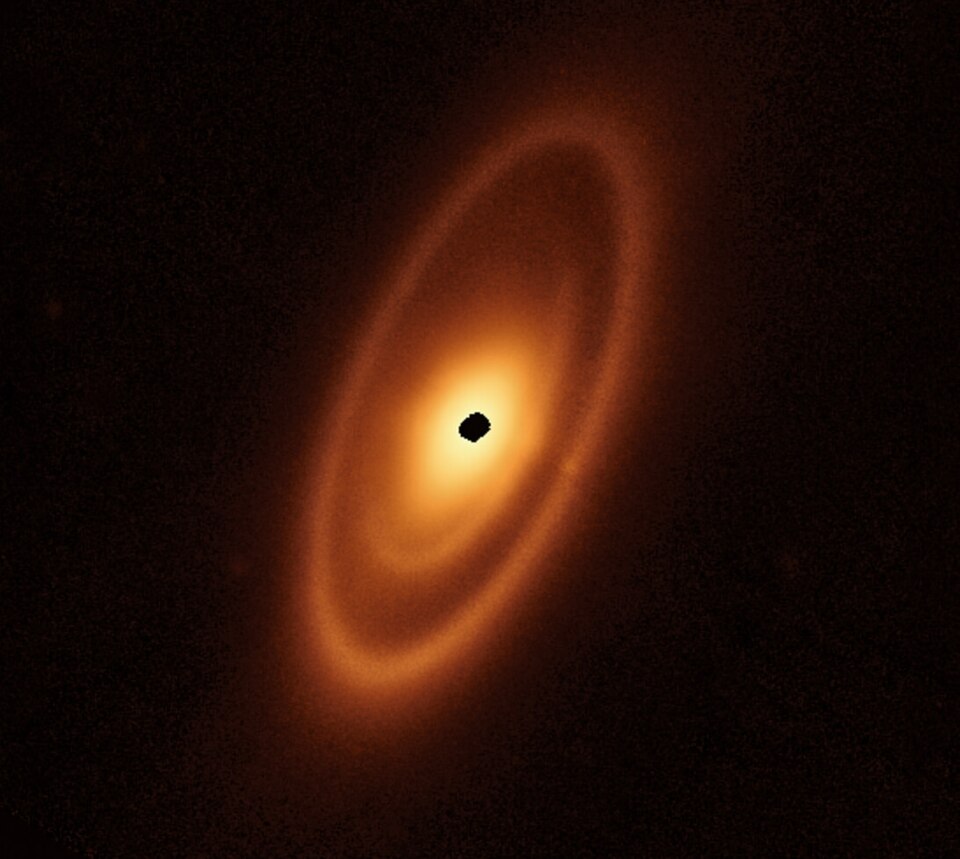
“There’s long been the suspicion that the picturesque appearance of debris disks belied a brutal reality: worlds are made in the midst of catastrophic collisions,” said Kelly Miller of the University of Notre Dame, another member of the research team. Indeed, the Fomalhaut system, just 25 light-years from Earth, has provided the first-ever evidence of planetesimal collisions in the act, in the same location, within just 20years.
1. No More “Planet”: A Vanishing Dust Cloud
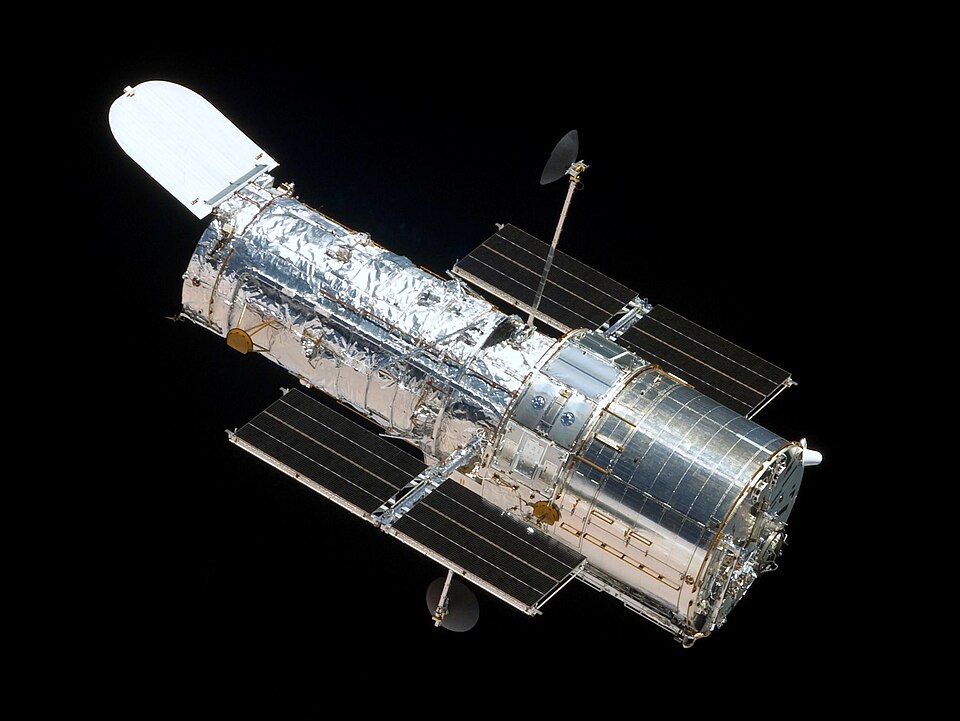
In the year 2004, the Hubble Space Telescope discovered a bright spot in the region of Fomalhaut, named Fomalhaut b. At first presumed to be an exoplanet, its curious behavior of being luminous in the visible but weak in the infrared spectra was puzzling scientists. However, by 2014, it became invisible.
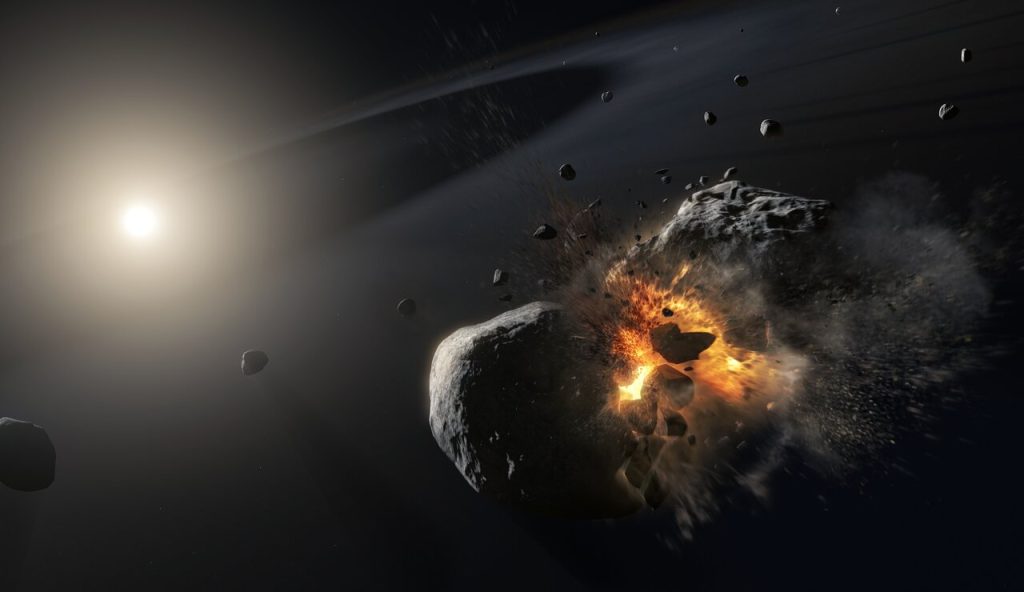
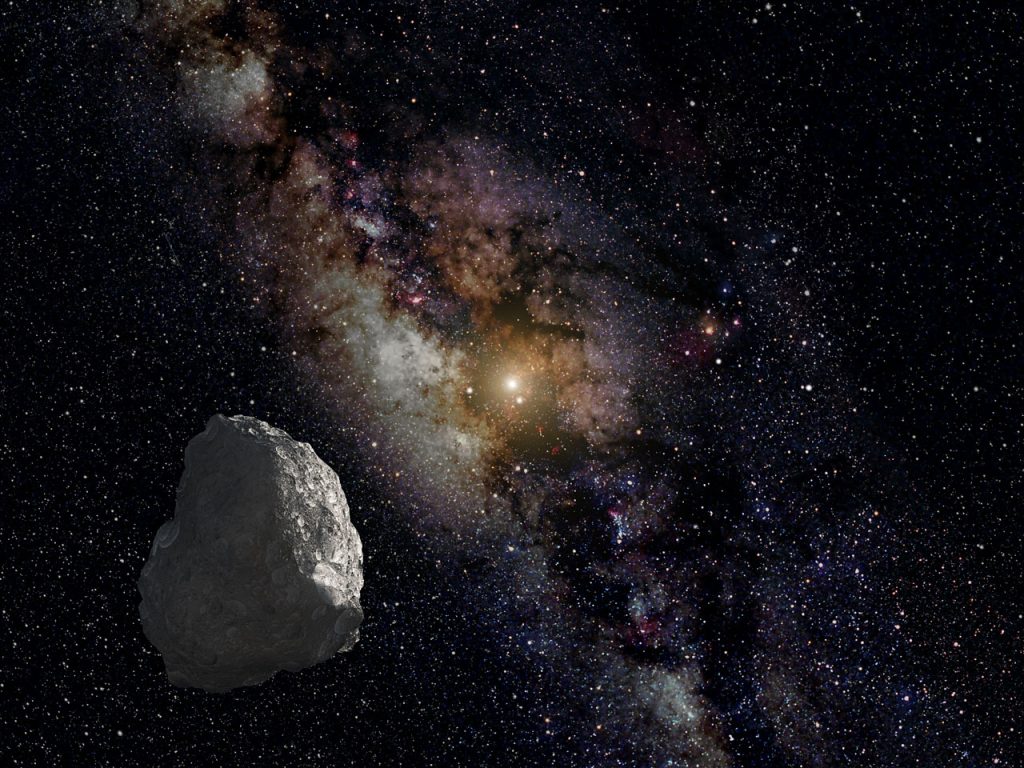
In 2023, a new bright companion was discovered in this region, known as circumstellar source 2 or cs2. Later found to be massive clouds of dust resulting from the collision of rocky objects 30-60 km in size, each spewing out material of ~10²⁰ grams of dust.
2. Collision Mechanics and Dust Cloud Evolution
The debris belts in Fomalhaut are similar to our Kuiper Belt, but they are much more turbulent. In a planetesimal collision, about 4% of material becomes small dust, with sizes predominately under 3 microns. The stellar radiation pressure then drives these dust particles, after the optical depth falls below unity. For cs1, this meant velocities around 12 km/s by 2013, causing it to move an extra 50 AU from the star in a decade. This is consistent with predictions for radiation pressure influence on small particles, where gravitational forces are overcome.
3. The Role of Gravitational Resonances
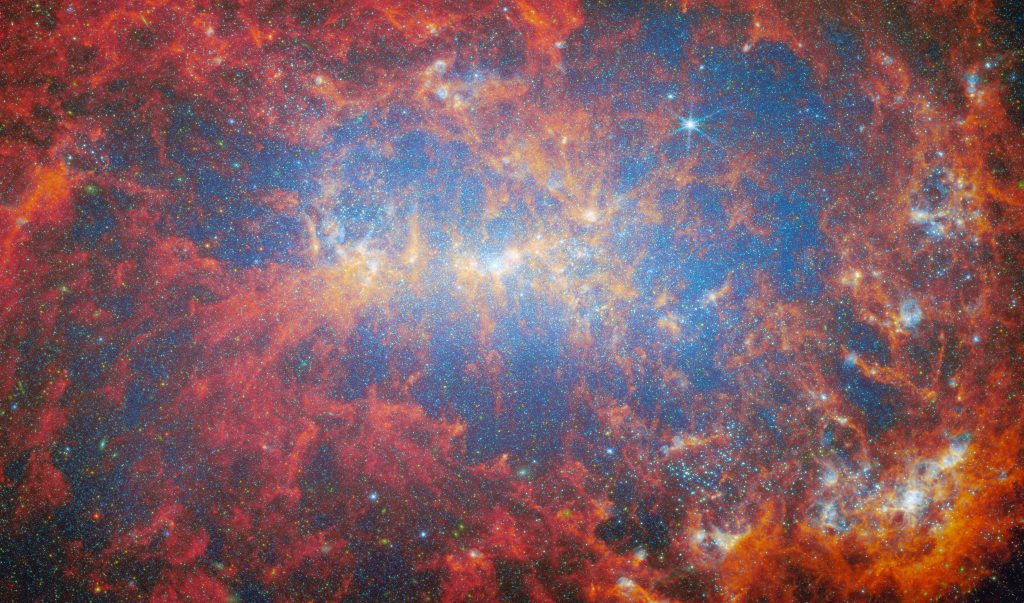
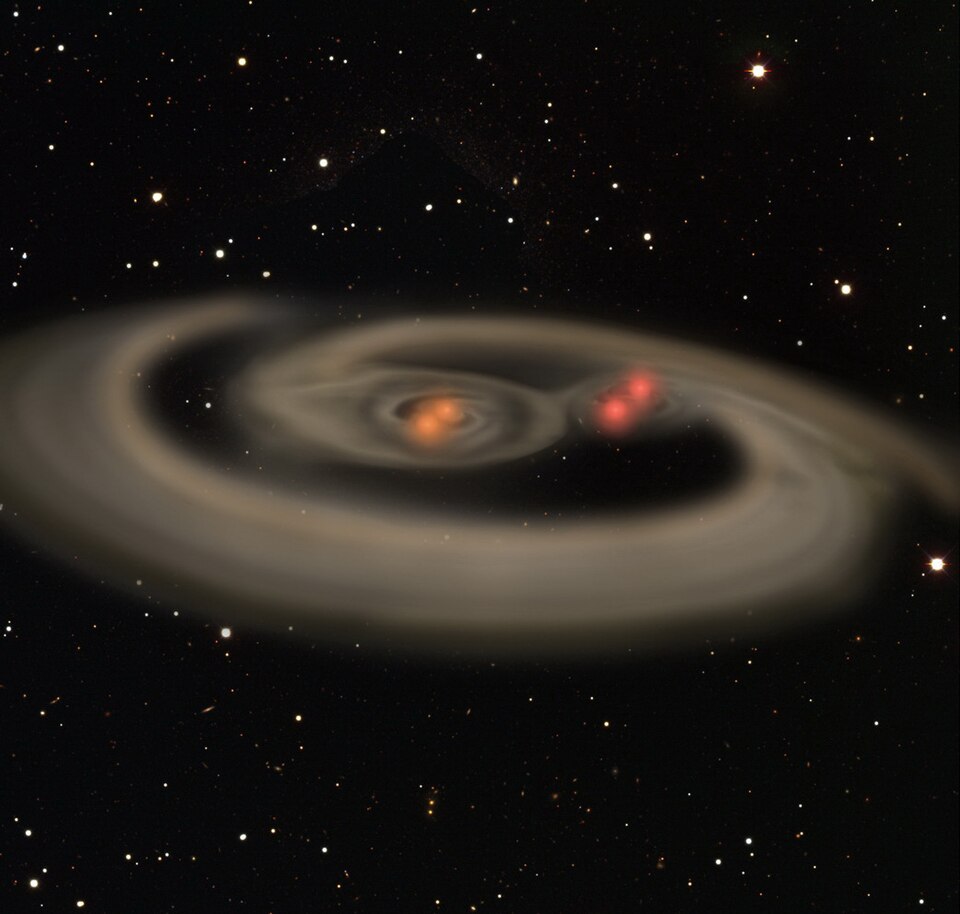
The closeness of cs1 and cs2, only 8° apart in the debris ring, is unlikely to occur by random chance (10% probability). This grouping is suggestive of gravitational resonances with unseen planets. ALMA and JWST observations have shown that the debris disk is eccentricity-gradiend, indicative of sculpting by planets, as in Neptune’s case in the Kuiper Belt. Computer simulations indicate that an undetected planet with mass between 1 and 16 Earth masses might be capable of planetesimal capture into orbits prone to destructive collisions, resulting in “hotspots.”
4. Belt Architecture and Planetary Formation Insights
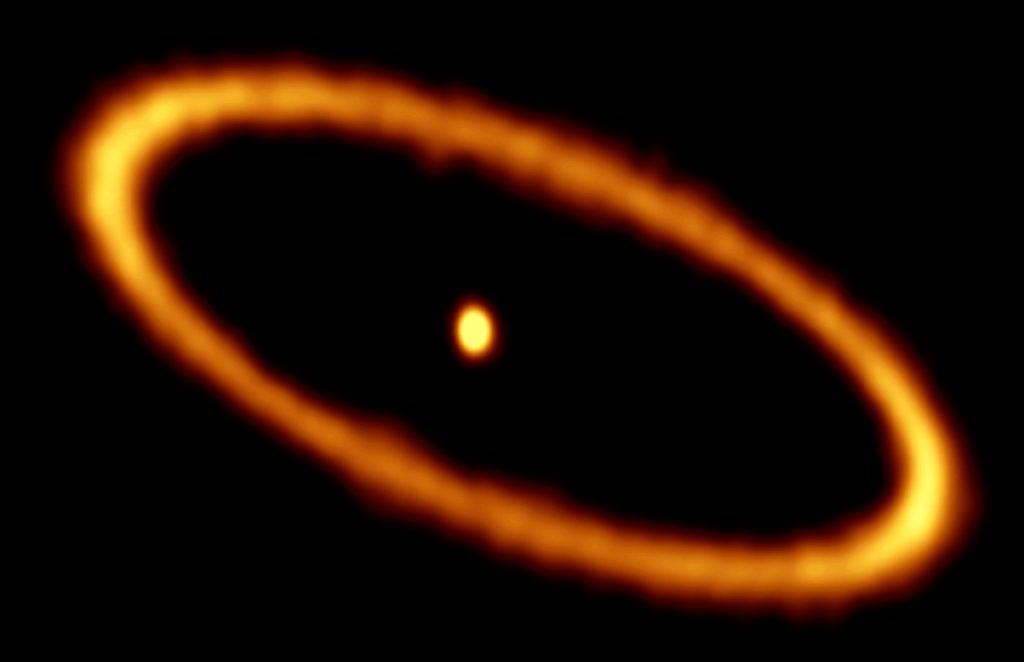
Fomalhaut’s disk system is complex, featuring three concentric belts out to 23 billion kilometers, with an eccentric ring at intermediate distance between 60-110AU. The sharp edge and tidal distortions of the outer belt are indicative of planetary shaping. It results from the continuous collisional recycling of approximately 300 million planetesimals, equivalent to 1.8 Earth masses, to resupply the dust particles that are continually lost to stellar wind or radiation pressure blowout.
5. Comparative Planetary System Dynamics
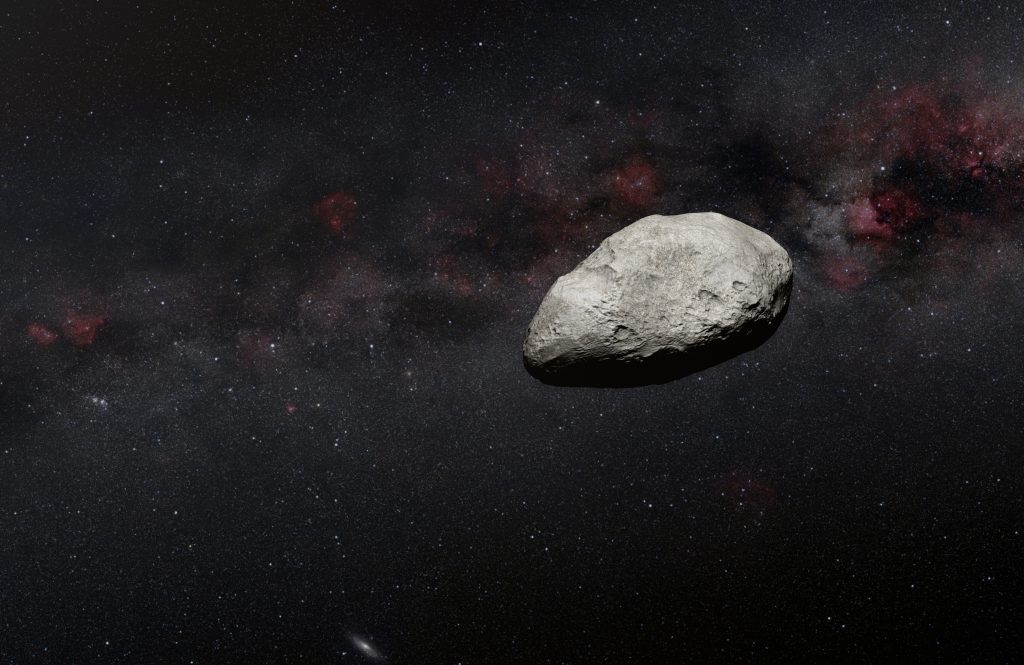
The level of the system’s activity corresponds with the “cosmic bumper car” phase of the young solar system, in which bodies were formed through collisions. The magnitude of the system’s collisions, which involve objects nine orders of magnitude larger than asteroid break-aparts in the vicinity of earth, provide a unique opportunity for research into the planet-forming process that is underway in real time.
The system’s observed levels fit models for Poynting-Robertson drag, which describe how dust sweeps from outer belts and may interact with bodies such as planets.
6. Power of Sculpting Through Radiation Pressure
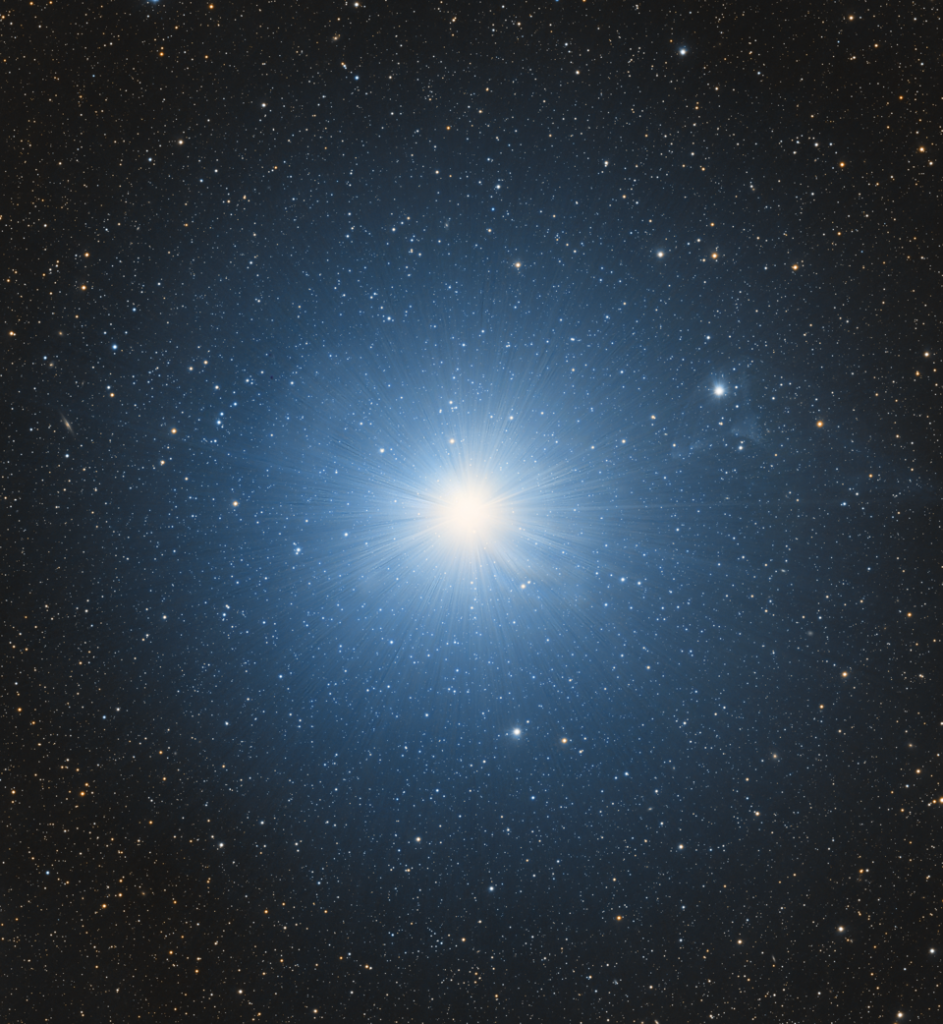
In the case of micron-scale particles and with Fomalhaut being 16 times as bright as our Sun and being an A-type star with a sufficiently high level of radiation pressure relative to gravity for micron-sized particles, it can play a dominating role in overcoming the force of gravity and cause a quick expansion of collision clouds. Such effects are also responsible for making “cs1 and cs2” transient objects and giving a warning to future planet-imaging missions about dust clouds that may resemble planet-signature objects.
7. Observational Campaigns and Future Prospects
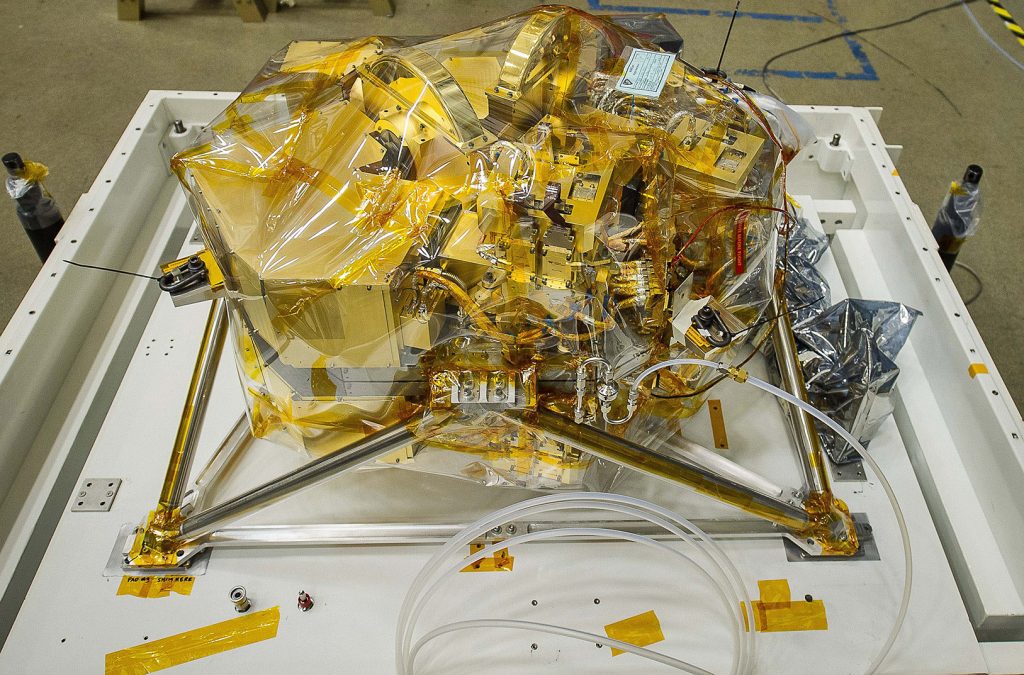
The precision of Hubble observations of Fomalhaut’s system in visible light is being paired with the infrared observations of JWST to study the evolution of cs2. NIRCam on JWST can measure grain sizes and types and detect water ice present on these planetesimals to see if they are ‘volatile-rich’ like Solar System comets. ALMA observations of millimeter imaging provide constraints on planetesimal geometry and eccentricity to refine theories of their hidden planetarian control. Observations may record additional planetesimal collisions to see if Fomalhaut’s 20-year ‘impact cycle’ is statistical fluke or a ‘new normal’ for young planetary systems.
The Fomalhaut double collision is not only an extraordinary event occurring once in a thousand years or more. It alsoprovides a direct view of the chaotic mechanisms of planet creation. Thanks to cooperation between multi-wavelength observations and dynamical and pressure of radiation models, researchers are deciphering the blueprint of a system even now in construction.


