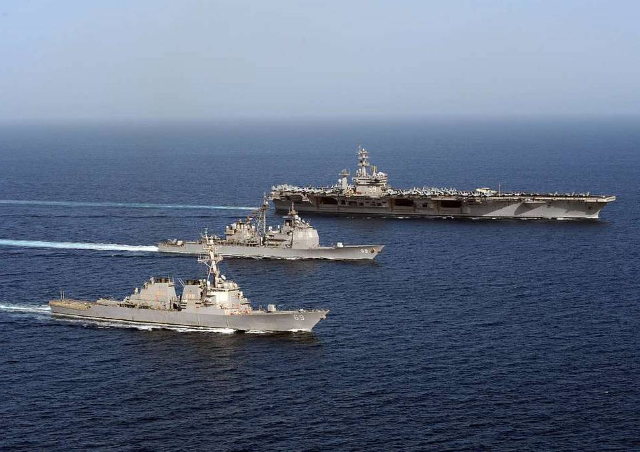
“Turnabout is fair play” – proverb that has hardly ever been so aptly applied as in military technology. In December 2025, the United States Navy conducted an important event to reverse a tradition that has been in place for well over a century. In addition, this took place in the development of Iranian-style kamikaze drones that reverse-engineered in the United States for the very first time on a warship at sea.
This is not simply a test or a trial.
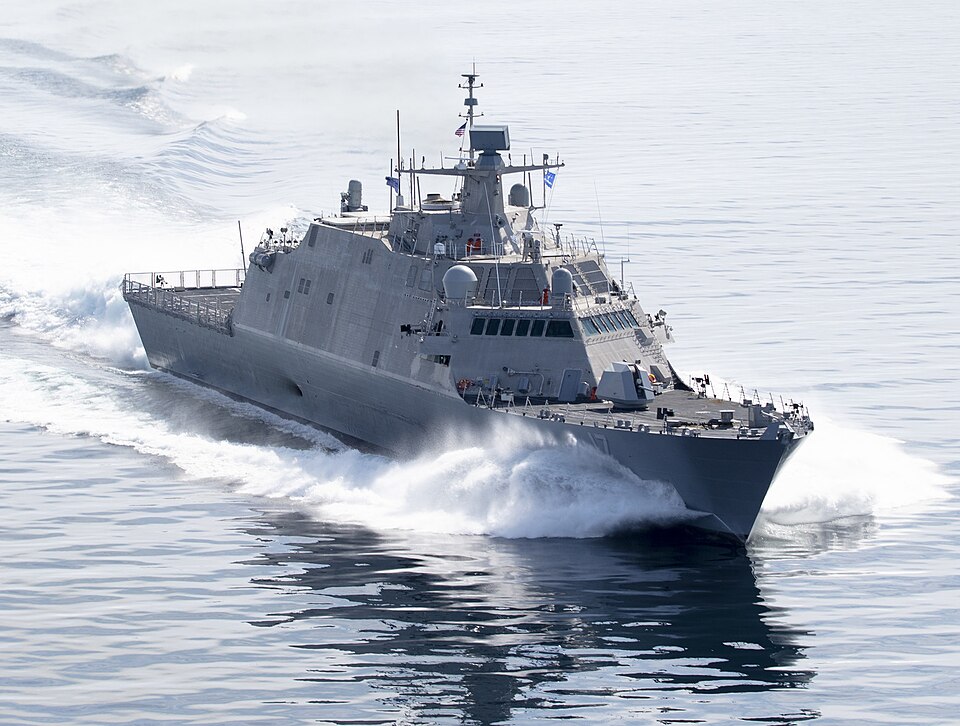
This is what it means to flex one’s military muscle in what can be accomplished in a timeframe that will soon see a low-cost unmanned combat system play a role in changing the nature of naval attacks altogether. The successful test of Indigo’s LUCAS attack system on the Independence-class Littoral Combat Ship USS Santa Barbara represented what marked a first operational test, deemed to be one that would overwhelm defenses, scan and track a moving target, at a significantly reduced cost from previous attack systems in play in this way prior to this one.
defense technology buffs, military strategy analysts, and naval warfare experts, the ramifications of this historic occurrence are far-reaching. Below are the ten major breakthroughs realized during this historic occurrence.

1. First Ever Launch of a LUCAS Drone by the Navy
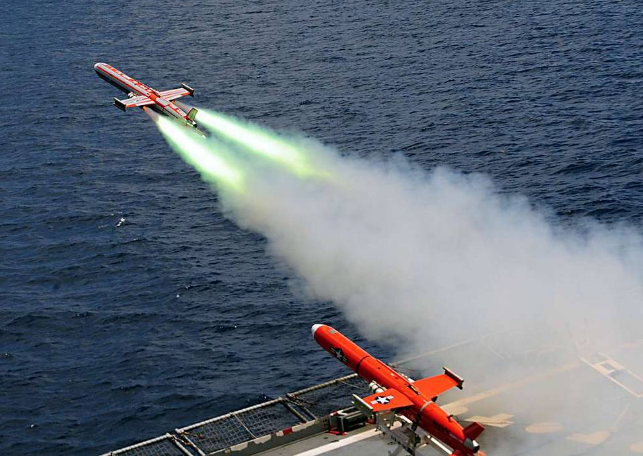
The first launch assisted by rockets for the LUCAS UAV took place on the 16th of December 2025. This activity followed the operations conducted by the Task Force 59 belonging to the U.S. Naval Forces Central Command within the Arabian Gulf. As quoted from Vice Adm. Curt Renshaw, the operation marks “a significant milestone in rapidly delivering affordable and effective unmanned capabilities to the warfighter.”
2. Task Force Scorpion Strike Deployment
This unit was introduced in the Mideast no longer than two weeks after having established Task Force Scorpion Strike, or TFSS for short, which is a one-way attack drone squadron in the Mideast area. tfss is operated by US Special Operations Command Center, using LUCAS drones with the intention of improving security in their zone of influence. tfss has been termed “a tremendous new asset to employ within the area.” It “could be employed anywhere that International Law would permit.”
3. Reverse-Engineering Iran’s Shahed-136
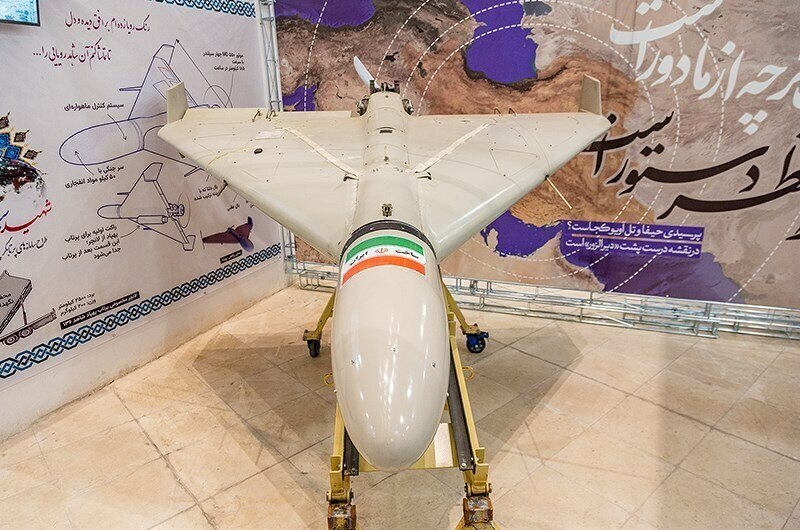
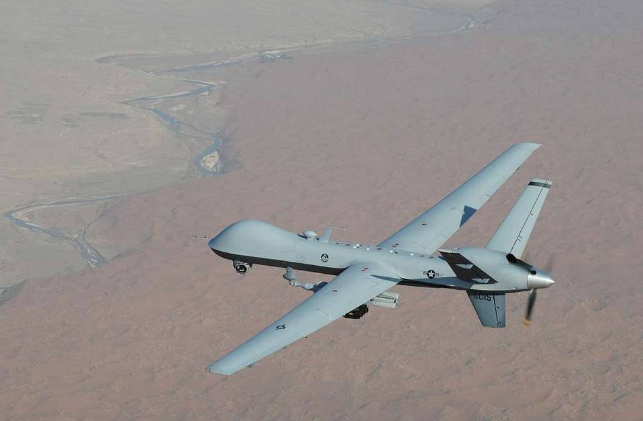
The LUCAS has been developed by SpektreWorks through reverse-engineering an Iranian version of the loitering weapon, called `Shahed-136`, which has been designed through reverse-engineering an American version, since Iran has already done it a number of times in its history, where an American version of `Shahed` has been seized by the United States in a damaged condition in order to reverse-engineer it for developing LUCAS, and it measures a length of 10 feet along with an eight-foot wingspan, slightly smaller compared to its Iranian version, priced at 35,000 for each unit, capable of being scaled up to massive production compared to `MQ-9 Reaper` drones.
4. Modular Designs for Multiple Functions
The LUCAS has a rather ingenious design in terms of incorporating the Modular design which offers flexibility when transitioning from mission roles of striking, surveillance, electronic warfare, as well as decoy missions. Several images released indicated the varieties of the LUCAS which have a gimbaled nose camera coupled with a miniature beyond-line-of-sight satellite communication link which communicates with these networks. They provide the ability to accomplish “more together than they can alone” as indicated by their ability to integrate simple striking components and smart communication components.
5. Beyond-Line-of-Sight Control
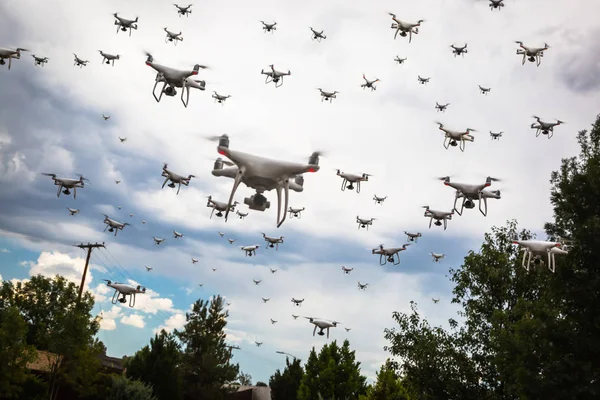
With the applicability of datalinks, the capability of controlling LUCAS when launched at an extended range for moving targets and opportunities qualifies within swarm attacks where UAVs can share data to attack targets on an immediate basis. It provides an improvement over the line-of-sight range that is presently being provided by most loitering weapons within the marketplace.
6. Swarm Tactics and Networking
The basic warhead drones can also be deployed along with the communication drones in order to create various swarms that are difficult to be countered by the enemy and can be deployed on various missions based on the tasks that are intended to be performed. Even the drones that are lost in battle can still be employed in the same tactic.
7. Flexibility for Platform Launch
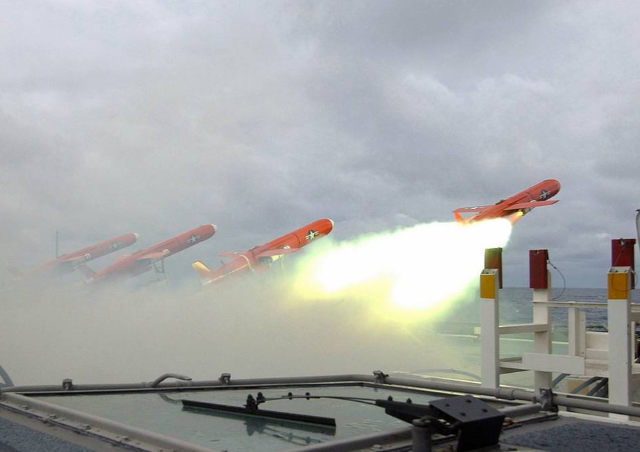
The potential platforms that LUCAS can be launched from are ships, semi-fixed ground launchers, ground mobile launchers, catapults, and rocket-aided launching. From the above, one can infer that the potential platform that has the ability to launch the extended-range U.C. capability would be any ship that has the capacity to be on the deck.

8. Strategic Context Relating to Iran
In the Middle Eastern region, other Iranian drone models such as Shahed-136 have been used. It must be noted that other countries, specifically Israel and its military forces, have also been attacked. According to statements released by CENTCOM officials, for the region to have LUCAS, there must be its presence in the area in order to “flip the script on Iran,” because such a system “represents a threat we cannot ignore.”
9. Integration with LCS Underperforming Fleet
It has not even worked well for the Independence and Freedom-class LRTs either. Their plan includes being provided with mission package containerized missile launchers. It is likely to be used in helping to increase their effectiveness because being underperformers, they might be used as drone carriers first.
10. Large-Scale Applications within U.S. Forces
“The Yuma Proving Ground applications of LUCAS by the U.S. Marines in other test applications can be seen to be in line with the long-term strategy to widen the use of LUCAS in other regions of the world, other than the Middle Eastern regions.” The applicability, feasibility, and easy manufacturability of the LUCAS, therefore, fit into the general strategy of the U.S. military to provide the country with cheap weapons systems in a shorter period of time.
“The presence of the LUCAS weapon system aboard the USS Santa Barbara was more than just a proof-of-concept; it was a statement of strategy.” The U.S. Navy, with its relatively low-cost approach to mass production, coupled with its networking and modularity advantages, marks the beginning of a new age of maritime strike warfare. By the countries of concern being used to dealing only with a handful of high-value assets among their few engagement partners, being faced with intelligent and expendable UAVs ‘launched’ by the sea will be a paradigm they simply will not be able to ignore.


