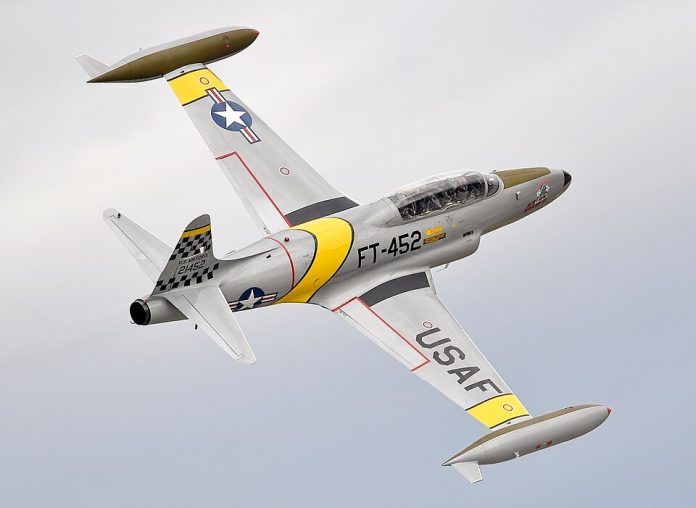
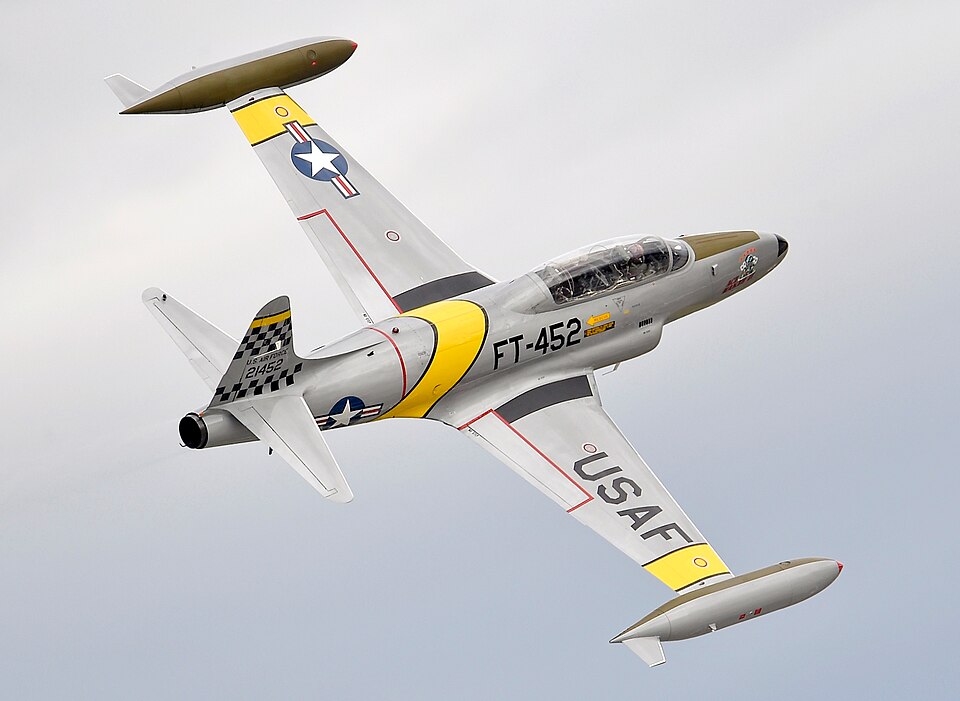
Just how much has military aviation progressed in such a short period of time? It becomes apparent when one looks at the T-33 Shooting Star, a jet that saw service during the Cold War, alongside modern trainers. While one time considered the forefront of Air Force training aircraft, the T-33 filled the gap between propeller trainers and the beginning of the Jet Age. To take one out for a spin today would be to experience excitement as well as a historical link.
Prior to the Pacific Airshow, a pre-show flight in the T-33 was a poignant reminder of the way in which analogue technology, the skills of the pilots of the previous century, and the power of jet engines had formed the breed of pilots of the mid-20th century. From the sound of the turbojet to the bird’s eye views through the canopy, every aspect of the experience was designed to highlight the difference in the cockpits of today, which are dominated by digital screens.
This list will look at nine aspects of the T-33 experience and the development of fighter pilots.
1. America’s First Full-Fledged Jet Trainer
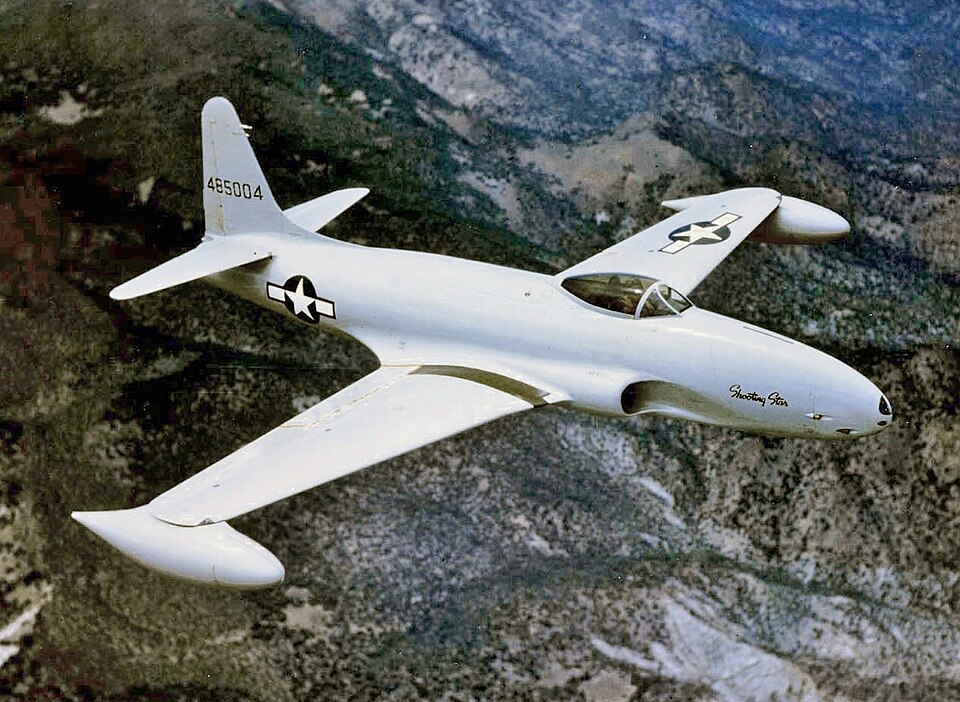
Based on the single-seat P-80 Shooting Star, the Lockheed T-33 introduced a dual cockpit for pilots transitioning from propeller planes to jet planes. With speeds reaching 600 mph and an altitude of 45,000 feet, it also came with an indicative bubble dome for improved visibility. Between 1948 and 1959, Lockheed manufactured over 5,000 units, alongside further licensed productions from Canadair and Kawasaki. The US Air Force last retired its T-33s in 1997 after five decades of service, impacting air forces in over 20 countries.
2. The Hands-On Analog Cockpit
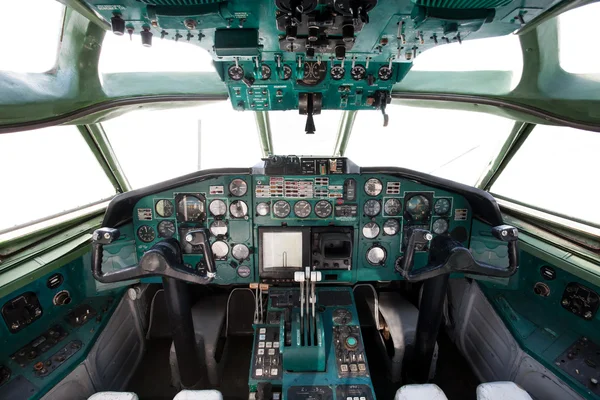
Entering the cockpit of the T-33 exposed the crew to a plethora of gauges and controls. This was an era that lacked computer avionics. The crew had to manually control the aircraft’s speed and altitude. Instructors were seated side by side to provide direct supervision. Control inputs such as the rocket ejection seat actuator served as a visible reminder that the aircraft was from a different era. Compared to current designs used in modern fighters, the controls used in the T-33 mandated minute-to-minute input from the pilot.
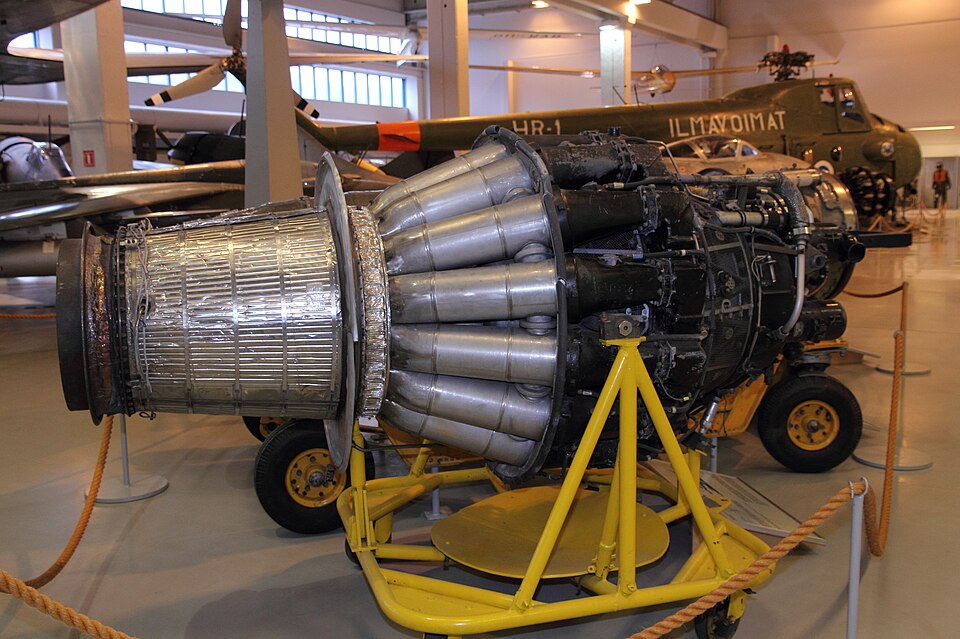
3. The Centrifugal-Flow Turbojet
The T-33 had the Allison J33-A-35 engine, and it had a centrifugal design that came from the innovation of Sir Frank Whittle. Instead of the axial-flow design in the modern jets, it used in the T-33, where it took 75% of the power to turn the fan and the remaining 25% for the propulsion. This design was inefficient, but it has significant historical value, to the point that the Soviets reverse-engineered it for the propulsion of the MiG-15 jet.
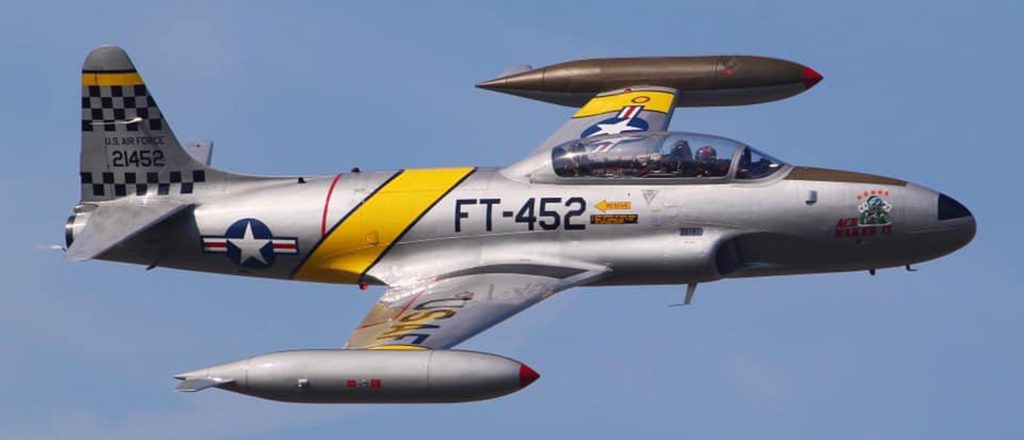
4. Flight Characteristics & Challenges
The pilots quickly learned to live with the foibles of the T-33: the slower acceleration when operating below a certain speed threshold, the necessity of differential brakes when taxiing, and the peculiar characteristics of the stalls, when roll was controlled by the ailerons rather than the rudder. The hydraulic boost-assisted ailerons allowed smooth turns when the boost was applied, but when it was not, the turns became heavy. There was little automation. Every aspect of flying had to be accomplished by the pilots’ hand operations.
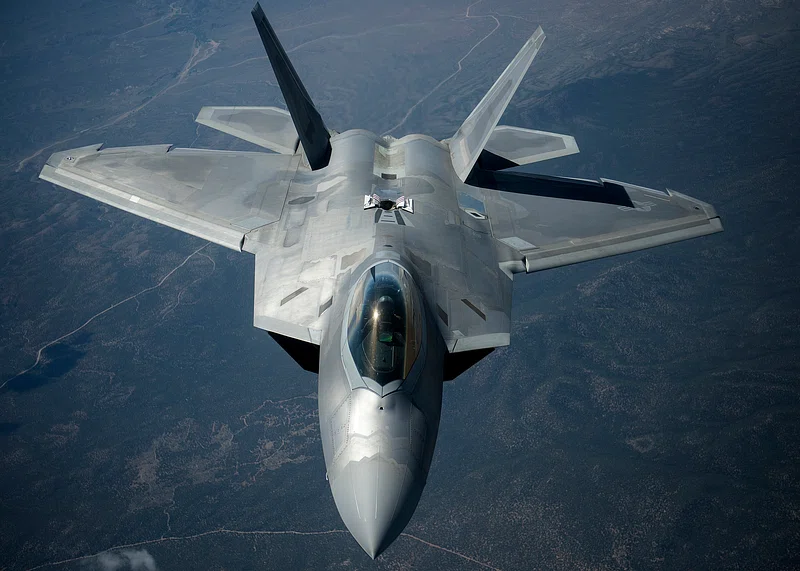
5. Airshow Heritage & Greg Colyer’s “Ace Makers”
During the Pacific Airshow, experienced pilot Greg “Wired” Colyer demonstrated the agility of the T-33 aircraft. A US Army veteran and owner of Ace Maker Aviation, Colyer flies three T-33 aircrafts for airshows across the country. “It was actually our first jet trainer and certainly just an iconic part of US history,” Colyer told Business Insider. His skillful aerobatic flying of the vintage aircraft is what symbolizes its popularity even after being outshone by better aircraft like the F-22 Raptor and the Thunderbirds’ F-16s.
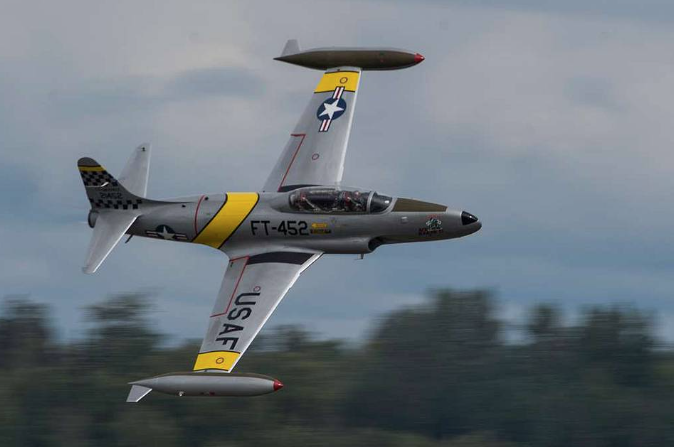
6. Fuel Management and Endurance
Burning 300 gallons of fuel every hour, the T-33’s endurance was limited to the equivalent of one hour of flight time. The fuel was pumped alternately from the tip tanks, the leading edge tanks, and the wing tanks into the reservoir carried in the fuselage. Automatic balancing prevented any imbalance, although in extreme circumstances, the tip tanks did have to be dumped.
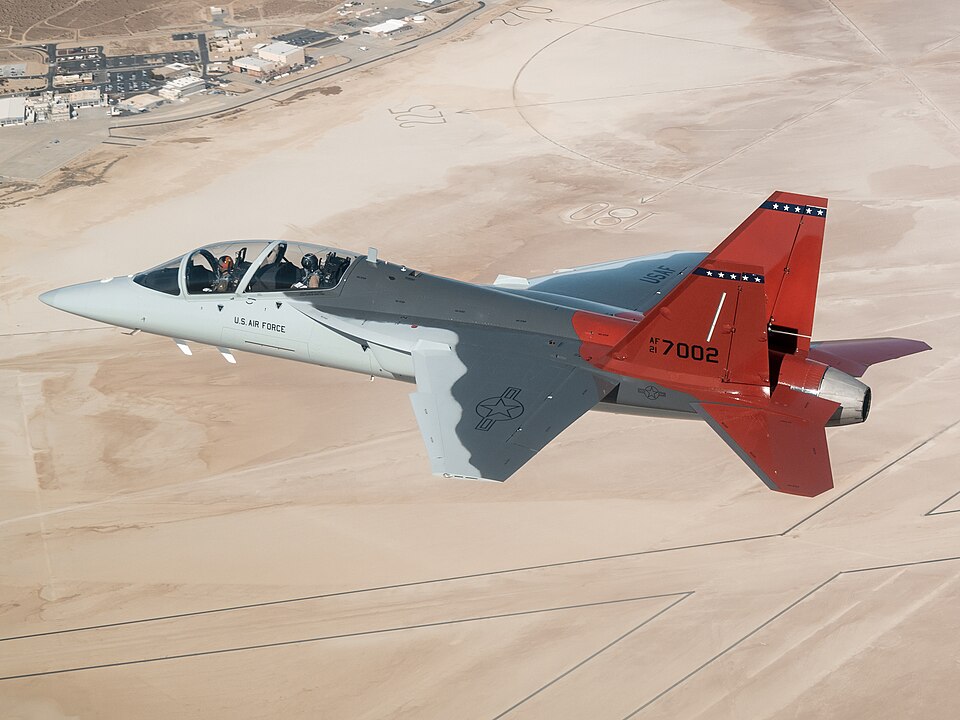
7. T-33 to T-7 Red Hawk
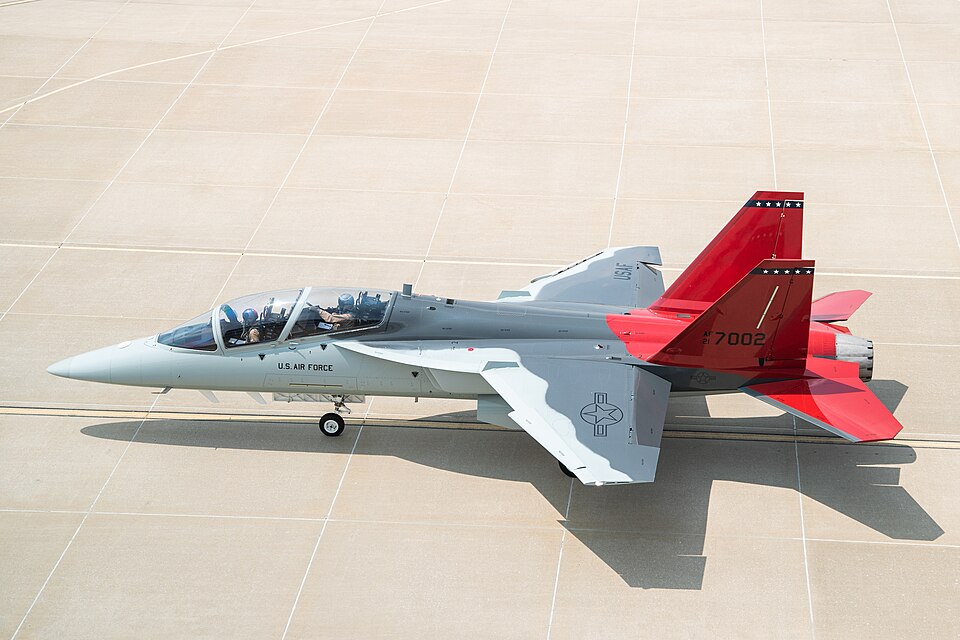
Today’s US Air Force has introduced its fifth generation of training aircraft, replacing its aging fleet of T-38 Talon trainers with its brand-new T-7 Red Hawks, which will prepare its student airmen for what to expect in fifth- and sixth-generation fighter aircraft. It represents a significant improvement over its predecessor, the T-33, which clung to its technology like a dinosaur to its club.
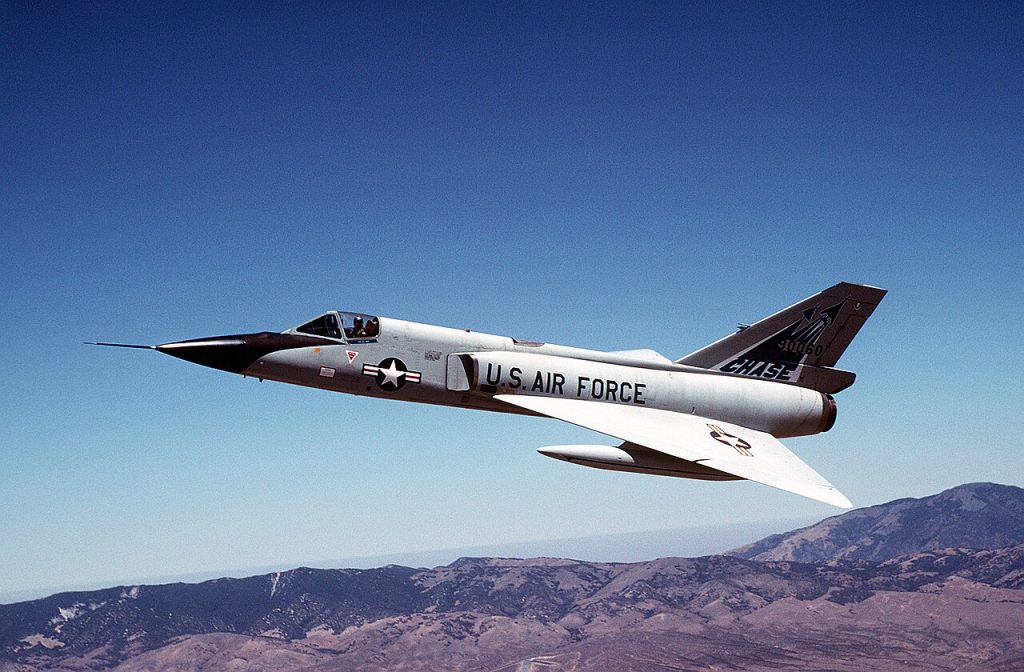
8. Cockpit Evolution: From Gauges to Helmet Displays
More than 65 years passed from the F-106 Delta Dart’s cluttered cockpits to the F-35’s wide touchscreen display and Helmet-Mounted Display. The requirement for dozens of discrete gauge readings was obsoleted by microprocessors that enabled multiple functions on single systems. The point of origin of such developments began with the T-33 jets when pilots’ awareness of their surroundings exclusively involved looking at real-time readings.
9. Air Show Culture and Public Participation
Shows like the Pacific Airshow are a fusion of the past with the current era since vintage aircraft perform in tandem with the most modern fighters. Spectators are treated to the capabilities of vintage jets in terms of maneuverability as well as the awe-inspiring power of modern jets capable of pulling up to 7 Gs. To military history enthusiasts as well as those with dreams to fly through the skies like their heroes, these provide a one-in-a-lifetime opportunity to witness the development of airpower in one arena with shows that highlight aircraft like the T-33. The T-33 Shooting Star remains both an historical milestone in terms of technology, as well as a trainer whose influence on generations of fighter pilots has yet to be fully appreciated.
To fly a T-33 today is more than a nostalgic experience it’s a historical education about the pace at which aviation has evolved, from centrifugal turbojets to digital cockpits. Indeed, as new trainers such as theT-7 Red Hawk begin to take their turn in the limelight, the T-33’s legacy will be measured in terms of the qualities it inculcated in its pilots.


