
Andrew Bailey, Governor of the Bank of England, made it clear in his warning that artificial intelligence could cause labour market upheaval, and that it could be comparable to the Industrial Revolution. Bailey, interviewed on BBC Radio 4, Today programme, claimed that though history indicated that technological revolutions did not lead to the mass unemployment, they do displace workers, and the changes that take place are often irreversible by changing the employment patterns permanently. His comments are issued in the context of increasing evidence that AI is gaining rapid adoption in the industries of the UK, transforming how people work and where they find jobs and the skills needed to succeed in an AI-driven world.
1. The Industrial Revolution teachings
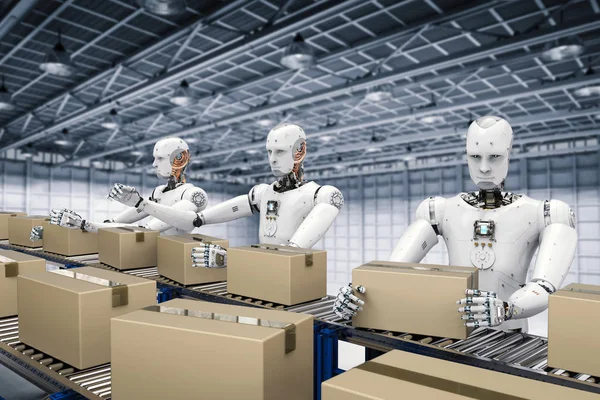
Bailey made a straight analogue between the current AI wave and the mechanisation of the 18 -19 th centuries. Then the machinery of the textile industry and steam power transformed the production process and moved the labour out of the crafts workshop and into the factory. Now with time as you can see in the case of the industrial revolution, I believe we can now look back and say it has not created the mass unemployment but it displaced people form jobs and this is significant, he said. The positioning was not symmetrical and those sectors that adopted new technologies expanded at the expense of others. Economists observe that the same sectoral split is probable with AI, which is the high-value services and high labour-intensive manufacturing.

2. The Lopsidedness of AI on Jobs
An analysis of all Bing Copilot interactions conducted (n=200,000) by Microsoft recently found interpreters and translators as the highest exposure occupations, and 98 percent of the work was overlapping with AI abilities. Historians, mathematicians were next at 91 percent and writers and journalists at 85 and 81 percent respectively. As the analysis has shown, the knowledge work specifically the tasks of research, drafting, and summarising is quite susceptible. On the other hand, employment with physical labour, direct human contact or equipment specialisation e.g. operational of a water treatment plant have low exposure. According to Nvidia CEO Jensen Huang, as he noted, you will not lose your job to an AI, but you will lose it to a person who uses AI.

3. Early Indicators in UK Labour Market
According to the official statistics, the level of unemployment in the UK has increased to 5.1 per cent in the three months to October, including 85,000 additional unemployed persons aged 1824 the highest growth since the end of 2022. The legal, accounting, and administrative profession are already shrinking in the recruitment of entry-level professionals since firms have adopted AI to review documents and analyze data. The change was verified by the global chairman of PwC Mohamed Kande: We have artificial intelligence now. We would like to hire; however, I do not know whether it will be the same level of people that we will hire it will be a different group of people.
4. Economic Potential and Productivity Gains
The potential of AI is the possibility to reduce the time of a complicated workflow, which normally takes weeks, down to hours. Fraud-checking reports which used to take two weeks are now done in two hours with the Gemini 2.5 model of Google. A group that more intensively used AI four times than other groups said it had an 8-percentage point greater profit margin. The rating agency Moody has opined that the UK may benefit more than the rest of the countries with AI innovations because the UK is more services intensive economy considering that 80 percent of its GDP is services based. According to Bailey, AI was the most plausible source of the next leg up in UK growth, but history indicates that productivity gains will be slow to show.

5. Technological Adoption Patterns in the Past
The evidence of the U.S. labour market is that, overall disruption caused by new technologies can take decades to be realised. The influence of generative AI since 2022 is similar to that witnessed at the beginning of the internet adoption, with changes in occupational mix being about a percentage point more than in the late 1990s. This is in line with Bailey, who cautions that AI benefits are going to take a long-term investment and adjustment just like electricity, which only showed benefits after 40 years in productivity statistics.

6. Skills as the New Currency
The changing demand of labour is exerting pressure on the demand of AI-dollar you will need. Research shows that using learning technologies, like Python and TensorFlow, could contribute tens of thousands of pounds to yearly profits. According to Bailey, having AI training and education will make it far easier to secure employment. The Department of science innovation and technology in the UK states that employment opportunities associated with AI have increased by over 70 percent since 2022 with over 86,000 jobs currently being announced in 2024, a fact that highlights the need to find technically skilled employees.

7. Imperatives of Policy and Investment
The policy will have to support the UK to maintain its position in the frontier AI development. Some of the earliest reinforcement learning systems and the work of DeepMind to the most advanced models in Google are only a few of the 100+ AI models that the country has been engaged in. In the year 2024 alone, AI-based inward investment was over 15 billion generating above 6,500 employment positions. Some of the strategic priorities are the development of edge AI, AI software infrastructure safeguarding, and investment in new materials to improve the performance of hardware.
8. Concentration and Market Imbalances Risks
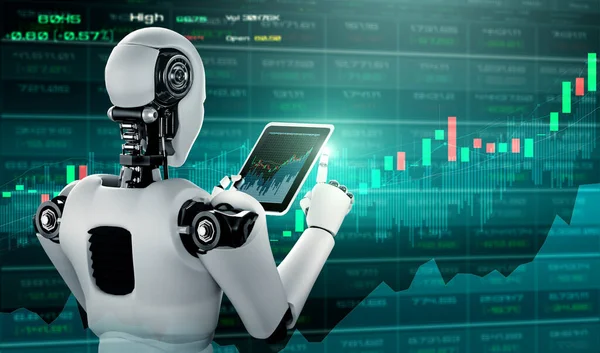
Analysts caution that AI economic benefits might become skewed towards large companies that have the resources to invest in them, potentially worsening regional and competitive imbalance. In a very controlled area such as accountancy, it is feared that rule making will be behind the technological capacity and will pose uncertainty to implement. Another concern Bailey raised is the danger of an AI investment bubble, which is similar to the dotcom bubble and that valuations needed to be closely followed.
The future of AI in the UK will be predetermined by the extent to which the industries, authorities, and employees will surmount the dual displacement and productivity forces. The historical account opines that despite the disruptive nature of the transition, individuals with the right skills and backed by visionary policy can use AI to leverage the potential of transformation.


