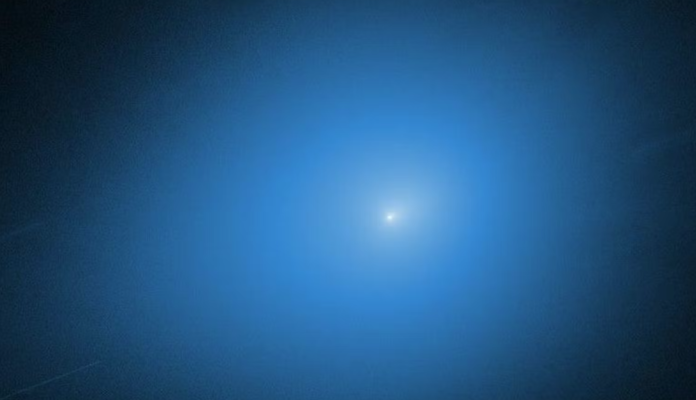
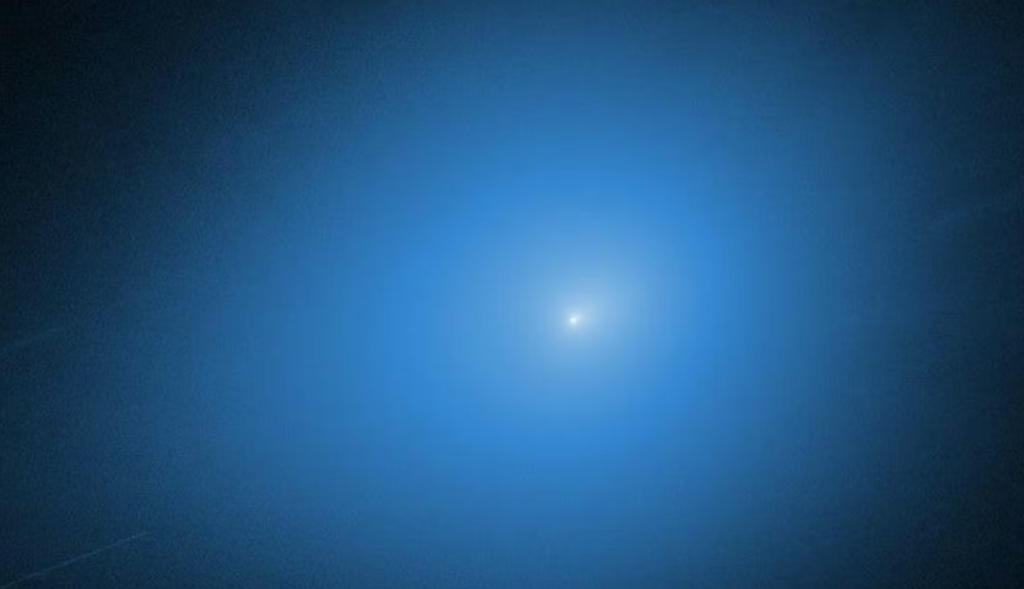
In the early morning hours of December 19, 2025, comet 3I/ATLAS flew through our cosmic neighborhood at 168 million miles, its closest recorded passage on record and the third-ever confirmed interstellar visitor in our solar system. Unbeknownst to scientists, the 3I/ATLAS was born around a foreign star, unlike the innumerable other comets born in our own region of the solar system, such as the Kuiper Belt and the Oort Cloud, thus carrying along with it the unique ‘chemical and physical signature’ of a far-off planetary system. Its orbital path course assures that it will never be seen again.

1. The Artificial Origin Hypothesis
This hypothesis has also been advocated by Avi Loeb, an astrophysicist at Harvard University, who formulated the theory that the 3I/ATLAS comet could be a man-made artifact created by an advanced civilization. He grounds his hypothesis on the orbit path of the comet, its nickel tail, and its ‘nongravitational acceleration’-all of which could hint at the presence of an propulsion mechanism. “Humans have launched artificial satellites and spaceships into orbit. We should therefore not rule out the possibility that extraterrestrial life forms could have the ability to create artificial satellites and spaceships,” he once wrote. While NASA has officially declared that the visitor is a naturally occurring comet, Loeb’s hypothesis has sparked immense interest among the public.
2. Trajectory and Nongravitation
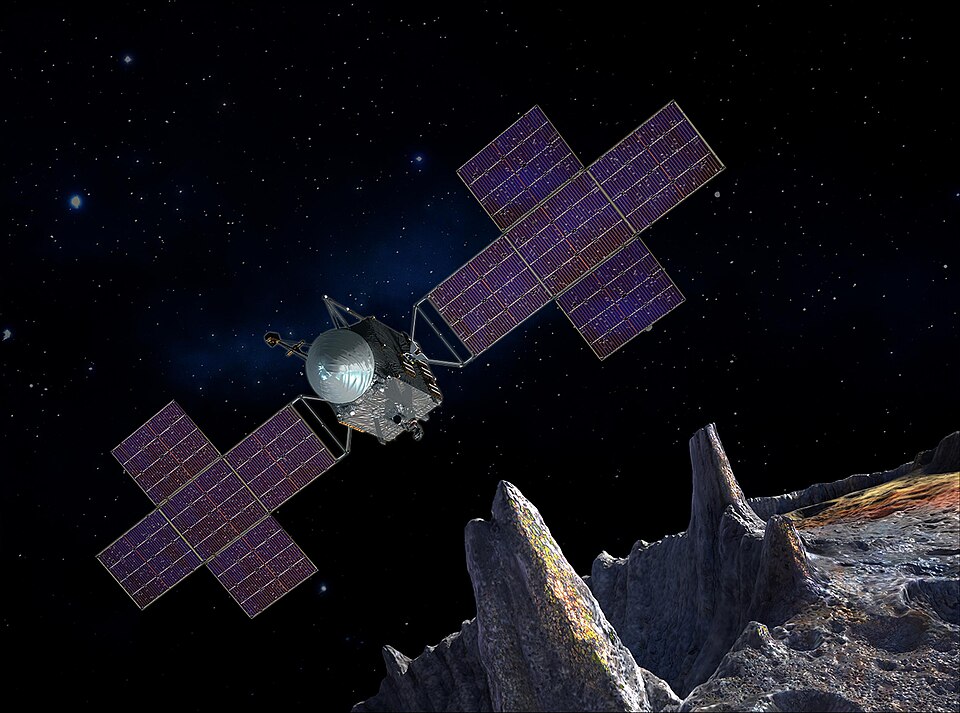
3I/ATLAS has a retrograde orbit with a geometry strongly embedded within the ecliptic plane. Loeb considers this ‘fine-tuned.’ There has been evidence for nongravitational acceleration that is nondetectable, usually because of comet outgassing. The NASA Psyche and ESA Mars Trace Gas Orbiter missions both found the acceleration to be what is expected for a comet but are suspected of attributing acceleration due to possible directed thrust. It is difficult to detect acceleration because a comet is not a point source.
3. The Nickel-Rich Tail and Chemical Anomalies
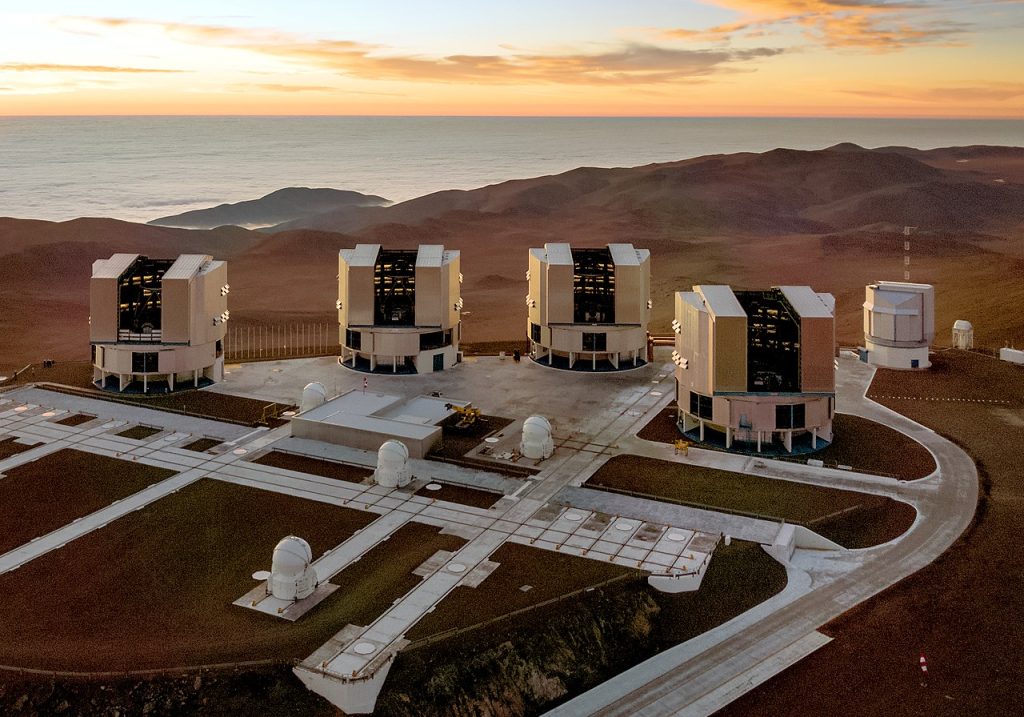
Data from the Very Large Telescope spectrum obtained indicated that there was nickel gas streaming from the distant 3I/ATLAS from the Sun, and it had a high ratio of CO2 to H2O, eight to one. Considerably, nickel is one such species that requires more elevated temperatures to vaporize and had been released early. The proposed mechanisms so far include the photodissociation reactions involving volatile metal carbonyls, like nickel tetracarbonyl, and photonstimulated desorption due to dust grains. Absence of iron emission also detected suggests that there is some selective carrier process involved. Events of this kind also took place in the case of Comet 2I/ATLAS (Borisov).
4. Twin Tails and the “Heartbeat” Brightness
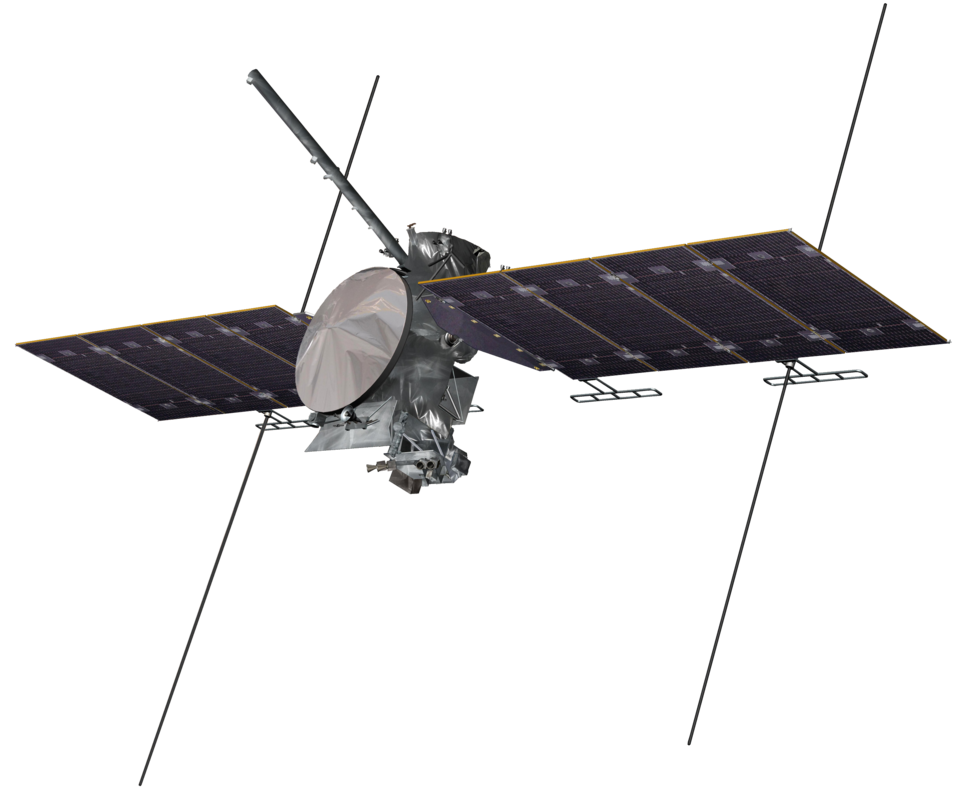
“Images from the NASA Europa Clipper mission and from ground-based telescopes show that 3I/ATLAS had two separate tails and a brightness variability that pulsates, or ‘beats,’ at times associated with its rotational period of 15.55 hours,” a NASA press conference explained. The comet’s anti-tail-a narrow jet of material pointed toward the sun-remained well-collimated (that is, didn’t spread out) over a distance of some 500,000 km even past perihelion, in opposition to what might be expected due to solar wind forces. Loeb notes that the possibility for naturally aligning the jet in this way-twice-is low.
5. Planetary Defense Drills & Monitoring Systems
The International Asteroid Warning Network, with NASA, ESA, and 23 other countries, took the approach of 3I/ATLAS as a live test for planetary defense. Starting on November 27, 2025, and up until January of 2026, a variety of organizations followed the comet using land-based telescopes in Hawaii, Chile, and Australia, as well as orbiters like Mars Express and Juice. ESA employed Meerkat, an imminent impactor early warning system, along with Aegis, which uses orbit predictions to forecast long-term danger. ESA also employed NASA’s Double Asteroid Redirection Test, which tested kinetic impactors that had succeeded in 2022.
6. Von Neumann Probes & the Berserker Hypothesis
A technological framework for Loeb’s warnings is that of self-replicating spacecraft, alternatively known as von Neumann probes. These may either mine resources at asteroids and moons, reproduce themselves, and then take over a whole solar system to analyze, make use of the resources, and dominate. “Seed factory” schemes include the REPRO scale put forward by Robert Freitas, whereby the initial seeds develop industrial infrastructure over an enormous span of time. A more sinister vision is the “Berserker Hypothesis,” in which an earlier civilization sends out probes to destroy any possible future rivals.
7. Detection of Artificial Objects in Space
Search patterns may involve more than listening for radio transmissions. As Zaza Osmanov notes, “alien spacecraft may be equipped with nano-scale swarming robots that reproduce themselves while being powered by the hydrogen within the interstellar dust, possibly duplicating cometary brightness in the infrared part of the spectrum.” Professor Alex Ellery recommends that we search for technosignature patterns such as unusual isotope signatures and subsurface magnetic fields, particularly on the Moon which might be used as a manufacturing facility for still other spacecraft which would visit Earth.

8. Public Perception and the ‘Alien of the Gaps’
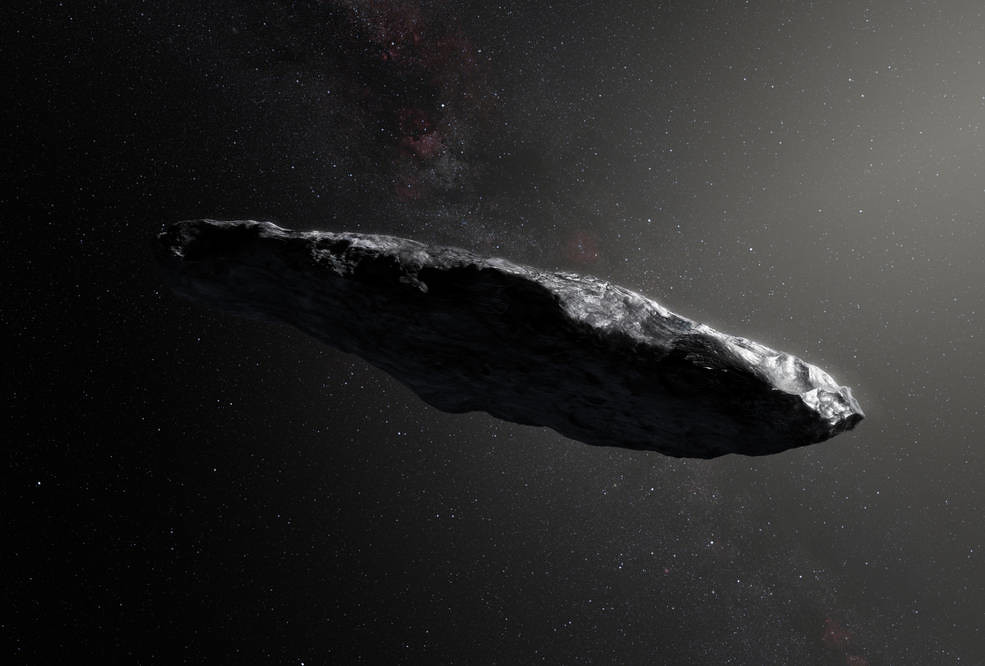
The image of A review of 700,000 social media messages from July to November 2025 suggests that 40% referenced aliens or alien technology, due to “anomalies” related to Loeb’s theory. This can also be attributed to a “alien of the gaps,” where, when there are gaps in natural explanations, greater agency must exist. Even as Loeb periodically agrees with cometary consensus, his focus on hypothetical explanations has made the alien construct prominent to the detriment of scientific consensus.
9. The Scientific Opportunity
Beyond speculation is the rare opportunity for research on pristine material outside the Solar System afforded by 3I/ATLAS. The composition dominated by CO₂, anomalies related to nickel, and characteristics of the jets can be interpreted for conditions related to planetary formation as well as volatile compounds outside the Solar System. Observations in a multi-spectral range of optical to X-ray can further models related to the interstellar comet.
As 3I/ATLAS retreats toward the edge of the heliosphere, the data it has left behind will be carefully sifted through for years to come. As much snowball from the cosmos or technology from another world as it is, its presence has already pushed the twin frontiers of cometary science and planetary defense readiness-the largest real estate and surprises for the rock we call home are well beyond.


