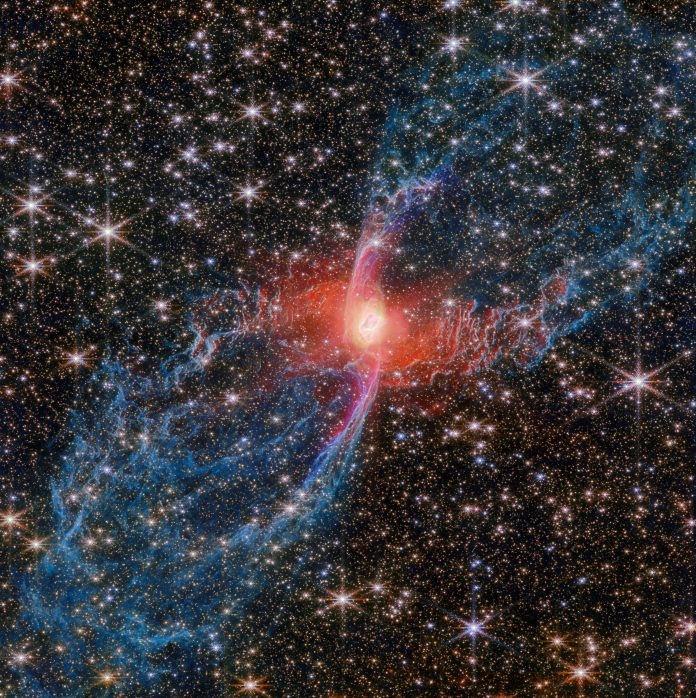
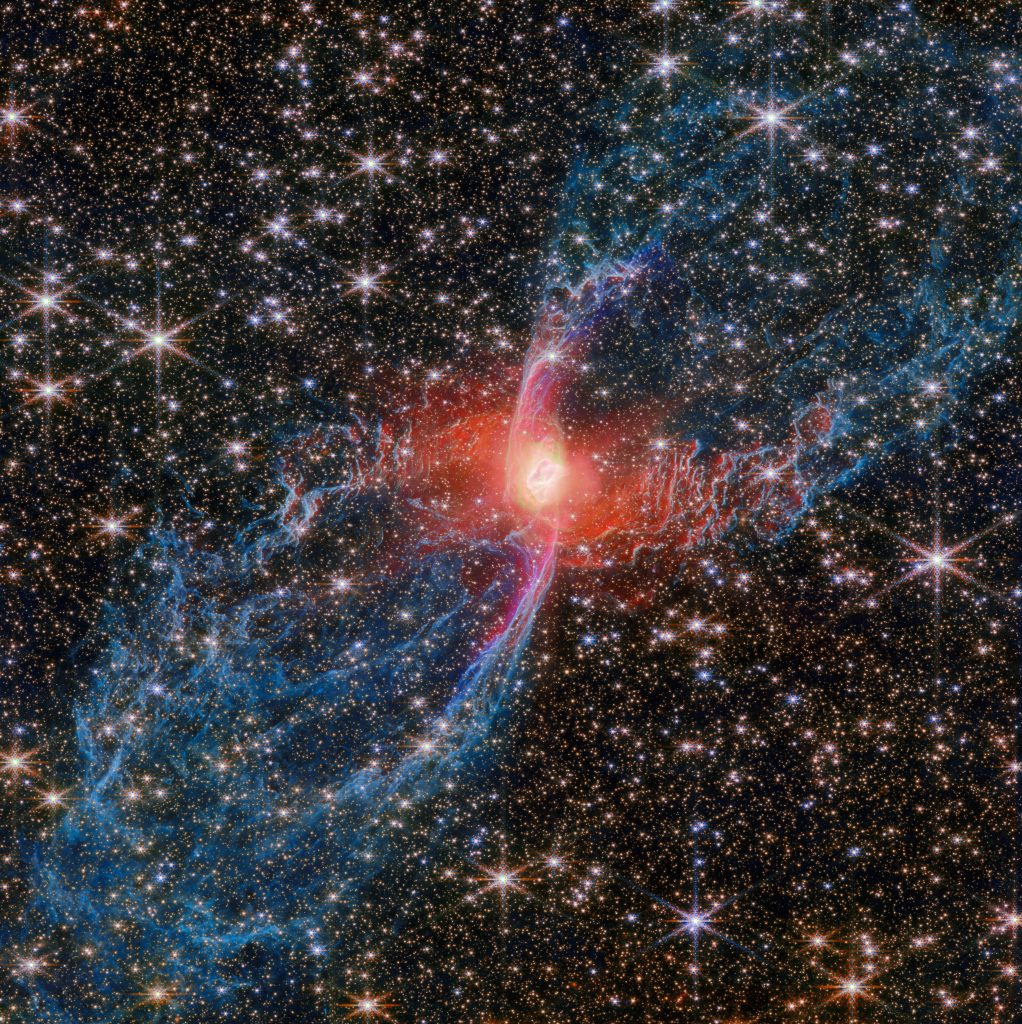
“Nature uses only the longest threads to weave her patterns, so each small piece of her fabric reveals the organization of the entire tapestry,” wrote Richard Feynman. The James Webb Space Telescope’s latest observations of the Red Spider Nebula have pulled back the cosmic veil on such intricate weaves-revealing colossal, closed molecular lobes, delicate shock fronts, and fingerprints from a stellar system sculpted by a binary interaction.
1. NIRCam’s Infrared Precision
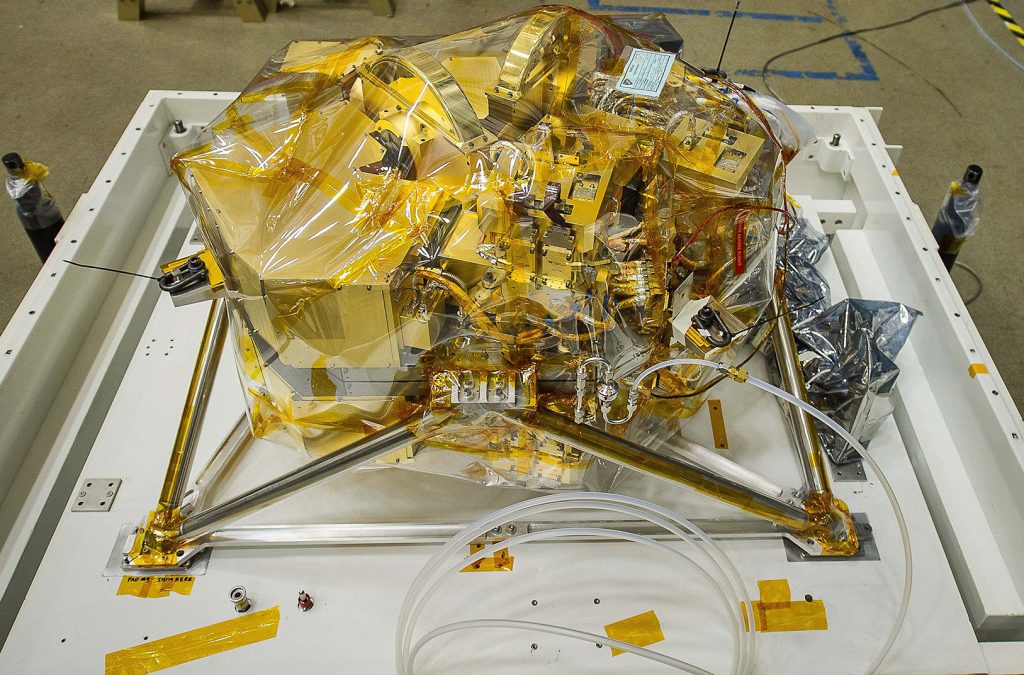
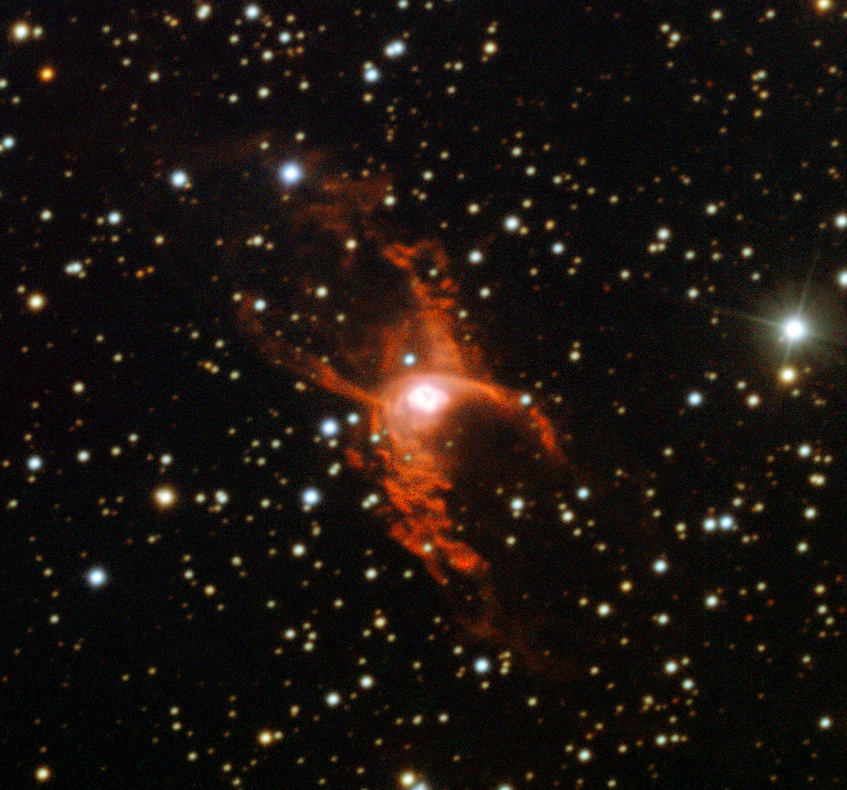
The Red Spider Nebula NGC 6537 now shows unprecedented clarity in the Near‑Infrared Camera aboard JWST. With narrow‑band filters isolating Brα at 4.05 μm, H₂ at 2.12 μm, [Fe II] at 1.64 μm, and PAH emission at 3.28 μm, the instrument mapped structures well beyond the reach of optical telescopes. Unlike Hubble, which cannot go as deep in the infrared, a huge 6.6‑meter beryllium mirror with cryogenically cooled optics in JWST pierces through dust to reveal the full molecular architecture of this nebula.
2. The Discovery of Closed Polar Lobes
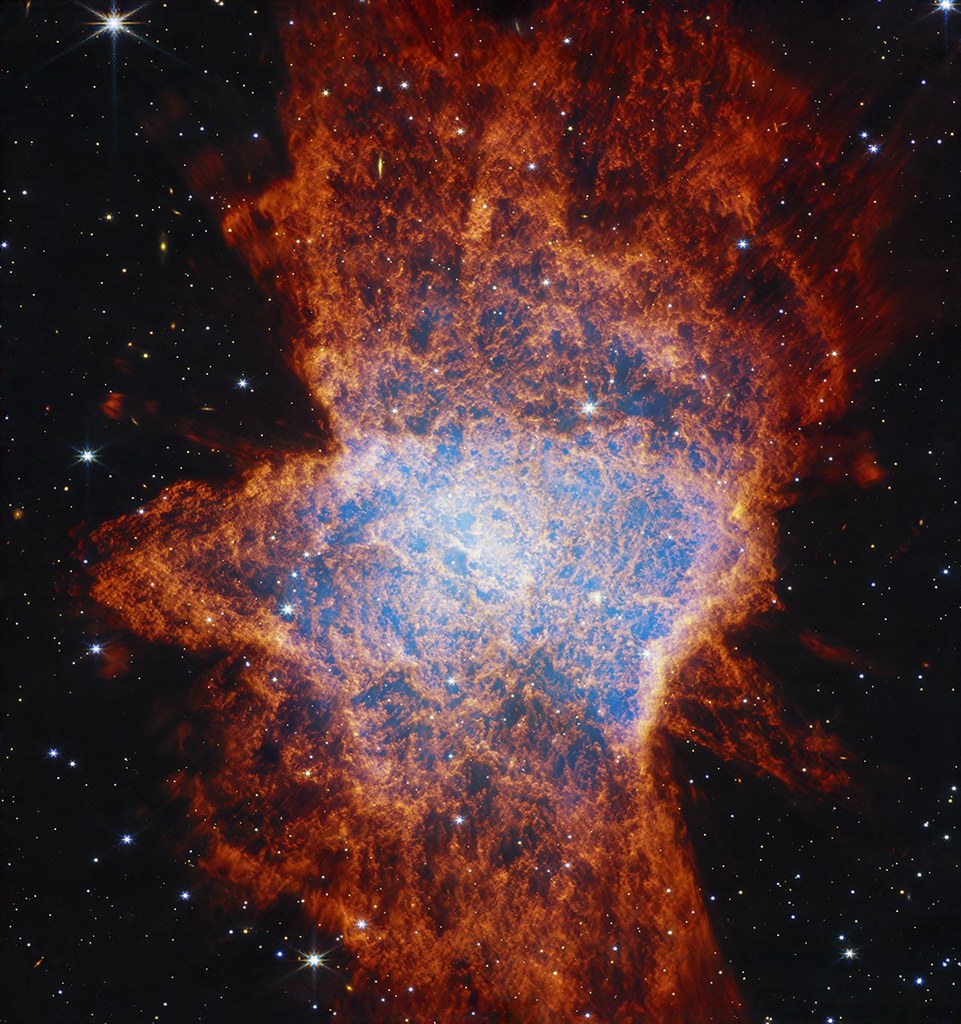
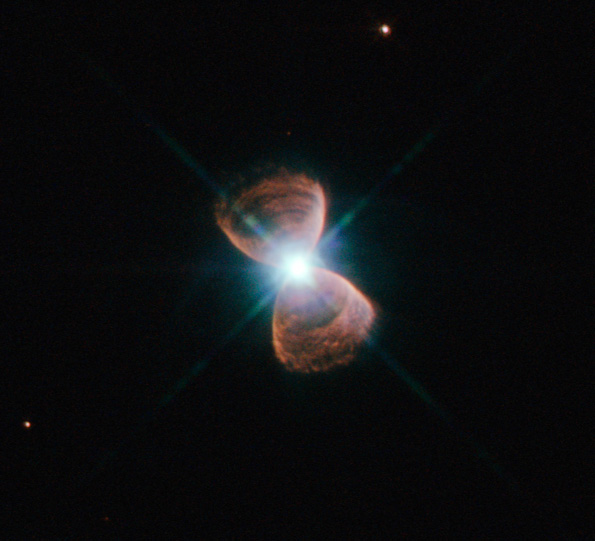
The H₂ imaging for the first time shows the nebula’s polar lobes as fully enclosed, bubble‑like structures extending about 1.1 pc – roughly 3.6 light‑years – tip to tip. These lobes are inflated by polar outflows moving at ∼300 km/s and have a dynamical age of ~3,700 years. Resolved at sub‑arcsecond scales, their delicate filamentary rims suggest instabilities in shock‑compressed molecular gas.
3. Shock fronts in [Fe II]
The [Fe II] emission traces an S‑shaped pattern along the inner lobe walls, marking zones where an active, collimated wind collides with slower material. This morphology mirrors that of NGC 6302, another high‑excitation, molecule‑rich bipolar nebula. The shocks here likely reach velocities near 100 km/s, energizing iron atoms stripped of electrons in the impact zones.
4. The Expanding Molecular Torus
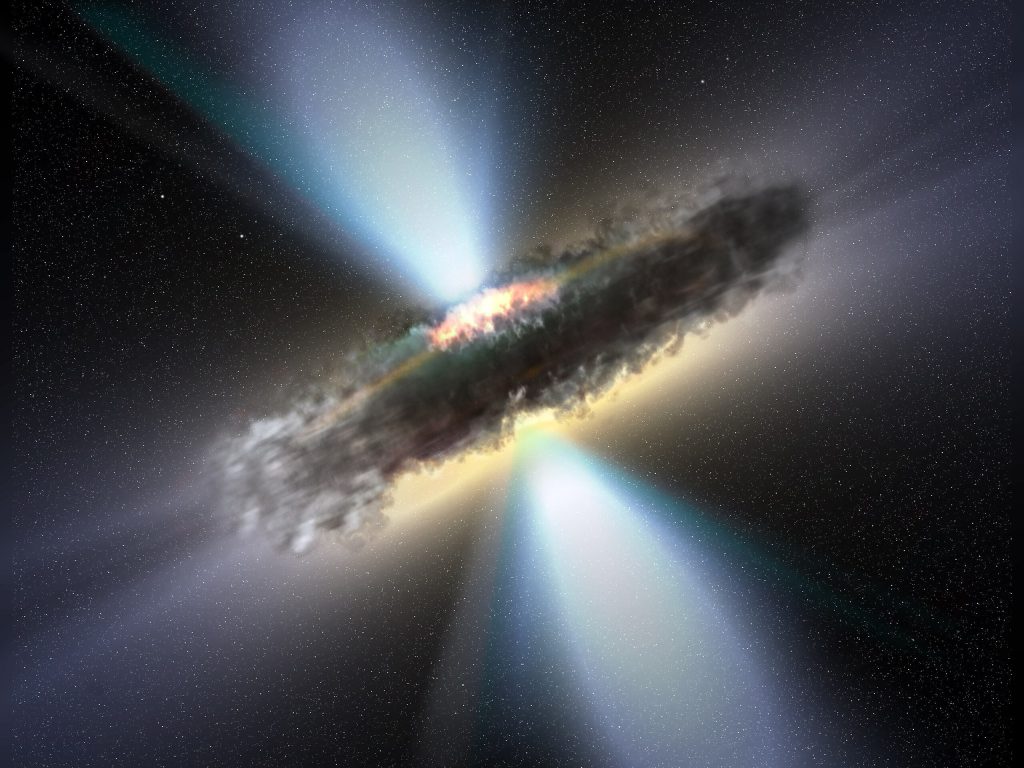
Mapping in ALMA 13CO(1–0) has revealed that a dense equatorial torus of cold molecular gas, which is expanding at ~13 km/s with a radius of 0.13 pc. Its dynamical age of ~10,000 yr predates the polar lobes, and reveals a two‑phase mass‑loss history: a slow, dense equatorial outflow during the late AGB evolution, followed by fast, collimated polar winds. The point‑symmetric density pattern of the torus is intriguingly misaligned by ~20° from the polar axis.
5. Multiwavelength Core Mapping
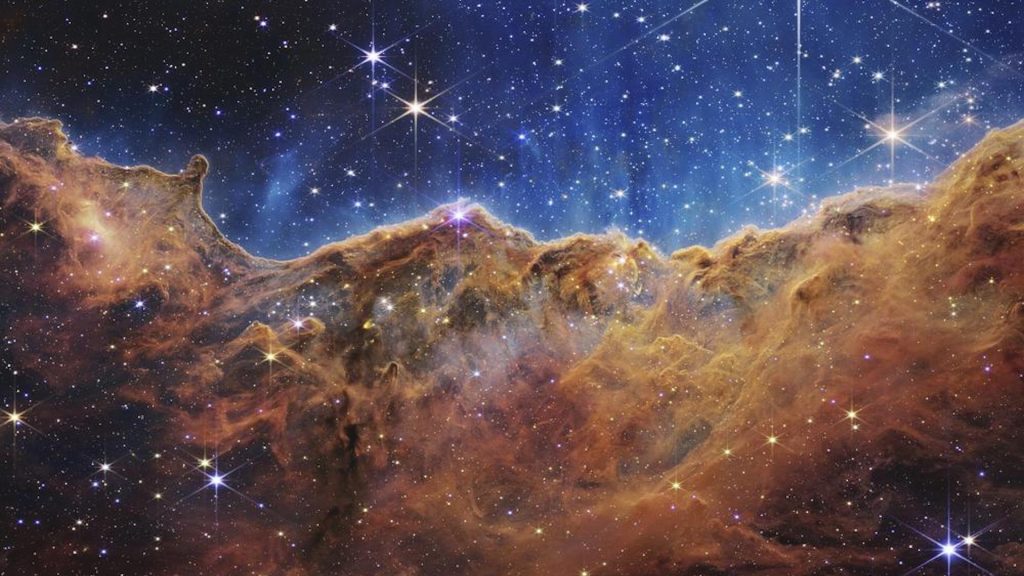
Such overlaying of JWST Brα, HST Hα, and ALMA 3 mm continuum data by astronomers has enabled the disentanglement between foreground and background ionized structures in the core. Millimeter continuum, unaffected by dust extinction, pinpoints the ionized inner edge of the torus, while Brα and Hα trace opposite‑facing lobe interiors. This synergy underlines the potential of combining optical, infrared, and radio datasets.
6. No X‑Ray Emission
No diffuse or point-like X-ray sources were detected in deep Chandra HRC-I imaging, providing strict upper limits to luminosities produced by shocks L X, d ≲ 1.5 × 10 31 erg / s and an stellar companion corona L X, p ≲ 2 × 10 30 erg / s. These values are at least a factor five below the values obtained for younger, molecule-rich PNe such as NGC 7027 and imply that either the shocks are weaker nowadays or more efficient cooling occurs.
7. Hydrodynamic Modelling
Comparisons with bipolar PN simulations provide good matches in lobe opening angles, turbulence along edges, and shock‑heated inner rims. Models that can place fast 600 km/s polar outflows impinging on a slower R⁻² density AGB wind reproduce the observed closed‑bubble morphology and [Fe II] shock zones, though refinements are required to capture the apparent precession of the outflow axis.
8. Clues to Infrared Excess and Binarity
The photometry over 0.55 to 4.05 μm shows a strong near‑IR excess over the hot (~200 kK) stellar photosphere, which is compatible with thermal emission from ~1000 K dust near sublimation temperature. The inferred dust location, ~7 au from the star, suggests a compact circumbinary disk. Such disks, in conjunction with precessing jets and equatorial tori, are hallmarks of binary-shaped planetary nebulae.
9. Creation Sequence
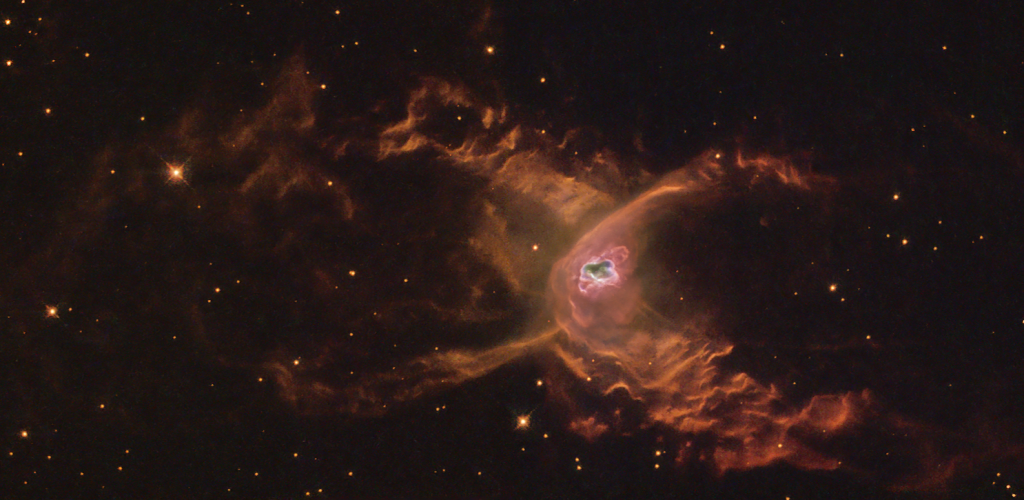
What emerges is a picture of a fairly massive progenitor star in a binary system that ejected a slow, dense torus ~10 kyr ago. A few millennia later, fast, possibly episodic and precessing polar outflows carved the closed molecular lobes seen today. The binary interaction likely focused mass loss into the equatorial plane and powered the collimated winds that continue to shape the nebula.
The Red Spider Nebula, once an enigmatic optical object, now stands as a textbook example of how multiwavelength astronomy and advanced instrumentation can unravel the complex interplay of stellar evolution, binary dynamics, and nebular shaping on parsec scales.


