
The prediction by Ford chief executive Jim Farley that AI will “replace literally half of all white-collar workers” is no longer a far-fetched provocation but the opening bell of a structural reversal in the labor market. Three accelerating waves of AI-driven disruption will unfold for senior executives in banking and wealth management over the next 15 years, each one demanding a deeper technical and organizational response.

1. The Three-Wave Timeframe of AI Disruption
From 2025 to 2030, in the Dawn of AI Disruption, AI will largely complement human roles, creating Human+AI hybrids. Yet the impact will be uneven: of the 11-22% of all jobs affected, almost 30% will be white-collar, representing over 300 million workers globally. For every blue-collar job lost, up to ten white-collar roles could disappear. From 2030 to 2035, in the Age of Accelerated Disruption, declining compute costs will make automation economically irresistible. Hybrid roles will be at risk, and 65% of white-collar workers will be exposed, potentially 35% being replaced. From 2035 to 2040, the Age of Uncertainty, self-sustaining AI and humanoid robots will push automation into nearly all sectors, disrupting 90-95% of jobs worldwide and erasing up to half.

2. Sector-Specific Vulnerability in Banking and Wealth Management
These industries are structurally exposed, as they are reliant on large teams performing tasks that are analytical, process-driven, or advisory in nature-functions AI can now execute more quickly and consistently. Operations, compliance, risk analysis, underwriting, and even parts of customer advisory have already started becoming automated. Goldman Sachs CEO David Solomon has said he’s taking a “front-to-back view” of how AI will reorganize people and decision-making, while JPMorgan’s CFO Jeremy Barnum has instructed managers to avoid new hires, as AI is deployed.

3. Economics of Large-Scale AI Automation
The medium-term acceleration is underpinned by steep declines in compute costs. Specialized chips, distributed cloud architectures, and edge processing enable real-time AI applications at scale. As AI fluency demand has grown sevenfold in two years, the cost-per-decision for AI agents in banking is dropping below human equivalents, making automation not just viable but economically compelling.

4. Agentic Workflow Systems and Autonomous AI Agents
Agentic AI represents a step change from analytic or generative AI. In banking, autonomous multi-agent systems can execute end-to-end KYC/AML processes; only exceptions will require human involvement. Knowledge Base RAG agents fetch context data, Data Pipeline agents ensure data integrity in ETL flows, and Critic Agents perform self-healing of workflows. Proper orchestration applies standards such as the Model Context Protocol to enable multi-agent collaboration seamlessly across core legacy systems and APIs. Productivity gains of 200–2,000% are reported by leading banks for replacing manual case handling with agentic squads.

5. Advances in Humanoid Robotics and Physical Task Automation
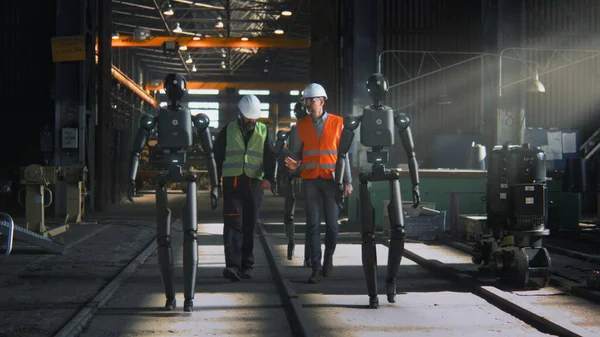
While banking is dominated by cognitive work, the third wave will coincide with humanoid robots capable of physical tasks requiring dexterity and situational awareness. In turn, this extends automation to branch operations, physical document handling, and secure asset management. Robotics integrated with AI agents will be able to execute hybrid workflows, combining physical and digital actions without human intervention.

6. Reinvention Framework: AI Skilling
The first is AI skilling-building practical proficiency in the use of AI tools to raise productivity. This includes training staff on auto-code platforms, AI-driven research assistants, and automated customer interaction systems. But with the half-life of skills collapsing to two years, the need is for continuous skilling embedded in workflows and linked to emerging AI capabilities rather than static job descriptions.

7. Reinvention Framework: Contextual Workflow Redesign
The second is to build context: redesigning the workflows to orchestrate the outcomes in an agentic environment. Humans would need to provide domain expertise in credit evaluation, portfolio construction, and risk management, while AI agents execute the process. This requires rearchitecting the legacy systems for end-to-end automation, embedding the compliance logic directly into agent workflows, and maintaining audit trails for regulatory oversight.

8. Reinvention Framework: Entrepreneurial Readiness
The third pillar is entrepreneurial readiness-shifting humans above the loop into creation and orchestration roles. In banks, this means investing in AI-powered advisory services, hyper-personalized wealth products, and real-time agentic risk models. Above-the-loop professionals will define business purpose, steer innovation, and create new revenue lines, leveraging AI as the execution engine.

9. Compliance and Risk Management Embedded
Compliance needs to be integrated into the operational logics of AI agents and includes automated risk assessments, continuous monitoring, and explainable decision outputs. With increased trust in employers to deploy AI ethically over technology companies, leaders need to reinforce governance frameworks to maintain both regulatory compliance and workforce confidence.
10. Organizational Restructuring for AI Maturity
AI maturity implies alignment between technical deployment and organizational design. Decision-making hierarchies will become flatter as AI agents assume a central operational role. This will require cross-functional teams working side by side with AI-driven insights, demanding a full cultural shift toward human–machine collaboration. Change management should deal with the redefinition of roles, adjusted performance metrics, and talent strategies rewarding AI-enabled outcomes.

11. Strategic Pathways for Banking Leaders
Leaders should start by defining a pilot perimeter identify portfolios in which agentic AI could make demonstrable impact and then scale across the enterprise. Investments should target high-impact workflows, modular AI architectures, and robust data governance. Partnerships with multiple tech providers will be necessary to avoid vendor lock-in and to integrate diverse agent capabilities. A disruption which is going to touch 3.3 billion jobs cannot be met by defensive thinking.
For leaders in banking and wealth management, the three-wave AI timeline is at once a warning and a blueprint: those who build AI fluency, redesign workflows for agentic orchestration, and cultivate above-the-loop entrepreneurial capacity will not merely survive the reversal-but will define the competitive frontier of the AI age.


