“History rhymes,” Mark Twain is said to have said-and in the unfolding AI era, that rhyme is growing louder. Over the last two years, artificial intelligence has emerged from an experimental novelty into a key driver of capital flows, corporate strategy, and workforce change. Beneath the optimism, however, lies a tangle of economic realities, technical debates, and societal frictions that will define whether AI’s promise translates into sustainable progress.
For business leaders more attuned to technology, 2026 is less about pursuing every new shiny algorithm and more about understanding the structural shifts-the valuation corrections, the move to agentic automation-which are changing the face of competitive advantage. The acceleration and recalibration that the coming year will bring, the manner in which this technology will reach out into infrastructure, governance, and human capital-all suggest that foresight is required. Following are ten developments that stand poised to influence the economic, workforce, and technological landscape.

1. AI Valuation Faces a Correction
After years of exuberant investment in this space, there are signs that a readjustment is underway in how AI firms are valued. The suspicion of circular financing arrangements-like Nvidia and Microsoft investing billions into Anthropic, which then spends heavily on their products-echoes past telecom and fiber‑optic bubbles. The analysts warn that such self-reinforcing deals inflate perceived growth without underlying profitability. Of course, this correction might also pare off speculative overexuberance and could fortify the fundamentals by rewarding those firms with sustainable revenue models.

2. Investment Bubble Unlikely to Burst
Despite the valuation pressures, the promise of AGI keeps capital flowing in. Governments and corporations alike view AGI as a strategic asset in a geopolitical arms race, unwilling to concede any ground on a technology capable of yielding transformative economic leverage. In their minds, AGI has tremendous exponential potential, and that belief itself ensures well-resourced players will continue aggressive funding into the company, even if near-term returns remain elusive.

3. Beyond Large Language Models
The laureate of the 2018 Turing Award, Yann LeCun, has argued that LLMs alone cannot underpin AGI. He envisages AI built on “World Models” that simulate environmental changes resulting from actions, enabling systems to reason about cause and effect rather than merely predict sequences. This will mean that in 2026, exploration of architectures beyond LLMs will be driven by the need for more generalist AI systems.

4. Rise of Agentic AI in the Workforce
Agentic AI, or autonomous systems that work within predefined boundaries, is transitioning from pilot projects to enterprise deployments. Salesforce laid off 4,000 customer support personnel in 2025 after deploying its AI agents. By 2026, more organizations will be redesigning workflows in a manner that allows agents to handle multistep tasks from report-generation and data visualization all the way to system monitoring. This further accelerates job displacement of repetitive functions while it creates demand for oversight and orchestration skills.
5. Automation‑First Organizational Design
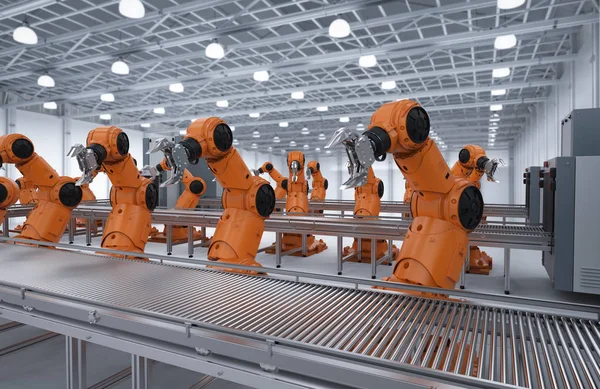
Leading companies are moving beyond fitting AI into human‑centric processes and rebuilding operations with automation at the center. Humans provide oversight, creativity, and complex judgment, while AI does everything else. This “automation-first” approach can lead to outsized efficiency gains and competitive advantage but requires cultural shifts and governance to ensure that what machines are doing aligns with strategic goals.

6. Mapping Informal Networks
As process automation scales, the human connections that fuel collaboration become harder to notice but more important to the bottom line. Understanding informal networks – the relationships and trust channels within an organization – will be a mainstream management priority. The leaders who will be able to quantify and nurture these networks will be better equipped to sustain innovation and morale in AI-intensive environments.

7. Storytelling holds strategic values
Data alone rarely convinces. The training work on investors by Benjamin Ball has shown that narrative coherence can move markets-in one case, it lifted the share price of a Finnish company 12% overnight without new facts. Even within an AI‑driven decision culture, the ability to frame information within compelling stories will remain a uniquely human advantage-especially in investor relations and change management.

8. STEM Over Social Sciences: A Policy Blind Spot
Therefore, the governments still emphasize STEM education even when AI is gaining increased momentum in delivering technical skills. The likely outcome of this trend could be to underprepare workers for those jobs that require quintessential human strengths: narrative building, empathy, and strategic judgment. A balance of STEM with social sciences would rather prepare the workforce for hybrid human‑AI collaboration and reduce long‑term unemployment risks.

9. AI Detection Tools Proliferate
Educational institutions are extending the use of AI detectors, even though their accuracy remains dubious-one labeled the US Declaration of Independence as 98.51% AI‑generated. Rather than an outright ban on the use of AI tools, progressive educators favor the notion of assessing students on how well they can work with the help of AI, instead of without it.

10. Infrastructure and Financing Risks
The infrastructure build‑out of the AI sector is staggering, with estimates for spending on data centers alone topping $400bn this year. Complex financing, including special‑purpose vehicles, GPU‑backed loans, and asset‑backed securities, ties major players together in ways that eerily echo the financial engineering of the pre‑2008 era. If demand for AI falters, these intertwining debts have the potential to amplify economic shocks, making infrastructure strategy and risk management pressing concerns at the boardroom table. AI in the year 2026 will not be defined by a single breakthrough but by the interplay of technological evolution, economic discipline, and human adaptation.
For business leaders, the challenge is to navigate valuation shifts, harness emerging architectures, and design organisations where automation and human ingenuity coexist productively. Those who can align strategic vision with operational resilience will be best-placed to turn AI’s turbulent ascent into enduring advantage.


