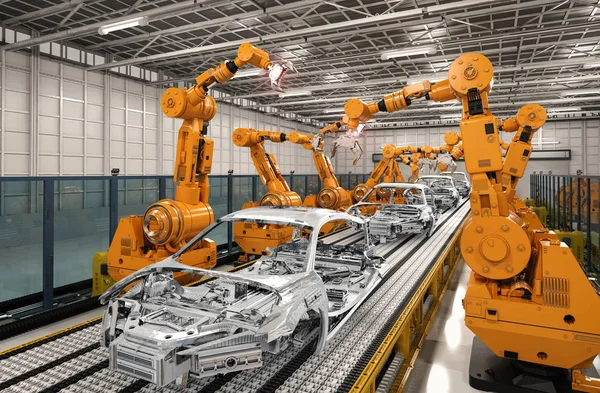
The automotive industry is now entering a phase where intrinsic value of the vehicle will be defined more by the software stack than by the mechanical unit. But this transformation is not incremental-it’s architectural, operational, and commercial. For India, this transition presents hitherto unexplored opportunities to emerge as a global engineering and R&D powerhouse for software-defined mobility, AI-driven manufacturing, and autonomous systems.
1. Distributed ECUs to Centralized Compute
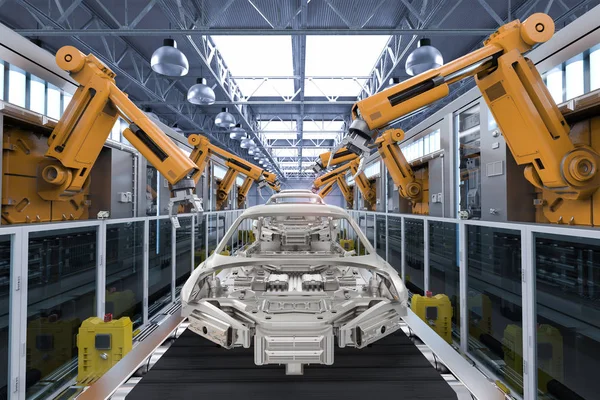
For decades, vehicles utilized a distributed network of upwards of 150 ECUs performing narrow functions. This architecture now stands as a bottleneck-laden with kilometres of wiring, low‑bandwidth CAN buses, and inflexible hardware‑bound features. The replacement is the emerging software‑defined vehicle, or SDV, with high‑performance computing units placed either centrally or zonally, capable of consolidating dozens of said ECUs. The transition passes through a domain‑centralized stage, wherein powerful domain controllers manage clusters of functions such as ADAS, infotainment, and powertrain. High‑speed Automotive Ethernet with Time‑Sensitive Networking replaces CAN for gigabit‑level, deterministic data delivery-critical for real‑time sensor fusion and autonomous decision‑making.
2. AI-Driven Efficiency Gains in Manufacturing
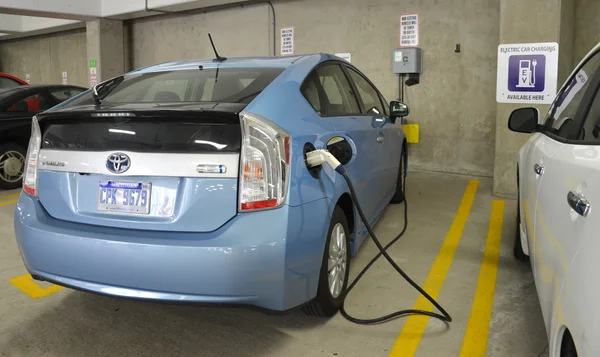
Artificial intelligence does not remain confined to vehicle features only; it has begun to shape the production floors. When Apollo Tyres introduced AI diagnostics, the fault-finding time reduced from two hours to ten minutes and showed measurable productivity gains. In electric vehicle propulsion, AI is aimed at the best possible design for an electric motor and at the selection of the best materials with multi-variable modeling for higher output and thermal efficiency. Just as AI-driven validation tools such as ZF’s TempAI are being used to support the transition from 400-volt to 800-volt architectures, faster charging, improved thermal control, and better drivetrain efficiency are enabled.
3. India as Global Software and R&D Hub
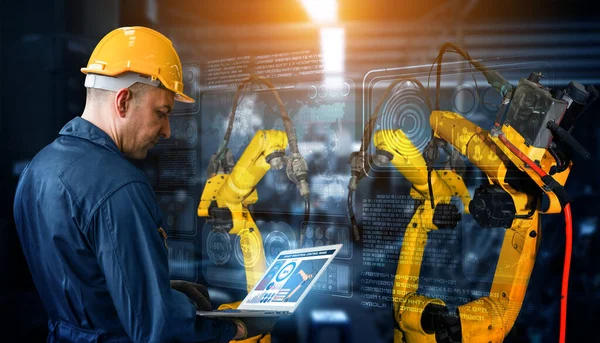
The engineering ecosystem of India is already intrinsic to the global operations of OEMs and Tier‑1s. Hyundai Mobis’ new centre for infotainment software development in Bengaluru will work in concert with its Hyderabad R&D hub, developing hardware-linked software functionality. The company is targeting a sixfold increase in Indian order value by 2028. This corresponds to the projected SDV market of India, which is expected to grow from USD 2.69 billion in FY2025 to USD 9.16 billion by FY2033, at a CAGR of 16.56%.

4. Commercial Imperatives of SDVs
The SDV architecture enables a new revenue model based on constant customer engagement. Features‑as‑a‑Service, predictive maintenance, and in‑car commerce are possible at scale. OEMs unlock features such as ADAS upgrades, performance boosts, or comfort features after the sale is complete, ensuring continued streams of revenue. Of course, this requires mature OTA update frameworks, secure integration of payments, and data analytics pipelines capable of crunching terabytes of vehicle-generated data.

5. Data Governance and Cybersecurity Standards
Put together, connected vehicles create and transmit terabytes of data. Complying with privacy‑by‑design legislation, such as the DPDPA in India, has thus become a prominent engineering concern. ISO/SAE 21434 mandates TARA, secure boot mechanisms, intrusion detection, and the security of OTA updates for cybersecurity. Functional safety per ISO 26262 imposes rigid ASIL for every system, ensuring mixed‑criticality workloads, such as infotainment and brake‑by‑wire, are kept segregated by means of hypervisors and Adaptive AUTOSAR middleware.

6. Spatial Intelligence and Digital Twins in Mobility
The award-winning GovConnect-Genesys Digital Twin Map for Varanasi showcases how spatial intelligence underpins not only urban governance but also mobility planning. Along with LiDAR mapping, 5‑centimeter‑accuracy 3D models, and live sensor integration, this platform enables flood modelling, infrastructure planning, and crowd management-all extensible into connected‑vehicle ecosystems to allow for real‑time adjustments in navigation, hazard prediction, and I2V communication.
7. Testing of Autonomous Mobility in Europe
It therefore means that Level 4 autonomous vehicles-capable of driverless operation in defined conditions-will enter European ride‑hailing networks from 2026 through this collaboration. The van, called the eK0, and the platform, named STLA Small, among other AV‑Ready Platforms by Stellantis, are engineered for sensor fusion, redundancy, and compliance with European safety and cybersecurity standards. With Bolt’s operational footprint in more than 50 countries, this collaboration is positioned for scaling toward its target of 100,000 autonomous vehicles on its platform by 2035.

8. India’s Talent Gap and Strategic Imperative
While India has the largest concentration of automotive R&D centres outside OEM headquarters, there remains a skill deficit around system architecture, integration of Adaptive AUTOSAR, and high-speed networking. The transition of engineers from ECU-level coding to full-stack automotive development requires expertise in cloud-to-vehicle integration, configuration of TSN, and hypervisor-based mixed-criticality management.
It is also important for universities and industry to increase the pace for training on HPC-based vehicle systems in order for India to retain its position as a global SDV leader. Convergence around centralized E/E architectures, AI-driven manufacturing, and autonomous mobility platforms is conjoined by spatial intelligence to redefine the automotive value chain. India’s growing role is no longer confined to cost-effective engineering but moves to platform leadership in the software-defined mobility era.


