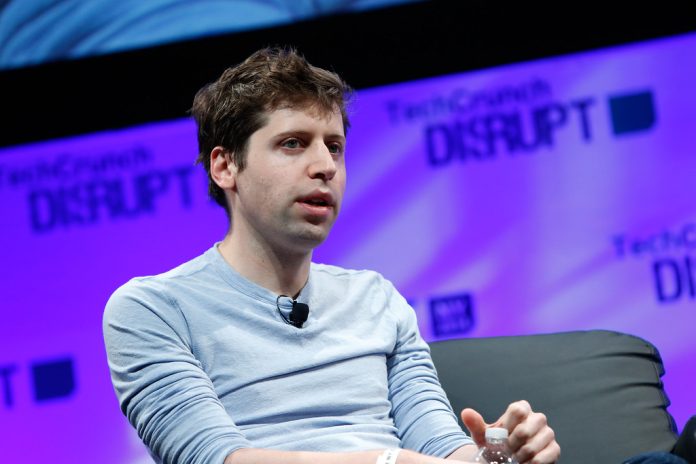
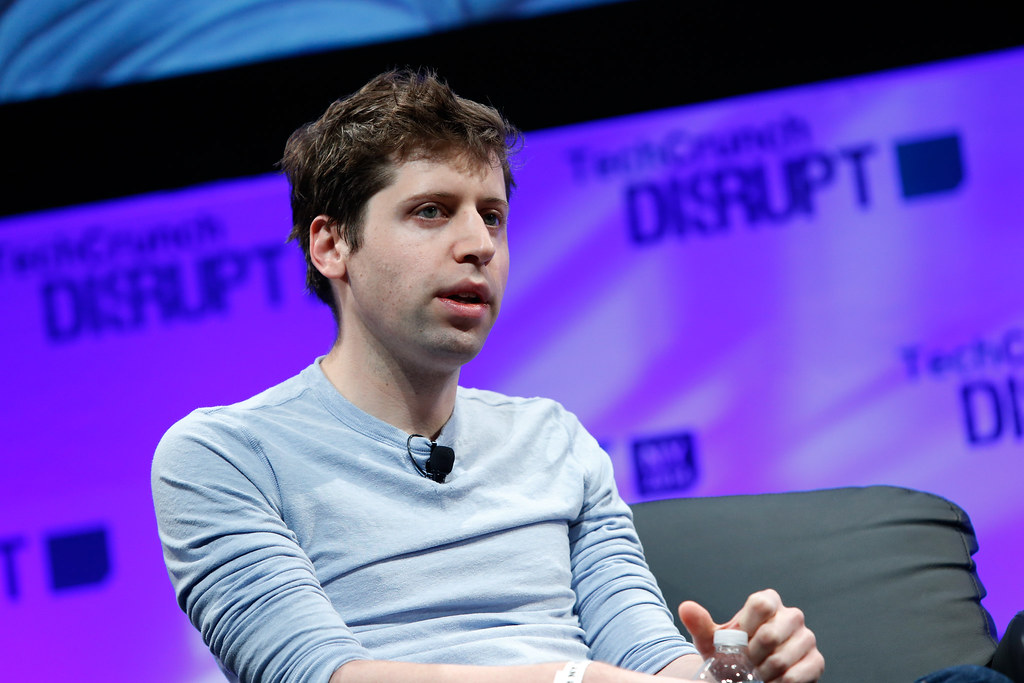
In fact, only three years since its public release, ChatGPT now has more than 800 million weekly users-a rate of adoption that OpenAI chief executive Sam Altman categorizes as “unlike any technology in history.” The CEO warned in one of his recent appearances on The Tonight Show, “One of the things that I’m worried about is just the rate of change that’s happening in the world right now. This is a three-year-old technology. No other technology has ever been adopted by the world this fast.” The comments underlined both the transformative potential and destabilizing risks of AI’s rapid integration into everyday life.

1. The Acceleration Problem
The core of Altman’s concern is that AI is developing at an unprecedented rate, outpacing the development of society that uses, regulates, and builds guardrails. That speed means classrooms, boardrooms, and governments are integrating generative AI more quickly than they can understand its long-term implications. And with competitors including Google, Meta, and Anthropic at its heels, it’s unlikely to slow. Recent months saw Google release Gemini 3, touting benchmark results that outperformed OpenAI’s flagship model and ratcheting up the race. “It was a code red,” Altman says of the move, redirecting resources to make ChatGPT better.
2. Infrastructure and Energy Requirements
That competitive race is heated by enormous infrastructure investments. While OpenAI has committed $1.4 trillion to data center and compute capacity over the coming years, Google is investing up to $93 billion in AI this year alone. It presents an astonishing energy footprint: according to U.S. Department of Energy data, data center load has tripled in the past decade and could consume up to 12% of U.S. electricity by 2028. The idea behind Google’s Project Suncatcher is to make such ambitions greener by building space-based solar-powered data centers; doing so could cut emissions as much as tenfold compared to earthbound facilities.

3. Workforce Disruption
Already, AI is upending labor economics with its automation potential. Anthropic CEO Dario Amodei has warned that AI might replace half of all entry-level white-collar jobs within just five years and unemployment could top 20%. UC Berkeley’s Stuart Russell takes it a step further, “80% unemployment” he says, is no longer science fiction.

AI agents-that is, autonomous systems able to code, perform legal review, and even offer customer service-are rapidly turning from augmentation to full automation, threatening the jobs of everyone from the junior developer to the mid-level manager. Companies including Meta have spoken openly about replacing mid-level engineers with AI by 2025.
4. Enterprise Integration Trends
OpenAI’s enterprise adoption metrics reveal deepening integration into workflows. ChatGPT message volume has grown 8x YoY, while organizations consume 320 times more reasoning tokens than last year-a signal of increasingly complex problem-solving tasks. Custom GPTs that codify institutional knowledge into automated assistants make up 20% of enterprise messages today. Companies like BBVA deploy thousands of these tailored models to save employees 40–60 minutes a day. On a related note, higher reasoning token usage means greater energy use, and hence there are sustainability concerns.

5. Medical Breakthrough Possibilities
Despite those economic anxieties, tech leaders are unanimous in their view about AI’s role in medicine. Altman projects that in five years, AI will be curing diseases. That optimism is rooted in breakthroughs such as Harvard Medical School’s PDGrapher, a graph neural network model that identifies multi-target drug strategies to reverse disease states in cells. Trained on datasets across 11 types of cancer, PDGrapher ranked correct therapeutic targets up to 35% higher and delivered results 25 times faster than comparable AI tools, a harbinger of the day when AI accelerates drug discovery for intractable diseases like Parkinson’s and Alzheimer’s.

6. Space-Driven AI Expansion
His vision for jobs of the future is simply out of this world. According to him, graduates in 2035 may embark on space missions to explore the solar system made possible by AI-driven space industries. Google CEO Sundar Pichai also has this as a big aspiration for data centers harnessing extraterrestrial solar energy 100 trillion times greater than what Earth produces today. Early steps: launching pilot satellites in 2027 to test AI hardware in orbit.
7. Economic Models Under Stress
While Google can incorporate AI directly into revenue-generating products, such as Search, OpenAI relies heavily on subscriptions and enterprise licensing. Analysts warn that subscription revenue can’t sustain the infrastructure costs of serving nearly a billion weekly users. Indeed, HSBC estimates that even with revenues of $213 billion by 2030, OpenAI may rack up losses above $70 billion due to soaring compute expenses. Other monetization strategies, such as Amodei’s proposed “token tax” on AI usage, are just beginning to enter policy debates.

The extreme trajectory of the AI sector consists of an unprecedented adoption rate, trillion-dollar infrastructure bets, looming labor upheaval, and transformative scientific breakthroughs. To Altman, the challenge is not stopping the train but steering it: making sure the rate of change remains a force for progress, rather than disruption.


