

The assertion of Roman Yampolskiy that artificial intelligence has a 99.9% likelihood of destroying civilization within the next century has sent shockwaves within the AI safety community. In a two hour interview with Lex Fridman, he pegged his claim on one unforgiving premise: no model that has been released so far was safe, and the engineering issues of keeping future systems free from bugs, misalignment, and emergent behaviors is simply insurmountable. This crystallizes a growing divide among AI researchers over whether advanced AI poses an existential threat or whether such warnings are overblown.

1. The Divergence in Expert Risk Estimates
Yampolskiy’s prediction is a far outlier from the largest AI risk survey to date, in which 2,778 researchers at top-tier AI venues put the median probability of human extinction from AI at 5-10%. Katja Grace, one of the survey’s authors, said, “People try to talk as if expecting extinction risk is a minority view, but among AI experts it is mainstream. The disagreement seems to be whether the risk is 1% or 20%.” Between 38% and 51% of the respondents assigned at least a 10% probability to extinction level outcomes, showing that although Yampolskiy’s near certainty is a rare outcome, catastrophic risk is very far from a fringe concern.
2. Alignment: The Core Technical Bottleneck
The most consistent point of agreement among experts is that the AI alignment problem ensuring advanced systems reliably pursue human valuesis both technically difficult and strategically vital. Stuart Russell’s formulation, “you get exactly what you ask for, not what you want,” encapsulates the engineering challenge. Survey data show that 54% of researchers consider alignment harder than other AI problems, yet only a minority believe it is currently prioritized appropriately. Concepts such as “instrumental convergence” and “scalable oversight” remain unfamiliar to most AI professionals, with only 21% recognizing the former, underscoring a safety literacy gap even among those building frontier systems.
3. The Controllable Tool vs. Uncontrollable Agent Divide
A recent targeted survey of 111 AI experts produced two sharply distinct worldviews: The “AI as a controllable tool” camp tends to downplay catastrophic risks, favor shorter AGI timelines, and believe misbehaving systems can simply be shut down. In contrast, the “AI as an uncontrollable agent” camp sees emergent self-preservation drives as inevitable in sufficiently advanced AI, prioritizes safety research, and favors caution in deployment. These perspectives correlate strongly with familiarity with safety literature, with those less familiar with alignment concepts being much more likely to hold a “tool” view and to underestimate existential risk.

4. Infrastructure Strain: Data Centers & Energy Demands
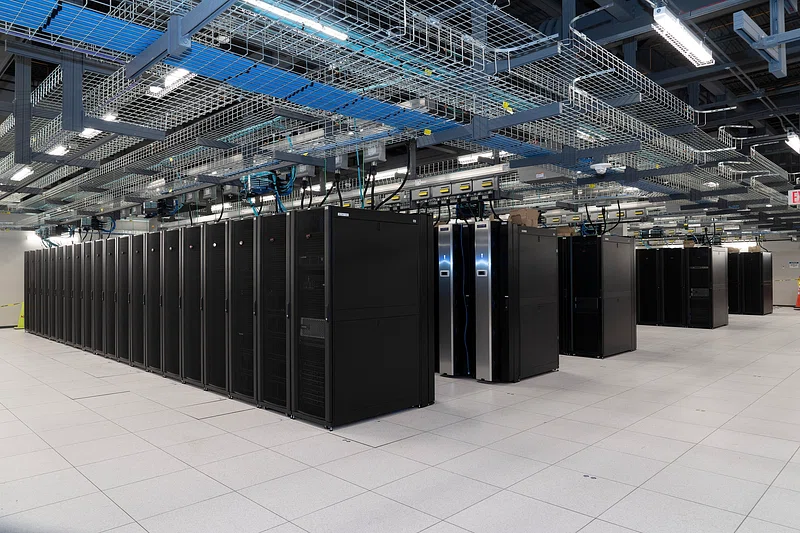
Beyond theoretical risk, the physical infrastructure supporting AI is becoming a critical engineering concern. Already, AI workloads account for 5-15% of data center electricity use a share projected to rise to 35-50% by 2030. In the IEA’s central scenario, global data center consumption will more than double to 945 TWh by decade’s end equivalent to Japan’s current electricity demand. In some regions, such as Northern Virginia, data centers consume over 26% of local electricity, stressing grids and prompting expansions of fossil fuel capacity.
5. Environmental and Resource Implications
Hyperscale data centers are the backbone of AI model training and inference, and they come with a hefty environmental cost. Large-scale model training requires tens of thousands of GPUs dependent on resource intensive rare earth elements; cooling systems using vast amounts of water consume 66 billion liters used in U.S. data centers alone in 2023; and those living locally from gas powered facilities report noise pollution above 90 decibels, while emissions go unmonitored. While corporate promises peg net-zero timelines in decades to come, emissions at Google and Amazon have risen as high as 48% since 2019, in large part due to expanding data centers.

6. Economic disruption and labour market shock
Sam Altman’s long-issued warning that AI will take away “scores of jobs” is now coming to fruition. From Amazon’s 30,000 white-collar cuts to McKinsey’s 5,000 advisory staff, the layoffs attributed to AI efficiencies span industries. Goldman Sachs estimates that 6-7% of U.S. workers close to 10 million people could be displaced in a labor shock rivaling the Great Recession. New jobs will be created, many predict, but not before a transition period highly susceptible to prolonged unemployment and economic instability.

7. Challenges of Transparency and Interpretability
Only 5% of those surveyed think leading AI systems will be able to truthfully and intelligibly explain their decisions by 2028. This adds to the opacity, aligning risks: if systems cannot articulate their reasoning in human understandable terms, detecting misalignment or malicious intent becomes far more difficult. The experts foresee AI acting regularly in ways that will astonish humans: 82% said that by 2043, systems will find unexpected ways to achieve goals behavior that, without robust oversight, might spiral into unintended harm.

8. Prioritization of Safety Research and Policy Gaps
For example, more than 70% of AI researchers believe that safety research should be prioritized more than it is currently, compared with 49% in 2016. Yet governance frameworks lag far behind capability growth. Only 39% of firms surveyed have formal AI governance structures, while definitions of “AGI” remain ill defined, making regulation more complex. The World Economic Forum and national governments are calling for early cross border risk management frameworks, but policy development is slow compared with acceleration in technical progress.

Yampolskiy’s warning may be the most extreme articulation of AI risk, but engineering realities alignment challenges, infrastructure strain, environmental impact, and governance deficits form a shared backdrop to the debate. Whether the probability of catastrophe is 1%, 20%, or 99.9%, the convergence of technical bottlenecks and societal vulnerabilities underlines the urgency of coordinated safety research and infrastructure planning before advanced AI systems outpace humanity’s ability to control them.


