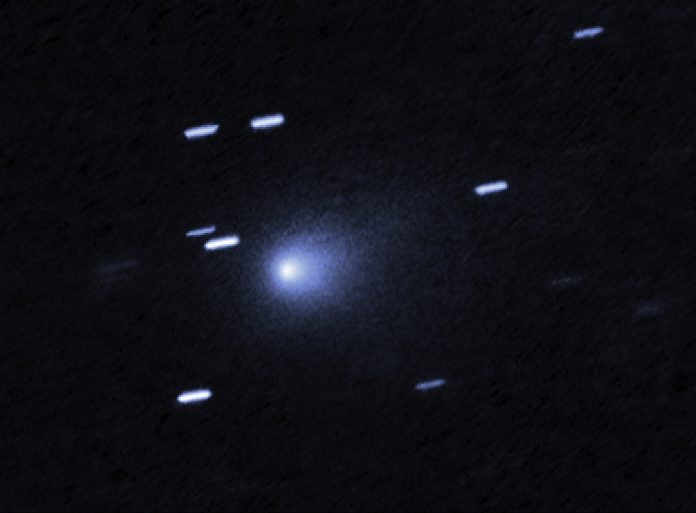
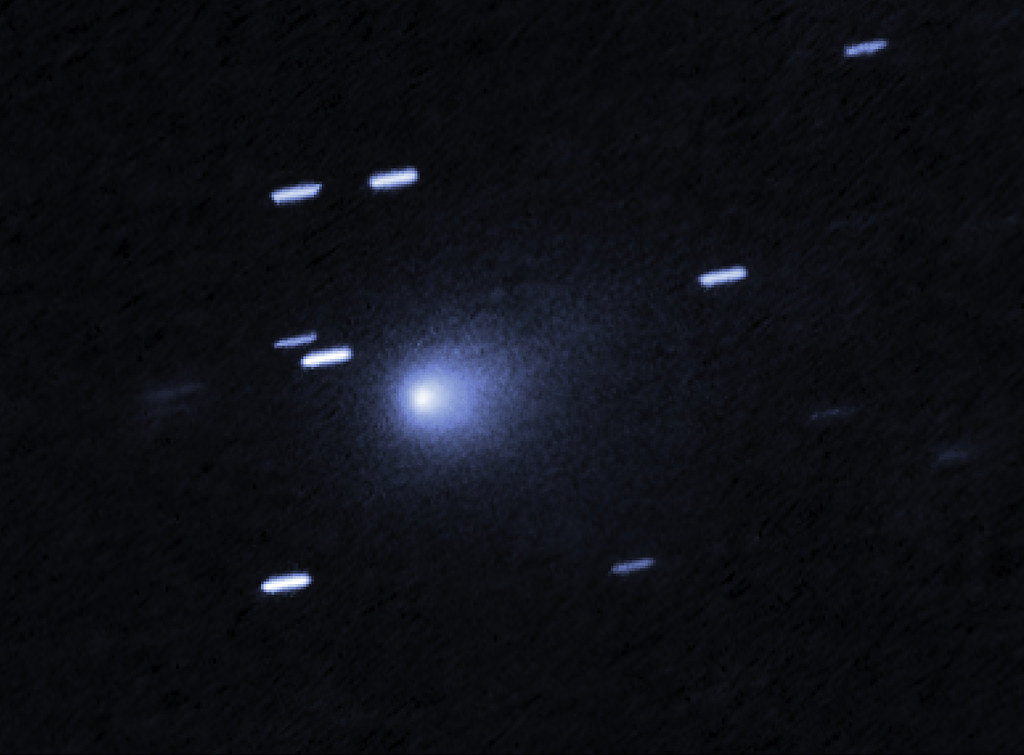
What is more unusual than finding a unicorn in the wild? That would be an interstellar comet passing through our solar system. And NASA has now done this for only the third time in history. To say the least, 3I/ATLAS (Comet 3I/ATLAS) is the main focus of an astonishing, multi-mission observation campaign which is producing pictures and data which not only attract attention but also change our understanding of the stuff coming from outside the Sun’s neighborhood.
1. A Rare Visitor from the Galactic Thick Disk
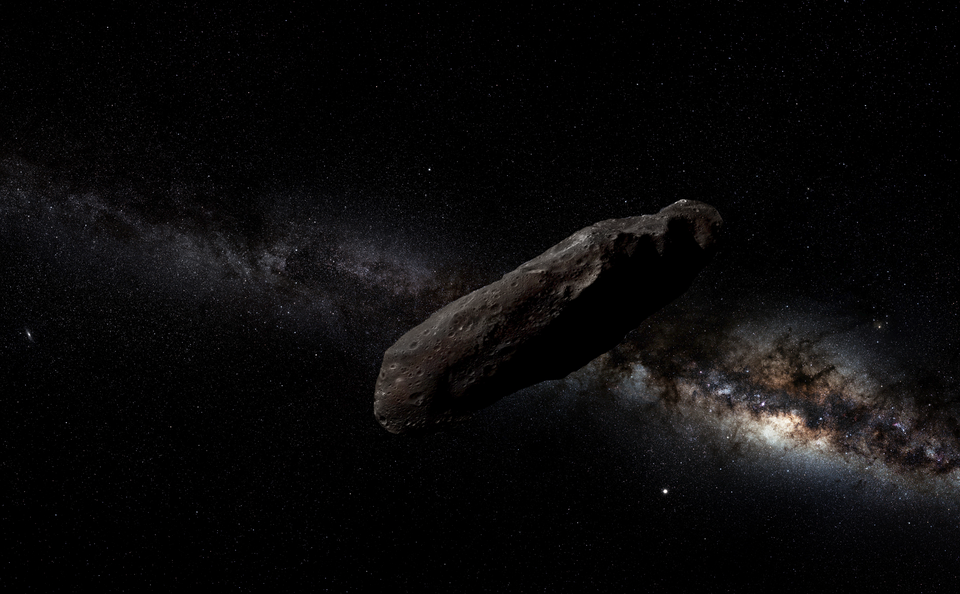
3I/ATLAS is the third interstellar object after 1I/‘Oumuamua and 2I/Borisov which has been identified unambiguously. According to the investigators Shokhruz Kakharov and Avi Loeb, who did the trajectory simulations, 3I/ATLAS could have come from the thick disk of the Milky Way, which makes it the oldest one at a median age of 4.6 billion years. The thick disk is a stellar population of mainly old, low-metallicity stars, which, among other things, means that the comet was made in places very different from our solar system.

2. Multi-Mission Imaging Across the Solar System
NASA has several instruments ready to follow the comet. Besides Earth-bound telescopes that were not able to observe the comet because of the solar glare, solar-observing missions like PUNCH, STEREO, and the Solar and Heliospheric Observatory could take the comet’s picture. MAVEN, Mars Reconnaissance Orbiter, and even Mars Perseverance made recordings from a distance of only 19 million miles. The Trace Gas Orbiter of the European Space Agency (ESA) has also contributed a new perspective, thus improving the prediction of the comet’s trajectory by a factor of ten through triangulating the data obtained from the ground with that acquired from space, which is considered a rehearsal for planetary defense and a demonstration of how valuable the observations by the spacecraft far from the Earth are.
3. Spin, Activity, and Dust Dynamics
Based on light measurement, the rotation period comes to 16.16 h. The dust mass loss rates were calculated to be in the range from 0.3 to 4.2 kg/s. The asymmetric nature of the coma and the lack of a long visible tail suggest that large dust grains are present which are less affected by the solar radiation pressure, and this characteristic is shared by some weakly active comets in the outer solar system.
4. Composition: CO2 Dominance and Water Ice Detection
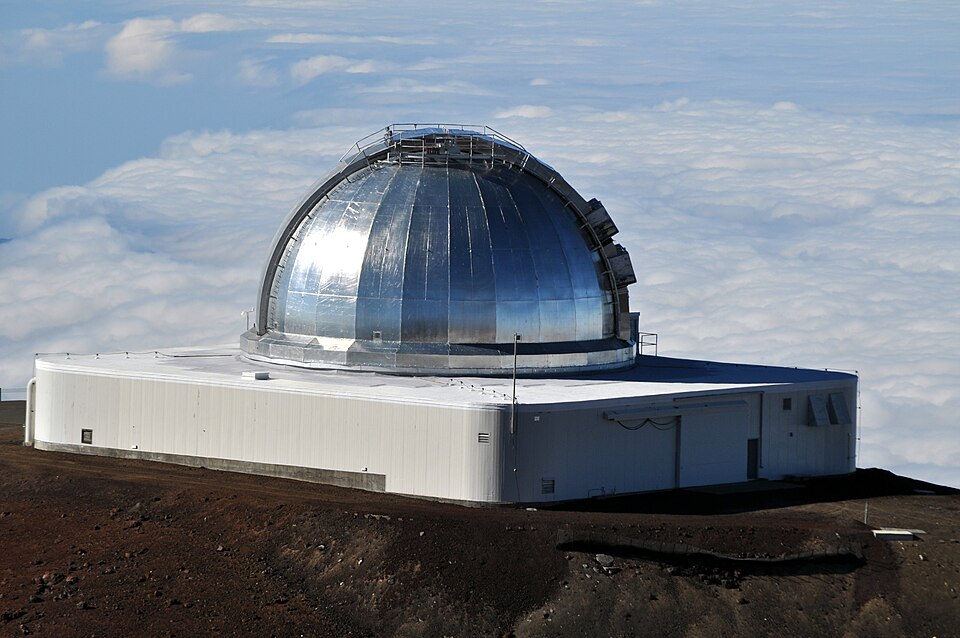
The CO2-to-H2O ratio of 8:1 for the comet is one of the highest recorded and was revealed by the combined efforts of the James Webb Space Telescope and SPHEREx. Additionally, NASA’s IRTF/SpeX instrument recorded near-infrared spectra, which showed a broad 2.0 μm absorption feature that was explained as a composite of 63% amorphous carbon and 37% water ice grains. This amount of water ice strongly indicates that the comet was formed beyond the snowline of its parent system. The lack of the 1.5 μm band of water-ice is in agreement with the small size of the grains and the fact that they are mixed with dark, refractory material.
5. Non-Gravitational Acceleration Explained
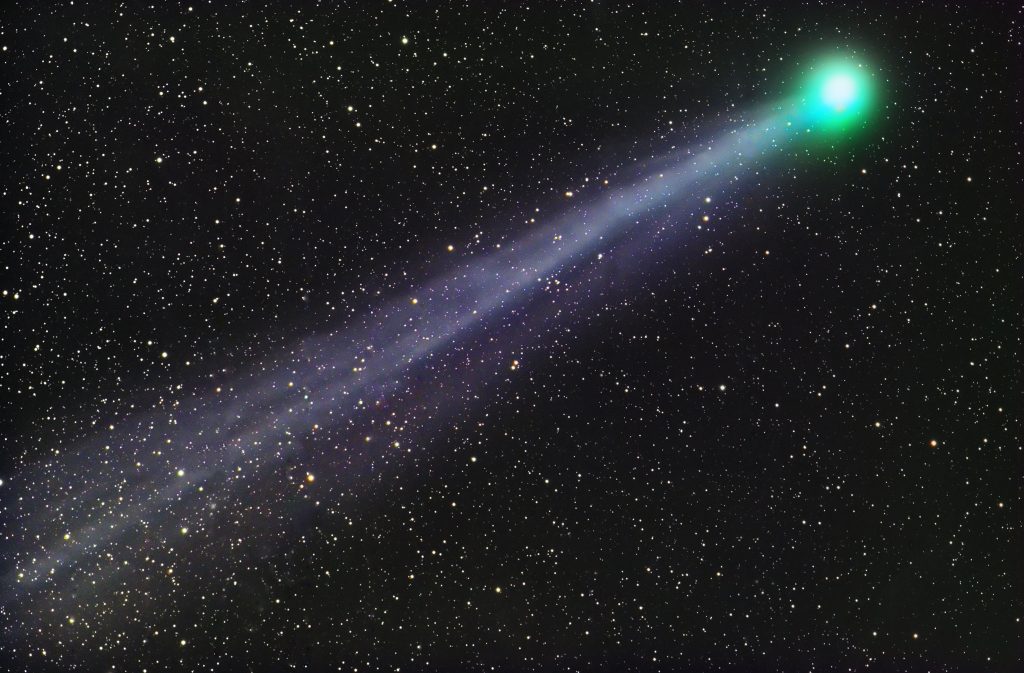
Close to perihelion, the most direct measurements of the comet showed that it was experiencing radial acceleration away from the Sun of 135 km/day² and transverse acceleration of 60 km/day². Such activity has been the reason for suggestions of the involvement of exotic sources. In contrast to this, thermophysical modeling performed by Florian Neukart demonstrates that this phenomenon can be accounted for by simple outgassing of CO and CO2 and hence there is no need for any non-naturally hypotheses.
6. Detection Challenges and Instrumentation
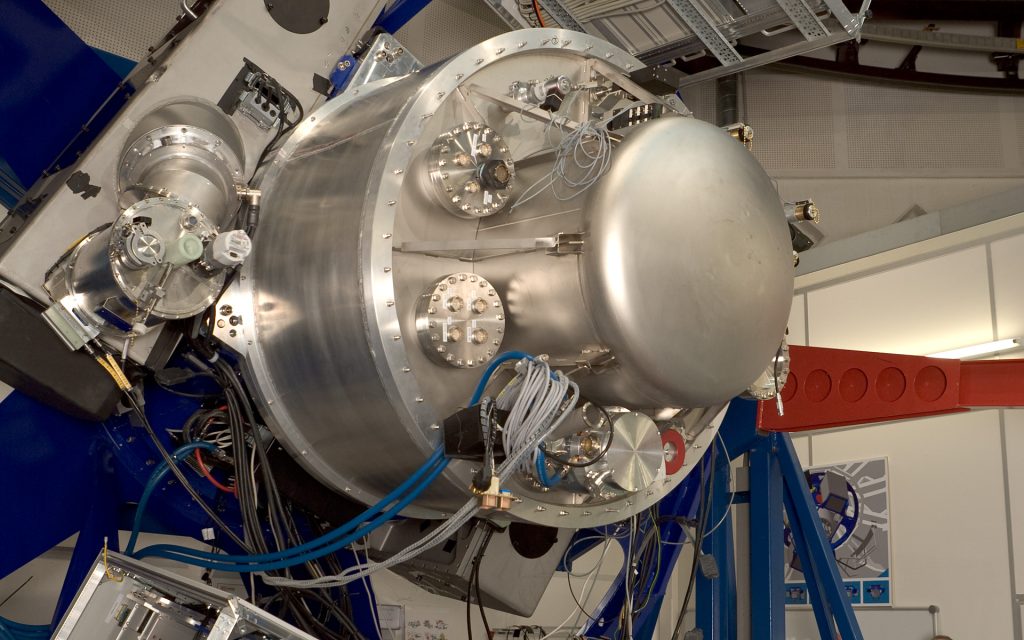
The position of the comet close to the densely populated Galactic plane made the initial finding by the ATLAS telescope in Chile somewhat difficult. Subsequent spectroscopy had to be done very carefully, with calibrations against solar analog stars and background corrections. Several facilities, from Gemini South’s GMOS to VLT’s X-shooter, provided optical-NIR coverage and revealed a moderately red spectral slope in the optical that flattens in the infrared a signature of abundant water ice.
7. Planetary Defense and Future Observation Windows
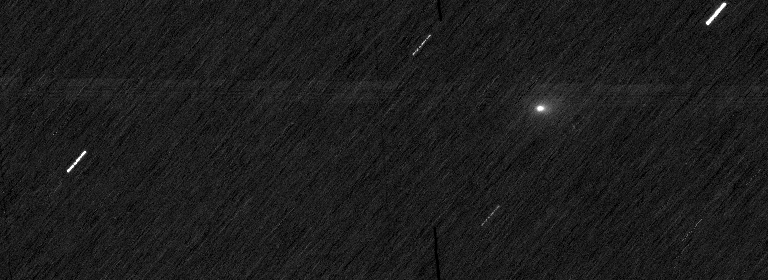
The spacecraft tracking and observing the very fast and non-periodic 3I/ATLAS, which will fly by at a safe distance of 170 million miles from Earth on December 19, have been rehearsed in the campaign. The work done by ESA with ExoMars TGO has shown how platforms that are not on the Earth can help in refining the trajectories of the fast-moving bodies. Composition studies will be possible through next coming to the attention of JWST and the W.M. Keck Observatory before the comet moves to Jupiter’s orbit in 2026.
8. Broader Scientific Context
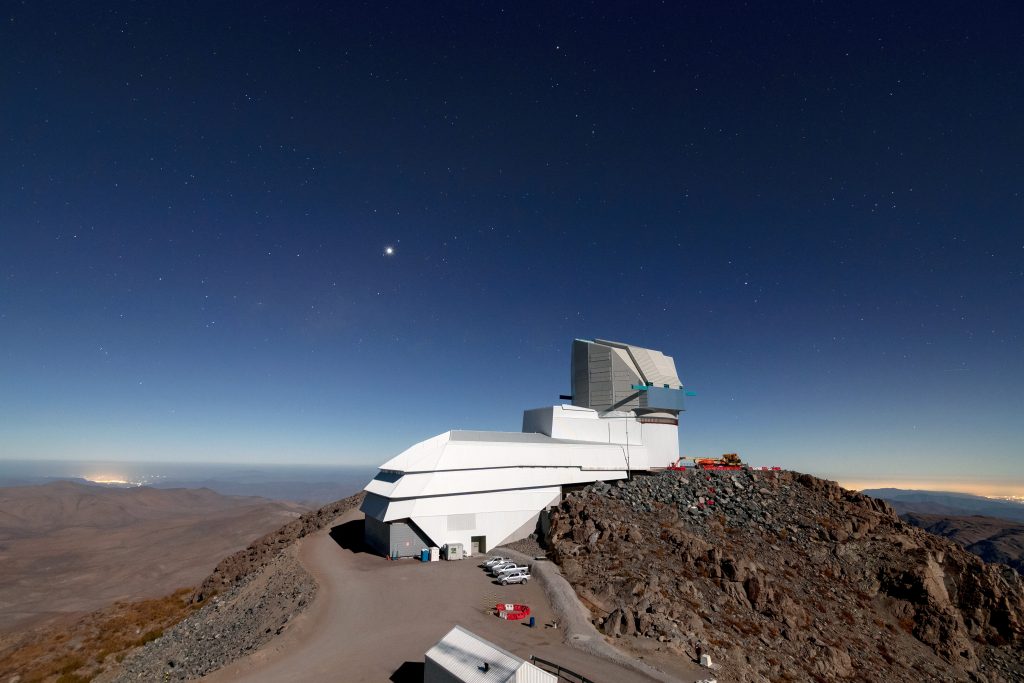
Interstellar entities such as 3I/ATLAS are, in essence, the messengers of materials hailing from far-off planetary systems. Their makeup from the ratios of the most volatile compounds to the isotopic signatures tells the chemical story of the place where they were birthed. Vera C. Rubin Observatory’s Legacy Survey of Space and Time is likely to raise the rate of detections from one in ten years to maybe dozens in a year, thus enabling the accomplishment of statistical studies and, later on, sample-return missions that will be able to deliver extra-solar materials to normal labs here on Earth.
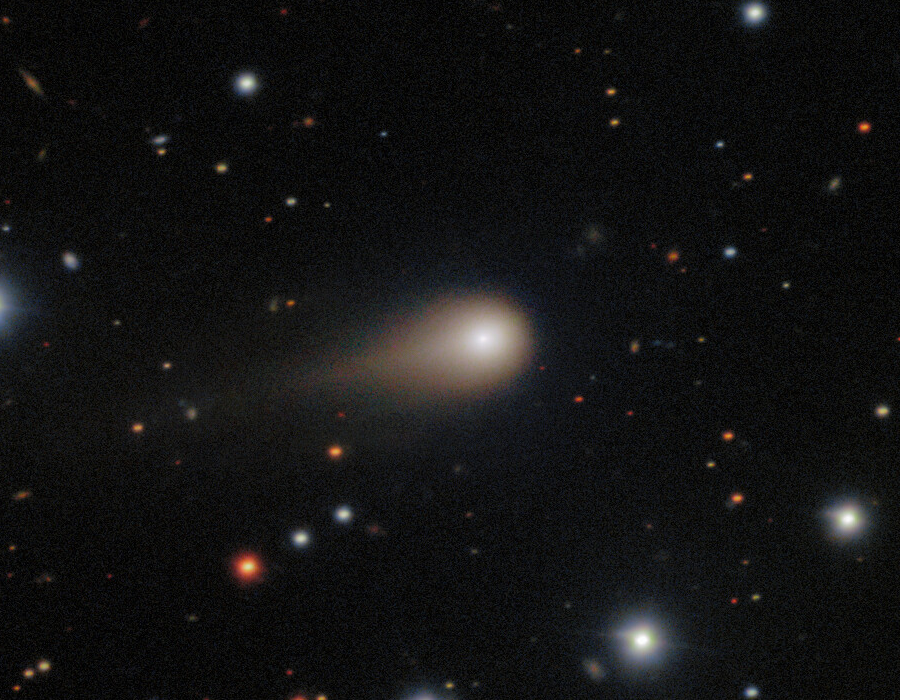
The best images of 3I/ATLAS so far are not only astrophysically beautiful but also serve as windows filled with information opening to the physics, chemistry, and mechanics of a body made in someone else’s star nursery and now sharing a little bit of space with us before going away into the interstellar dark again.


