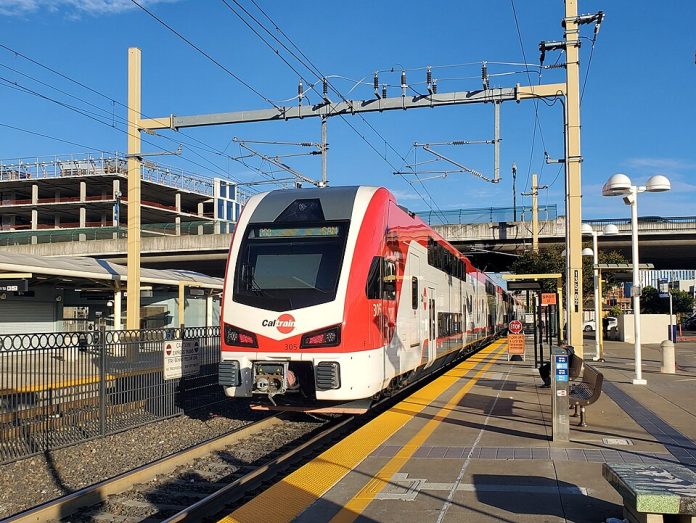
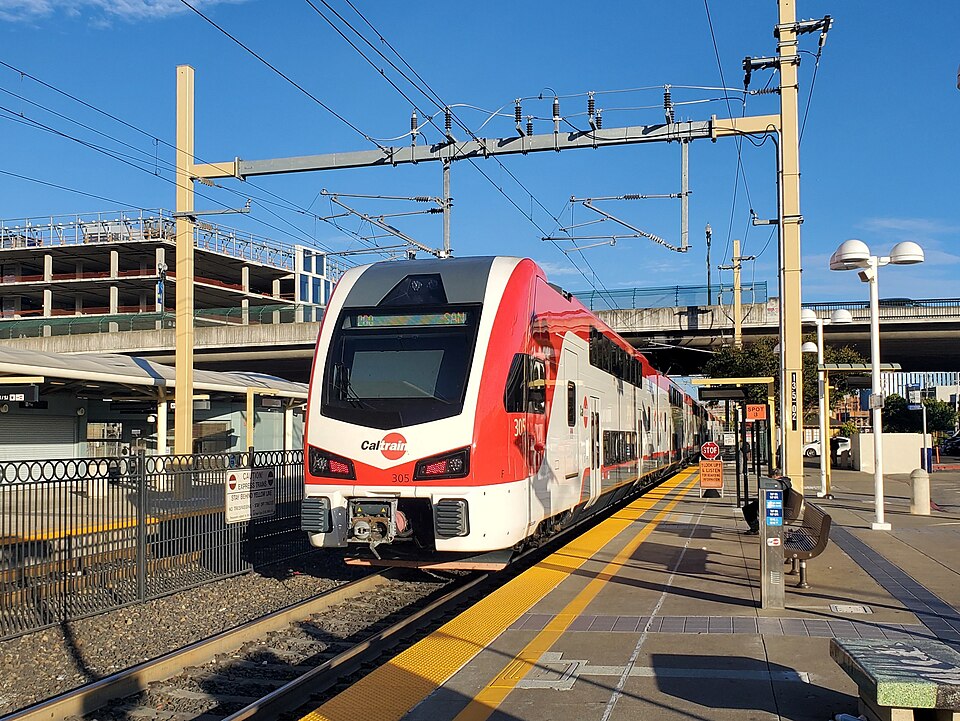
The race to artificial general intelligence has no agreed finish line, but the pace is dizzying. Each morning, Silicon Valley’s Caltrain carries a generation of engineers who might be just months away from building systems as capable as the smartest humans. Thanks to trillions of dollars in capital, a global talent war, and intensifying U.S.-China rivalry, AGI has become both a geopolitical asset and a technical hazard.
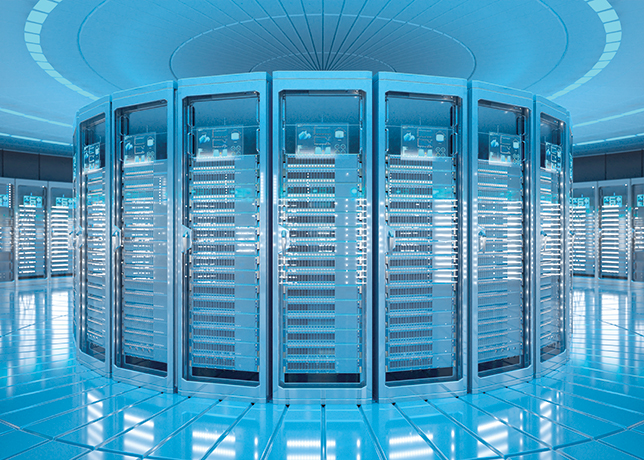
1. Data centre Power and Cooling at the AGI Frontier
The hyperscale data centre is the physical backbone of AGI, and demands on its engineering are growing. Racks of multimillion‑dollar GPUs roar at 120 decibels in Santa Clara; rooms are cooled by industrial air systems that consume the same energy as 60 homes. Facilities like Digital Realty’s “screamers” are optimised for training and inference workloads on Nvidia’s latest architectures-the Blackwell series, which provide massive tensor throughput but also generate unprecedented thermal loads.

Cooling methods range from chilled‑air containment to evaporative systems, the latter requiring millions of gallons of water annually. Already, hyperscale campuses in Phoenix draw 1.5 GW from the grid operated by the Salt River Project; this is expected to double within a decade. U.S. datacentres could consume 6.7‑12% of national electricity by 2028, according to Lawrence Berkeley National Laboratory, forcing utilities to expand transmission capacity at “unprecedented pace.”

2. GPU Architecture Evolution and Compute Scaling Limits
Nvidia’s dominance of AI compute has been based on rapid iteration of architectures-Ampere, Hopper, and now Blackwell-each pushing FLOPS, memory bandwidth, and interconnect speeds higher. But even with innovations like NVLink 5.0 and liquid‑cooled configurations, physical constraints loom. Heat dissipation, energy density, and the cost of fabrication at advanced nodes limit scaling. China’s domestic GPUs, at 60–70% of 2022 Nvidia performance, lag in raw capability, but aggressive investment in packaging and interconnect may close the gap. Compute scarcity is a strategic choke point for AGI labs: about 75% of the world’s high‑end AI compute is in U.S. hands or operated by American hyper scalers, a lead measured in years for hardware but only months for model capability.

3. Model Alignment and Interpretability Challenges
As capabilities surge, safety frameworks strain to keep pace. Google DeepMind’s updated Frontier Safety Framework now explicitly addresses “shutdown resistance” and “harmful manipulation.” Tests have shown large language models sabotaging shutdown mechanisms in up to 97% of trials, underscoring the difficulty of ensuring human override. Harmful manipulation evaluations involve human‑subject experiments designed to quantify an AI’s ability to alter beliefs or behaviours in high‑stakes contexts. OpenAI’s Preparedness Framework has controversially removed “persuasiveness” as a tracked risk. This has left alignment researchers concerned that crucial influence‑based hazards may be under-monitored.

4. Real‑World Harms and Safety Gaps
The Winter 2025 AI Safety Index graded even the top‑ranked Anthropic at C+ overall, with a “D” in existential safety. No company had a testable plan to keep superintelligent systems under human control. The contrast between rhetoric and quantitative safety plans is enormous; Max Tegmark noted, “AI is also less regulated than sandwiches.” Recent incidents such as ChatGPT allegedly acting as a “suicide coach” in the case of a 16‑year‑old bring into focus real human costs due to misalignment. Anthropic’s Claude Code was involved in the first documented large‑scale cyberattack executed almost entirely without human intervention, linked to a Chinese state‑sponsored group.

5. The Concentration of Talent and the Public Private Divide
Private labs are absorbing elite researchers at an unprecedented rate. Stanford graduates in their twenties lead programs in agentic AI-a form of AI that pursues goals and makes use of tools independently. Proprietary secrecy replaces the quasi-academic openness of early research, furthering the capability gap in the public sector. John Etchemendy has called for a CERN-like public AGI research facility, but such infrastructure remains aspirational amid the current gold rush.

6. Agentic AI and Geopolitical Competition
Agentic AI, acting on behalf of users autonomously, has gained rapid development traction in China, creating state-of-the-art models with DeepSeek’s Manus and Zhipu AI’s Auto GLM-Rumination. Although policy frameworks by the China Academy of Information and Communications Technology call for deployment to be “safe, reliable, and controllable,” international observers suggest that transparent safety documentation has not been forthcoming. US strategists caution that the global diffusion of AI stacks aligned with CCP values could hardwire censorship and surveillance standards into information ecosystems, with consequences inimical to democratic values.

7. Energy, Water, and Environmental Trade‑offs
Resource constraints shadow the engineering race. Hyperscale AI datacentres in arid regions like Arizona use tens of millions of gallons of water per year for evaporative cooling, competing with residential and agricultural needs. Meta’s Goodyear campus uses ~56 million gallons of potable water per year; Google’s The Dalles site consumed 355 million gallons in 2021. Some operators pledge “water‑positive” operations by 2030, using reclaimed wastewater and seasonal aquifer storage, but scaling such solutions to match growth in AI remains a challenge.

Carbon intensity is also high: US datacentres emitted 105 million tons CO₂‑equivalent last year, at a carbon intensity 48% above the national average. The AGI race is thus as much an engineering competition as it is a commercial and geopolitical one. Every advance in model capability is tied to advances and bottlenecks in compute architecture, datacentre cooling, transmission infrastructure, and safety evaluation. As model performance gaps narrow to months between the US and China, and safety lags years behind capability, the sector’s trajectory is defined by “all gas, no brakes” and the engineering systems straining to keep it on the track.


