
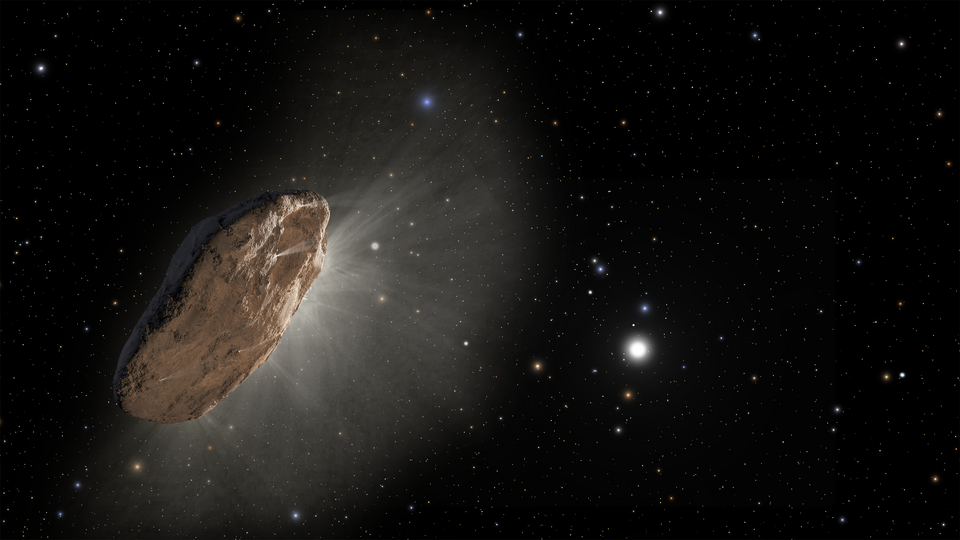
When the interstellar object 3I/ ATLAS was first spotted streaking into the solar system on July 1, 2025, it joined a rare class of cosmic visitors-only the third interstellar object ever detected. But unlike its predecessors, 1I/’Oumuamua and 2I/Borisov, this one carried a dossier of anomalies so unusual that Harvard astrophysicist Avi Loeb insists they demand open, public discussion. Instead, NASA’s muted communication has ignited a controversy over scientific transparency, public engagement, and whether techno signature research is being sidelined by institutional bias.

1. Anomalies That Challenge the Comet Label
Loeb enumerates 13 different anomalies in the behavior of 3I/ATLAS, from its retrograde trajectory aligned within 5° of the ecliptic a probability of 0.2%-to its million-times-more-massive nucleus than that of 1I/ʻOumuamua, with much higher velocity. Observations revealed a persistent sunward anti-tail visible in July, August, and November 2025, and its composition is incompatible with standard comet physics. Spectroscopy revealed a plume rich in nickel relative to iron, but with a nickel to cyanide abundance ratio orders of magnitude above known cometary baselines. Its water content is only 4% by mass, while polarization measurements are unprecedented. Near perihelion, it brightened faster than any known comet, became bluer than the Sun, and exhibited non-gravitational acceleration without disintegration. Loeb proceeds to state that such anomalies should be studied as plausible techno signatures and not dismissed to protect reputations.

2. The Coincidence of Jupiter’s Hill Radius
3I/ATLAS is predicted to pass within 53.445 ± 0.06 million km of Jupiter on March 16, 2026-a distance within one standard deviation of the planet’s Hill radius, 53.502 million km. At this boundary, Jupiter’s gravity overcomes that of the Sun, and orbits at Lagrange points become possible with minimum energy investment. Measured non-gravitational acceleration of 5×10⁻⁷ au/day² was accounted for by NASA’s JPL Horizons code during perihelion, moving the trajectory by ~0.1 million km enough to make the Hill radius alignment. Loeb comments on the statistical improbability: one in 1,000 with respect to the Hill radius, one in 26,000 with respect to the orbital diameter of Jupiter. If artificial in origin, such fine tuning might be achievable through thrusters possible course corrections may have been made via the observed post-perihelion jets.

3. Imaging Evidence: the Jäger Anti-Tail
An image taken by astrophotographer Michael Jäger on November 28, 2025, showed a geometrically clean and turbulence-free dagger-straight anti-tail pointing toward the Sun. Features such as secondary parallel filaments and possibly ribbed coma structures suggest coherent outflows or internal modulation inconsistent with random dust emission. The forensic comparison across datasets for persistence and repeatability reinforces that these indeed are intrinsic features of 3I/ATLAS. Loeb links such signatures to propulsion-like vectors rather than passive drift.
4. Technosignature Detection Frameworks
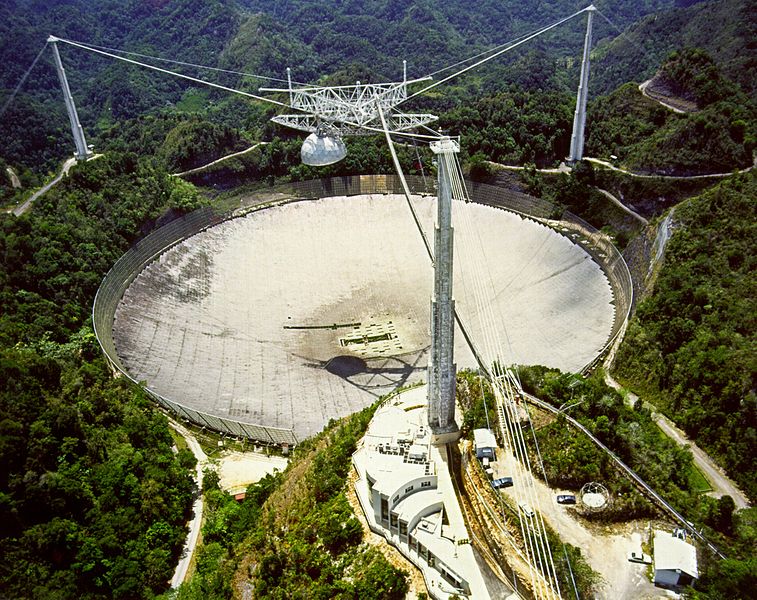
The SETI researchers enumerate four ISO technosignatures: unexplained rapid non-gravitational acceleration, unnatural spectra, unusual shapes-such as solar sails-and transmissions. 3I/ATLAS already exhibits acceleration and spectral anomalies. The advantage, the authors note in the technosignature methodology section, is that much of the data needed is a by-product of routine observations made by telescopes, although definitive close-up evidence could be obtained by missions designed for the purpose.
5. The Funding Disparity and Institutional Bias
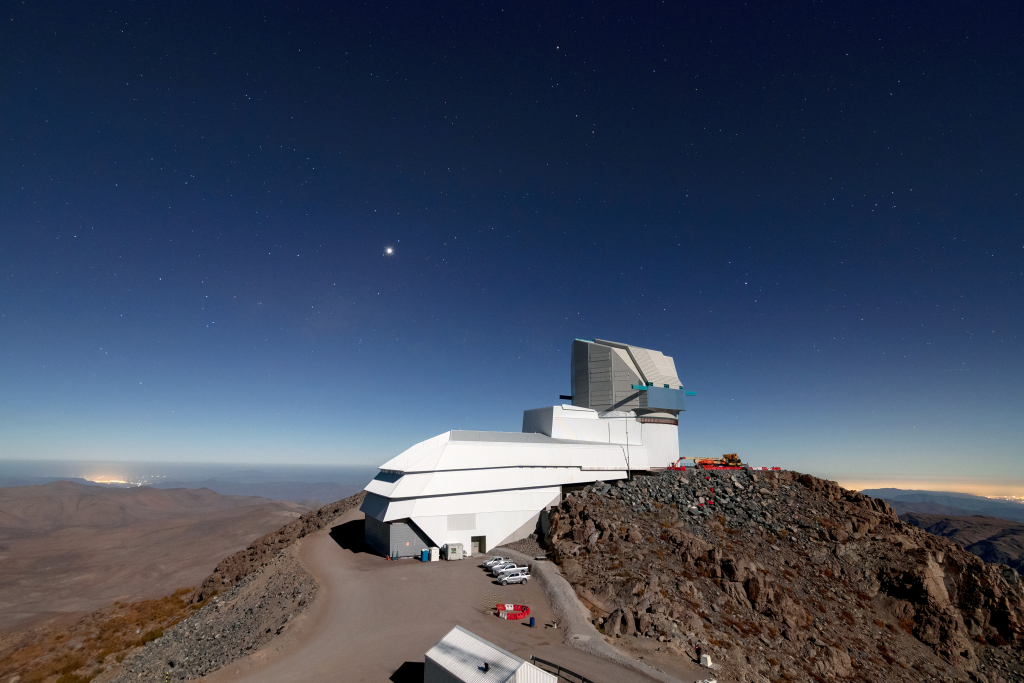
The 2020 Decadal Survey prioritized microbial biosignature searches and recommended at least $10 billion over two decades for the Habitable Worlds Observatory while not appropriating any funds for technosignature research. Surveys indicate that 58.2% of astrobiologists and 65% of Americans recognize the existence of extraterrestrial intelligence. Loeb and co-authors believe this sidelining of technosignature searches despite this public interest is a reflection of institutional bias, much like the so-called “giggle factor” that led Congress in 1993 to terminate NASA’s SETI program. This underinvestment leaves no funded capability able to intercept ISOs like 3I/ATLAS, despite Vera Rubin Observatory projections of 1-10 detections annually.
6. Public Engagement and the ‘Scientific Declaration of Independence’
Loeb insists, “the public funds science” and must be treated as active participants. He warns, “excluding the anomalies from the vocabulary of NASA officials alienates the public, because it violates the scientific declaration of independence.” He contrasts academia’s one-way communication model with detective-like openness to mystery and urges that unexplained phenomena be shared in real time to build trust and inspire curiosity.

7. Communication Challenges in Astrobiology
Workshops on how to communicate discoveries make the point that uncertain data, media sensationalism, and institutional caution together can lead to public trust erosion. History teaches, from the meteorite ALH 84001 onward to the recent Venus phosphine controversy, about the importance of managing uncertainty and consensus. Loeb’s position regarding 3I/ATLAS, in effect, is an appeal for transparency far in advance of guarded finality.
8. The stakes of December 2025
3I/ATLAS will make its closest approach to Earth in December 2025, offering a narrow observational window in which its cometary nature can be confirmed or refuted. Loeb casts this as a test of whether science will move toward public curiosity or retreat into insularity. Anomalies unresolved, imaging ongoing, and with the Hill radius around Jupiter yet to come, the object is not only a scientific enigma but also a case study in the ways that discovery is publicly communicated.

The trajectory of 3I/ATLAS traces more than a celestial path-it outlines the fault lines between established research priorities and the public appetite for transformative science. Whether its mysteries resolve into natural explanations or technological revelations, this case’s handling will shape public trust in space science for years to come.


