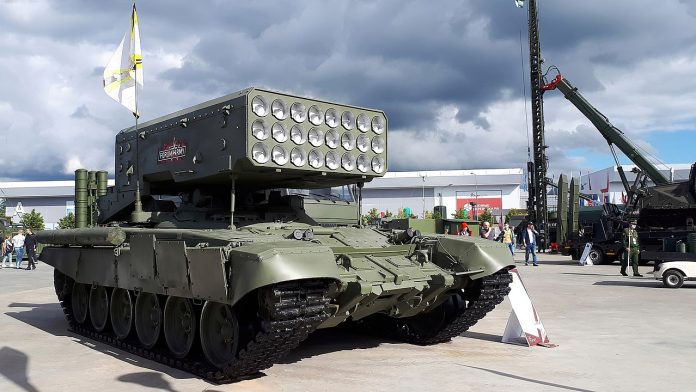
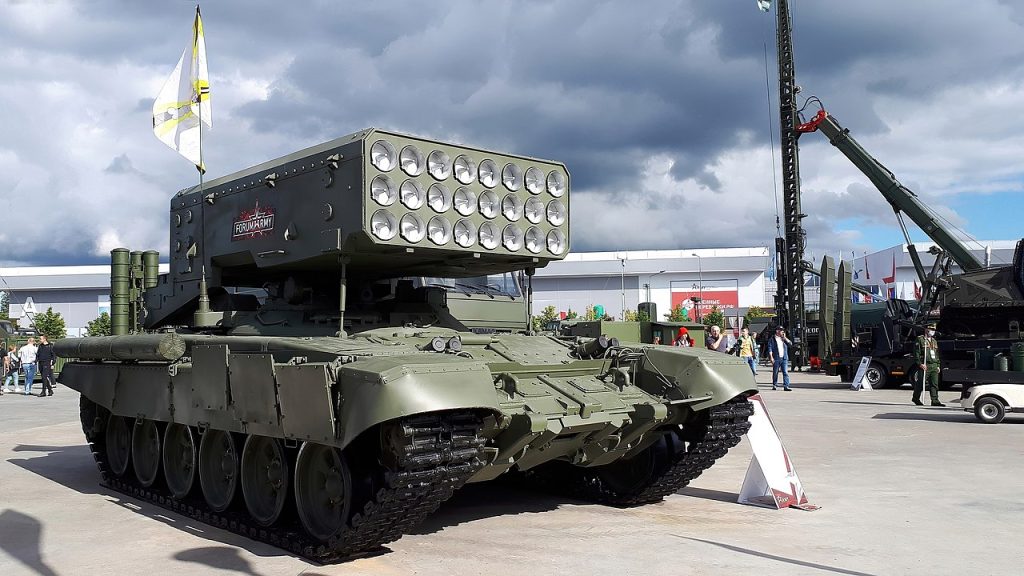
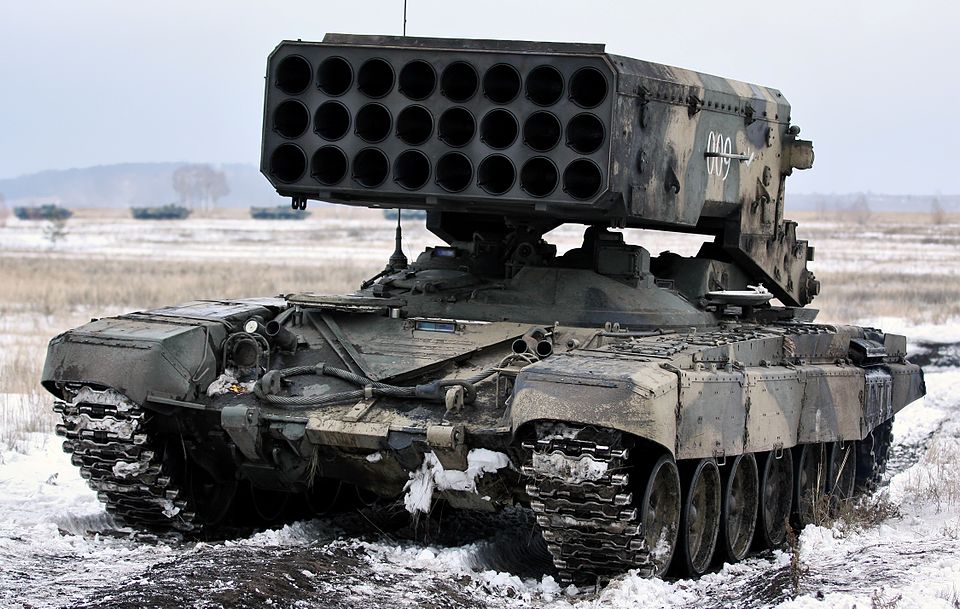
Can a Cold War–era heavy flamethrower survive on a battlefield swarming with drones? That’s the challenge facing Russia’s TOS‑1A “Solntsepyok” in Ukraine, where small, cheap FPV drones have proven capable of spotting, tracking, and destroying high‑value armored assets. In response, Russian industry has pushed through a series of rapid upgrades aimed at keeping this short‑range thermobaric rocket system viable in an era of pervasive unmanned threats. The TOS‑1A, whose tank chassis can lay down a field of fire on as many as 40,000 square meters in seconds, was never designed for combat under unblinking aerial surveillance.
Still, two years of combat lessons and heavy use of drones drove engineers to add electronic warfare suites, passive armor, and even changes to the very platforms in order to increase survivability. It’s part of a larger global trend: re-engineering legacy heavy weapons to survive in drone-dominated battlespaces. Below are nine of the most pivotal technical and operational changes that are driving the TOS‑1A’s evolution-and what they presage about the future of heavy fire support under the shadow of unmanned systems.
1. Integration of Advanced Anti‑Drone Electronic Warfare
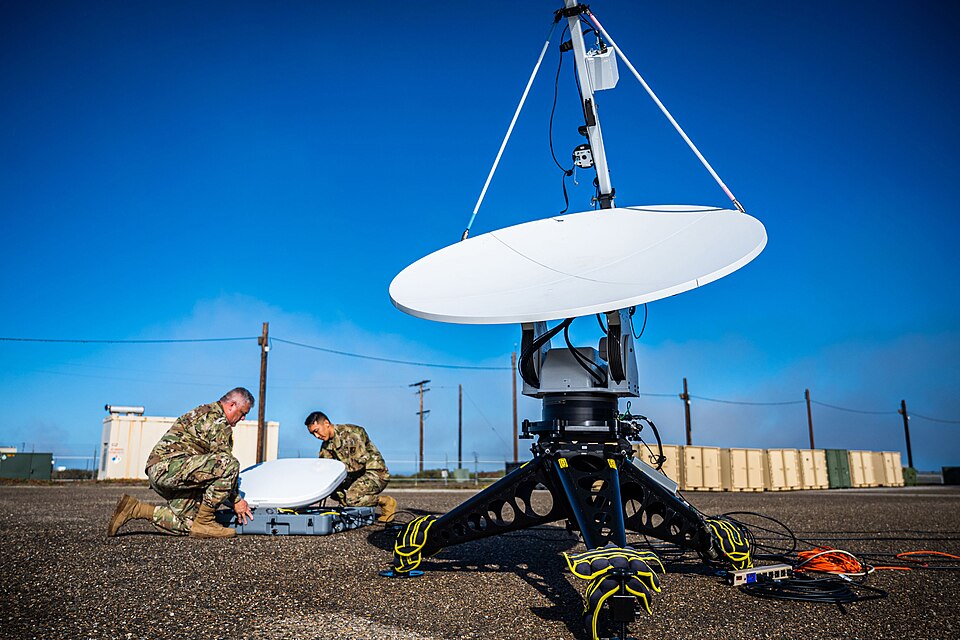
The newest batches of TOS‑1A now carry an EW suite designed to jam and suppress the control links of hostile UAVs. According to Sputnik, a Russian soldier explained, “The electronic warfare system helps us. It includes anti drone guns and other systems that jam and suppress communications.” The ability to affect a range of frequencies used for navigation and targeting means it degrades the FPV drone’s ability to home in on the launcher. This system not only self-protects from ground attacks by enabling the active disruption of enemy drone feeds but also retains its capability to deliver thermobaric salvos without constant aerial harassment.
2. Passive Armor and Lattice Screens for Overhead Protection
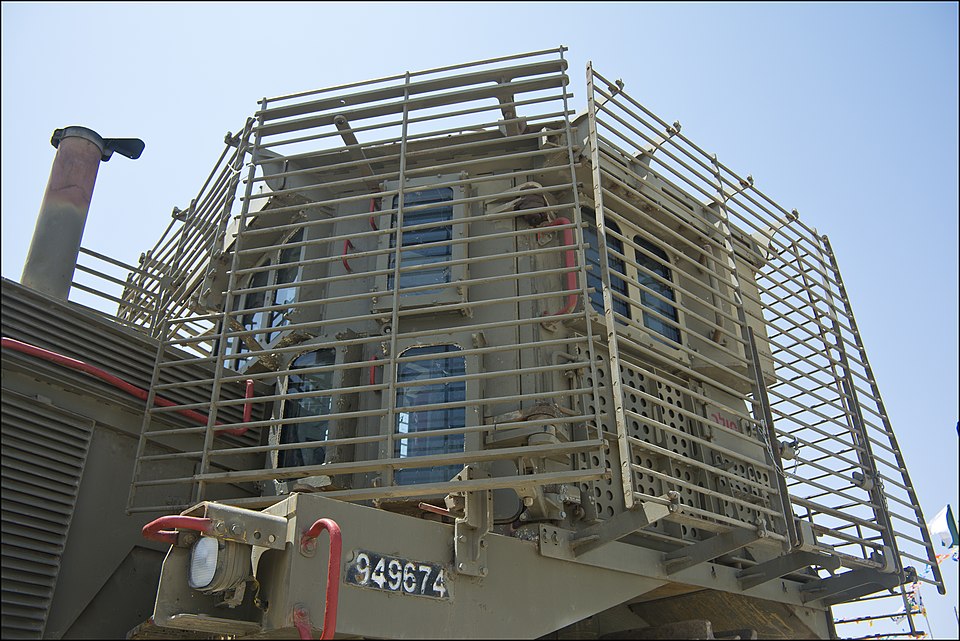
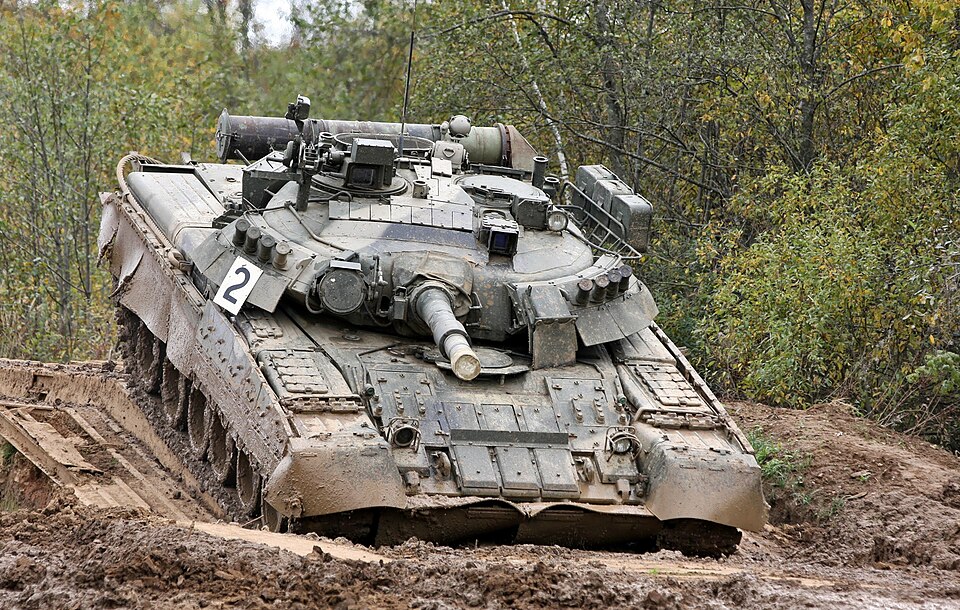
Combat footage and official imagery show the addition of cage‑style lattice armor over the launcher section. These passive barriers are meant to detonate or deflect incoming munitions from drones before they reach critical components. The latest production runs have also seen the addition of Relikt explosive reactive armor on the chassis, further hardening against top‑attack profiles. What was once an improvised field fix reportedly now comes factory-installed as the norm, perhaps an indication of recognition at an institutional level that the overhead drone threat is a leading design concern.
3. Transition to T‑80 Chassis for Improved Mobility
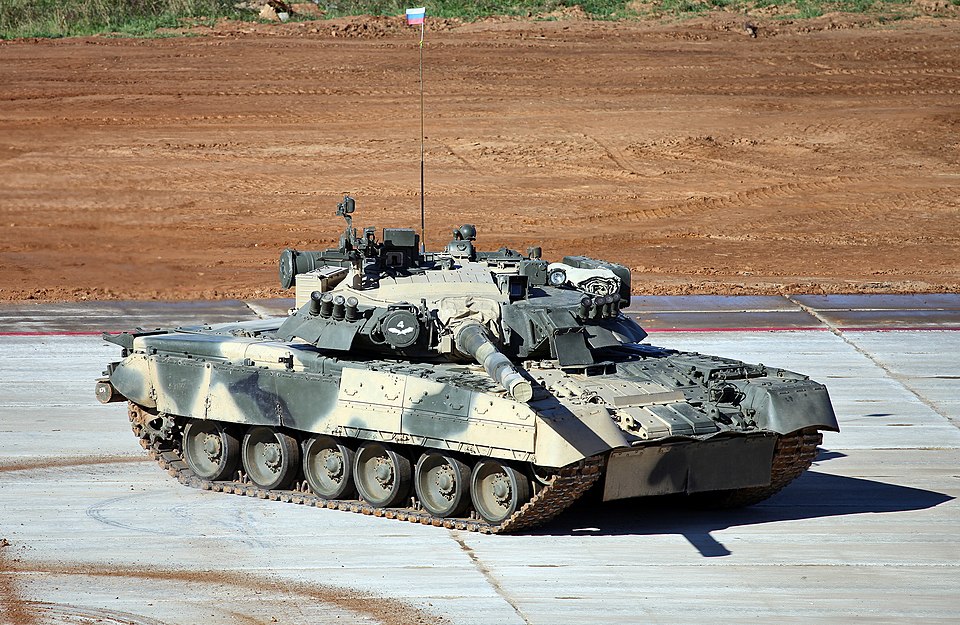
One key structural design difference is that the TOS‑1A launcher is mounted on the T‑80 tank platform. The 1,250‑horsepower gas turbine engine and hydropneumatic suspension of the T‑80 provide higher speeds-including an 11 km/h reverse-and a smoother ride over rough terrain compared with the 840 horsepower and 4 km/h reverse of the T‑72. This mobility allows for quicker repositioning after firing, something that becomes very critical as counter‑battery fire or loitering munitions can arrive in just minutes. The modular powerpack enables faster field replacement, which enhances operational uptime.
4. Lessons from Earlier T‑80 Integration Attempts
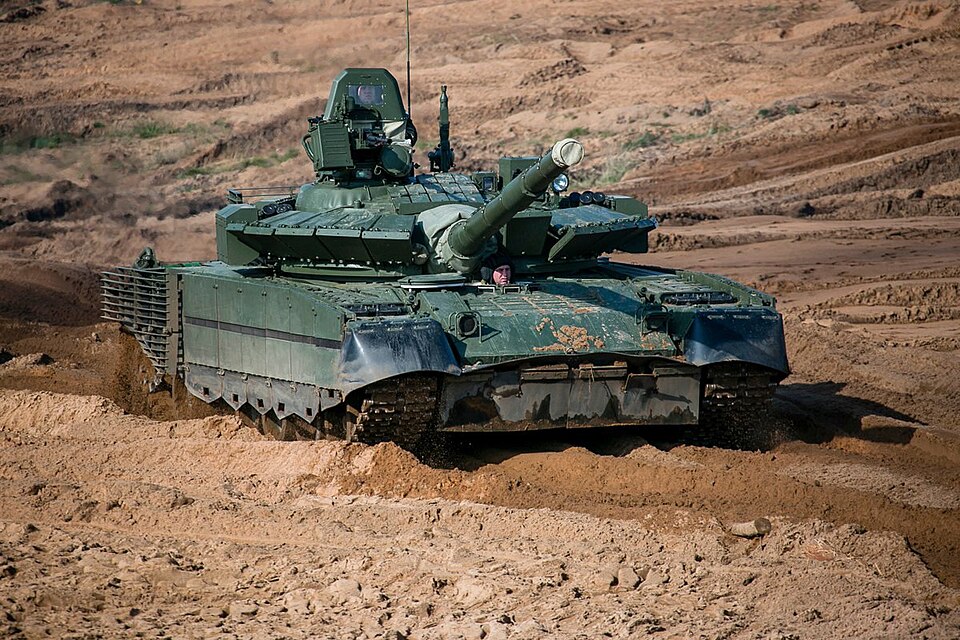
Efforts to marry the TOS system to the T‑80 date back to the late 1990s, when Omsk engineers sought to exploit the platform’s mobility. Early prototypes suffered from suspension overload, balance issues, and even turbine stalls from rocket exhaust ingestion. Space constraints prevented adding planned secondary armament. These shortcomings, combined with the T‑80’s post‑Chechen War unpopularity, shelved the concept until recent combat losses and production realities revived it.
5. Extended‑Range and Heavier Rockets
TOS‑1A traditionally fired MO.1.01.04M rockets out to 6 km; reportedly, newer M2 munitions reach out to 10 km with heavier payloads. This extends the range and reduces exposure to short‑range drone spotters, as well as enables strikes from beyond some FPV engagement envelopes. Parallel developments in the TOS‑2 and TOS‑3 families-with ranges up to 20 km-show a clear trajectory toward keeping thermobaric firepower relevant while minimizing time in the kill zone.
6. Modernized Fire‑Control and Automation
The future T‑80‑based variant is likely to boast improved fire‑control accuracy and a greater degree of automation. Though specifics remain classified, messaging from Russian industry focuses on a decreased crew workload and faster target engagement cycles. In a drone‑saturated environment where exposure time is directly proportional to survivability, automation could shave precious seconds off the detect‑aim‑fire sequence.
7. Combat‑Driven Feedback Loops
Companies like Uralvagonzavod highlight that “combat use is the most effective step toward continuous improvement.” Field reports from Ukraine are directly inserted into design changes, from relocating sensors to refining EW antenna arrangements. This pattern of iteration has echoes of rapid adaptation by other counter‑UAV defences, where protection kits can be developed in weeks to keep pace with dynamic enemy tactics.
8. Specialised role in breaching and area denial
Despite the extremely short range, the TOS‑1A’s salvo is claimed to be able to destroy bunkers, trenches, and UAV command posts. Its armored chassis allows it to operate closer to the front than conventional multiple‑launch rocket systems, providing direct support to assault units. In Russian doctrine, NBC Protection Troops-not artillery-operate the TOS, underlining its status as a close‑support siege weapon rather than a general‑purpose rocket launcher.
9. Strategic Signaling Through Public Deliveries
That new TOS‑1A deliveries coincided with Radiation, Chemical and Biological Defense Troops Day, and the public messaging on anti‑drone upgrades is not incidental. Continued production and delivery of these systems are a signal both to the domestic audience and to its adversaries that Moscow plans to continue heavy flamethrower operations despite the growing losses-at least 31 lost in Ukraine by March 2025 according to open source counts.
The transformation of the TOS 1A from Cold War bunker buster to drone resistant fire support platform shows in microcosm the wider evolution of battlefield systems under unmanned pressure. The addition of electronic warfare suites, passive armor, mobility upgrades, and extended‑range munitions would not be just add‑ons, enabling the systems to merely survive in a battlespace where, for many systems, exposure is equated to destruction in minutes. For the defense analyst and engineer, the Solntsepyok’s upgrades are a case study in how legacy heavy weapons can be re‑engineered to endure in the age of drones, and how adaptation speed may now mean as much as raw firepower.


