Could a stubby Cold War jet possibly hold lessons for today’s most advanced fighters? The Saab 29 “Flying Barrel” was proof even a small nation could design, build and export world-class combat aircraft without leaning on Washington or Moscow. The achievement still resonates today in a Europe increasingly wary of over-reliance on U.S. defence technology.
The Swedish model, mixing industrial independence with operational credibility, has moved from the post-war race for swept-wing speed to today’s debates over F-35 sovereignty. More than the sales themselves, Saab’s latest Gripen exports-to Hungary, Brazil, and Colombia, and possibly soon Canada-are statements of strategic autonomy. Here are nine ways the Flying Barrel’s legacy is shaping modern airpower decisions-and challenging the F-35’s dominance.

1. The Flying Barrel’s Improbable Success
When the Saab 29 Tunnan first took to the air in 1949, its rotund fuselage drew comparisons with a beer keg. Yet the design was no accident. Engineers incorporated swept‑wing aerodynamics based on wartime German research and combined it with a de Havilland Ghost turbojet license‑built in Sweden. The result was a fighter that established a 1954 closed‑circuit world speed record of 977 km/h and was outstanding for its agility, stability, and high‑angle‑of‑attack handling qualities. Its performance under Nordic conditions was particularly good, and Sweden produced a quite remarkable 661 examples considering the size of the country. Further laurels were gained during the UN Congo mission flying ground-attack and reconnaissance sorties without losses in establishing its reputation as proof that a small neutral country could field a credible frontline jet.

2. Engineering Firsts in Western Europe
It was the first swept-wing fighter to be built in Western Europe, marking a leap from the piston engines of earlier designs into the true jet age: 25-degree wing sweep, pressurized cockpit, ejection seat, hydraulic flight controls-cutting-edge technology for the early 1950s. Later variants kept it relevant well into the middle of the 1960s thanks to upgrades with afterburners, Sidewinder missiles, and aerodynamic refinements. This was Saab’s path of incremental improvement which would bridge the first‑generation jet aircraft with the supersonic successors such as the Draken and Viggen. The experience forged a sophisticated aerospace workforce along with a domestic supply chain-foundations for Sweden’s modern fighter programmes.

3. Gripen Exports as a Modern Independence Play
Today, the Saab JAS‑39 Gripen represents the very same spirit as the Tunnan: competitive capability without strategic dependence on superpowers. Current deals include the Hungarian expansion of its Gripen C/D fleet, deliveries of the Gripen E to Brazil, and the $3.6-billion contract with Colombia for 17 Gripen E/Fs. These sales resonate in a Europe where several NATO members are questioning the political strings attached with the F‑35 program. The Saab pitchsovereign control, local assembly, and industrial offsetsreflects the independence Sweden showed with the Flying Barrel.

4. Canada’s Fighter Debate and Industrial Leverage
Ottawa’s re-evaluation of its 88‑jet F‑35 order has freed up space for a mixed fleet including Gripens. Industry Minister Mélanie Joly recently commented on insufficient industrial benefits from the F‑35 deal, and Saab is offering up to 10,000 Canadian jobs via local assembly and supply chain development. But the military chiefs warn that this split buy would raise costs and add logistical complexity. The proposal nonetheless strikes a chord with those eager to reduce U.S. dependence, and the debate is an instructive example of how fighter procurement now explicitly mingles defense needs with domestic economic and political considerations.

5. The F‑35 Sovereignty Question
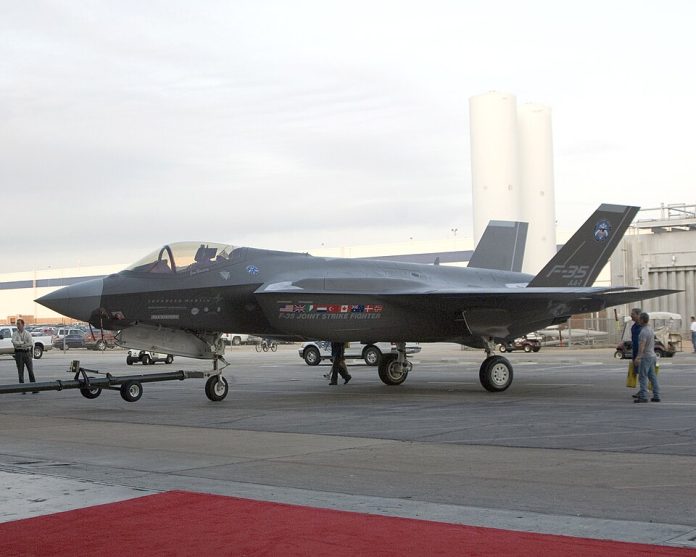
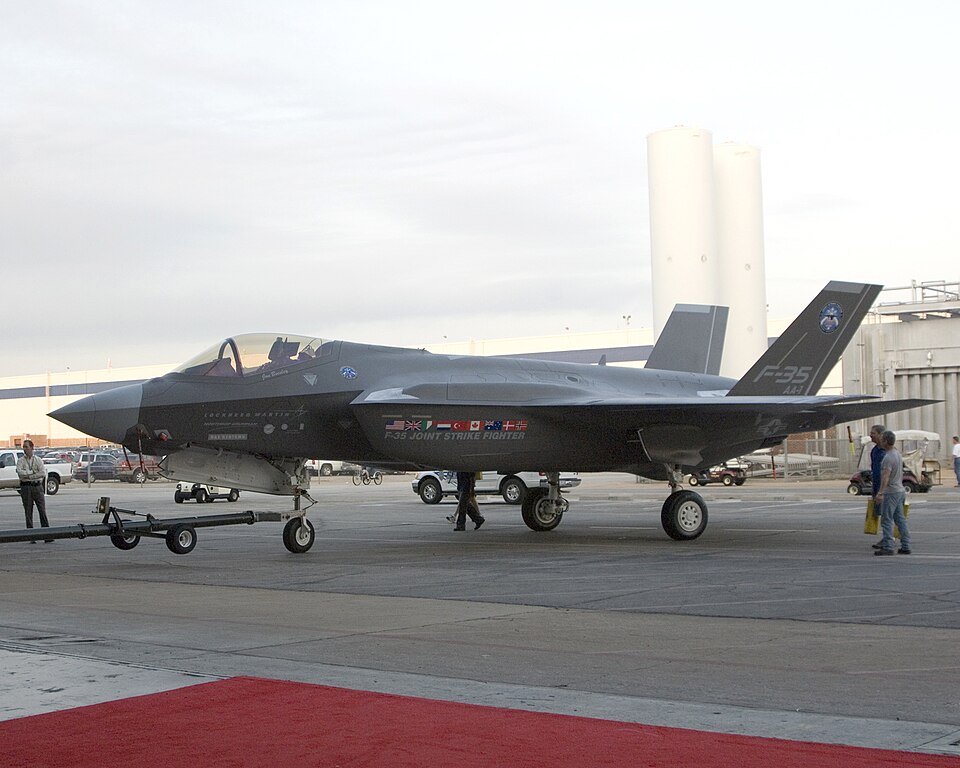
Aside from the cost, there are also apprehensions by some allies over its operational autonomy with the F‑35. Setting aside myths of a U.S. “kill switch,” there indeed are real constraints: U.S. policy bars independent foreign testing outside CONUS, while mission data files – MDFs – are updated only via U.S.-controlled labs. As Bill Sweetman pointed out, the MDF is the “electronic battle manual” essential to exploiting the jet’s stealth and sensors. This is because reliance on U.S. software updates and sustainment systems, such as ODIN, means that while the F‑35 offers unparalleled capability, it also embeds strategic dependencea point Saab leverages in marketing the Gripen.

6. Gripen vs. Rafale: Europe’s Other Contest
Outside the U.S., Europe’s two top fighter options are the French Dassault Rafale and Swedish Gripen E. Twin engines, heavier payload and the SPECTRA EW suite give the Rafale a better long-range strike capability and survivability, while the lighter frame and lower operating cost and short take-off capability of the Gripen render it well-suited for dispersed operations and smaller budgets. Both field the Meteor BVR missile, but their design philosophies reflect fundamentally different approaches to the choice between high‑end capability and broad affordability that many air forces face.

7. Strategic Shift in Colombia
The deal replaces aging Kfirs with Gripen E/Fs while reducing reliance on U.S. and Israeli platforms. Technology transfer, industrial cooperation across a wide range of sectors-from aerospace to sustainable energy-and short takeoff capability from dispersed runways form part of the package. Equipped with Meteor missiles, RBS‑15 anti‑ship weapons, and advanced sensors, the FAC’s Gripen will be able to pivot between air policing, maritime patrol, and precision strike, expanding deterrence against regional threats and embedding new industrial skills at home.

8. Production Capacity and Europe’s Dilemma
Even if Europe wanted to replace the F‑35 with homegrown fighters, production limits are stark: Saab builds about 24 Gripens a year; Dassault up to five Rafales a month; and Eurofighter partners around 20 Typhoons annually. In contrast, Lockheed Martin plans 190 F‑35s in 2025 alone. With Russia’s war in Ukraine driving urgent rearmament, European industry cannot yet match the scale and speed of U.S. output, making a full pivot away from the F‑35 impractical in the near term.

9. The Flying Barrel More than nostalgia
The story of Saab 29 reflects the belief that with determination even a small nation is able to achieve aerospace self-sufficiency and export success. That legacy underpins Sweden’s modern fighter strategy and appeals to countries balancing capability, cost, and sovereignty. In a world where even the most advanced jets are as much about software and supply chains as they are about aerodynamics, the lesson of the Flying Barrel is obvious: control over design, production, and upgrades can be as strategically valuable as raw performance.
From the Congo skies of the 1960s to today’s procurement battles, Sweden’s fighter programs have invariably punched above their weight. The Saab 29 proved that unconventional design combined with national resolve could achieve world-class results. The Gripen extends this tradition into the 21st century with an alternate vision of airpower, one in which sovereignty and adaptability rival stealth and scale. In the F-35 era, that vision is finding new audiences.


