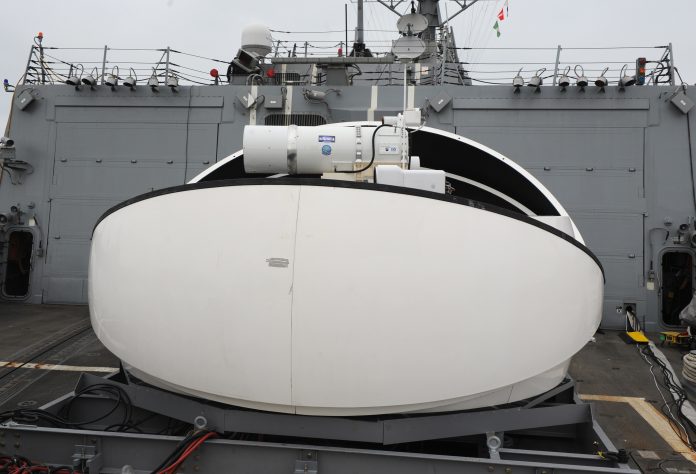

Imagine a warship being able to swat a drone out of the sky at the speed of light, for the price of a cup of coffee. That’s no longer a hypothetical. The UK’s DragonFire high-energy laser has moved from concept to combat-ready capability, delivering precision kills against aerial threats in trials and earning a place aboard Royal Navy destroyers years ahead of schedule.
In a world where foes use low-cost drones to drain million-dollar missile supplies, directed-energy weapons are rewriting the economics of defense. Success for DragonFire at the Hebrides range striking drones at 403 mph marks a turning point for naval air defense. Underpinned by a £316 million contract and leading NATO in innovation, the system is poised to change the way the Royal Navy confronts fast, agile threats.
This listicle breaks down nine key aspects of DragonFire’s development, deployment, and strategic impact, showing why it’s being hailed as a game‑changer in modern maritime warfare.

1. Precision at Extreme Speeds
During October 2025 trials at the UK’s Hebrides range, DragonFire achieved a national first by tracking and destroying drones flying at up to 650 km/h. The system’s optical targeting is so refined it can hit a £1 coin from a kilometer away, a feat that underlines its sub‑meter accuracy even against maneuvering aerial targets. Above‑the‑horizon engagement capability allows it to counter threats before they close in, an essential feature for defending high‑value naval assets.

2. Cost Per Shot Versus Missile Economics
Traditional shipborne interceptors can cost hundreds of thousands-even millions-per shot, as witnessed in the use of $2 million missiles by U.S. Navy vessels against $2,000 drones in the Red Sea. DragonFire fires for about £10 (~$13) per engagement, breaking the adverse cost‑exchange ratio that has plagued modern air defense. This low cost allows for operations to be sustained without the financial burden imposed by missile resupply, a key advantage in prolonged conflicts.

3. Unlimited Magazine Depth
Missile-armed ships have to go back into port to reload once their magazines are expended. The DragonFire magazine is limited only by the ship’s electrical power, allowing continuous engagements as long as fuel and generation capacity last. This deep-magazine capability directly addresses the risk of ammunition exhaustion from swarm attacks, keeping defensive readiness high without logistical interruptions.

4. Accelerated Deployment Timeline
Originally destined for 2032, DragonFire will now be fitted onto Type 45 destroyers by 2027-five years earlier than planned. The acceleration reflects lessons from Ukraine and the Red Sea, where rapid adaptation to evolving threats has proved essential. Minister Luke Pollard underlined the fact that procurement speed is as important as capability, saying there is a need for systems that can Layered be spiral‑developed to stay ahead of adversary innovations.

5. Integration Into Air Defense
DragonFire is not meant to replace missiles; it’s to complement them. Integrated into the Type 45’s combat management system, it adds a mid‑layer between long‑range interceptors and close‑in weapons such as the Phalanx CIWS. This gives commanders more options for engagement, saving expensive missiles for high‑end threats and instead using the laser for drones and other low‑cost targets.

6. Compact Shipboard Design
Early prototypes occupied a 40‑foot container footprint. For shipboard deployment, MBDA engineers have reduced this to 20 feet without sacrificing capability. According to Julia Warren, MBDA Chief Engineer, the redesign is focused on effective use of space and automation, allowing the system to be controlled by one operator from the operations room. As such, this compact automated system will fit easily into the overall naval operating environment.

7. NATO‑Leading Directed Energy Capability
DragonFire will be the first high‑power laser to enter service from a European nation, positioning the UK at the very cutting edge of NATO’s Directed Energy weapons portfolio. Delivered by MBDA in partnership with QinetiQ and Leonardo and supported by BAE Systems for ship integration, it is one of the most advanced DEW programs across the Alliance, with considerable potential to influence Allied procurement strategies.

8. Strategic Value Against Drone Swarms
These systems are sometimes used in large swarms, which can saturate traditional defenses. Directed energy has a near-zero cost per shot and can help break the cost curve and maintain inventories of missiles against more challenging threats. Due to DragonFire’s speed in its tracking and engagement, it is well-suited to defeat one-way attack drones before they attain their objectives.

9. Economic and Industrial Impact
This £316 million contract sustains almost 600 highly skilled jobs across England and Scotland, further strengthening the UK’s defense industrial base. The program also secures close to £1 billion of invested funding in directed-energy programs under the Strategic Defence Review. By enhancing domestic competence in DEW technology, DragonFire reinforces both national security and the UK’s standing in the global defense market.
Its arrival on Royal Navy decks represents more than a technological milestone; it marks a new paradigm in the way modern navies will fight and win against the fast, low-cost aerial threats. Setting the standard for NATO allies, the combination of precision, deep-magazine endurance, and affordability within a layered defense will be set by the UK. As 2027 deployment approaches, real-world performance of the system will be followed not only in regard to its tactical effect but also in its potential to redefine the economics of naval warfare.


