
It started with a reassurance: “3I/ATLAS is a comet,” NASA Associate Administrator Amit Kshatriya announced at the November 19, 2025 press conference, ending weeks of speculation that the object might be alien technology. Still, this inter-solar visitor has proven to be no ordinary comet. Just the third confirmed interstellar object ever spotted, 3I/ATLAS is within 300 million kilometers of Earth, hurtling outward after its close solar pass, offering scientists an unparalleled opportunity to probe the building blocks of distant planetary systems.

1. A Multi-Mission Imaging Campaign
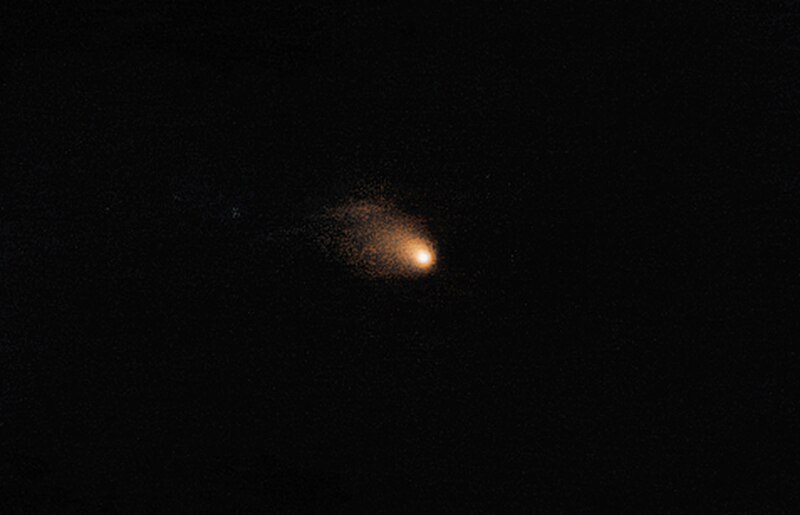
Since its discovery on July 1, 2025, by the ATLAS survey telescope in Chile, NASA has coordinated a solar system-wide observation campaign involving more than a dozen spacecraft. The closest view came from the Mars Reconnaissance Orbiter (MRO), which snapped images of the comet on October 2 from 19 million miles (30 million km) away. With the HiRISE camera that normally is focused on the Martian surface, the orbiter took images of the expansive coma at 30 km per pixel. Spectral data came courtesy of MAVEN’s Imaging Ultraviolet Spectrograph, which mapped hydrogen and hydroxyl emissions to estimate rates of water vapor release. Even the fixed Perseverance rover on the Martian surface managed a faint smudge in the predawn sky.
2. Challenges in Observation and Instrumental Limitations
Imaging 3I/ATLAS tested the limits of deep-space instruments cameras such as CaSSIS aboard ESA’s ExoMars Trace Gas Orbiter are optimized for bright, nearby targets-the comet can be 10,000 to 100,000 times fainter. Thus, exposure times had to be pushed to the maximum, and image stacking techniques were used to enhance very faint features. Attempts were made at spectral characterizations with Mars Express instruments OMEGA and SPICAM, although brightness might still limit compositional information.
3. Jets, Coma, and Tail Dynamics
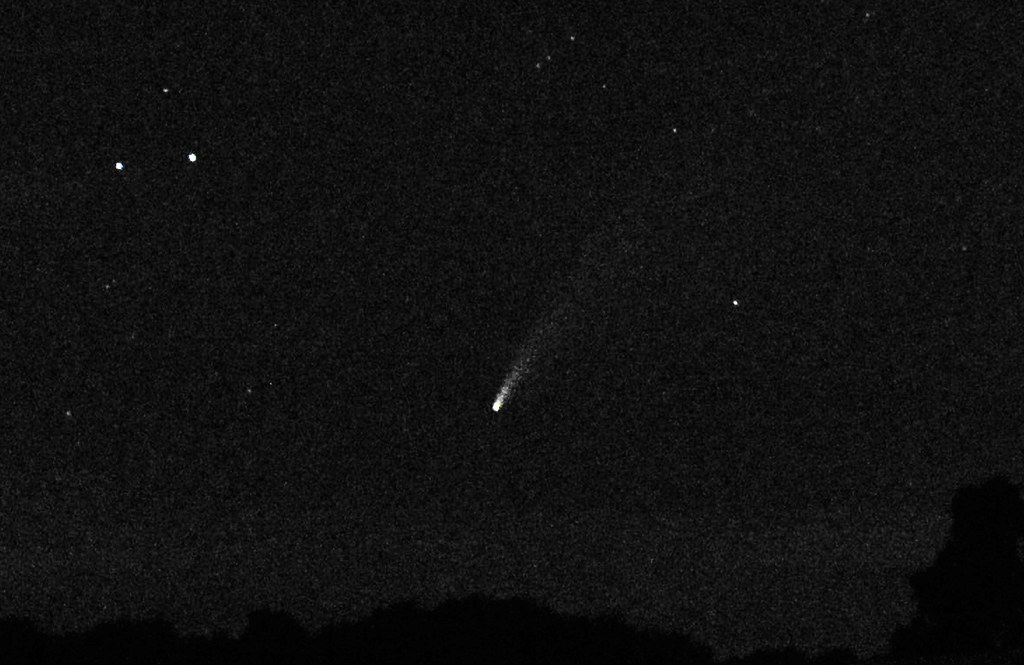
After its closest approach to the sun on October 29, 3I/ATLAS sprouted multiple jets that ejected dust and gas in tightly collimated streams. Jets showing up in astrophotographers’ images imply active surface regions where intense sublimation is occurring. And then there’s MAVEN’s ultraviolet data, which revealed a carbon dioxide–rich coma with an unusually high nickel-to-iron ratio compared with other solar-system comets findings that hint at novel conditions in its parent system during the object’s formation.
4. Trajectory and Hyperbolic Orbit
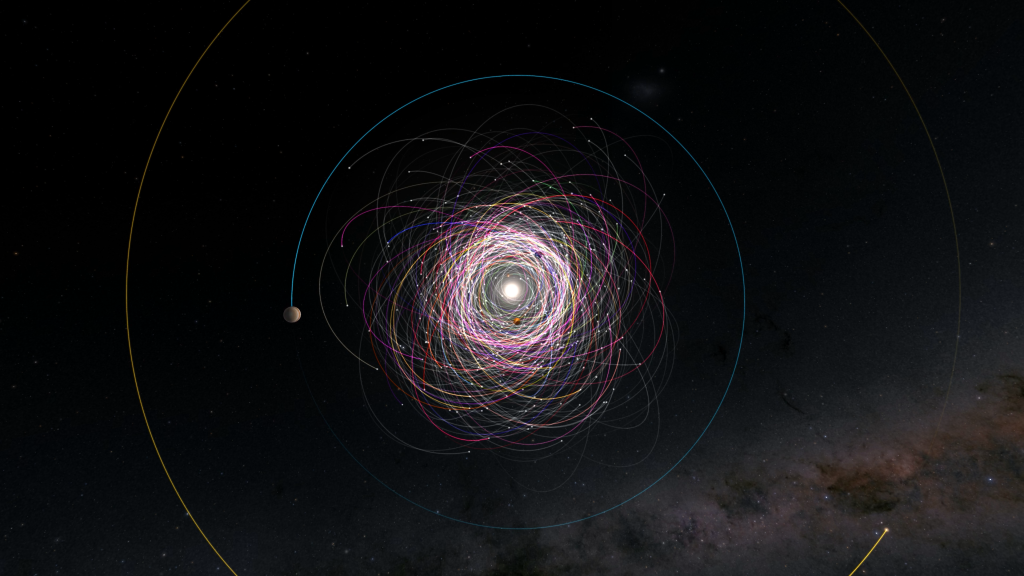
3I/ATLAS is on an extremely hyperbolic trajectory with eccentricity ~6.1, inbound with a velocity of ~58 km/s relative to the Sun. With such kinematics-characteristic of interstellar origin-it is unbound to solar gravity and will leave the solar system after its December 19 Earth flyby at 270 million km. This velocity is greater than that of 1I/ʻOumuamua and 2I/Borisov thus, it is the fastest interstellar visitor recorded to date.
5. Tracing Galactic Origins with Gaia
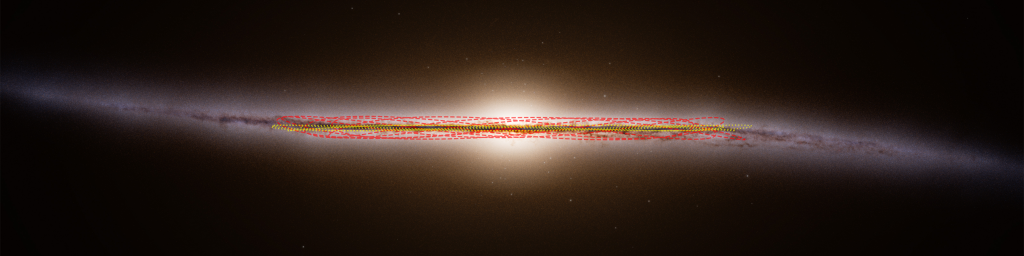
Xabier Pérez-Couto and his colleagues used the stellar data from Gaia DR3 to integrate the comet’s orbit back 10 Myr and identified the 93 nominal stellar encounters, of which 62 were significant. None of them induced meaningful perturbations: the strongest flyby imparted a velocity change as small as 5×10⁻⁴ km/s. Such an analysis favors a thin-disk origin with vertical excursions of |Z|~0.42 kpc and suggests it might have been ejected from a primordial planetesimal disk billions of years ago.
6. Comparative Insights from Other ISOs
Compared to 1I/ʻOumuamua’s elongated, inactive body and 2I/Borisov’s water-rich activity, 3I/ATLAS is both larger potentially up to 5.6 km in diameter and compositionally distinct, with more nickel than iron and low water content (~4% by mass). These differences emphasize the variety of interstellar objects and point toward diverse planetary architectures across the galaxy.
7. ESA’s JUICE Campaign
ESA’s Jupiter Icy Moons Explorer, JUICE, which is en route to Jupiter, observed 3I/ATLAS from a distance of only 60 million km between November 2-25. Its Submillimetre Wave Instrument seeks high-resolution water signatures and the Particle Environment Package measures neutral atoms created by the interaction between the solar wind and the coma. The data will arrive in February 2026. From this, near-surface ice distributions and volatile release rates may be gleaned.

8. Anomalies and Speculative Signals
Anomalies have been cataloged by some researchers: persistent sunward jets, non-gravitational accelerations near perihelion, and compositional ratios atypical of known comets. Although NASA attributes these to natural processes, such anomalies feed ongoing debates about whether certain ISOs could be technological in origin. A spectroscopic measurement of jet velocities and compositions may help resolve these questions.

9. Future Interception Prospects
The transient appearance of 3I/ATLAS highlights the importance of the rapid-response mission. ESA’s Comet Interceptor, set to launch in 2029, will enter a parking orbit and await a pristine comet or another ISO. Valuable multi-platform coordination, instrument adaptation, and trajectory predictions from this campaign will make such efforts more efficient for future interstellar visitors.
As 3I/ATLAS speeds toward its December Earth flyby and eventual departure, coordinated observations from Mars, deep-space probes, and Earth-based telescopes are building the most complete profile yet of an interstellar comet. For space enthusiasts and astronomers alike, it’s a rare chance to study material forged in a distant star system, preserved for billions of years, now passing briefly through our cosmic neighborhood.


