

Bill Gates’ latest warning has landed with the weight of history: the AI boom, he says, is tracking the same dangerous arc as the dot-com bubble. The comparison to that event is more than rhetorical for tech-savvy investors and industry leaders; it’s a call to look hard at the economic, engineering, and infrastructural realities underpinning today’s trillion-dollar valuations.

1. Gates’ Dot-Com Parallel and Market Psychology
Speaking on CNBC’s “Squawk Box,” Gates compared the current rush in AI to the late-1990s frenzy around the internet, where “some companies succeeded, but a lot of the companies were kind of me-too, fell behind, burning capital companies.” His point: The intrinsic value of AI is high, but the market is awash in overcapitalized ventures with brittle business models. This is not tulip mania’s pure speculation, but the more insidious overextension of capital into ventures that cannot sustain their operating costs, particularly the energy-intensive data centers at the core of AI infrastructure.
2. Investor Overexcitement and Bubble Indicators
OpenAI CEO Sam Altman has likewise sounded warnings: “There are many parts of AI that I think are kind of bubbly right now.” Analysts say 80% of US stock market gains this year are AI-related, and Gartner’s forecast of $1.5 trillion in global AI spending before 2025 is over. Historical patterns-from the South Sea Bubble to the dot-com crash-show that when asset price growth outpaces underlying value, mean reversion is inevitable.

3. The Engineering Cost Curve of AI Data Centers
The physical backbone of AI consists of hyperscale data centers, which require unprecedented amounts of energy and capital. Facilities can support as many as 10,000 servers, each with a price tag of $1 billion, consuming as much electricity as 100,000 households. The largest currently under development will use 20 times that. With fixed operational costs resistant to general market downturns, AI workloads call for high-density GPU clusters, advanced cooling systems, and constant uptime. In the end, assured Gates, “some… will commit to data centers whose electricity is too expensive,” a scenario already unfolding in regions with strained grids and steeply rising prices for power.

4. Sustainability and Resource Strain
The environmental footprint is staggering: in 2023, US data centers used 4.4% of national electricity; projections suggest this could triple by 2028. Water usage for cooling runs into billions of gallons annually, exacerbating scarcity in arid regions. The short lifecycle of GPUs and TPUs accelerates e-waste generation, while manufacturing them requires rare earth minerals with significant ecological impact. Absent aggressive adoption of energy-efficient chips, carbon-aware computing, and renewable power integration, AI’s growth trajectory risks a collision course with environmental and regulatory limits.
5. Circular Financing and Market Distortion
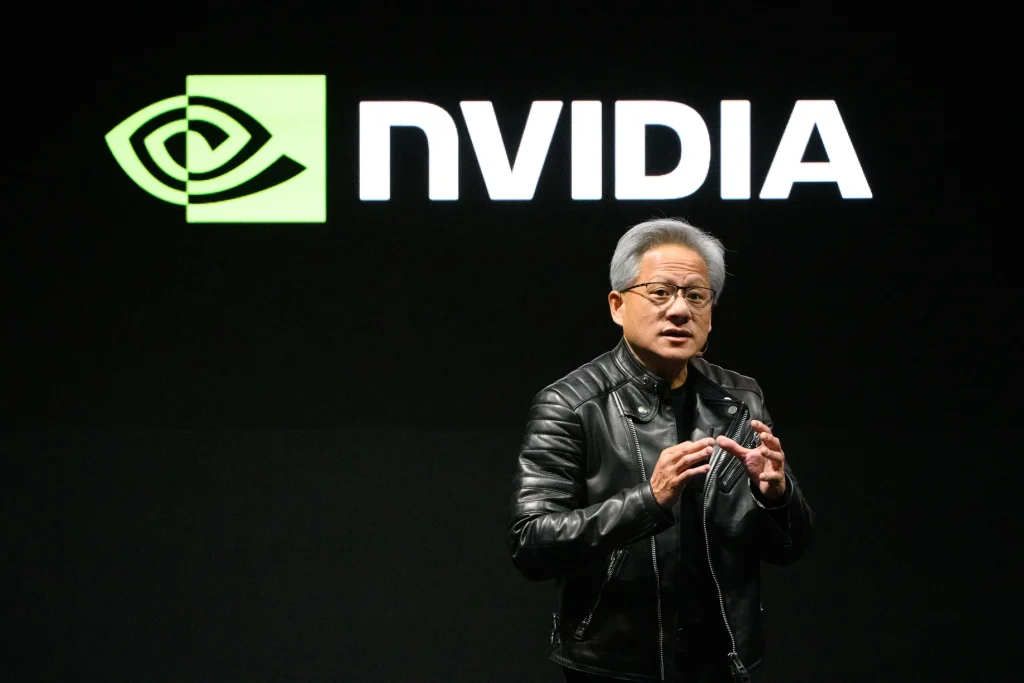
Complicated financial arrangements mask the demand signals. The $100 billion that Nvidia invested in OpenAI, and OpenAI’s multibillion-dollar purchases from Nvidia, demonstrate “vendor financing” patterns witnessed in former bubbles, à la the customer lending of Nortel before its collapse. These deals balloon revenue optics without growing real market demand, creating a feedback loop that unravels quickly when the capital dries up.

6. Adoption Rates vs. Revenue Reality
A study by MIT, “GenAI Divide,” found that 95% of companies see zero return from AI investments despite $30-40 billion in enterprise spending. While individual productivity is better with the help of tools such as ChatGPT and Copilot, poor workflow integration means they infrequently deliver measurable P&L impact due to a lack of contextual learning. Slow enterprise adoption undermines the revenue forecasts underpinning massive infrastructure bets.

7. Geopolitical and Competitive Pressures
Government contracts would stabilize revenues for AI in defense, healthcare, and transportation, but competition among hyperscalers and specialized startups will likely erode pricing power. And if market dominance fragments, the ability to sustain high margins-and justify capital-intensive infrastructure-diminishes. Public trust is another wildcard: skepticism over data privacy, bias, and job displacement might slow the pace of adoption-which in turn reduces ROI timelines.

8. Lessons from Historical Bubbles
The one core lesson common to both the Dutch tulip mania and the dot-com crash is that it is the herd mentality, speculative greed, that can take asset values far beyond the fundamentals. In both cases, infrastructure investments survived the bubble but enabled future growth only after severe market corrections. Gates’s analogy would suggest AI could follow that path: overinvestment today perhaps builds a foundation for tomorrow’s breakthroughs but at the cost of widespread corporate casualties.

As Gates put it, AI is “the biggest technical thing ever in my lifetime.” That magnitude makes the stakes higher: the engineering challenge of sustainable infrastructure, the economic discipline to align valuations with value, and the strategic foresight to avoid repeating history’s most expensive lessons.


