

Bad weather and unprecedented federal restrictions combined to delay one of this year’s most-anticipated commercial spaceflights Blue Origin’s second New Glenn rocket launch, carrying NASA’s twin ESCAPADE probes to Mars. The scrub on November 9 came just hours before new FAA rules, triggered by the ongoing government shutdown, were set to sharply limit daytime launch opportunities.
1. Launch Delay Under Tight Weather Rules
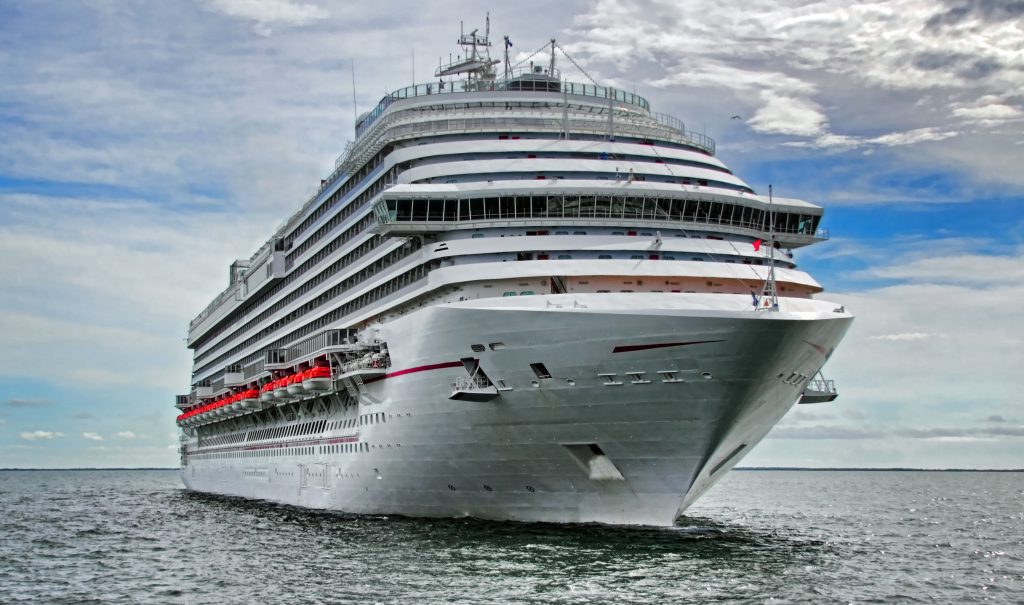
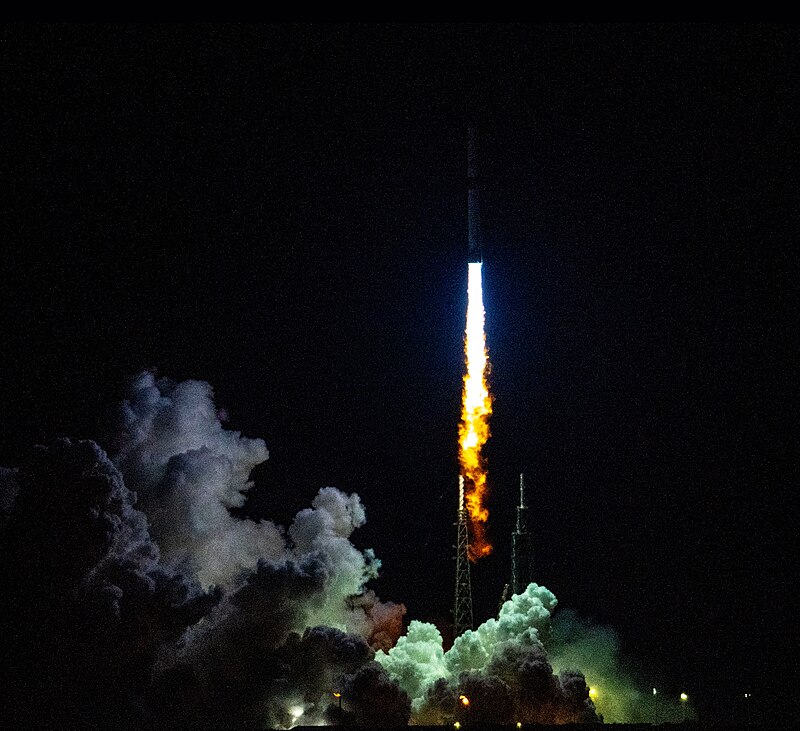
The NG-2 mission was set to launch from Launch Complex 36 at Cape Canaveral Space Force Station in an 88-minute window. Meteorologists cited the “cumulus cloud rule” as the primary violation, compounded by intermittent rain, lightning, and even a cruise ship drifting into the keep-out zone. Blue Origin spokesperson Tabitha Lipkin said, “Today’s NG-2 launch is scrubbed due to weather, specifically the cumulus cloud rule. We are reviewing opportunities for our next launch attempt based on forecasted weather.” The next attempt is now set for November 12, with a window from 2:50 to 4:17 p.m. EST.
2. FAA Restrictions Amid Government Shutdown
The delay coincided with new FAA restrictions limiting commercial launches to between 10 p.m. and 6 a.m. local time. The order, issued November 6, is designed to alleviate stress on air traffic controllers who have been working since October 1 without pay. The curfew unprecedented in recent spaceflight history jeopardizes what has been the busiest launch cadence Florida has ever seen 92 launches already in 2025. Blue Origin sought an exemption to allow a daylight launch, with Vice President Laura Maginnis stating the company is “working very closely with both our partners at the FAA and with the NASA team to ensure we’re honoring and respecting the airspace expectations.”
3. New Glenn: Heavy-Lift Engineering
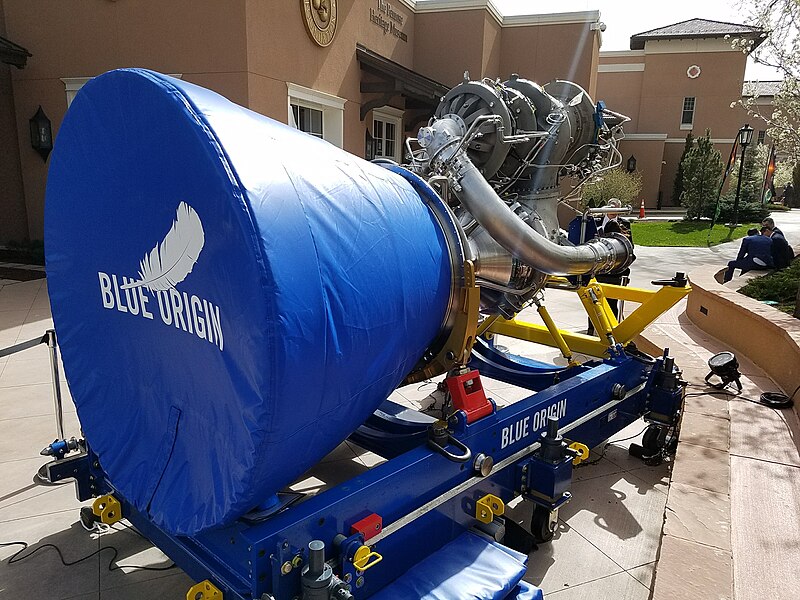
New Glenn is one of the biggest rockets ever built 98 meters tall, by 7 meters in diameter. Propulsion will be provided by a reusable first stage, Glenn Stage 1, with seven BE-4 engines combusting liquid methane and liquid oxygen, producing 17,100 kN of thrust. It will be reusable up to 25 times, with hydraulically actuated landing legs recovering on a barge. Glenn Stage 2 (GS2) is powered by two BE-3U engines using liquid hydrogen and LOX, producing 1,600 kN of thrust. GS2 is capable of lifting 45,000 kg to LEO, 13,600 kg to GTO, and 7,000 kg to the Moon.
4. Problems of Booster Recovery
The NG-2 mission will once again attempt a first stage landing on Blue Origin’s autonomous vessel Jacklyn, stationed in the Atlantic. Booster GS1-SN002 – tagged “Never Tell Me The Odds” – will conduct a reentry burn ahead of a precision landing burn with one BE-4 engine. An unsuccessful landing on NG-1 in January was attributed to an engine relight issue since that time engineers have updated the propellant management system and hardware to improve success opportunities.
5. ESCAPADE Mission Objectives
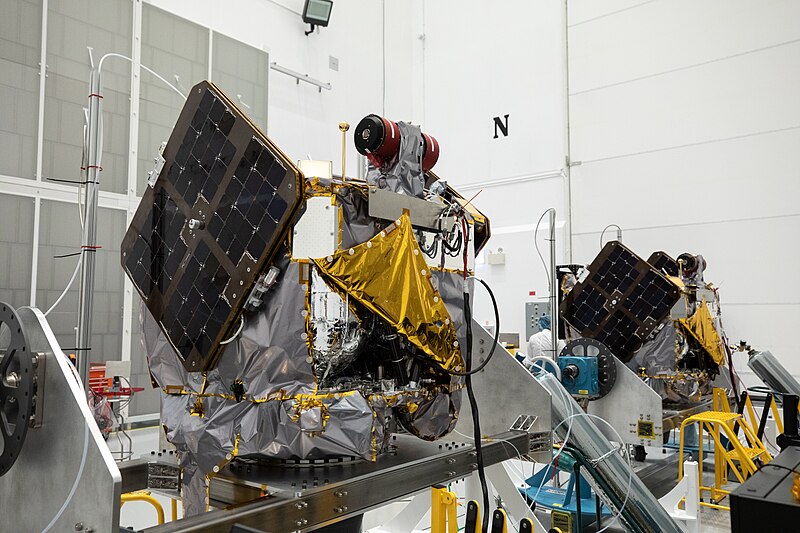
NASA’s ESCAPADE — Escape and Plasma Acceleration and Dynamics Explorers — is the space agency’s first dual-satellite mission to another planet. Built by Rocket Lab on the Photon bus, the twin probes “Blue” and “Gold” will study how the solar wind strips Mars’ atmosphere. Each 535 kg spacecraft carries a magnetometer from NASA Goddard, electrostatic analyzers from UC Berkeley and plasma sensors from Embry-Riddle Aeronautical University, along with cameras from Northern Arizona University.
6. Novel Trajectory to Mars
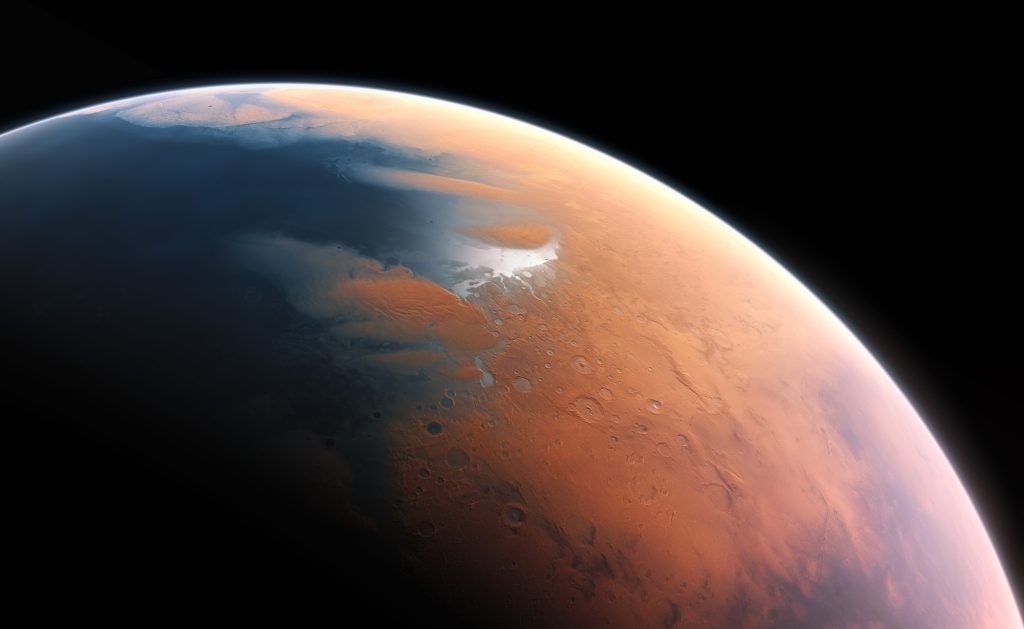
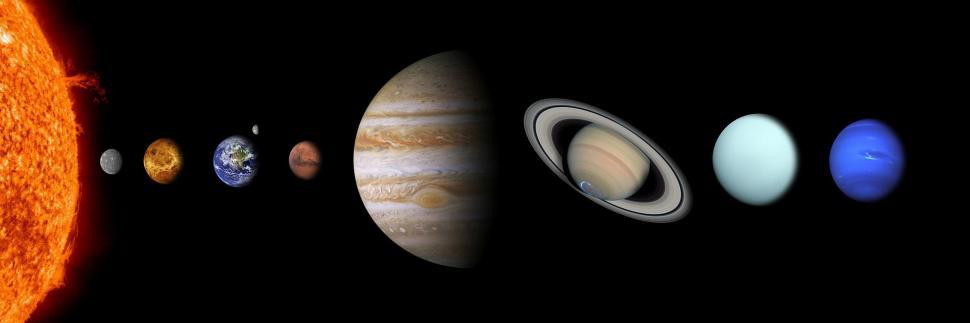
Instead of a direct Hohmann transfer, ESCAPADE will head to the Sun-Earth Lagrange Point 2, loiter for about a year, then slingshot toward Mars in 2026. The flexible route, devised by Advanced Space, might allow future missions to avoid narrow launch windows and enable them to “queue up” for planetary alignment. Arrival at Mars is expected in September 2027, to be followed by seven months of orbital fine-tuning.
7. Scientific Impact
Operating in tandem, the probes will provide the first 3D mappings of Mars’ hybrid magnetosphere by tracking the flows of particles and changes in the magnetic field on timescales as short as two minutes. Succinctly, the mission will seek to answer three basic questions what is the shape of the magnetic bubble that surrounds Mars how does solar energy couple to this and how does that coupling drive atmospheric escape? Results will feed into both planetary climate models and strategies for human exploration, where radiation exposure and communication reliability are vital concerns.
8. Secondary Payload: Communications Technology
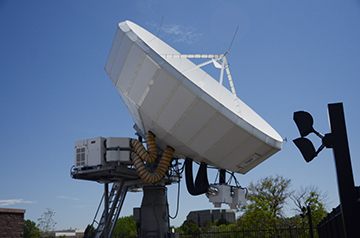
Besides ESCAPADE, the second stage of New Glenn will also carry ViaSat’s InRange telemetry relay demonstration as part of NASA’s Communications Services Project. The experiment will test commercial relay capabilities for use on future missions and hopefully reduce dependence on NASA-operated relay networks.

The NG-2 mission embodies advanced rocket engineering, innovative planetary science, and complex regulatory navigation. When weather and policy align, it will mark a milestone in both Blue Origin’s commercial ambitions and NASA’s low-cost interplanetary exploration strategy.


