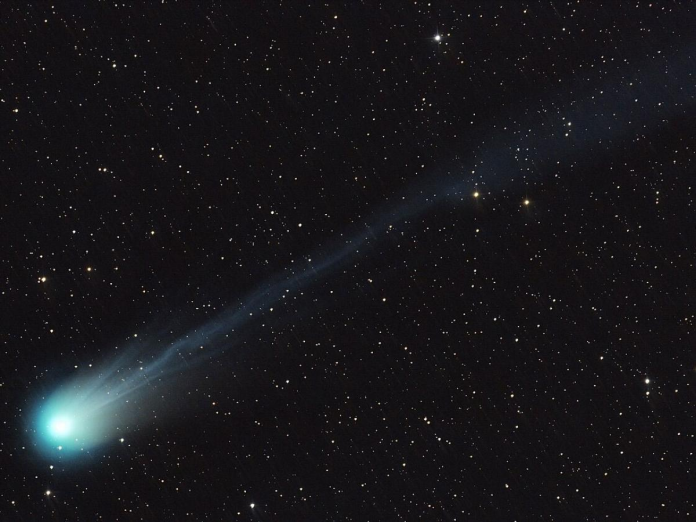
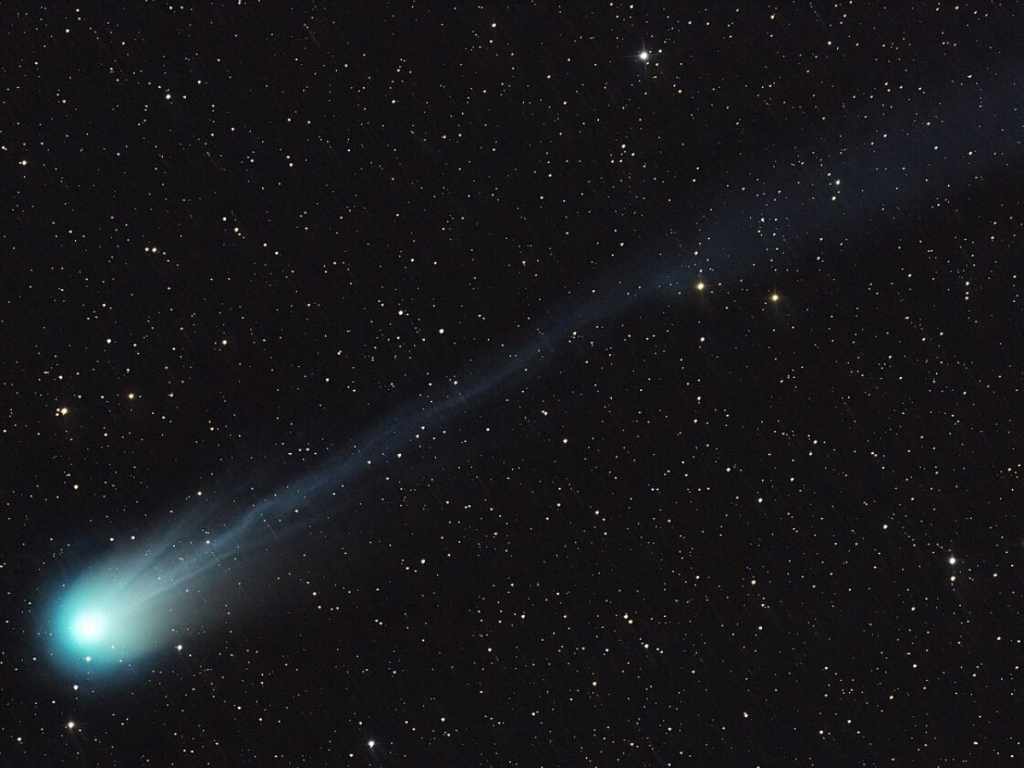
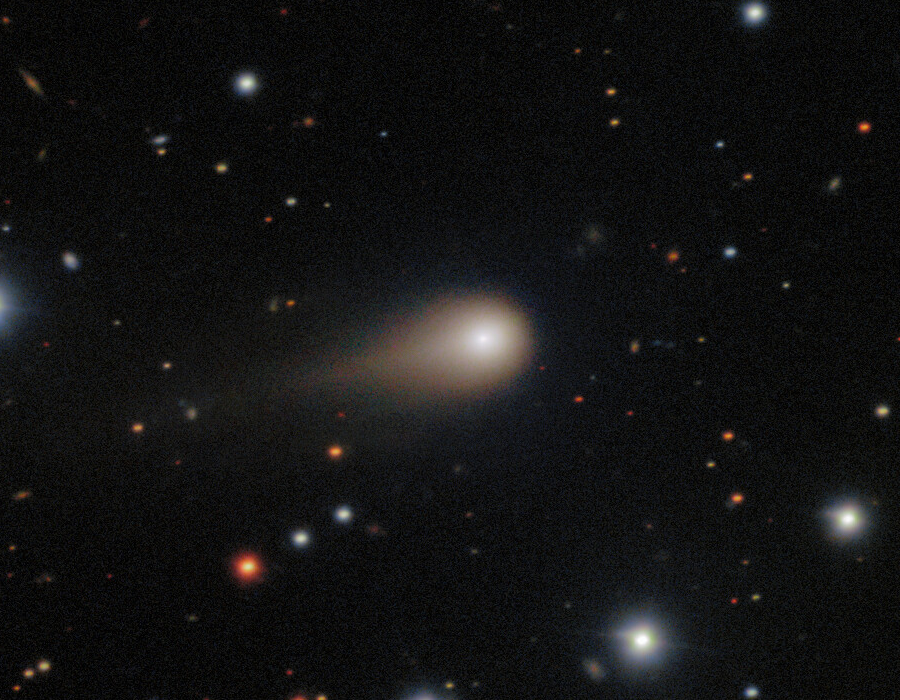
Could a comet be concealing an engine? That is the question now hovering over 3I/ATLAS, the third confirmed interstellar object to pass through our Solar System, after scientists detected a non‑gravitational acceleration and a striking blue coloration near its closest approach to the Sun. The findings have stirred both excitement and debate, blending the physics of cometary outgassing with speculation about possible technological origins.
1. Detection of Non‑Gravitational Acceleration
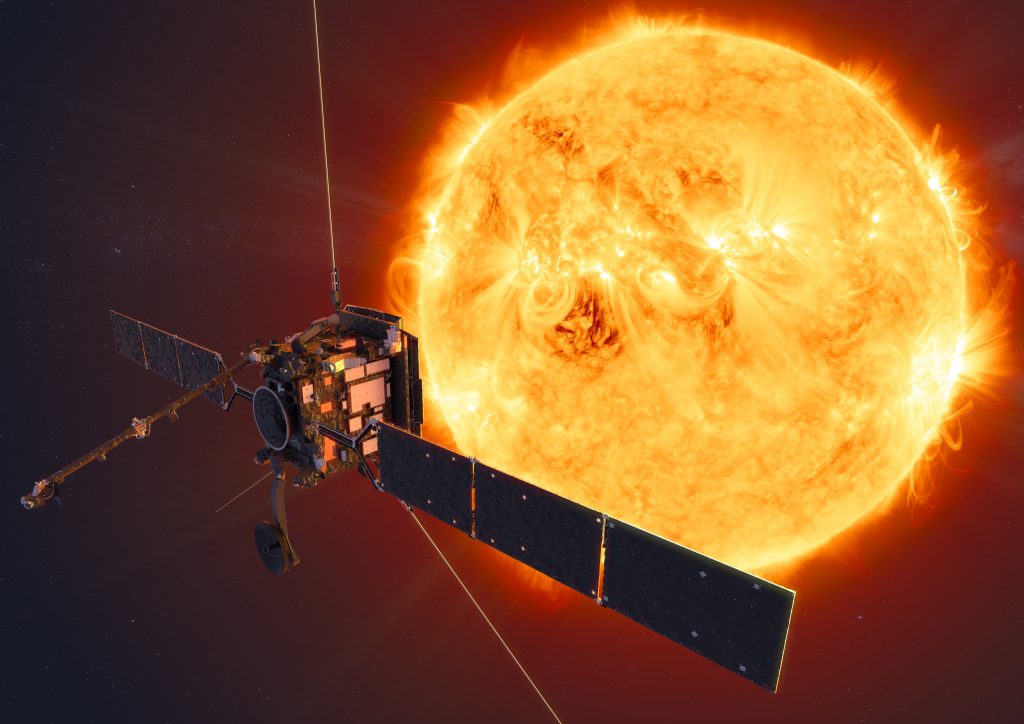
On October 29, 2025, at a perihelion distance of 1.36 astronomical units-about 203 million kilometers-navigation engineer Davide Farnocchia at NASA’s Jet Propulsion Laboratory measured a radial acceleration of 135 kilometers per day² away from the Sun and a transverse acceleration of 60 kilometers per day². These deviations from purely gravitational motion suggest a force acting on the comet’s nucleus. In natural comets, such forces typically arise from what has been termed the “rocket effect,” in which sublimating ices eject gas and dust, imparting momentum to the body.
2. Outgassing Physics and Mass Loss Estimates
Calculations of momentum conservation suggest that if 3I/ATLAS is accelerated by thermal ejection at several hundred meters per second its evaporation half‑life would be approximately six months. That means that it will lose about 10% of its mass the equivalent of 3.3 billion tons during the month it spends near perihelion, generating a giant gas plume. That should be detectable by instruments in November and December 2025 ESA’s Juice spacecraft is expected to make early measurements before Hubble, Webb, and hundreds of ground‑based telescopes take over during its December 19 closest approach to Earth.
3. Brightening Beyond Natural Expectations
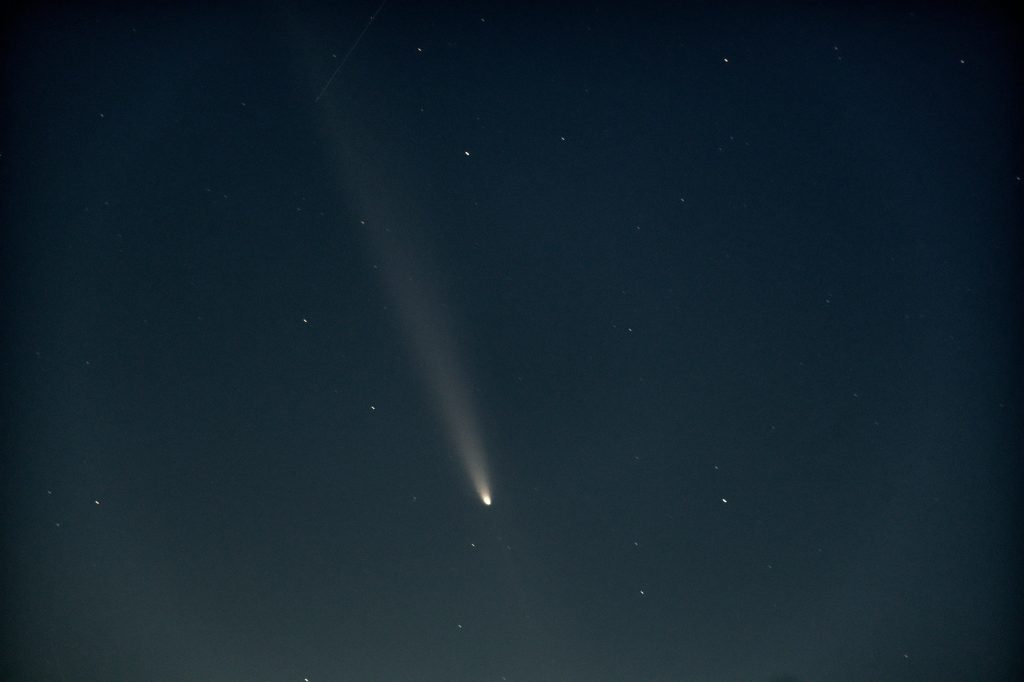
Observations made by STEREO, SOHO, and GOES‑19 revealed that 3I/ATLAS was brightening with distance from the Sun in accordance with an inverse power law of −7.5-a slope much steeper than the −2 to −3 characteristic for comets. Indeed, such rapid brightening might be powered by outgassing of volatile‑rich material. Yet, that scenario also opens up other possibilities for energetic processes. If the comet is losing mass at the calculated rate, its coma should grow very large and be readily visible.
4. The Blue Color Anomaly
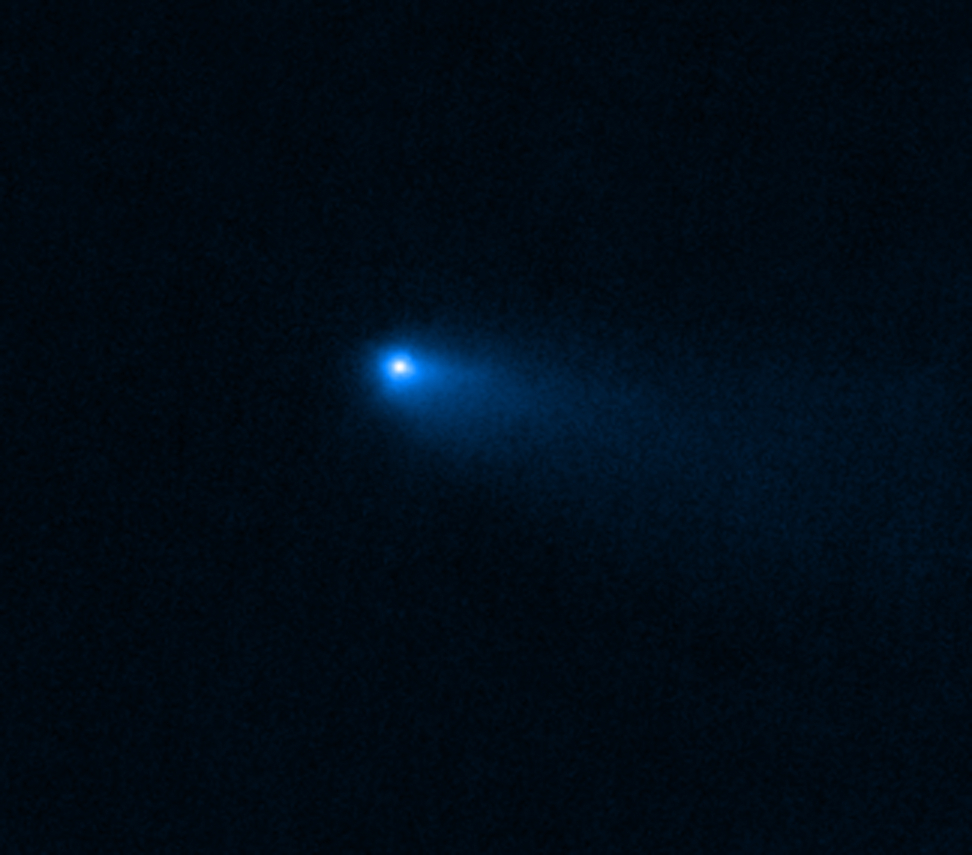
Near perihelion, 3I/ATLAS appeared bluer than the Sun an unusual occurrence for a comet. Dust scattering should redden reflected sunlight, and the comet’s surface temperature should be well below the Sun’s 5,800 K photosphere. The blue shift could be due to emission by ionized carbon monoxide, a natural process detectable via spectral analysis, or from an artificial light source or hot propulsion system.
5. Spectral Analysis and Ionized Molecules
Spectroscopy from missions like SPHEREx has identified carbon dioxide, carbon monoxide, and water ice in the comet’s coma. Ionized CO-emissions arise when solar wind electrons are stripped away from CO molecules these are powerful at shorter wavelengths and might explain why the cometary emission appears blue. Detection of such ions depends on having instruments sensitive enough to resolve such faint emission lines against the continuum spectrum of the comet.
6. Instrumentation and Observation Campaigns
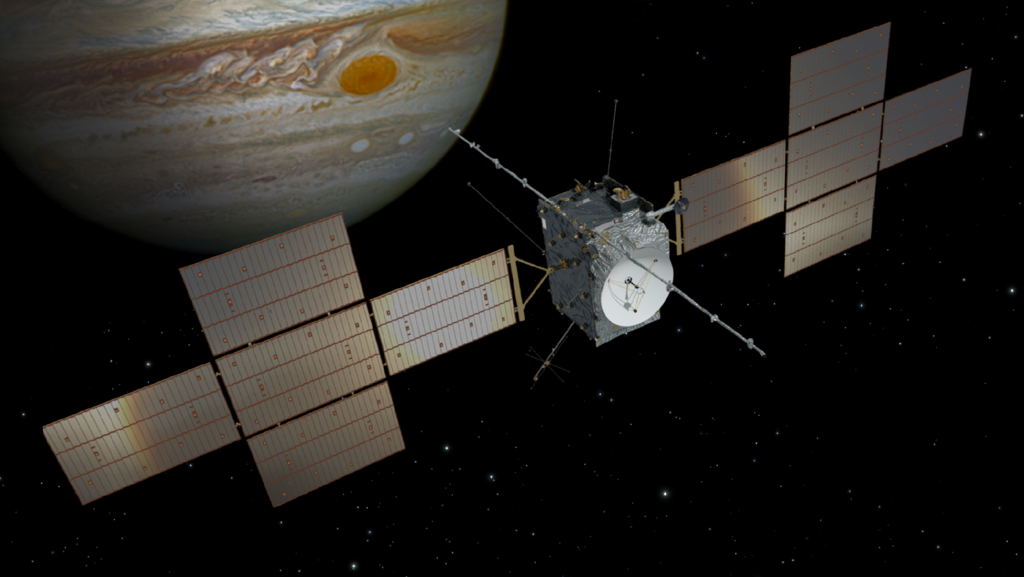
ESA’s Juice spacecraft, with its high‑resolution imaging spectrometers and particle detectors, will try to quantify the composition and density of the coma. Mars‑orbiting spacecraft like the ExoMars Trace Gas Orbiter have already taken distant images of the comet, although 10,000 to 100,000 times fainter than typical targets. Missions ranging from Parker Solar Probe through Europa Clipper may pass through 3I/ATLAS’s ion tail, the region where charged particles from the Sun interact with outgassed material.

7. Anomalies and Statistical Improbabilities
The blue glow and acceleration join a list of nine anomalies that include an anti‑tail pointing sunward, extreme nickel‑to‑iron ratios in the gas plume, low water content, and unusual polarization properties. Avi Loeb has calculated that the odds of all these anomalies arising naturally are vanishingly small. Critics counter that comets often show non‑gravitational accelerations and compositional diversity, and that extraordinary claims require extraordinary evidence.
8. Engineering Perspective on the Rocket Effect
From an engineering perspective, the rocket effect in comets is a low‑thrust propulsion system. The measured accelerations of 3I/ATLAS are small-nearly ten Earth radii of trajectory deviation over a month-but sustained thrust from asymmetric outgassing may measurably change its orbit. Were that propulsion artificial, it would also require very precise control over mass ejection rates and vectoring, similar to spacecraft attitude control systems.
9. Tests of Hypotheses
Ahead November and December 2025 will be the telling months when a telescope can confirm whether this giant coma is present or absent in which case, that would be a strong case for a non-natural origin. If it exists, detailed spectral and photometric data will help constrain the volatile inventory and physical processes driving the acceleration and color change. Whether 3I/ATLAS is an icy relic from a distant star system or something more engineered, the next few months offer an unprecedented opportunity to study the interplay of cometary physics, interstellar chemistry, and perhaps technological signatures.


