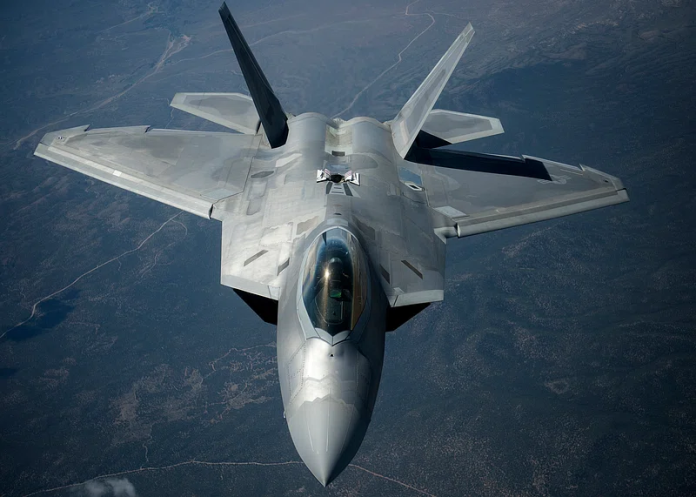
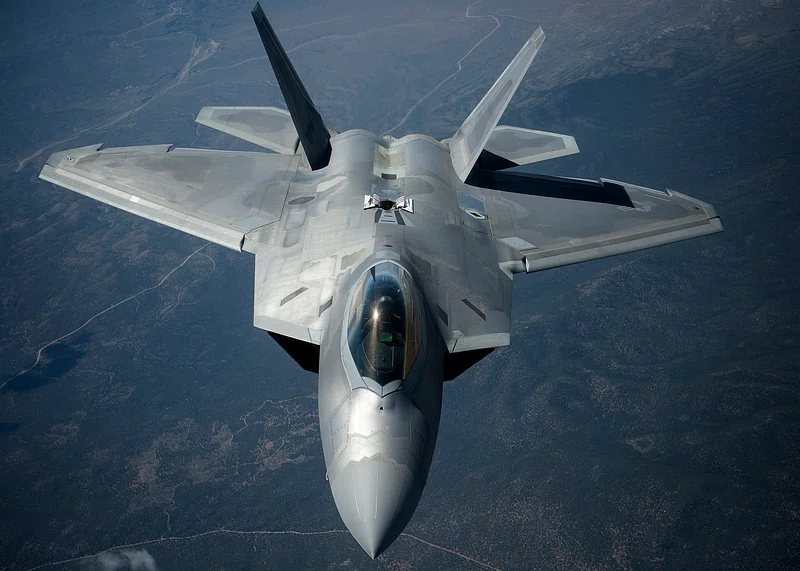
What still keeps a 1990s-designed aircraft the standard for air dominance in 2025? In a world where foes also possess stealth fighters and drone warfare is redefining war zones, the Lockheed Martin F‑22 Raptor stays on an exclusive level. It is not merely an era product it is a platform whose engineering vision has stayed ahead of its own time in air dominance.
Designed from the Advanced Tactical Fighter program of the U.S. Air Force, the Raptor was meant to rule the skies over any possible adversary. Even though its lifespan in production was truncated, its mating of stealth, speed, maneuverability, and sensor fusion has been iterated upon continuously. The outcome is a combat-proven aircraft whose versatility has only gained momentum in the framework of great-power competition reviving.
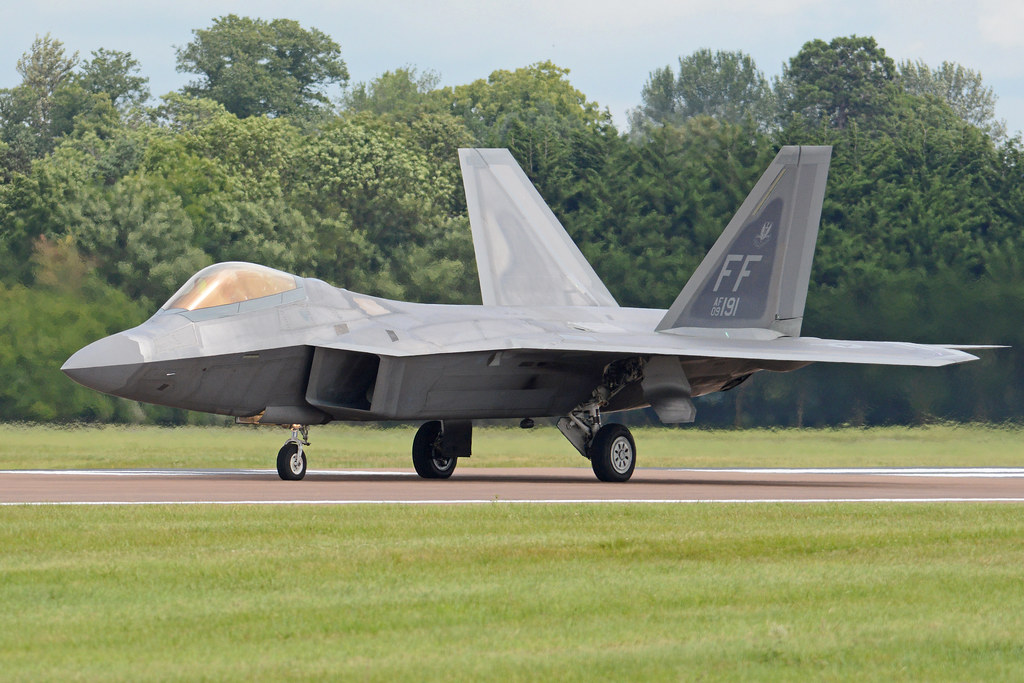
This anthology examines seven distinctive attributes that make the F‑22 unique, from its radar-evading design to its evolving role in modern warfare.
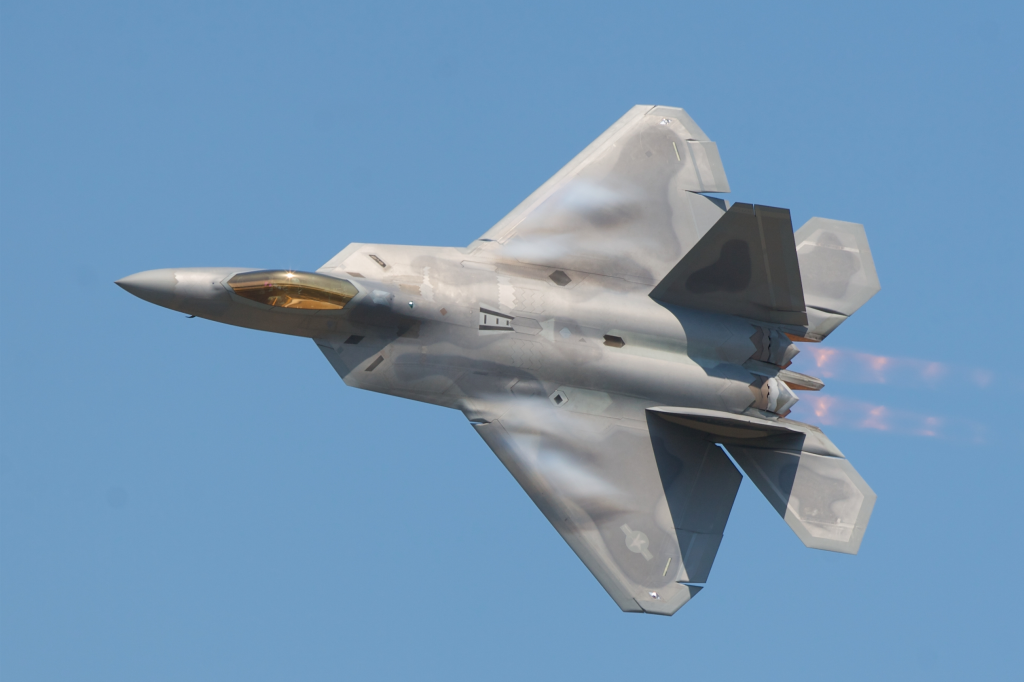
1. Stealth as a Design Imperative
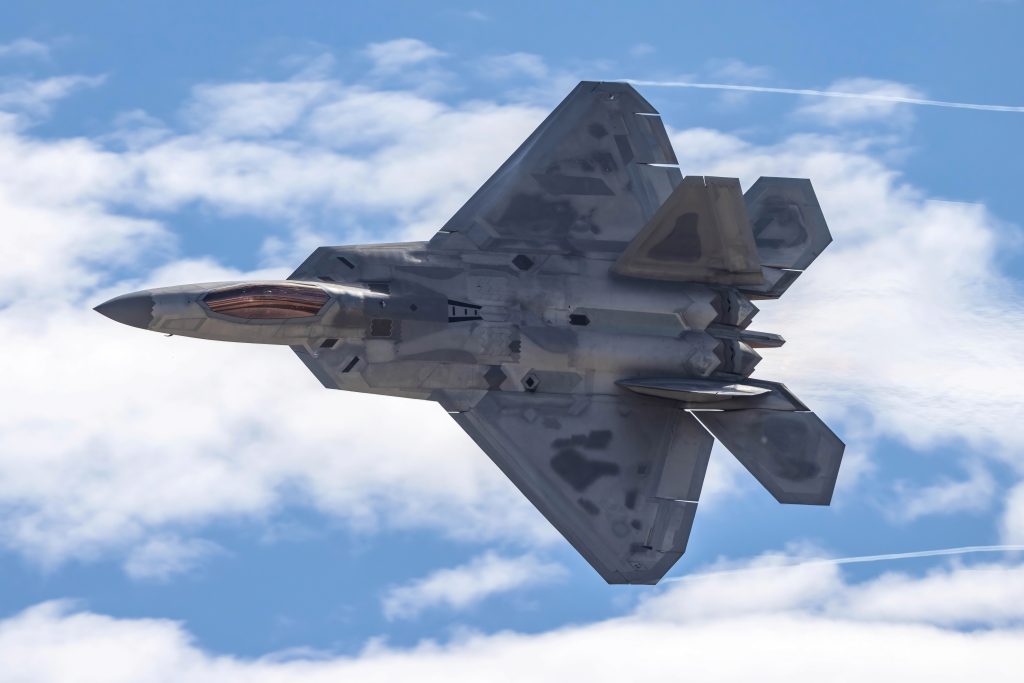
Stealth in the F‑22 is not an add-on but the basis of its design. Every edge, intake, and nozzle is slanted to diffuse radar waves, with sweeping curves that bounce direct returns away from hostile receivers. Four internal armament bays ensure a clean silhouette, avoiding the radar signature penalties of external carriage. Radar-absorbent material (RAM) bursts also help to reduce detectability, reportedly reducing its frontal radar cross-section to that of a steel marble. As Lockheed Martin designers have demonstrated, this combination of shaping and judicious application of RAM allows the Raptor to be invisible and fast simultaneously a capability the likes of China’s J-20 have not been able to accomplish without compromise.
2. Supercruise and Thrust‑Vectoring Agility
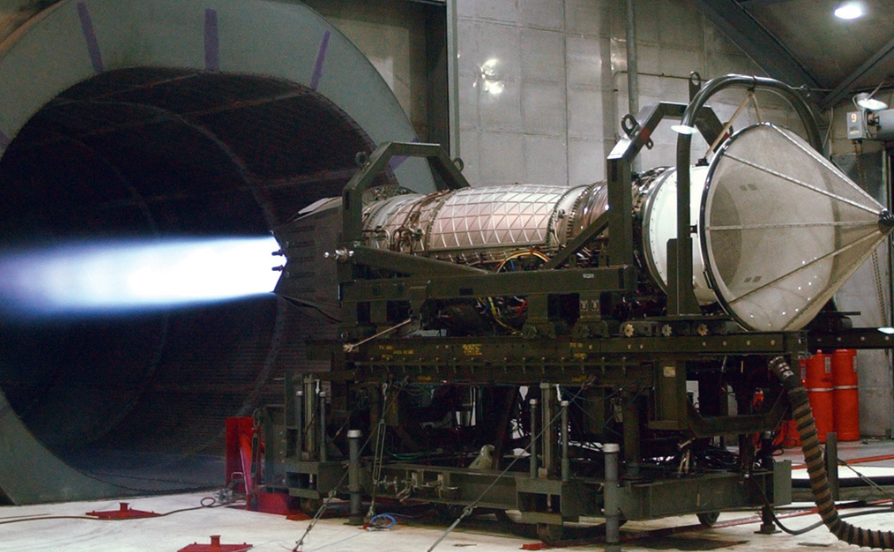
The Raptor is capable of sustained speeds over Mach 1.5 without the use of afterburners, a characteristic known as supercruise. This allows rapid repositioning over long distances without fuel consumption and infrared signature reduction. Its two Pratt & Whitney F119 engines employ two-dimensional thrust-vectoring nozzles, rotating exhaust through 20 degrees. This yields post-stall maneuvers and maneuverability at high angles of attack, enabling pilots to fire weapons against targets faster than targets in close combat. The coupling of stealth, speed, and agility creates a performance envelope that no current operational fighter can equal.
3. Sensor Fusion Ahead of Its Time
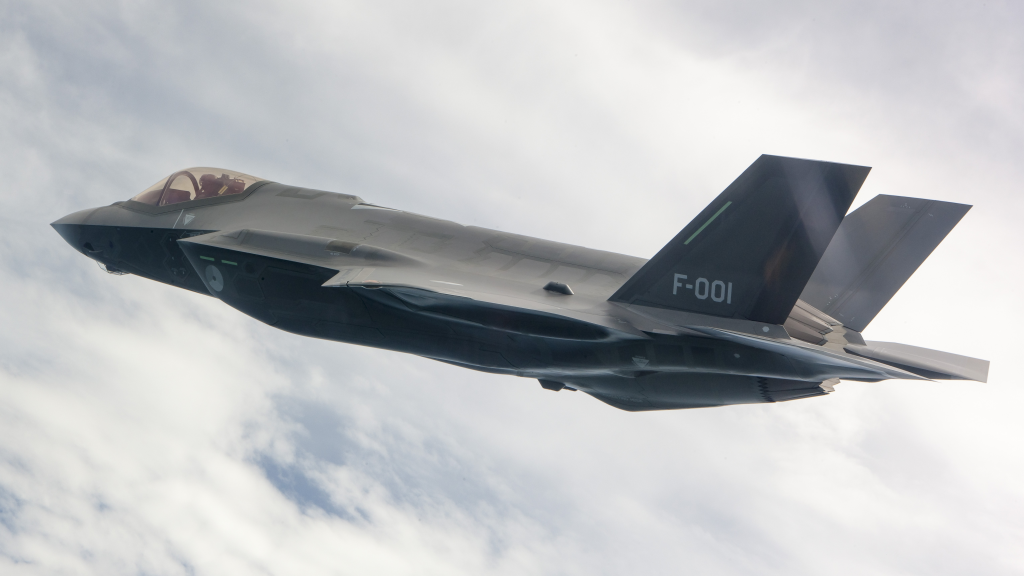
Years before the F‑35 put the term into the mainstream, the F‑22 was merging data from multiple sensors into a single coherent view of the battlespace. Its AN/APG‑77 Active Electronically Scanned Array radar delivers rapid, wide-area scanning and low-probability-of-intercept modes, allowing it to follow targets without warning them. Complemented by an advanced electronic warfare system, the system provides the pilot with a complete picture of airborne and ground threats. This “quarterback in the sky” ability enables the Raptor to call in strikes, cue friendly assets, and possess situational awareness that cannot be matched by adversaries.
4. Dedicated Air Superiority Lethality
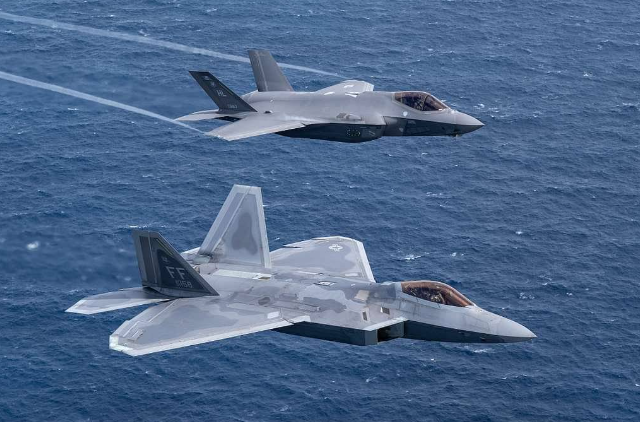
The F‑22 was designed for air-to-air combat and carries six AIM‑120 AMRAAMs and two AIM‑9 Sidewinders in its internal bays. At high speed and altitude, it can fire missiles with greater initial energy, extending the range and reducing the enemy’s reaction time. In simulated and real combat, this has translated into the ability to take out threats before the threat can return fire. The philosophy is made real avoid even battles, negotiate terms, and triumph.
5. Combat Record and Operational Versatility
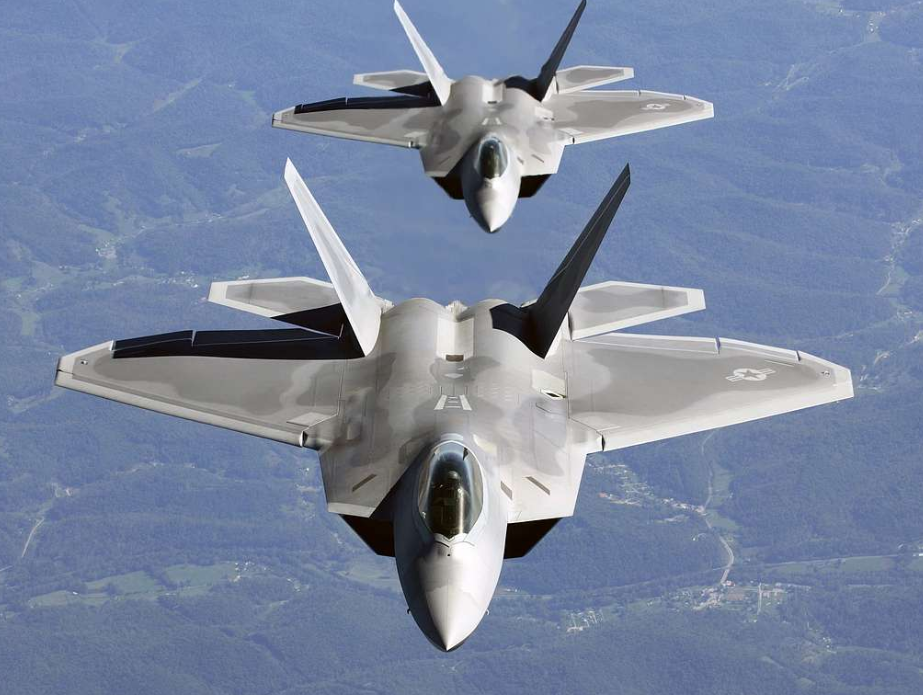
Though intended for peer-to-peer air combat, the Raptor has proved adaptable. In Operation Inherent Resolve, it performed 204 sorties between September 2014 and July 2015, striking 60 ISIS targets with 270 precision-guided munitions. It also performed surveillance, relayed target data to other aircraft, and stood watch against possible enemy aircraft in contested airspace. Most recently, it shot down a Chinese spy balloon over the Atlantic, highlighting its worth for home defense. The missions also show its versatility to transition from air dominance to strike and intelligence missions.
6. Continuous Modernization for Future Threats
The U.S. Air Force has invested a great deal of money keeping the F‑22 ahead of challengers until the 2030s, when the Next Generation Air Dominance fighter becomes operational. All upgrades include Increment 3.2B software with high-resolution synthetic aperture radar mapping, threat location, enhanced electronic attack, and integration of the AIM‑120D and AIM‑9X missiles. Recent additions include infrared search and track (IRST) systems, stealth external fuel tanks, and Link 16 networking to allow interface with legacy aircraft. The Reliability, Availability, and Maintainability Program adds power system, avionics, and low-observable coatings enhancements to provide sustained readiness.
7. Strategic Value Amid Limited Numbers
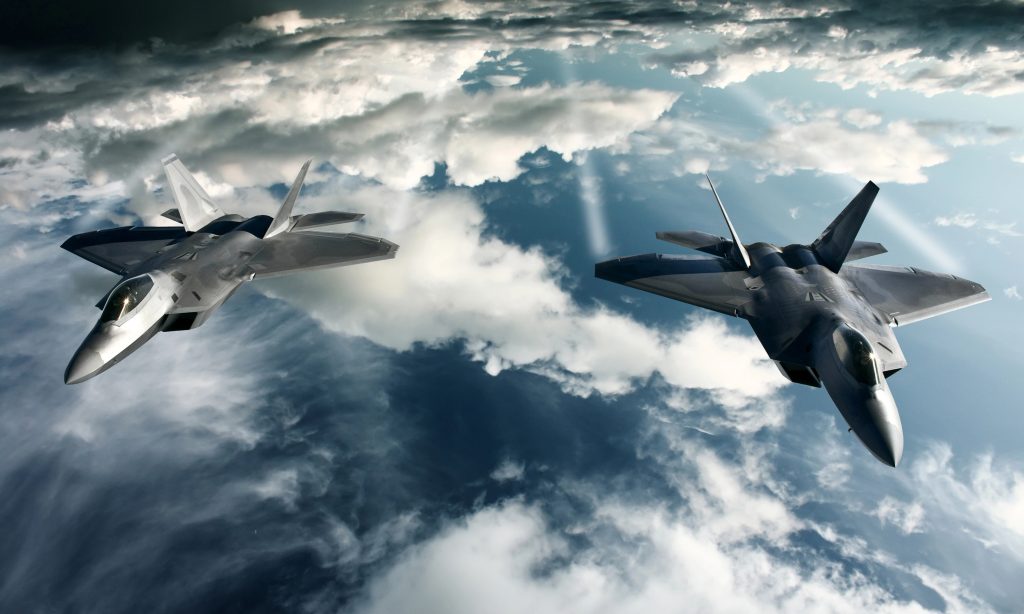
With fewer than 185 Raptors flying, quantity is its only weakness. Cancellation of production is widely regarded by defense analysts as a strategic mistake. But the plane’s peerless capabilities make it remain at the center of U.S. airpower strategy, particularly in the Indo‑Pacific. Its ability to clear the skies for other systems is that it is a force multiplier, and modernization makes certain it will be effective against sophisticated threats well into the next decade.
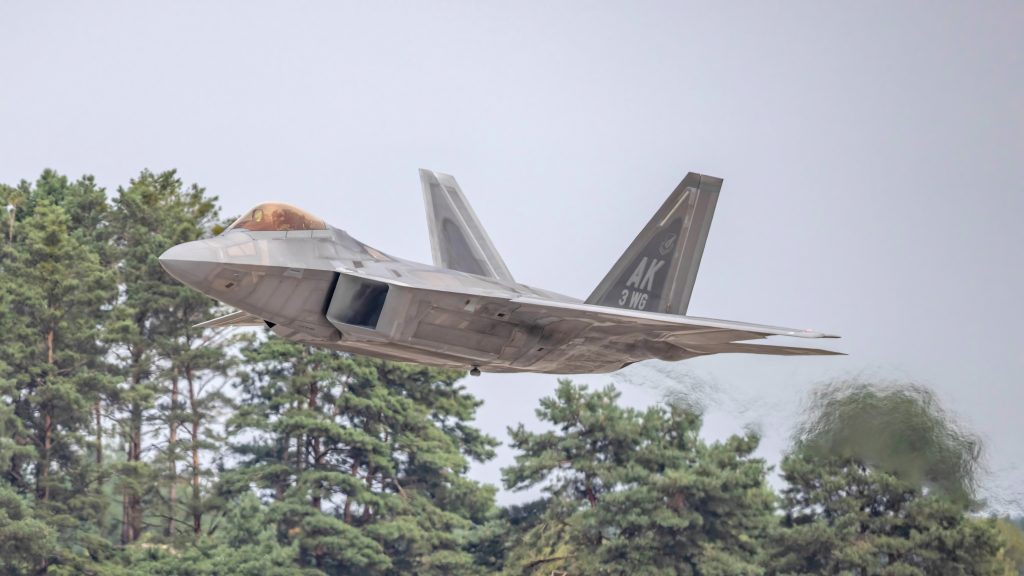
The F‑22 Raptor’s persistent supremacy is the product of visionary design, constant refinement, and combat-proven performance across a broad mission spectrum. Its fleet size is low, but its effect on tactical combat and strategic deterrence is out of proportion. In a world of air superiority where the domains are increasingly contested, the Raptor’s message to the U.S. Air Force is clear: some apex predators never lose their bite.


