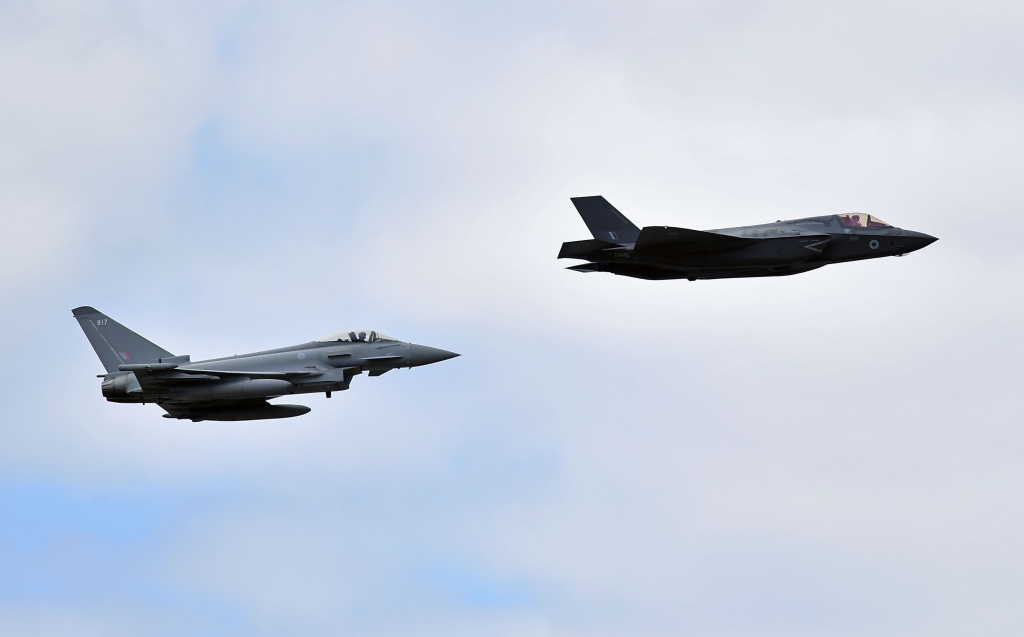
The Eurofighter Typhoon occupies an awkward but important place in modern air combat. It is not a stealth aircraft, it arrived after the Cold War had already reshaped European procurement, and it now flies beside fifth-generation platforms that were designed for a different kind of fight. Yet the Typhoon has not been pushed aside. It remains one of Europe’s central combat aircraft because it combines speed, agility, a heavy weapons load, and a steady stream of upgrades that keep it relevant in roles stealth jets do not always perform most efficiently.
1. It was built for air superiority first
The Typhoon began life as a multinational European answer to the need for a fast, agile fighter optimized for controlling airspace. Its canard-delta layout, relaxed stability, and digital fly-by-wire system were all chosen to make the aircraft highly maneuverable across a wide speed range. That origin still defines the jet today. Even as the aircraft matured into a multirole platform, its reputation remained strongest in air-to-air work. With a top speed of Mach 2.35, supercruise ability, and a high thrust-to-weight ratio, the Typhoon was designed to enter a fight with energy and keep it.
2. The real story is not stealth versus non-stealth
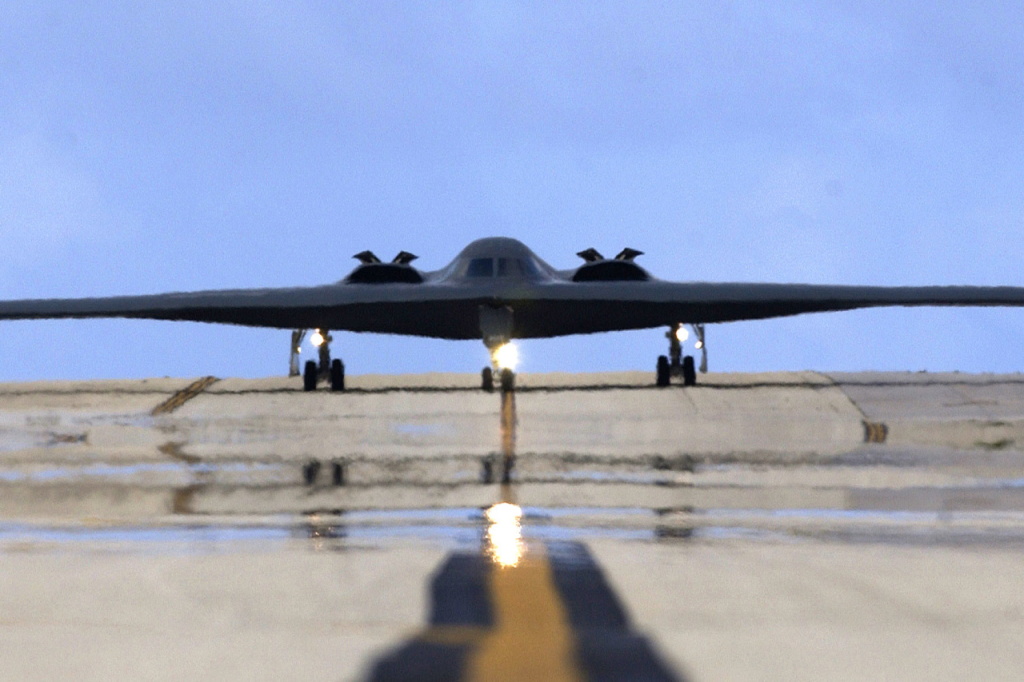
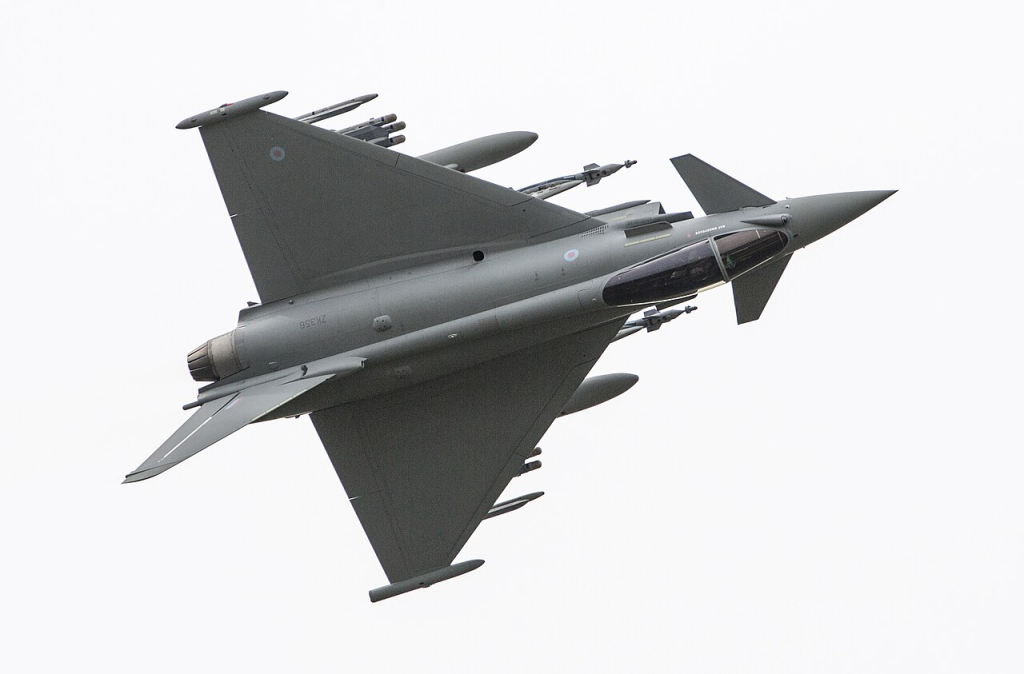
The usual comparison misses the point. The Typhoon cannot be turned into a stealth fighter because its basic shape and external weapon carriage were never meant for that mission. Its value instead comes from force mix. In that model, stealth aircraft move forward into the most heavily defended airspace while Typhoons operate farther back, carrying more missiles, expanding air defense coverage, and using networked targeting data to join the fight without taking on the highest-risk penetration role. That is why the jet still fits into NATO planning even as F-35 fleets grow.
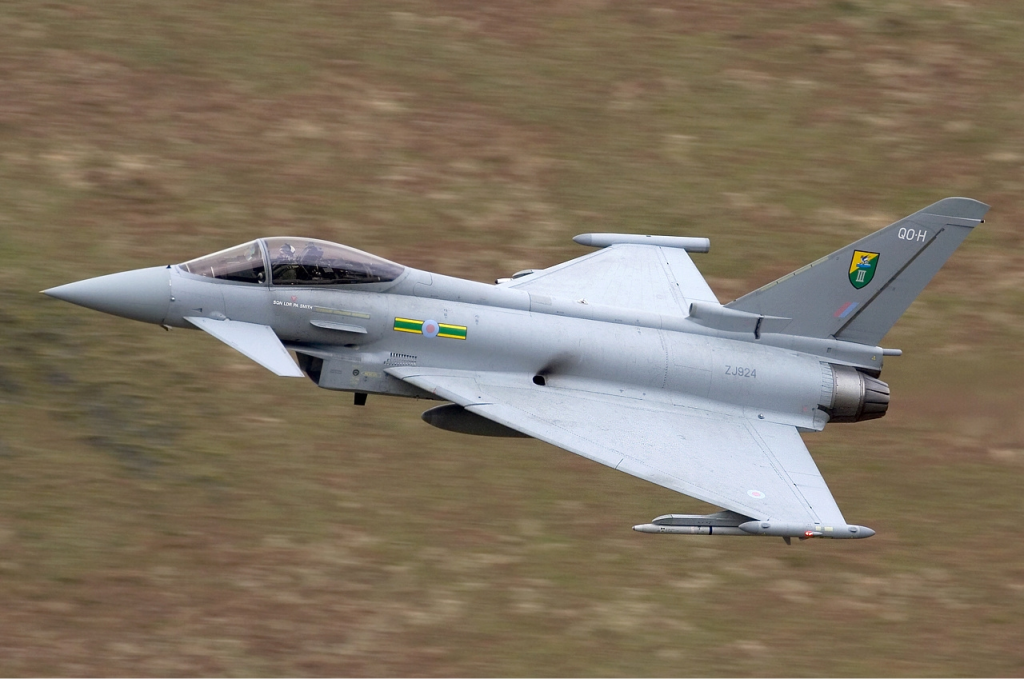
3. Its missile load remains a major advantage
The Typhoon’s 13 hardpoints and payload of nearly 19,800 pounds give it a role that many air forces still need: a fast missile carrier that can arrive with a large magazine. In practical terms, that means it can support air superiority patrols, homeland defense, and long-endurance alert missions without depending on stealth to stay useful.
That role becomes more significant when paired with long-range weapons. The Meteor missile gives the Typhoon a beyond-visual-range punch built around a range in excess of 200 kilometres, a ramjet propulsion system, and a two-way datalink for mid-course updates. For a fighter designed around speed and high-energy maneuvering, that combination matters.
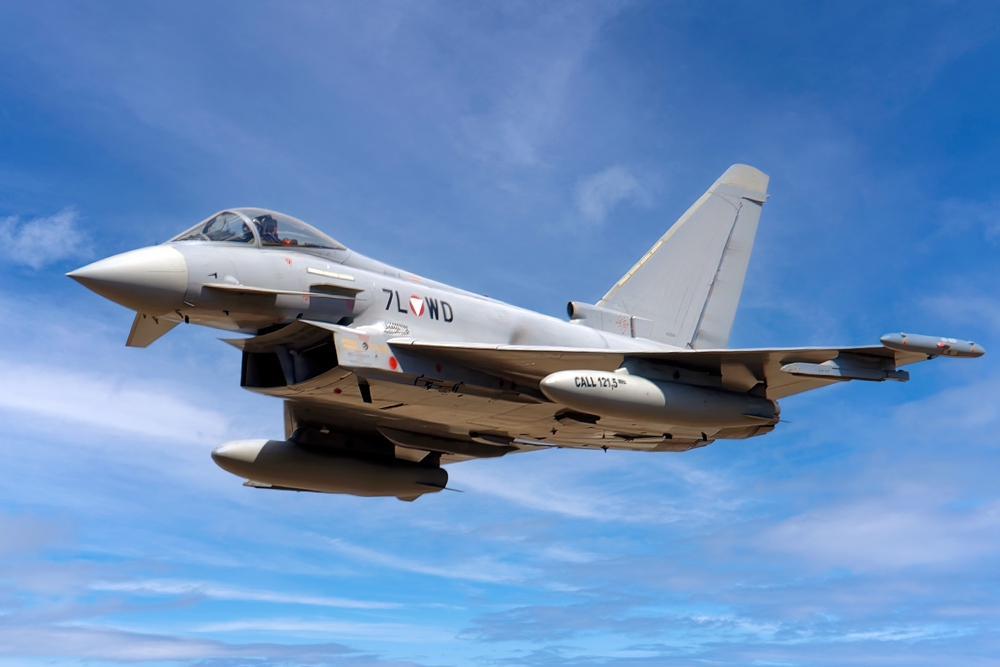
4. Sensors and electronic warfare are carrying the next phase
Much of the Typhoon’s future depends less on raw aerodynamics than on what sits behind the radome. The aircraft’s upgrade path has moved toward better sensor fusion, stronger electronic warfare functions, and broader integration with other platforms. That is the part of the story that will determine how useful it remains through the 2030s.
The clearest sign is the new radar effort. Britain has moved into full production for the ECRS Mk 2 radar, a system designed to improve detection, tracking, and electronic warfare performance. According to the announced plan, 40 Typhoon Tranche 3 aircraft are to receive the capability by about 2030. That matters because a non-stealth fighter survives longer when its sensors and jamming options improve faster than the threat.
5. Europe is still buying it for a reason
The Typhoon is not a legacy fleet being kept alive only out of habit. Germany, Spain, Italy, and export users have all continued to invest in new production, upgrades, or both. The aircraft’s total procurement had reached 680 aircraft as of November 2023, and subsequent orders have pushed the program further into the future. That continuing demand reflects a simple industrial and operational reality. European air forces need an aircraft they can sustain, upgrade, and integrate with their own weapons and support structures while sixth-generation programs remain years away from service.
6. Its weaknesses are real and cannot be ignored
The Typhoon is not a universal answer. It remains less suitable for penetrating dense modern air defense networks than a stealth platform, and some of its history shows the friction that comes with a multinational program: delays, support complexity, and uneven modernization timelines.
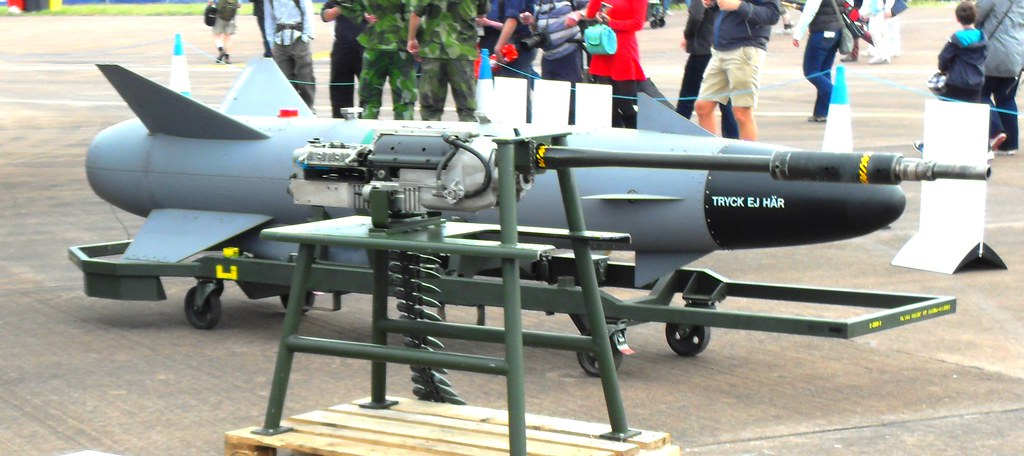
Its internal 27 mm cannon has also drawn attention for reliability concerns, with former RAF pilot Mike Sutton writing that the gun jammed during a strafing run in Syria. That detail does not define the aircraft, but it does underline a broader truth about the Typhoon: it is strongest when used as a high-end networked fighter, not as a simple all-purpose substitute for every mission.
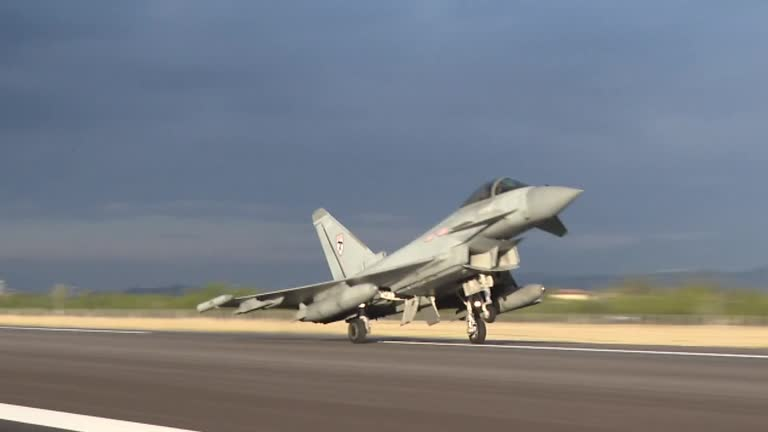
The Eurofighter Typhoon still matters because it solves a problem stealth fleets do not solve alone. It can defend airspace, carry a large missile load, absorb new sensors, and work as the visible, heavily armed partner to lower-observable aircraft. That is not a temporary workaround. It is the operating logic that has kept the Typhoon relevant long after the stealth era began.


