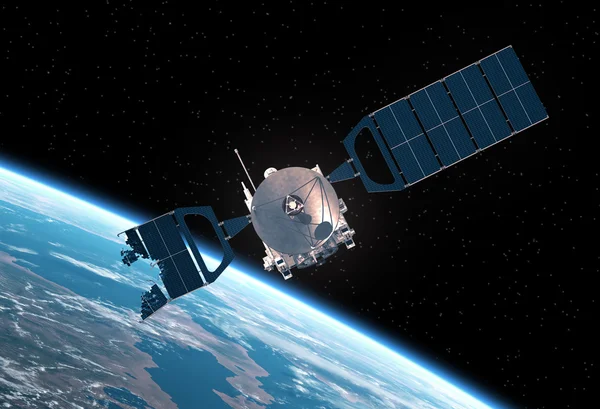
Low Earth orbit depends on a quiet bargain: spacecraft keep moving, operators keep steering, and the atmosphere stays predictable enough for collision warnings to mean something. A severe solar storm can strain all three at once. That is why a recent orbital-risk metric has drawn attention. In a worst-case loss of maneuvering and reliable tracking, researchers estimated the first collision in crowded low Earth orbit could arrive in as little as 5.5 days in 2025, while another account of the earlier preprint version highlighted regions near 500 kilometers where the average time could fall to 2.8 days. The larger point is not a countdown to catastrophe, but how little margin now exists in heavily used orbital bands.
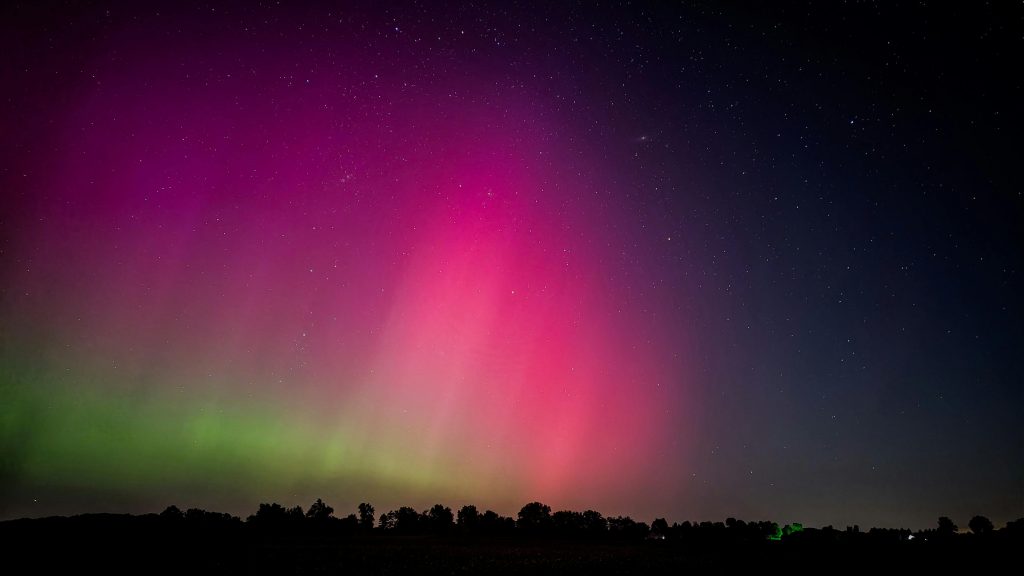
1. A solar storm can make satellite positions suddenly less predictable
When geomagnetic activity surges, Earth’s upper atmosphere heats and expands. That increases drag on satellites in low Earth orbit, changing their motion faster than normal forecasting systems expect. Researchers described this as one of the most dangerous moments for conjunction analysis because objects that usually follow well-characterized paths begin drifting with much larger uncertainties. During the G5 geomagnetic storm in May 2024, the thermosphere expanded enough to affect thousands of satellites, forcing some spacecraft into safe mode and pushing others to spend more power maintaining orbit. In that environment, collision avoidance becomes harder not because satellites stop moving, but because the confidence in where they will be starts to erode.
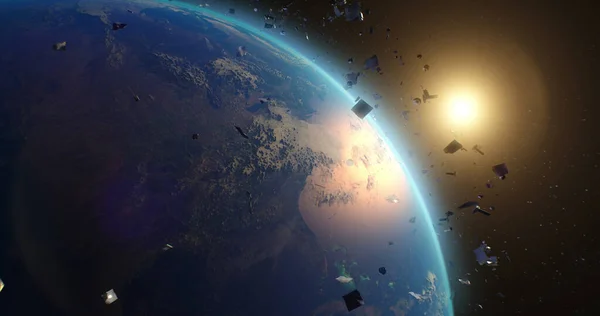
2. The “Crash Clock” measures stress, not a full debris cascade
The new metric is easy to misread. It does not claim that a Hollywood-style chain reaction begins in a few days, and it does not simulate the entire long-term evolution of secondary collisions. Instead, it asks a narrower engineering question: if avoidance maneuvers stop during a severe disruption, how long until the first collision is likely? Sarah Thiele told IEEE Spectrum, “We only look at the timescale to the first collision we don’t simulate secondary or tertiary collisions.” That framing turns the result into a measure of orbital fragility. A shorter clock means the system is operating with less tolerance for errors, software failures, communication loss, or space-weather-driven confusion.
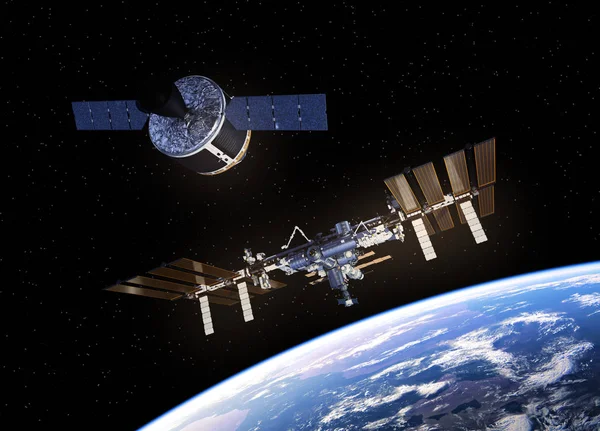
3. Crowded orbital shells have changed the risk picture in only a few years
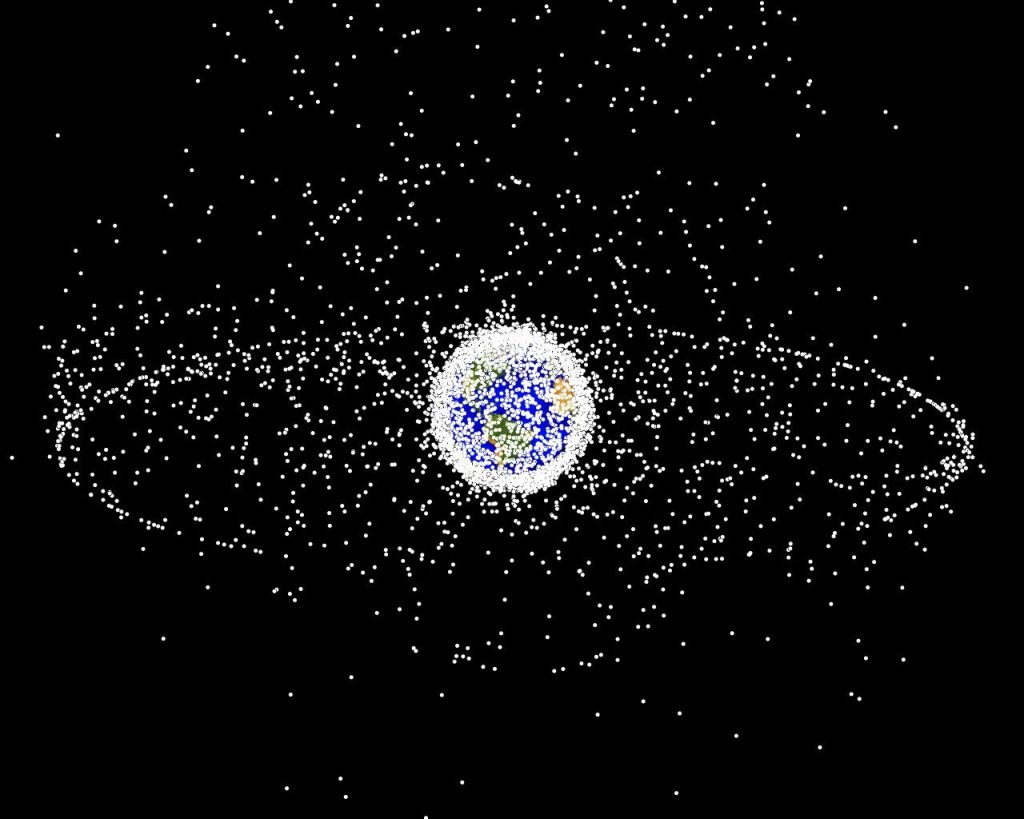
The sharp drop in estimated time to first collision reflects a more crowded orbital environment. Low Earth orbit now hosts thousands of active satellites alongside tracked debris, spent rocket hardware, and many smaller fragments that cannot be routinely tracked but can still disable a spacecraft. One comparison from the researchers showed how quickly conditions have tightened: the warning metric was far longer for 2018 than for 2025. That shift tracks the rise of large constellations and the concentration of spacecraft in specific altitude bands. In operational terms, it means orbital safety increasingly depends on continuous maneuvering, rapid data exchange, and accurate models rather than on wide natural spacing between vehicles.
4. The most dangerous debris is often the debris nobody can track well
Public discussion often focuses on big cataloged objects, but operators worry just as much about smaller fragments. These pieces may be too small for regular tracking yet large enough to cripple attitude control, puncture critical surfaces, or end a mission outright. Aaron Boley told IEEE Spectrum that “The biggest risk on orbit is the lethal non-trackable debris.” That concern matters because a solar storm does not merely raise the odds of one satellite hitting another active satellite. It also complicates the prediction of encounters with an already existing debris population whose full extent is not visible in routine tracking networks.
5. Not every altitude behaves the same way
Altitude determines whether space junk lingers for years or for centuries. Below roughly 600 kilometers, atmospheric drag acts as a partial cleanup mechanism, gradually pulling debris down. Above that, the process slows dramatically. This is one of the most important engineering distinctions in the entire debate. Research on orbital decay shows that small altitude changes can drastically alter satellite lifetime because atmospheric density falls off steeply with height. Around 800 to 900 kilometers, debris from past breakups can persist for generations, which is why those bands remain a long-term sustainability concern even if lower shells are currently more crowded with active spacecraft.
6. A collision at 550 kilometers would not make orbit unusable overnight
The phrase “Kessler syndrome” often evokes an instant wall of debris. The physics is slower and more uneven. Experts interviewed in the reference material consistently described the process as a gradual degradation of operating conditions, not an immediate lockout from space. Thiele said a catastrophic collision at 550 kilometers would be “an acute injection of debris,” not a “Gravity movie scenario.” That distinction matters for readers trying to separate orbital mechanics from cinematic imagery. The practical consequence would be a more hazardous environment, more avoidance maneuvers, higher operational burden, and more uncertainty for nearby missions.
7. Solar storms affect infrastructure on Earth too, which makes coordination harder
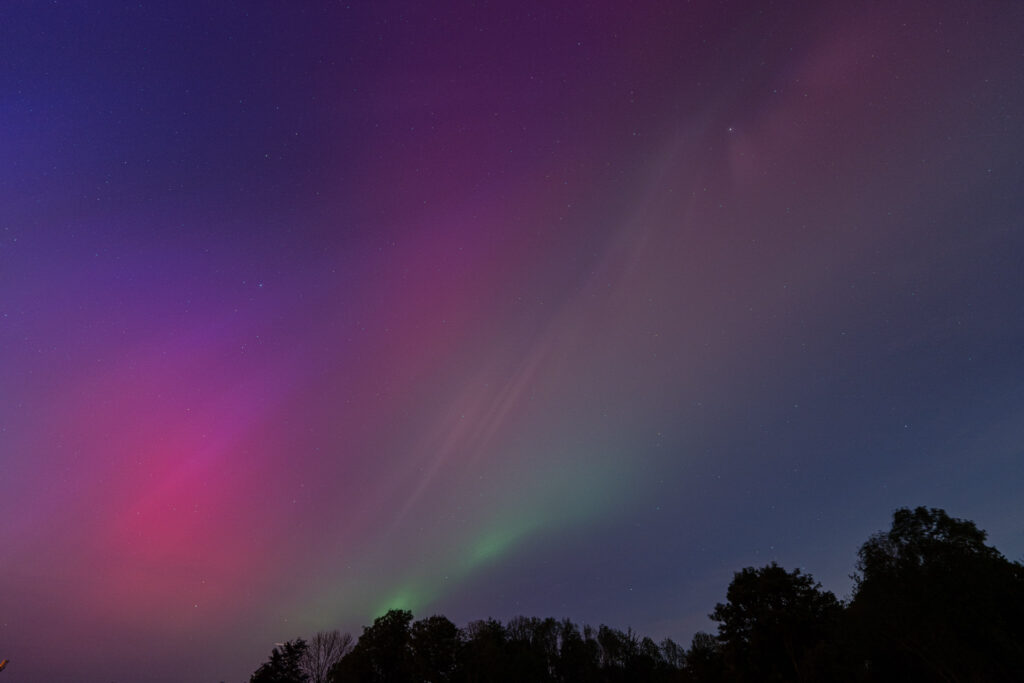
Space weather is not an orbital-only problem. The same solar activity that perturbs satellites can also disrupt navigation, power systems, aviation, and communications on the ground. NASA’s review of the Gannon storm found effects ranging from overheated transformers to disrupted flight operations, while a separate study reported GPS positioning errors of up to 230 feet in parts of the central United States. That overlap matters because severe space weather can degrade the very terrestrial systems used to monitor fleets, schedule responses, and coordinate traffic management during an orbital disturbance.
8. The long-term issue is orbital governance as much as orbital physics
The engineering challenge is no longer just launching satellites safely. It is keeping a shared orbital environment usable as traffic rises. Studies of mega-constellations have repeatedly found that more satellites mean more endogenous encounters within constellations, more exposure to external debris, and a greater chance that one failure can generate a cloud of fragments that raises risk for everyone else. That makes disposal rules, deorbit capability, collision-avoidance systems, and debris-removal planning part of the same story. The orbital environment remains manageable, but only through active stewardship.

The warning embedded in a three-day collision scenario is less about a single solar storm than about how tightly engineered the margin has become in low Earth orbit. A severe solar storm does not guarantee a collision. It does reveal how dependent modern space operations are on uninterrupted tracking, communication, and maneuvering. In that sense, the most important lesson is not the exact number of days. It is that low Earth orbit now behaves like critical infrastructure: densely used, operationally interdependent, and increasingly sensitive to disruptions from the Sun.


