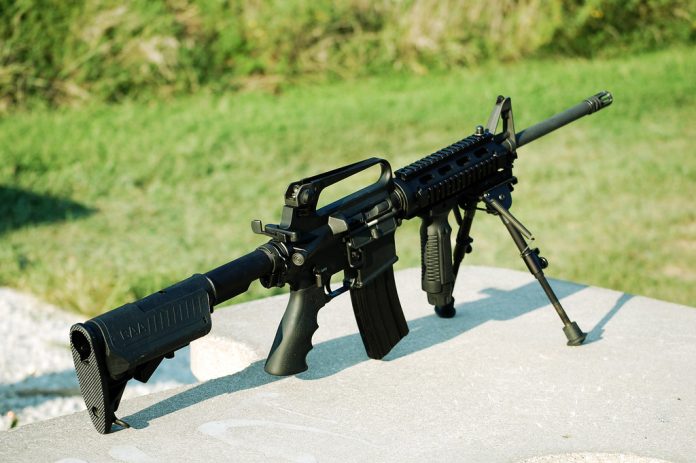
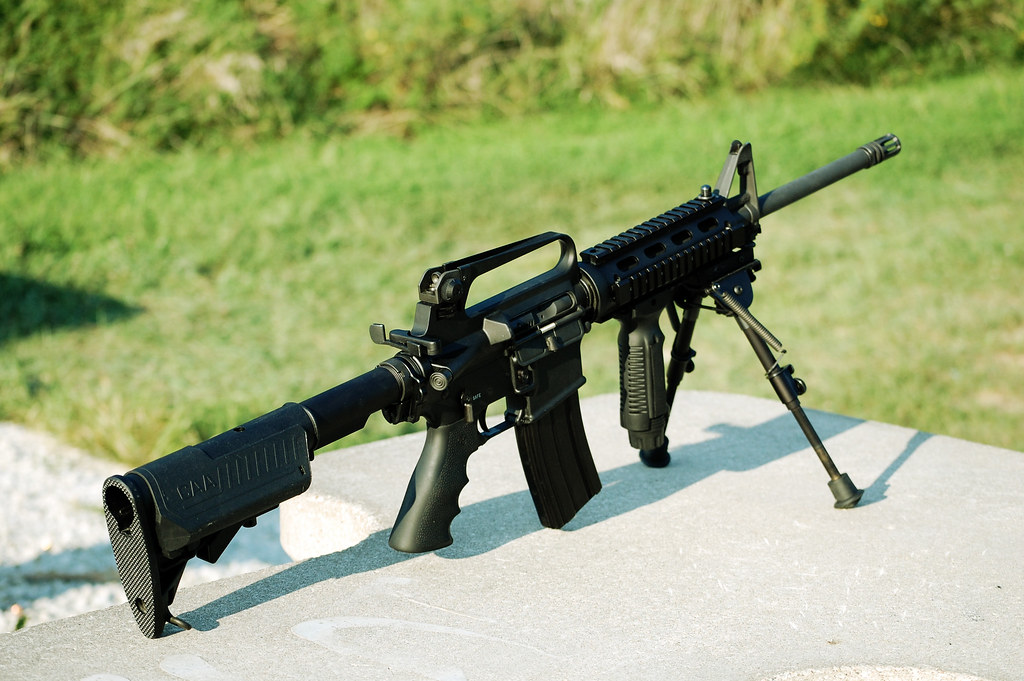
The AR-15 is often described by its outline instead of its mechanics. That shortcut creates confusion, because the platform’s appearance, legal treatment, and military ancestry do not explain how it actually functions. A clearer view starts with the rifle as a system of parts: receiver sets, barrel lengths, chamberings, gas systems, fire-control components, and accessories that can change handling and purpose without changing the basic identity of the platform. Once the discussion moves from labels to hardware, several persistent myths fall apart.
1. “AR” means “assault rifle”
The “AR” in AR-15 refers to ArmaLite, the original design lineage, not “assault rifle” or “automatic rifle.” That naming mistake has survived because the rifle shares visual cues with military carbines, but the letters are a brand-origin marker, not a description of firing mode. The distinction matters because names tend to be treated as technical definitions when they are not. The model number also does not describe barrel length, magazine capacity, or caliber. It is simply part of the original naming convention tied to the platform’s development history.
2. A civilian AR-15 fires like a machine gun
A standard civilian AR-15 is a semi-automatic rifle. That means one round is fired for each trigger press. Holding the trigger to the rear does not continue firing; the trigger must reset before the next shot. Mechanically, that differs from a true automatic firearm, which uses a different fire-control arrangement. Sources explaining full-auto operation note the role of an auto sear and related internal parts that are not present in a typical commercial AR-15. Similar shape does not equal similar function, and the operating difference begins at the trigger group rather than the rifle’s silhouette.
3. Every AR-15 is basically the same rifle
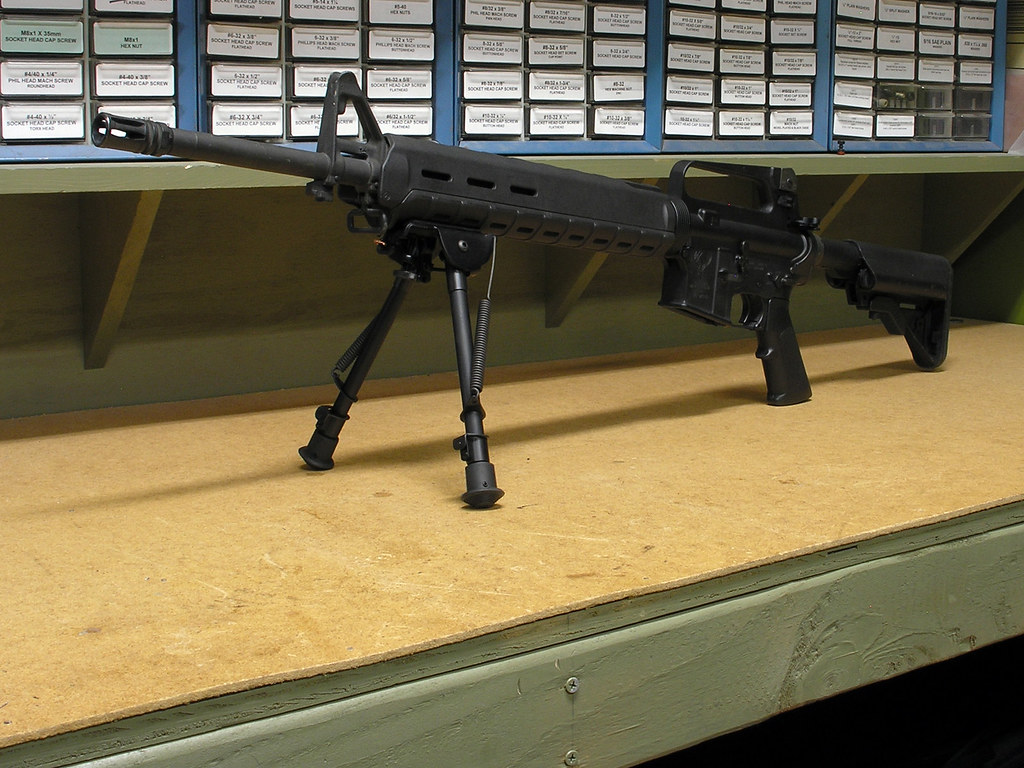
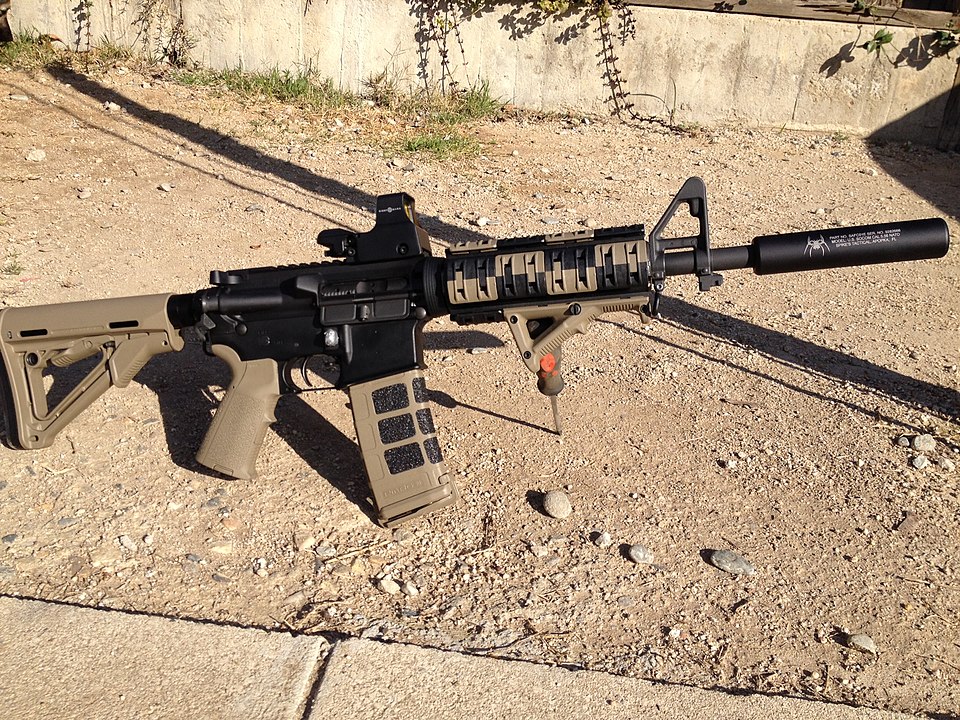
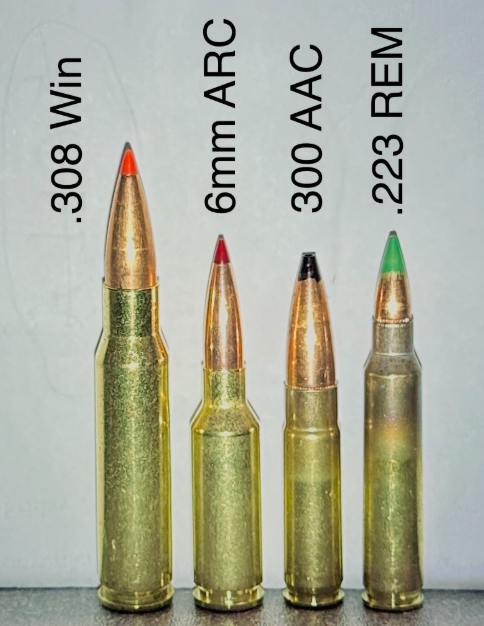
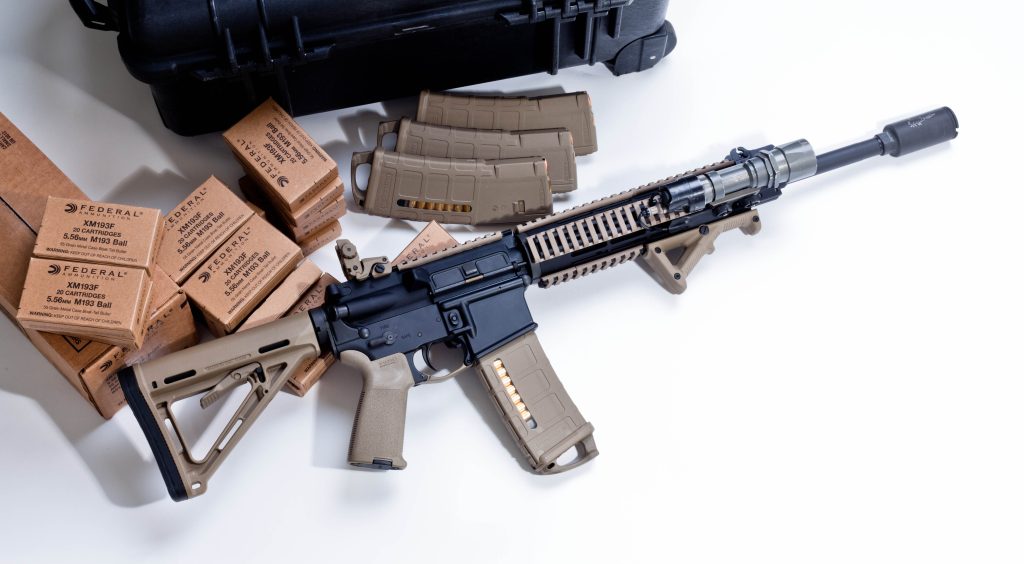
This is one of the easiest myths to disprove by looking at the platform’s architecture. The AR-15 is modular by design, which means one lower receiver can support very different configurations depending on the upper receiver, barrel, gas system, stock, optic, and chambering. The common .223 Remington and 5.56 NATO setup still dominates, but the platform also appears in cartridges such as 6mm ARC, 6.5 Grendel, .300 BLK, and 350 Legend. That flexibility is one reason the rifle became so widespread. A lightweight range rifle, a hunting configuration, and a precision-oriented build can share a family resemblance while behaving quite differently in recoil, ballistics, and intended use.
4. The AR-15 is uniquely overpowered
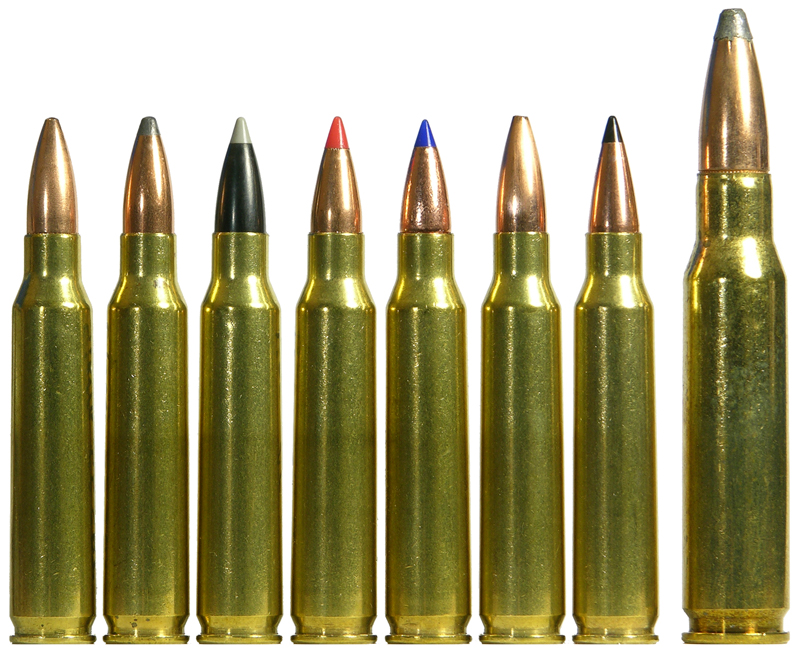
The claim does not hold up well against basic cartridge comparisons. The AR-15’s most common chamberings, .223 Remington and 5.56×45mm, are intermediate cartridges rather than full-power rifle rounds. Compared with a cartridge such as .308 Winchester, .223 typically produces far less recoil and substantially less muzzle energy.
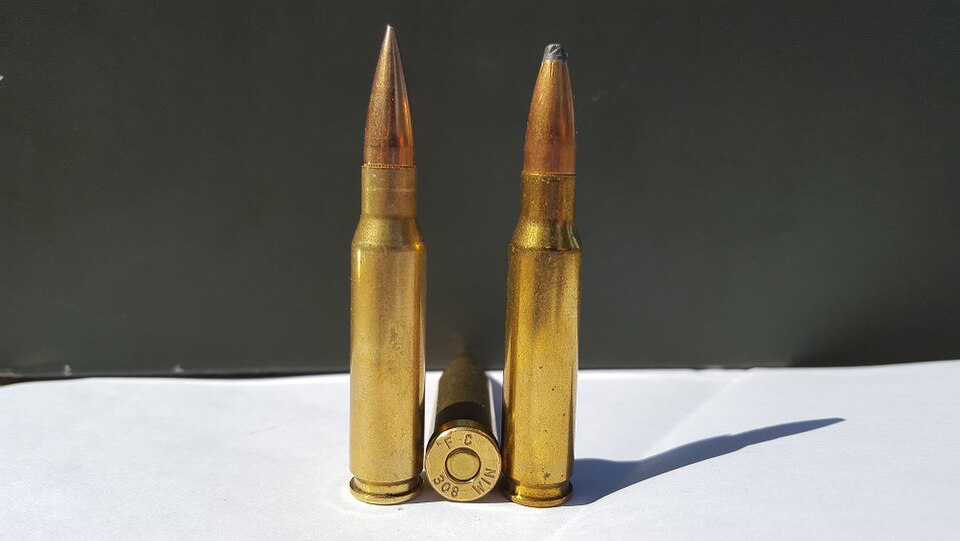
Comparative ballistic references place average .223 muzzle energy at roughly half that of .308 Winchester in common factory loads. That lower recoil is part of the platform’s practical character: easier control, faster follow-up shots, and less shooter fatigue. Those traits are often mistaken for extraordinary power when they are really signs of an efficient, relatively mild-shooting rifle system.
5. Direct impingement is a flaw and piston systems are always better
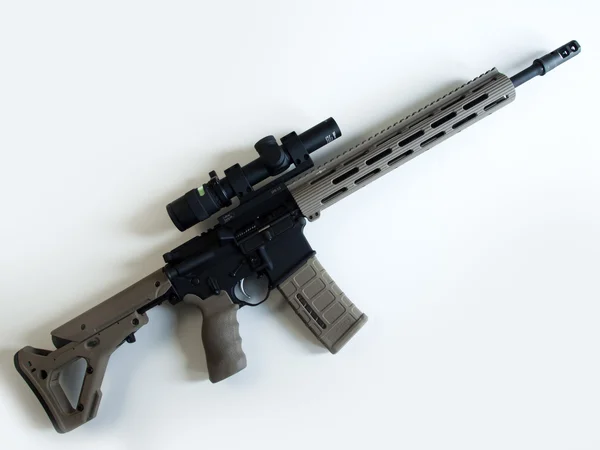
The AR-15’s gas system gets oversimplified into a winner-versus-loser argument. In reality, each setup carries tradeoffs. The classic AR pattern routes gas back through the system to cycle the bolt carrier. Piston variants use a separate piston assembly to drive the action. Direct-impingement-style rifles tend to stay lighter and maintain broad parts compatibility.
Piston rifles can keep more fouling and heat out of the action, but they often add weight and rely on more proprietary components. Neither setup automatically makes a rifle more reliable or more accurate in every use case. The original platform gained popularity because its operating layout balanced weight, controllability, and mechanical efficiency well enough to become the default pattern for decades.
6. The AR-15 is only relevant because of military heritage
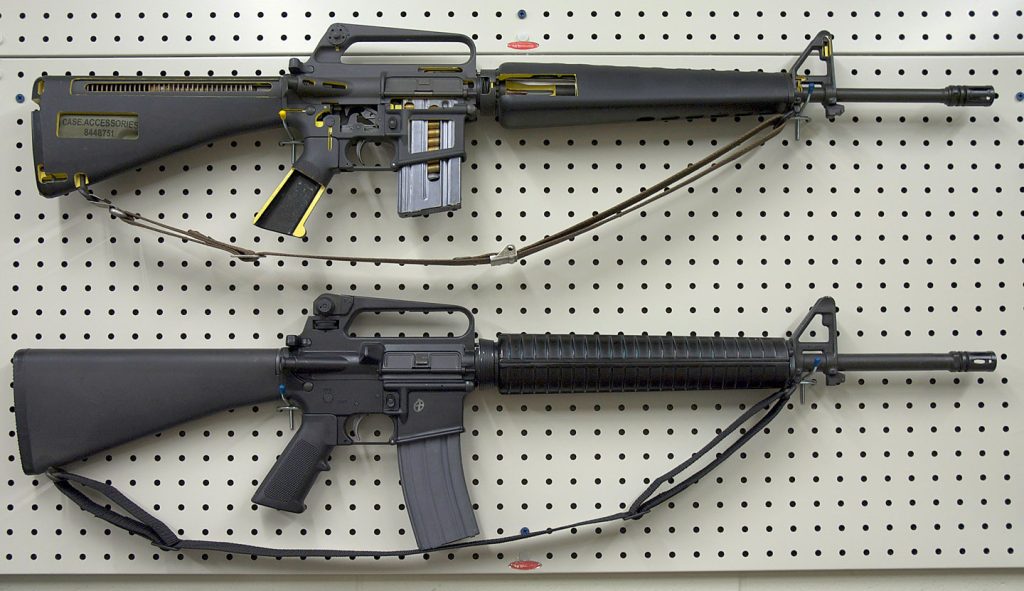
The design’s military ancestry is real, but the civilian platform spread because of ergonomics and adaptability rather than uniform issue. Straight-line recoil, familiar controls, relatively light recoil, and easy reconfiguration made it useful across target shooting, competition, predator control, and hunting.
That background also explains a common source of confusion: the civilian AR-15 is related to the military M16 family, but it is not the same as a select-fire service rifle. Historical accounts of the design’s evolution show how the original ArmaLite concept was scaled, revised, and eventually adopted by the U.S. military as the M16 after Colt-era modifications. Shared lineage does not erase the mechanical differences between military and civilian fire-control systems.

7. AR pistols and braces have a simple yes-or-no legal status
This subject is often treated as if one national rule settles everything. It does not. The legal treatment of AR-style pistols and stabilizing braces depends on how federal definitions interact with court action and with separate state or local restrictions. That makes legal literacy part of understanding the platform. A configuration that appears simple on a workbench can fall into a different category once barrel length, overall setup, and jurisdiction are considered. Mechanical familiarity alone is not enough when the classification of a firearm can turn on details that have nothing to do with how the action cycles.
Most AR-15 myths survive because they sound intuitive. The rifle looks military, so many people assume it works like a military rifle. It accepts modular parts, so some assume every version is interchangeable in purpose and performance. Neither assumption is precise. The platform makes more sense when discussed as a machine rather than a symbol. Once the focus shifts to trigger function, cartridge power, gas operation, and modular design, the AR-15 becomes much easier to describe accurately.


