

The AR-15 is one of the most recognized rifle platforms in the United States, but recognition has not produced clarity. The design sits at the intersection of branding, mechanics, customization, and law, which makes it unusually easy for bad shorthand to spread faster than solid information.
That confusion matters because AR-15 myths are rarely harmless. Some lead to poor technical decisions, some distort how the rifle actually works, and some can push owners into legal or safety problems that were entirely avoidable.

1. “AR” means “assault rifle”
The letters in AR-15 refer to ArmaLite, the company tied to Eugene Stoner’s original design work, not to a firing mode or a legal classification. The naming confusion has lasted for decades because the civilian AR-15 shares visual DNA with military rifles that descended from the same lineage. Before the U.S. military adopted the M16 name, the select-fire rifle was designated as the AR-15, which helped cement the misunderstanding. The important distinction is technical. A name stamped on the receiver does not define whether a rifle is semiautomatic, select-fire, restricted, or lawful in a specific jurisdiction.
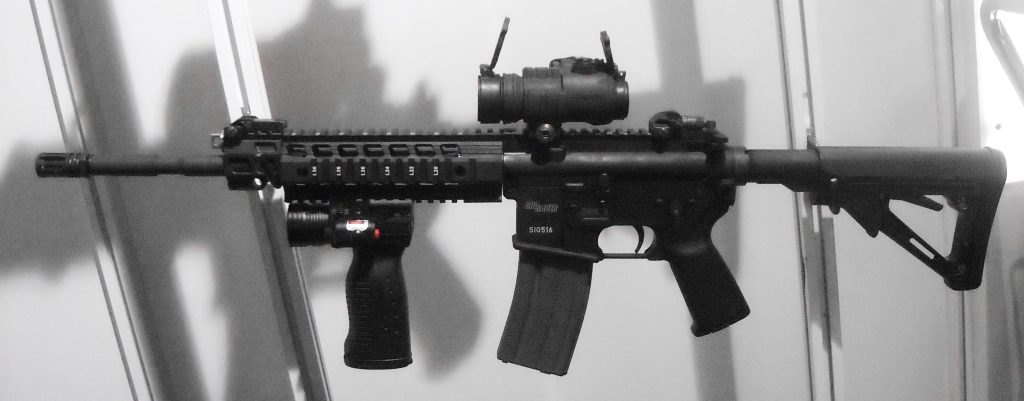
2. A civilian AR-15 is basically the same as a machine gun
A standard civilian AR-15 fires one round per trigger press. That is the defining behavior of a semiautomatic rifle, and it remains different from a true automatic or select-fire military rifle. The external shape does not change that operating fact. The confusion partly survives because the AR-15 and M16 family share broad design ancestry, and because the rifle’s low recoil and easy handling can make rapid semiautomatic fire look different from what many people expect. Mechanically, though, a civilian rifle lacks the fire-control arrangement required for automatic fire. As one widely cited description put it, the main difference is straightforward: “it’s one trigger pull, one bullet.”

3. The AR-15 is only a military-style tool
That claim ignores how the platform actually spread. The AR-15 became a dominant commercial rifle not because it stayed in a military niche, but because it adapted to civilian uses including range work, competition, training, predator control, and highly individualized general-purpose setups. By 2023, about 20 million AR-15s had been sold in the United States, according to industry and production estimates discussed in national reporting. Its civilian popularity comes from modularity as much as image. Stocks, optics, handguards, triggers, barrels, and uppers can change the rifle’s role without changing the lower receiver. That flexibility is why the AR-15 is better understood as a platform family than as one fixed rifle.
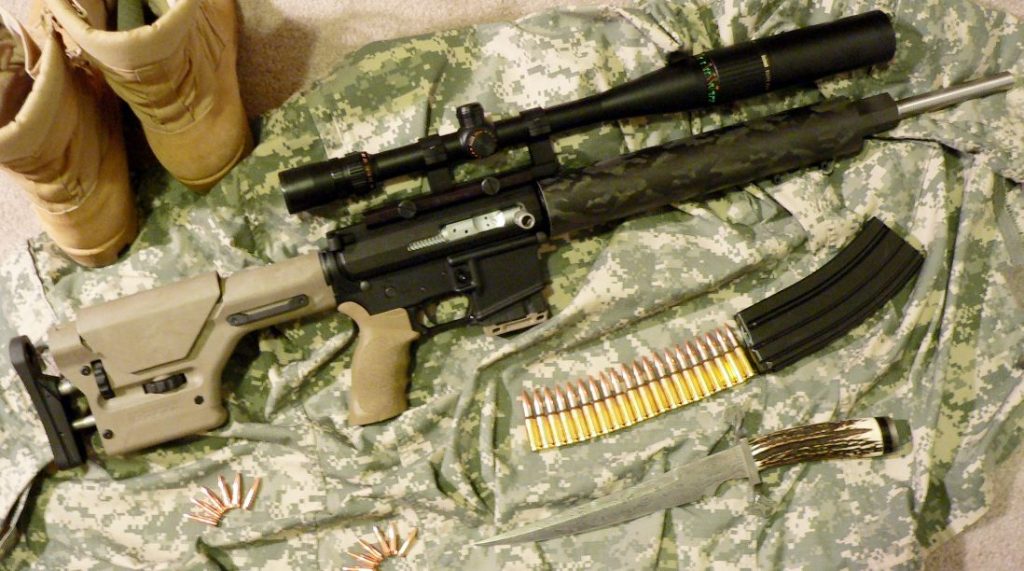
4. The rifle is so modular that any parts will fit any build
This is one of the costliest myths for new builders. The AR-15 is modular, but modular is not the same as universal. Within the small-frame AR-15 world, many parts benefit from a true Mil-Spec standard, yet even there, proprietary dimensions and brand-specific parts still appear. The moment a builder crosses into large-frame rifles or pistol-caliber variants, interchangeability gets much less predictable. That means compatibility checks are not optional housekeeping. Receiver geometry, barrel extensions, gas-system length, bolt carrier dimensions, handguard mounting, and buffer components all matter. A rifle assembled from individually good parts can still run poorly, wear prematurely, or fail altogether if the parts do not belong in the same operating system.

5. .223 Remington and 5.56 NATO are interchangeable in every AR-15
This is a common shortcut that can create real pressure problems. The cartridges are closely related, but they are not identical in chamber requirements. According to SAAMI guidance summarized in 2025, a 5.56 NATO chamber is generally designed to handle both 5.56 and .223 Remington, while firing 5.56 ammunition in a rifle marked only for .223 Remington is not recommended. The reason is chamber geometry and pressure. A 5.56 chamber uses a longer throat to manage higher-pressure rounds, while a .223 chamber can produce unsafe pressure when fed 5.56 ammunition. Barrel markings matter more than internet certainty.
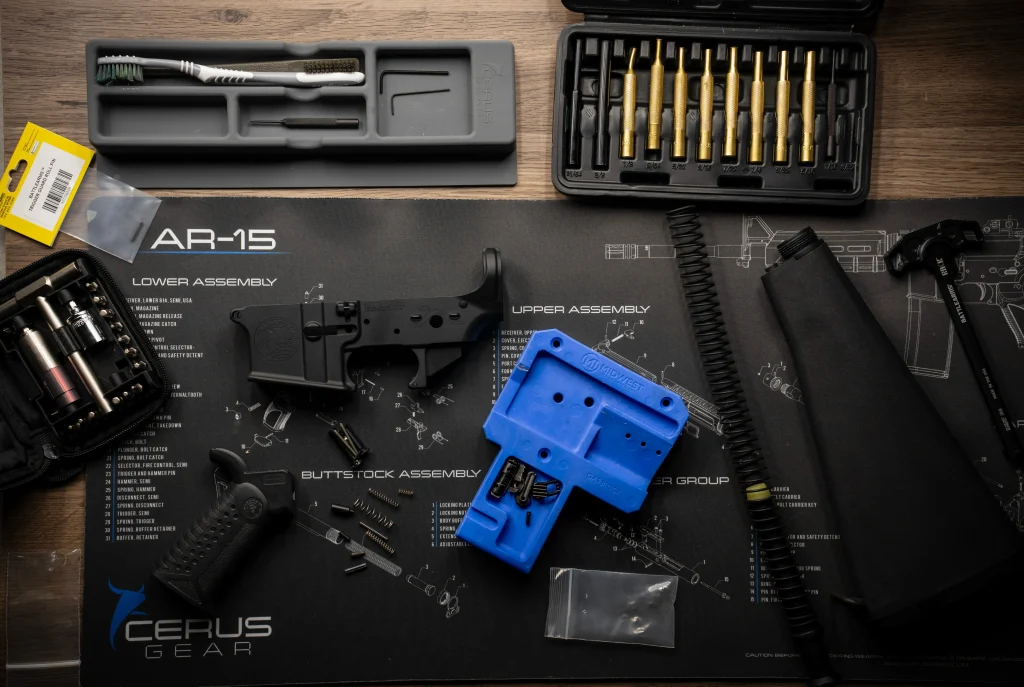
6. Building an AR-15 is just like snapping together blocks
The “adult LEGO” line survives because the platform is easy to accessorize, not because assembly is foolproof. Building a reliable AR still demands correct torque values, proper gas-system alignment, attention to headspace, and a clear understanding of how barrel, buffer, and gas choices work together. Even the gas system itself is more nuanced than many first-time builders expect.
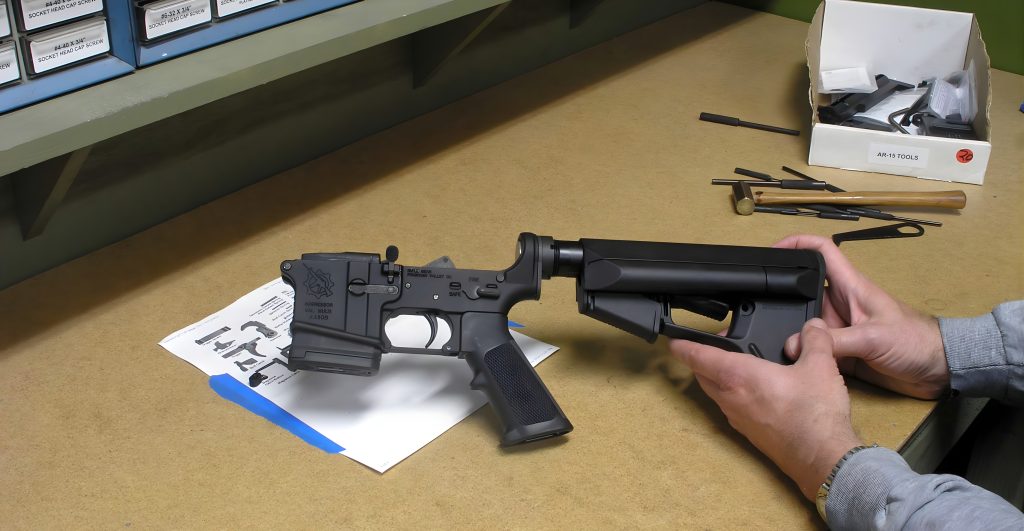
In a traditional direct-impingement rifle, gas is carried through a tube into the bolt carrier to cycle the action, which means timing, pressure, and fitment directly affect function. Shortcuts usually do not show up at the workbench. They show up later as cycling failures, accelerated parts wear, inconsistent ejection, and rifles that seem “picky” when the real problem is assembly quality.

7. AR-15 laws work the same way across the United States
They do not. Federal law is only part of the picture, and state or local rules can turn the same rifle from compliant to prohibited based on features, magazine limits, overall length, registration rules, or named-model restrictions. In California, for example, some restrictions are tied to a features-based test for semiautomatic centerfire rifles, while other states focus on different definitions and thresholds.= This is where myths become expensive fast. The legal status of an AR-15 follows its exact configuration and location, not what another owner said online, not what a store employee assumed, and not what applied in a neighboring state.

The AR-15 keeps attracting myths because it combines old military lineage, modern consumer modularity, and unusually fragmented regulation. That mix invites oversimplified claims, especially when appearance is mistaken for mechanism. Clear terms still do most of the work. When the chamber marking is checked, the parts are matched correctly, the operating system is understood, and the local law is read as written, most of the platform’s loudest myths collapse under basic inspection.


