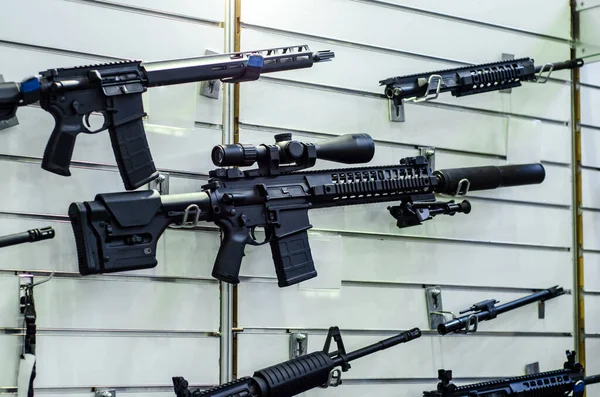
The AR-15 is one of the most recognized rifle platforms in the United States, and also one of the most persistently misdescribed. Much of the confusion comes from visual shorthand: if a rifle resembles a military carbine, many people assume it must operate the same way, deliver the same performance, and fall under the same rules. That shortcut breaks down fast. The AR-15 is better understood as a modular semi-automatic platform with a long commercial lineage, broad configuration differences, and a reputation built as much by appearance as by mechanics.
1. “AR” means “assault rifle”
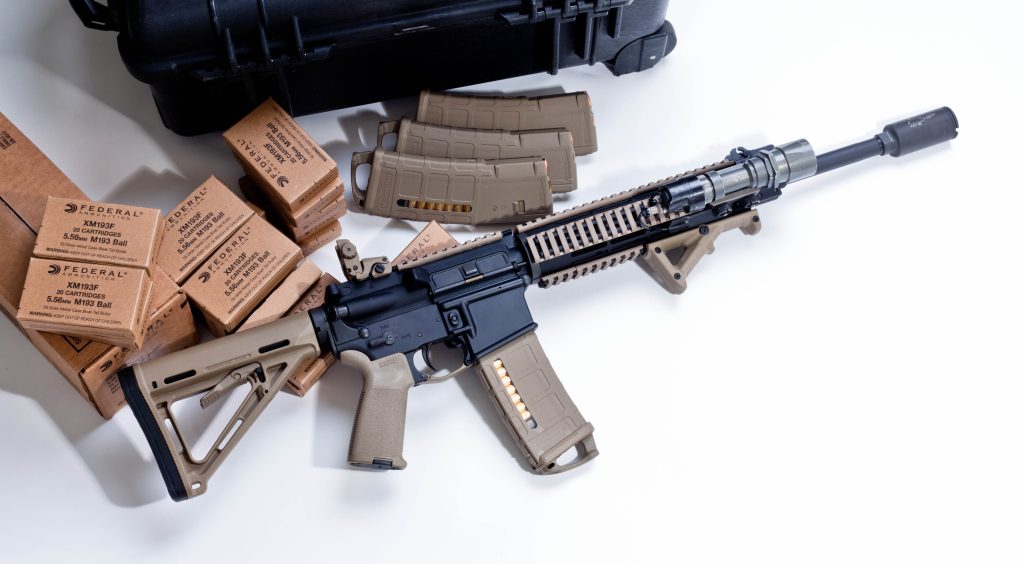
The letters “AR” refer to ArmaLite, the company behind the original design family, not a firing mode or legal category. That naming point matters because many later arguments about the rifle start from the wrong premise before the mechanics are even discussed. The platform traces back to the development of the ArmaLite AR-15 rifle, which grew out of earlier engineering work tied to the AR-10. Over time, “AR-15” became a broad commercial label for semi-automatic rifles based on that architecture. That is one reason the term now covers an enormous range of barrel lengths, stocks, handguards, optics setups, and chamberings rather than one fixed factory pattern.
2. A civilian AR-15 fires like an M16 or M4
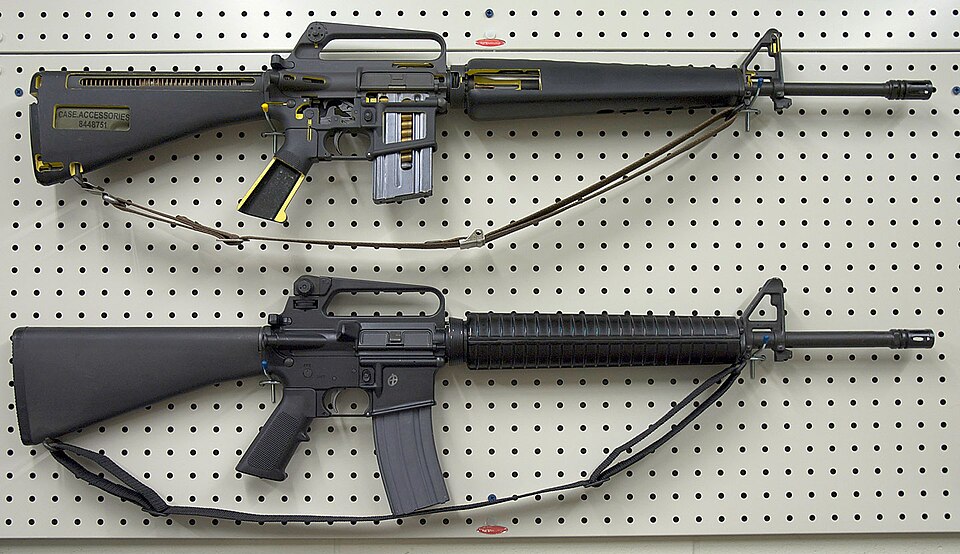
A standard civilian AR-15 fires one round per trigger press. That is the defining mechanical difference separating it from select-fire military rifles such as the M16 family and certain M4 variants. The resemblance causes confusion because the external layout is close enough that many people collapse the categories together.
But a civilian AR-15 is not simply an M16 with a different label. Military rifles in that family were built around select-fire trigger groups, while commercial AR-15s are semi-automatic only. The shared lineage is real, yet the trigger function is not interchangeable just because the silhouette looks familiar.
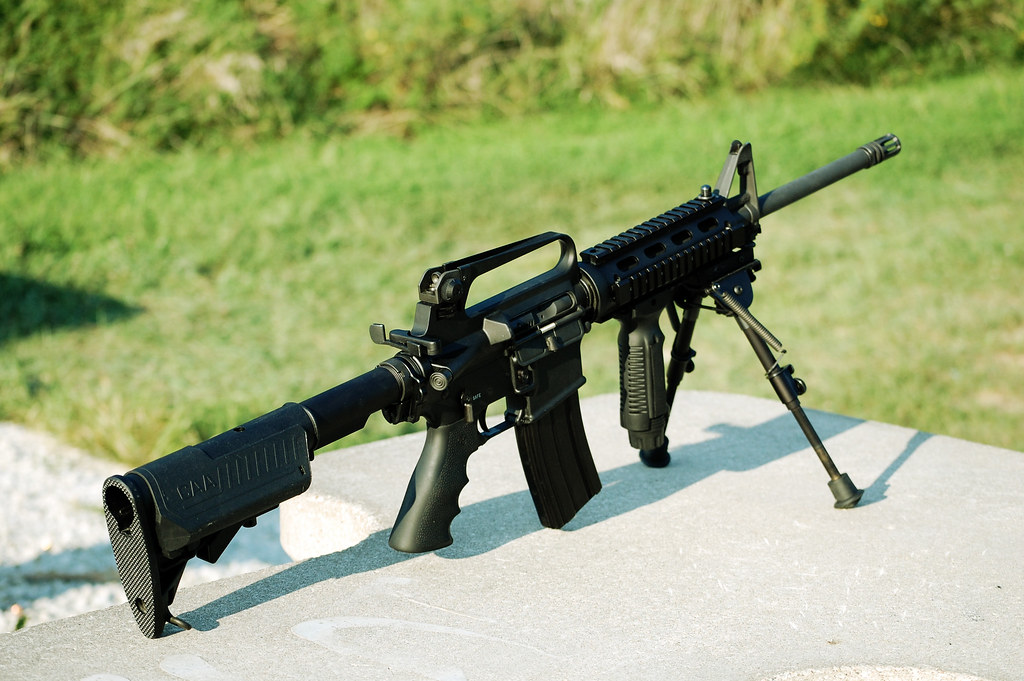
3. The AR-15 is one fixed rifle instead of a platform
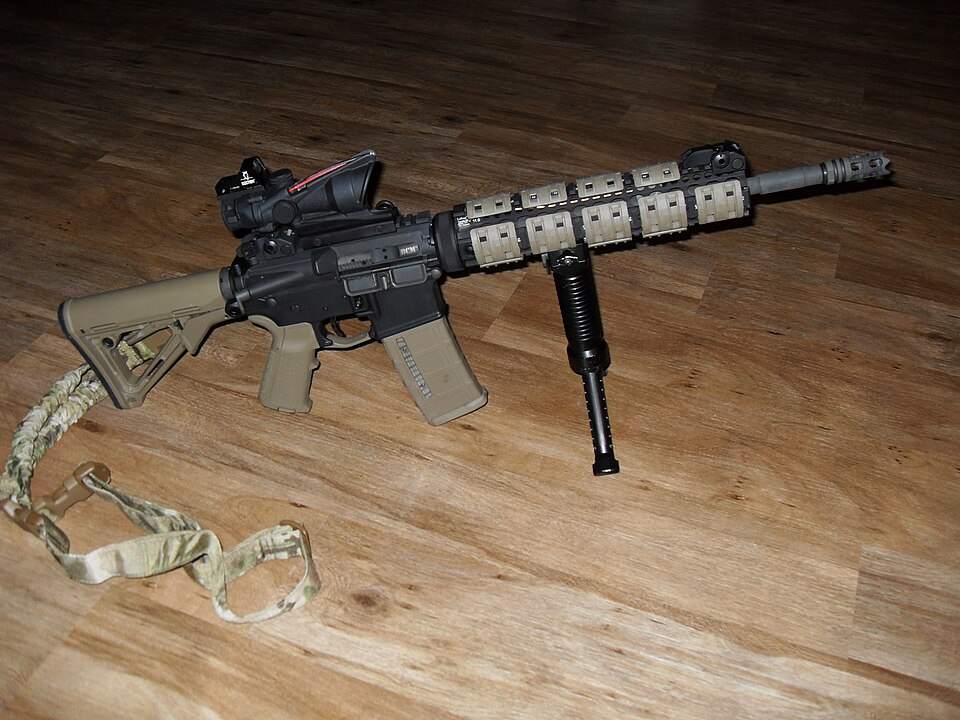
This is where many casual descriptions become inaccurate. There is no longer one standard AR-15 in the way many people imagine. Commercial production expanded so broadly that hundreds of companies now making AR-15s have turned the design into a family rather than a single specification. Different uppers, barrel lengths, gas systems, stocks, optics, and calibers can change how the rifle handles and what it is suited for. That modularity helps explain why the platform appears in target shooting, competition, varmint and small-game hunting, and general recreational use. Treating every AR-15 as if it were the same rifle obscures the engineering feature that made the design commercially dominant in the first place.
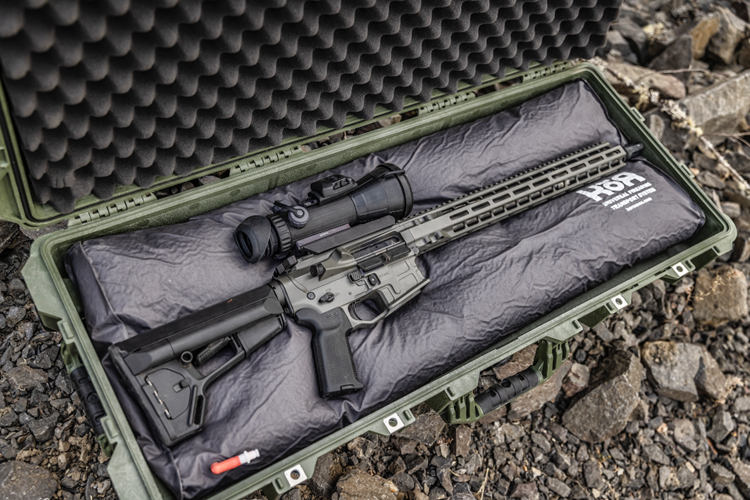
4. The AR-15 is uniquely “too powerful” compared with ordinary rifles
The standard .223 Remington and 5.56×45mm chamberings are intermediate cartridges, not the upper end of rifle power. In raw energy, they sit well below many traditional hunting rounds that rarely attract the same rhetoric. A common comparison places a 55-grain .223 load at roughly 1,280 foot-pounds of muzzle energy, while a 150-grain .308-class load can exceed 2,600 foot-pounds. That does not make the AR-15 harmless; it means the platform’s popularity is not explained by extraordinary power. In practical use, controllability, lighter recoil, and adaptable ergonomics do far more to define the rifle than any claim that it occupies a special class of ballistic force.
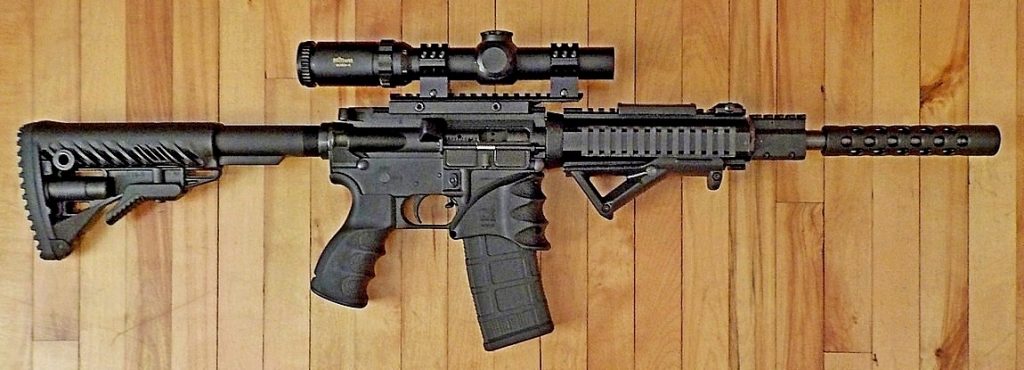
5. Barrel length and range claims are simple
Range talk around AR-15s is often muddled because people mix up effective range with maximum range. They are not the same measurement. around 400 to 600 yards is a common estimate for effective range, depending on ammunition, barrel setup, weather, and shooter skill. Maximum range is much farther, but that figure describes how far a bullet can travel physically, not how far a shooter can expect useful accuracy. Barrel length also matters, though not in a magical way: longer barrels can increase velocity, while shorter setups often trade some velocity for easier handling. That is why broad claims that an AR-15 “shoots forever” or, just as inaccurately, “can’t reach meaningful distance” miss the technical reality.
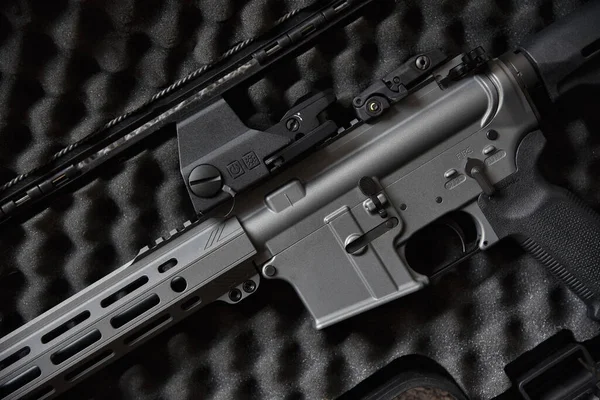
6. Building one is basically adult toy assembly
The platform’s parts ecosystem makes customization easier than on many rifles, but ease of swapping components is not the same as safe assembly. A rifle that goes together without obvious resistance can still be out of spec. Correct torque, gas-system alignment, headspace considerations, and bolt compatibility all affect reliability and safety. That is especially important for first-time builders who assume modularity removes the need for technical discipline. The AR-15 may be more approachable than many platforms, but it still rewards careful work and punishes shortcuts.

7. AR pistols and braces are covered by one simple national rule
Legal shorthand causes as much confusion as mechanical shorthand. Federal definitions, state restrictions, and court action do not always move in sync. One major flashpoint has involved stabilizing braces. At the federal level, Final Rule 2021R-08F was set aside nationwide, but that did not erase separate state and local restrictions. Treating brace-equipped firearms as always legal everywhere, or always prohibited everywhere, turns a complex compliance issue into a misleading slogan.
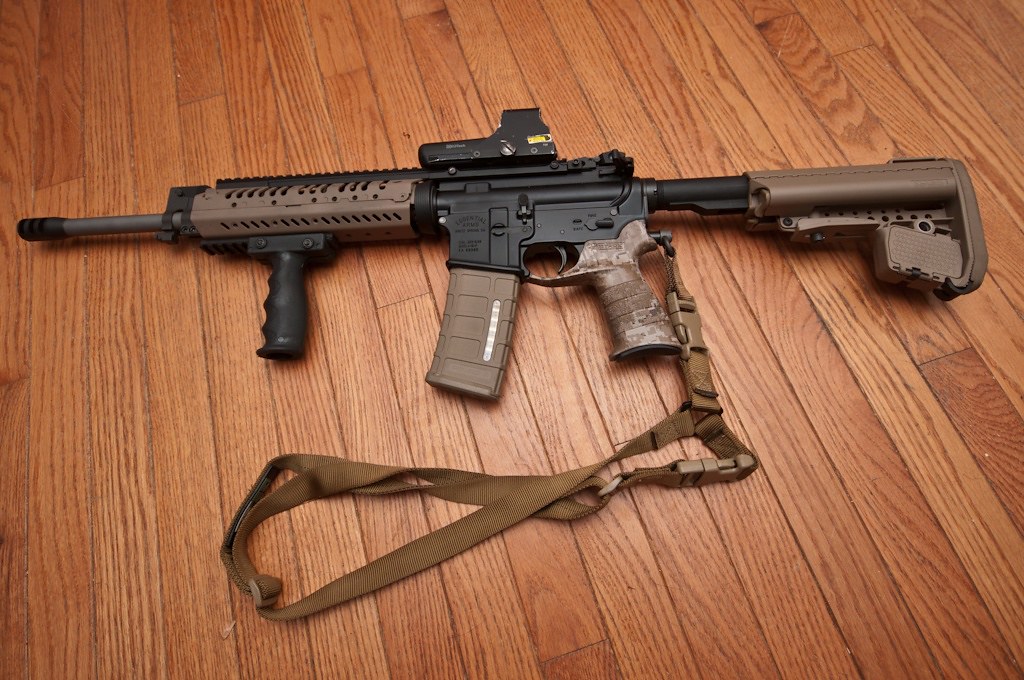
Most durable AR-15 myths survive because they compress a machine into a symbol. A name becomes a legal category, a silhouette becomes a firing mode, and a broad platform gets mistaken for a single fixed design. Clear discussion starts with smaller details: what the trigger group actually does, what cartridge is being used, how barrel length changes performance, and which rules apply in a specific configuration. On this rifle, precision in language is often the first sign of technical literacy.


